Loading...
Done
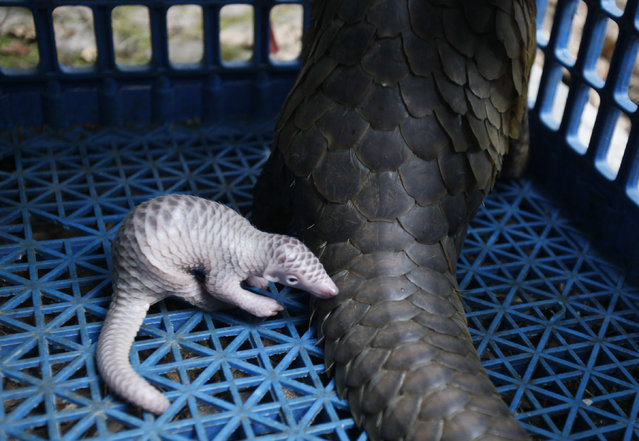
A baby pangolin sits with its mother inside a cage prior to their release into the wild in Sibolangit, North Sumatra, Indonesia, Monday, April 27, 2015. (Photo by Binsar Bakkara/AP Photo)

A baby pangolin sits with its mother inside a cage prior to their release into the wild in Sibolangit, North Sumatra, Indonesia, Monday, April 27, 2015. The anteaters are part of dozens of live pangolins and around five tons (11,000 lbs) of pangolin meat ready to be shipped abroad confiscated in a police a raid last week. (Photo by Binsar Bakkara/AP Photo)
Details
29 Apr 2015 06:16:00
A woman looks at jellyfish during a media preview for the Epson Aqua Park Shinagawa aquarium's re-opening in Tokyo July 6, 2015. (Photo by Toru Hanai/Reuters)

A woman looks at jellyfish during a media preview for the Epson Aqua Park Shinagawa aquarium's re-opening in Tokyo July 6, 2015. The aquarium will re-open on July 10 with new attractions including a pirate ship ride and a merry-go-round. (Photo by Toru Hanai/Reuters)
Details
07 Jul 2015 12:03:00
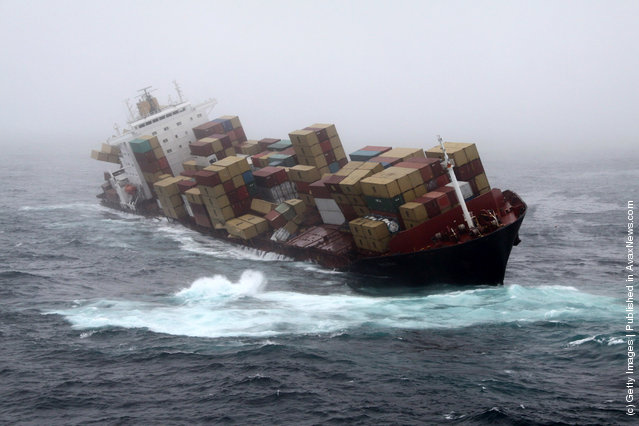
Authorities Fear MV Rena May Break-Up In Rough Seas

In this handout provided by Maritime New Zealand, MV Rena is battered by strong seas as it is stuck on Astrolabe Reef, on November 2, 2011 in Tauranga, New Zealand. The stricken vessel encountered a three metre swell, which led authorities to fear it may finally break up. Rena struck the reef on October 5, and has spilled 350 tonnes of oil, and almost 100 shipping containers. (Photo by Graeme Brown/Maritime New Zealand via Getty Images)
Details
02 Nov 2011 10:50:00
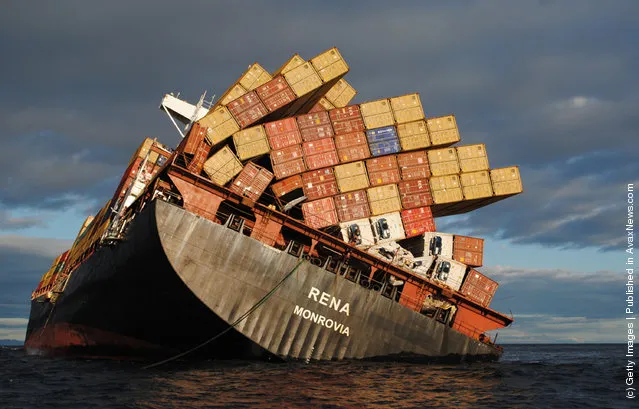
Oil Pumping From Rena Continues

The stern of the stranded cargo vessel Rena grounded on the Astrolabe Reef is seen on October 20, 2011 in Tauranga, New Zealand. Salvage crews continue to pump oil off the ship in an effort to remove as much as possible before bad weather predicted for the evening threatens to break the vessel and release more oil into the sea. Over 300 tonnes of oil has leaked from Rena since it hit the reef on October 5. (Photo by New Zealand Defence Force via Getty Images)
Details
20 Oct 2011 09:11:00
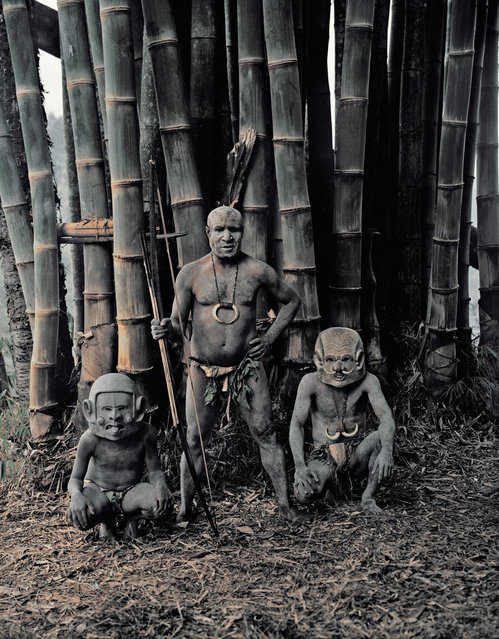
“Asaro from the Eastern Highlands”. The mudmen could not cover their faces with mud because the people of Papua New Guinea thought that the mud from the Asaro river was poisonous. So instead of covering their faces with this alleged poison, they made masks from pebbles that they heated and water from the waterfall, with unusual designs such as long or very short ears either going down to the chin or sticking up at the top, long joined eyebrows attached to the top of the ears, horns and sideways mouths. (Jimmy Nelson)

“Asaro from the Eastern Highlands”. The mudmen could not cover their faces with mud because the people of Papua New Guinea thought that the mud from the Asaro river was poisonous. So instead of covering their faces with this alleged poison, they made masks from pebbles that they heated and water from the waterfall, with unusual designs such as long or very short ears either going down to the chin or sticking up at the top, long joined eyebrows attached to the top of the ears, horns and sideways mouths. (Photo and caption by Jimmy Nelson)
Details
20 Oct 2013 08:54:00
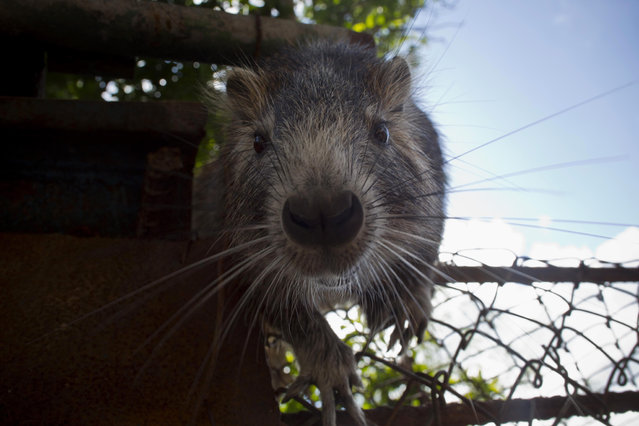
In this November 17, 2014 photo, Pancho, a domesticated huitia, confronts a camera, in Bainoa, Cuba. With their rope-like, dark tails, long front teeth, and whiskers that appear to be vibrating, huitias look like giant rats. They measure nearly a foot long (about 30 centimeters), with the largest ones weighing in bigger than a small dog. (Photo by Ramon Espinosa/AP Photo)

In this November 17, 2014 photo, Pancho, a domesticated huitia, confronts a camera, in Bainoa, Cuba. With their rope-like, dark tails, long front teeth, and whiskers that appear to be vibrating, huitias look like giant rats. They measure nearly a foot long (about 30 centimeters), with the largest ones weighing in bigger than a small dog. (Photo by Ramon Espinosa/AP Photo)
Details
21 Nov 2014 12:58:00
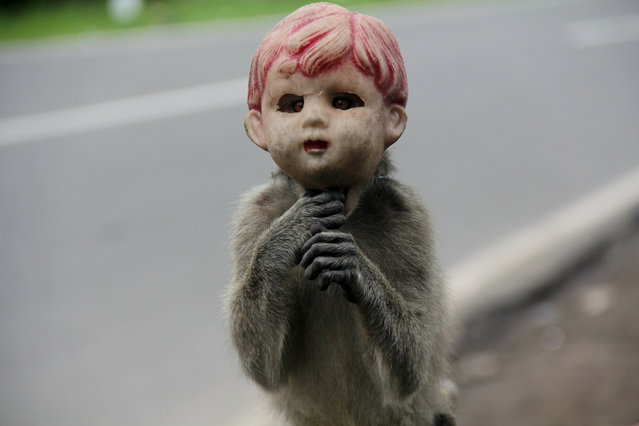
A long-tailed monkey, wearing jeans and a doll's head perform on the streets of Boyolali, Central Java Indonesia. Primates are used by owners to beg at crossroads, the primate show can earn $ 5 per day. Begging using long-tailed monkeys is opposed by animal lovers community as it is considered to torture and degrade animal health. (Photo by Arief Setiadi/Pacific Press/Barcroft Images)

A long-tailed monkey, wearing jeans and a doll's head perform on the streets of Boyolali, Central Java Indonesia. Primates are used by owners to beg at crossroads, the primate show can earn $ 5 per day. Begging using long-tailed monkeys is opposed by animal lovers community as it is considered to torture and degrade animal health. (Photo by Arief Setiadi/Pacific Press/Barcroft Images)
Details
26 Nov 2017 07:39:00
Ginny - The Dog Who Rescues Cats

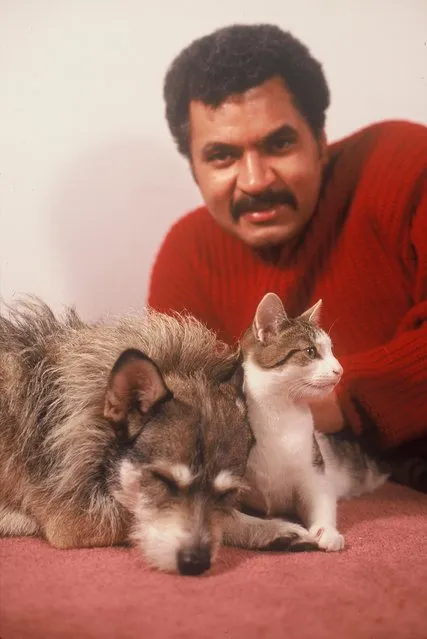
Ginny, a seventeen-year old schnauzer-husky mix from Long Beach, Long Island who was famous for rescuing cats, was killed off by her owner, Philip Gonzalez, on August 25th. At the time of her death she had stopped eating and was incontinent and arthritic.
Details
06 Oct 2012 12:16:00