Loading...
Done
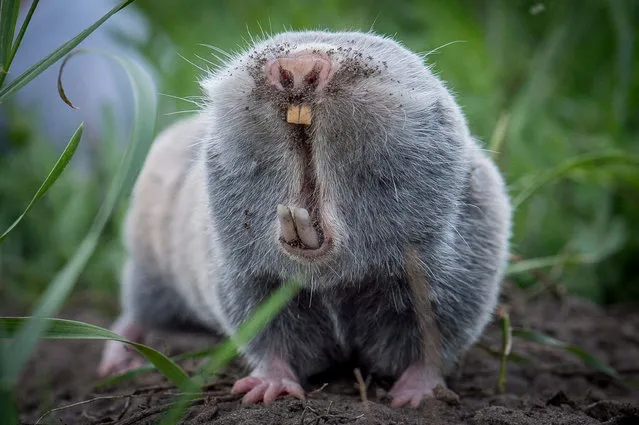
An adult specimen of Nannospalax (leucodon) montanosyrmiensis, a variant of the lesser mole-rat (Spalax leucodon) is pictured near Albertirsa, some 60 kilometers southeast of Budapest, Hungary, 12 May 2018. The critically endangered rodent lives in several isolated populations in the Carpathian Basin. (Photo by Sandor Ujvari/EPA/EFE)

An adult specimen of Nannospalax (leucodon) montanosyrmiensis, a variant of the lesser mole-rat (Spalax leucodon) is pictured near Albertirsa, some 60 kilometers southeast of Budapest, Hungary, 12 May 2018. The critically endangered rodent lives in several isolated populations in the Carpathian Basin. (Photo by Sandor Ujvari/EPA/EFE)
Details
20 May 2018 00:03:00
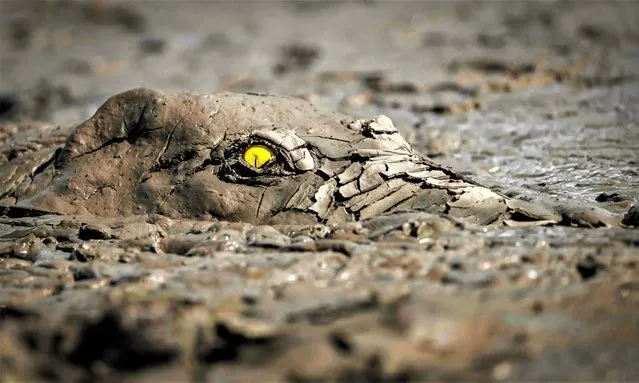
“Danger in the mud” – a crocodile at Mana Pools National Park, Zimbabwe. The grand prize winner. (Photo by Jens Cullmann/World Nature Photography Awards 2022)

“Danger in the mud” – a crocodile at Mana Pools National Park, Zimbabwe. The grand prize winner. (Photo by Jens Cullmann/World Nature Photography Awards 2022)
Details
08 Mar 2023 04:28:00
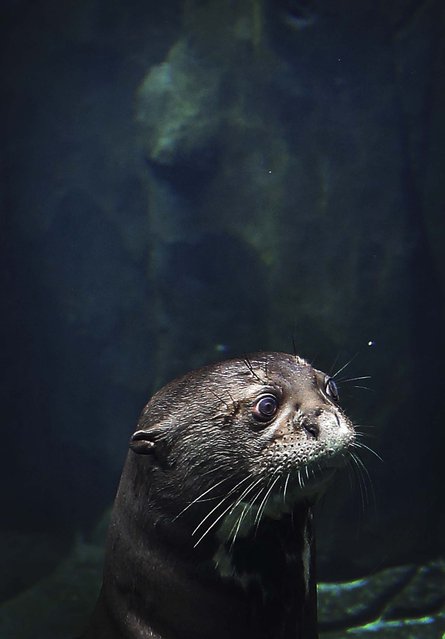
A giant river otter, the world's largest otter species, looks out of its enclosure at the newly completed River Safari in Singapore, on March 25, 2013. (Photo by Wong Maye-E/Associated Press)

A giant river otter, the world's largest otter species, looks out of its enclosure at the newly completed River Safari in Singapore, on March 25, 2013. (Photo by Wong Maye-E/Associated Press)
Details
30 Mar 2013 12:22:00
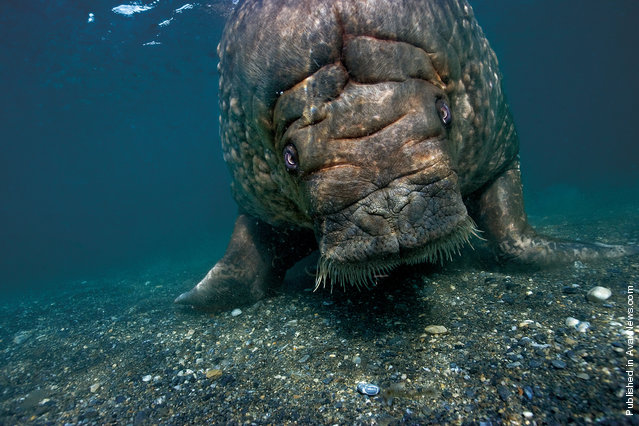
A large bull walrus returns to the shores of Prins Karl Forland after diving and feeding on clams

A large bull walrus returns to the shores of Prins Karl Forland after diving and feeding on clams. (Photo by Paul Nicklen/National Geographic). Svalbard, Norway, 2011
Details
14 Apr 2012 11:53:00
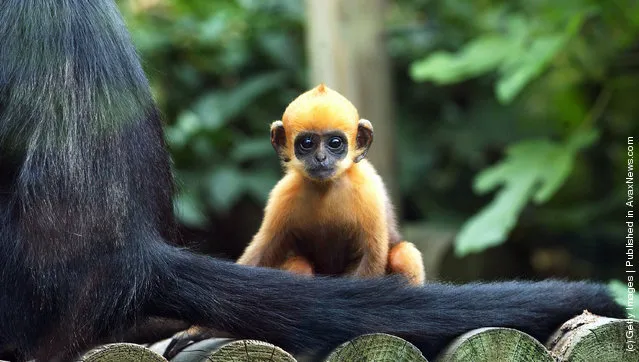
Baby Francois' Langur

“Francois' langur is one of several species of leaf monkeys. Over 50% of its diet is made up of young leaves. It will also consume fruits (17.2%), seeds, flowers, stems, roots, bark and occasionally minerals and insects off of rock surfaces and cliffs. This langur consumes its favorite food, young leaves, at the highest rate during the dry season, April through September, also known as the young leaf-lean period”. – Wikipedia

Photo: An endangered baby Francois' Langur monkey called Laa Laa settles in following her July 6 birth at London Zoo, Regent's Park on August 5, 2004 in London. The bright ginger youngster was born to glossy black parents Max and Shaneka and has the typical orange baby coat which is in stark contrast against the black of her parent's and older brother Grub's fur. (Photo by Steve Finn/Getty Images)

Details
22 Sep 2011 11:28:00
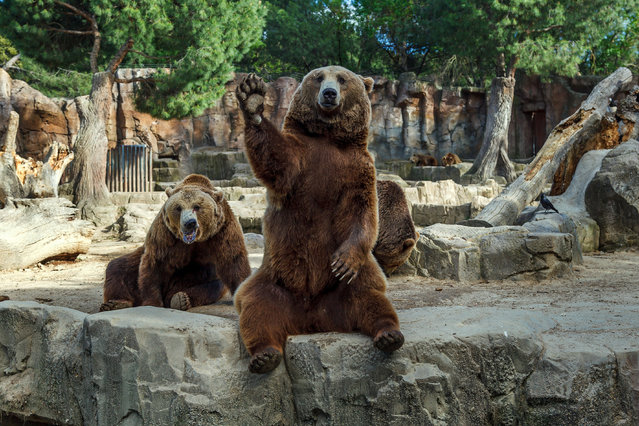
A photographer could bear-ly believe his eyes when a bear started waving at him. The friendly animal wandered to the front of his enclosure before sitting back in full view of zoo guests. He then lifts his powerful paw and excitedly waves in an almost human-like way at his new audience. The hilarious encounter was captured by keen photographer Andrey Slepnev, 31, while on a trip to Madrid Zoo, Spain on March 24, 2016. (Photo by Andrey Slepnev/Caters News)

A photographer could bear-ly believe his eyes when a bear started waving at him. The friendly animal wandered to the front of his enclosure before sitting back in full view of zoo guests. He then lifts his powerful paw and excitedly waves in an almost human-like way at his new audience. The hilarious encounter was captured by keen photographer Andrey Slepnev, 31, while on a trip to Madrid Zoo, Spain on March 24, 2016. (Photo by Andrey Slepnev/Caters News)
Details
11 Oct 2016 11:25:00
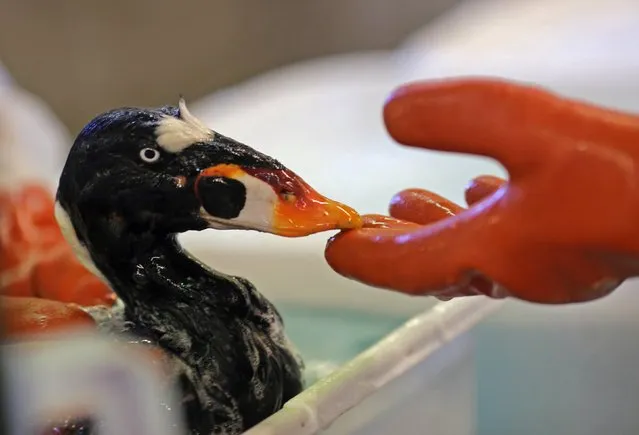
A bird is cleaned at the International Bird Rescue in Fairfield, California January 20, 2015. A gooey, unknown material discovered on the eastern shores of San Francisco Bay is clinging to the feathers of birds, and more than 100 birds, mostly species of oceangoing, diving ducks, have died after their feathers were fouled by the viscous substance now undergoing testing at state labs in Sacramento. (Photo by Robert Galbraith/Reuters)

A bird is cleaned at the International Bird Rescue in Fairfield, California January 20, 2015. A gooey, unknown material discovered on the eastern shores of San Francisco Bay is clinging to the feathers of birds, and more than 100 birds, mostly species of oceangoing, diving ducks, have died after their feathers were fouled by the viscous substance now undergoing testing at state labs in Sacramento. (Photo by Robert Galbraith/Reuters)
Details
22 Jan 2015 14:03:00
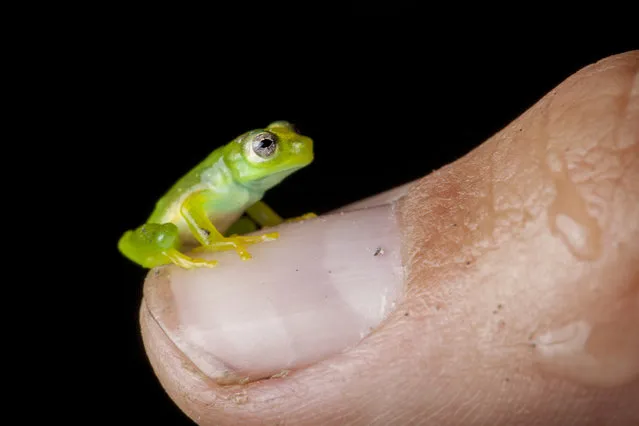
Miniature glass frog. (Photo by Robin Moore)

Thousands of species of amphibians are endangered and hundreds have already disappeared, but in recent years, a team of scientists and conservationists have re-discovered some of these “lost” species and uncovered previously unknown varieties. Here: Miniature glass frog. (Photo by Robin Moore)
Details
10 Oct 2014 12:55:00