Loading...
Done
Members of the media film as a ranger performs a post mortem on the carcass of a rhino after it was killed for its horn by poachers at the Kruger national park in Mpumalanga province August 27, 2014. Rhino poachers in South Africa now risk giving themselves away when they shoot thanks to a high-tech, gunfire-detection system being piloted in the country's flagship Kruger National Park. (Photo by Siphiwe Sibeko/Reuters)

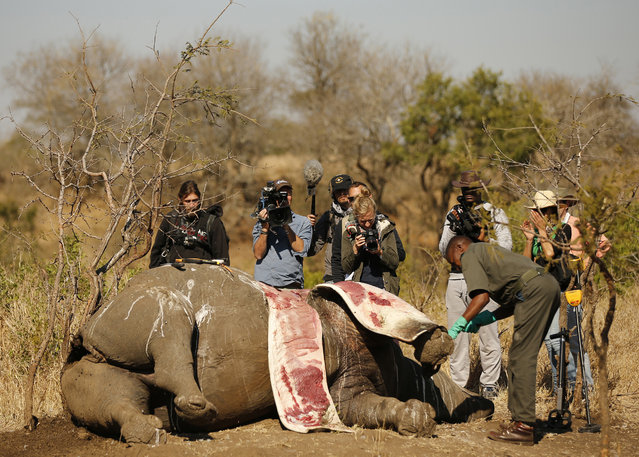
Members of the media film as a ranger performs a post mortem on the carcass of a rhino after it was killed for its horn by poachers at the Kruger national park in Mpumalanga province August 27, 2014. Rhino poachers in South Africa now risk giving themselves away when they shoot thanks to a high-tech, gunfire-detection system being piloted in the country's flagship Kruger National Park. The stakes are high, for rhinos are being slain in escalating numbers for their prized horns, alarming both conservationists and the government since wildlife in South Africa is an important tourist draw. (Photo by Siphiwe Sibeko/Reuters)
Details
07 Nov 2015 08:03:00
Ja Kang Song, 71, and Ja Hyun Su, 72, dive for shellfish and are the main breadwinners for their families. In South Korea, 45% of the diving women of Jeju are over the age of 70. Routinely diving to depths of 20m and staying under for an average of two to three minutes, the pressure on the body takes its toll and, like many others, burst eardrums have left Ja Hyun Su deaf. Each season, between seven and 10 women die diving the waters around Jeju Island. (Photo by Andy W. Langton/Age International)

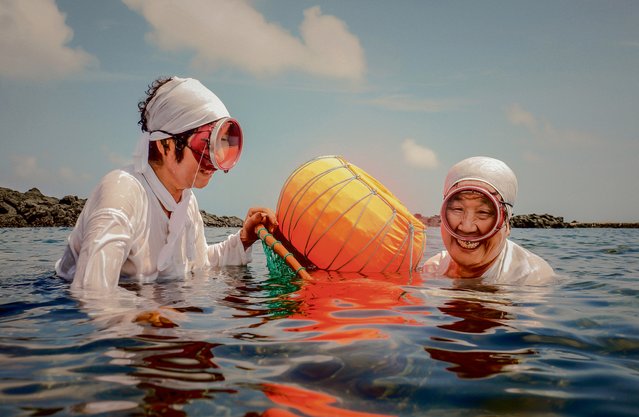
Ja Kang Song, 71, and Ja Hyun Su, 72, dive for shellfish and are the main breadwinners for their families. In South Korea, 45% of the diving women of Jeju are over the age of 70. Routinely diving to depths of 20m and staying under for an average of two to three minutes, the pressure on the body takes its toll and, like many others, burst eardrums have left Ja Hyun Su deaf. Each season, between seven and 10 women die diving the waters around Jeju Island. (Photo by Andy W. Langton/Age International)
Details
12 Sep 2016 10:35:00
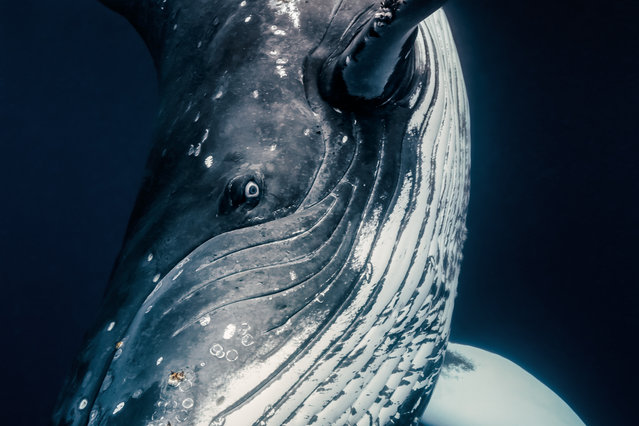
“To look into a whale’s eye is life-changing and humbling. Well, it’s the same with dolphins but they are mostly very fast in the water. A whale’s eye is unexpectedly looking, just like a human eye, kinda checking you out”. (Photo by Rita Kluge/The Guardian)

With the humpback calving season drawing to a close, here’s a look at some of Rita Kluge’s distinctive marine photos from the south Pacific. The Sydney-based photographer fell in love with whales after witnessing southern rights from the New South Wales coastline as they travelled to and from their feeding grounds in the Antarctic. She has since been to Tonga, where humpbacks breed and calf in winter months, to photograph them in the water. (Photo by Rita Kluge/The Guardian)
Details
26 Oct 2016 11:09:00
It would seem to be something you'd see only in a cartoon or at a Phish concert, but according to park rangers in New South Wales, Australia, dozens of giant, fluorescent pink slugs have been popping up on a mountaintop there. (Photo by Michael Murphy/AFP Photo/NSW Environment Office)

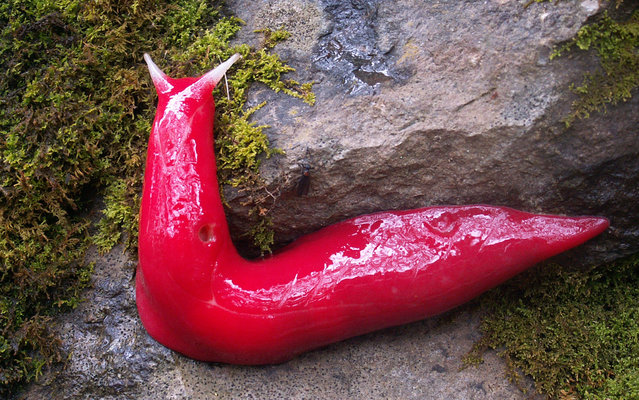
It would seem to be something you'd see only in a cartoon or at a Phish concert, but according to park rangers in New South Wales, Australia, dozens of giant, fluorescent pink slugs have been popping up on a mountaintop there. The eight-inch creatures have been spotted only on Mount Kaputar, a 5,000-foot peak in the Nandewar Range in northern New South Wales. Scientists believe the eye-catching organisms are survivors from an era when Australia was home to rainforests. A series of volcanoes, millions of years of erosion and other geological changes “have carved a dramatic landscape at Mount Kaputar”, the park service wrote on its Facebook page, and unique arid conditions spared the slugs from extinction. (Photo by Michael Murphy/AFP Photo/NSW Environment Office)
Details
01 Jun 2013 14:09:00
Vervet monkeys Higgins, left, and Andor fight playfully atop a car in the Park 'N Fly parking lot which lies adjacent to the swampy mangrove preserve where the monkey colony lives, Tuesday, March 1, 2022, in Dania Beach, Fla. For 70 years, a group of non-native monkeys has made their home next to a South Florida airport runway, delighting visitors and becoming local celebrities. (Photo by Rebecca Blackwell/AP Photo)

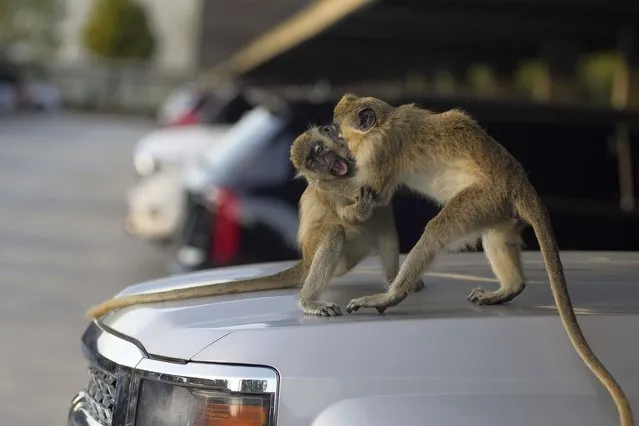
Vervet monkeys Higgins, left, and Andor fight playfully atop a car in the Park 'N Fly parking lot which lies adjacent to the swampy mangrove preserve where the monkey colony lives, Tuesday, March 1, 2022, in Dania Beach, Fla. For 70 years, a group of non-native monkeys has made their home next to a South Florida airport runway, delighting visitors and becoming local celebrities. (Photo by Rebecca Blackwell/AP Photo)
Details
10 May 2023 03:05:00
A striking funeral worker takes a break near a casket placed at a parking lot as they protest over changes to a host of procedures and regulations, during the coronavirus disease (COVID-19) outbreak outside the department of home affairs in Soweto, South Africa, September 16, 2020. (Photo by Siphiwe Sibeko/Reuters)

A striking funeral worker takes a break near a casket placed at a parking lot as they protest over changes to a host of procedures and regulations, during the coronavirus disease (COVID-19) outbreak outside the department of home affairs in Soweto, South Africa, September 16, 2020. (Photo by Siphiwe Sibeko/Reuters)
Details
18 Sep 2020 00:07:00
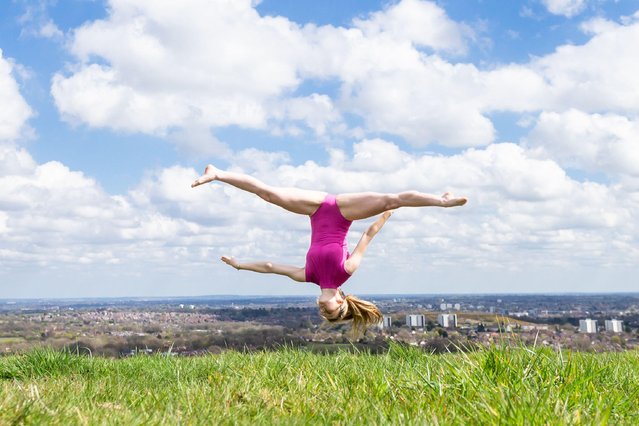
17-year-old dance student Amelia Hubbard of Halesowen, West Midlands, takes to the park in south Birmingham, United Kingdom on April 14, 2022 to do some spring moves, as temperatures soar in the UK on Good Friday.(Photo by Peter Lopeman/Alamy Live News)

17-year-old dance student Amelia Hubbard of Halesowen, West Midlands, takes to the park in south Birmingham, United Kingdom on April 14, 2022 to do some spring moves, as temperatures soar in the UK on Good Friday.(Photo by Peter Lopeman/Alamy Live News)
Details
19 Jul 2022 05:02:00
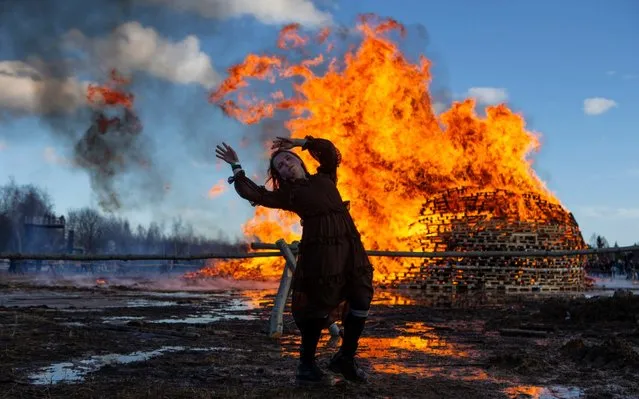
In this photo taken on Saturday, March 9, 2019, a visitor dances in front of a sculpture burning at the Maslenitsa (Shrovetide) festival at the Nikola-Lenivets art park in Nikola-Lenivets village, about 200 kilometers (125 miles) south-west of Moscow, Russia. As part of the celebrations of Maslenitsa (Shrovetide) Holiday in Russian, a folk holiday which heralds the beginning of spring, contemporary artist and park founder Nikolay Polissky built a giant sculpture made of wood and hay which was burnt to ashes during a traditional bonfire. (Photo by Alexander Zemlianichenko Jr./AP Photo)

In this photo taken on Saturday, March 9, 2019, a visitor dances in front of a sculpture burning at the Maslenitsa (Shrovetide) festival at the Nikola-Lenivets art park in Nikola-Lenivets village, about 200 kilometers (125 miles) south-west of Moscow, Russia. As part of the celebrations of Maslenitsa (Shrovetide) Holiday in Russian, a folk holiday which heralds the beginning of spring, contemporary artist and park founder Nikolay Polissky built a giant sculpture made of wood and hay which was burnt to ashes during a traditional bonfire. (Photo by Alexander Zemlianichenko Jr./AP Photo)
Details
27 Jul 2019 00:01:00