Loading...
Done
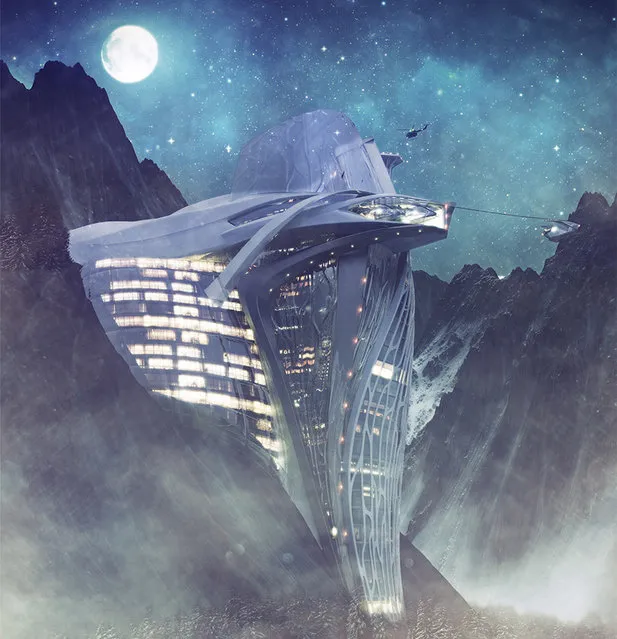
Semiotic Alpine Escape By Armin Senoner

Armin Senoner conceptualizes class system based semiotic alpine escape all visuals courtesy of armin senoner. From birth, every human is organized through the hierarchical class system. Without regard to personal characteristics in the least, each is donned with a label; lower, middle, or upper. Society at large is innately regulated because by it, the rich do anything to remain at the top, the middle tries to overthrow the rich, and the poor just try to survive. Modern times, though less brutal, is no less restrained by the unspoken rules of social division.
Details
01 Jul 2015 13:22:00
Rioters scuffle with police on a street in Mongkok district of Hong Kong, Tuesday, February 9, 2016. (Photo by Kin Cheung/AP Photo)

Rioters scuffle with police on a street in Mongkok district of Hong Kong, Tuesday, February 9, 2016. Rioters clashed with police overnight and into the early hours of Tuesday in a crowded area of Kowloon. The unrest started when local authorities tried to prevent street food sellers from operating on Monday night. Activists who are dissatisfied with Hong Kong's administration took part in the clashes, local media reports said. (Photo by Kin Cheung/AP Photo)
Details
09 Feb 2016 13:22:00
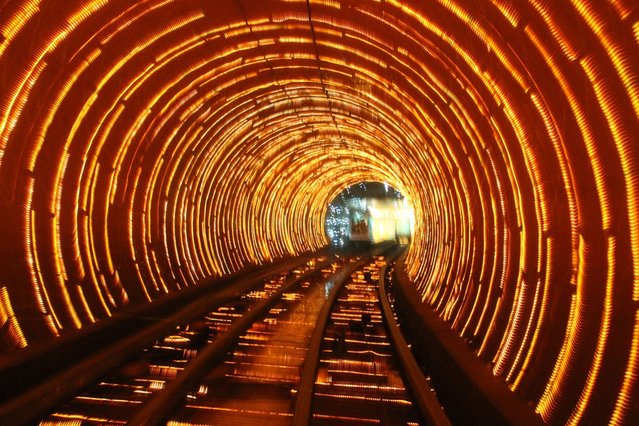
The Bund Sightseeing Tunnel In Shanghai

The Bund Sightseeing Tunnel is not an adventure for the light hearted. The trippy visuals and sound effects are rather bizarre and creepy. They look like something out of a nightmare or a psychedelic trip. Maybe the creators of this project did experiment with some illicit drugs to gain inspiration for this project. Moreover, it is more likely than not that some people tried going to this tourist attraction after “preparing” themselves beforehand. This trippy tunnel stretches from Pudong to Puxi in Shanghai, China, and is rated as one of the top five tourist attractions. We recommend visiting this place; just don’t take your kids along for the ride, since it might prove to be too scary for them.
Details
06 Feb 2015 12:27:00
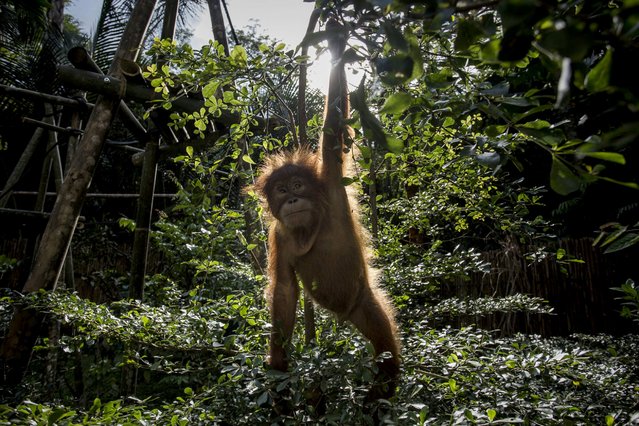
A Baby sumatran orangutan (Pongo abelii) plays around in a tree as they train at Sumatran Orangutan Conservation Programme's rehabilitation center on November 12, 2016 in Kuta Mbelin, North Sumatra, Indonesia. The Orangutans in Indonesia have been known to be on the verge of extinction as a result of deforestation and poaching. Found mostly in South-East Asia, where they live on the islands of Sumatra and Borneo, the endangered species continue to lose their habitat as a result of corporate expansion in a developing economy. Indonesia approved palm oil concessions on nearly 15 million acres of peatlands over the past years and thousands of square miles have been cleared for plantations, including the lowland areas that are the prime habitat for orangutans. (Photo by Ulet Ifansasti/Getty Images)

A Baby sumatran orangutan (Pongo abelii) plays around in a tree as they train at Sumatran Orangutan Conservation Programme's rehabilitation center on November 12, 2016 in Kuta Mbelin, North Sumatra, Indonesia. The Orangutans in Indonesia have been known to be on the verge of extinction as a result of deforestation and poaching. Found mostly in South-East Asia, where they live on the islands of Sumatra and Borneo, the endangered species continue to lose their habitat as a result of corporate expansion in a developing economy. Indonesia approved palm oil concessions on nearly 15 million acres of peatlands over the past years and thousands of square miles have been cleared for plantations, including the lowland areas that are the prime habitat for orangutans. (Photo by Ulet Ifansasti/Getty Images)
Details
16 Nov 2016 11:14:00
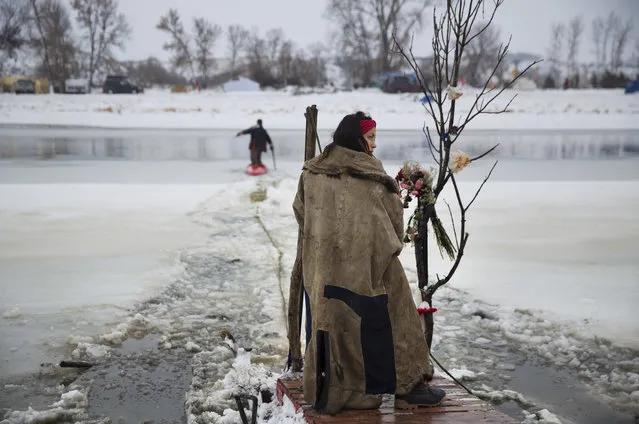
In this Thursday, December 1, 2016 photo, Cat Bigney, part of the Oglala Native American tribe, waits on the shore of the Cannonball river for travelers to arrive by canoe at the Oceti Sakowin camp where people have gathered to protest the Dakota Access oil pipeline in Cannon Ball, N.D. So far, those at the camp have shrugged off the heavy snow, icy winds and frigid temperatures. But if they defy next week's government deadline to abandon the camp, demonstrators know the real deep freeze lies ahead. Life-threatening wind chills and towering snow drifts could mean the greatest challenge is simple survival. (Photo by David Goldman/AP Photo)

In this Thursday, December 1, 2016 photo, Cat Bigney, part of the Oglala Native American tribe, waits on the shore of the Cannonball river for travelers to arrive by canoe at the Oceti Sakowin camp where people have gathered to protest the Dakota Access oil pipeline in Cannon Ball, N.D. So far, those at the camp have shrugged off the heavy snow, icy winds and frigid temperatures. But if they defy next week's government deadline to abandon the camp, demonstrators know the real deep freeze lies ahead. Life-threatening wind chills and towering snow drifts could mean the greatest challenge is simple survival. (Photo by David Goldman/AP Photo)
Details
06 Dec 2016 10:22:00
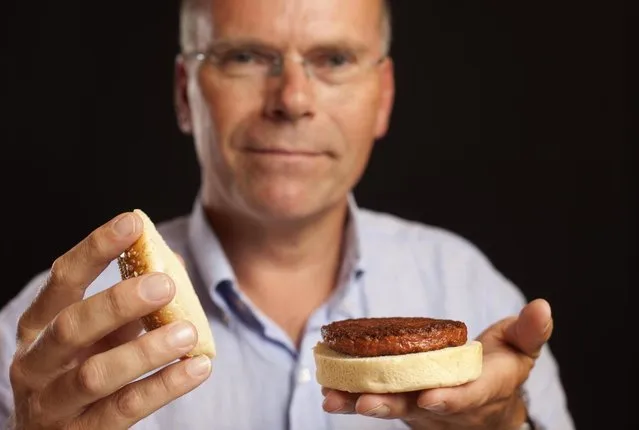
In this handout image provided by Ogilvy, a burger made from cultured beef, which has been developed by Professor Mark Post of Maastricht University in the Netherlands (pictured) is shown to the media during a press conference on August 5, 2013 in London, England. Cultured Beef could help solve the coming food crisis and combat climate change with commercial production of Cultured Beef beginning within ten to twenty years. (Photo by David Parry via Getty Images)

In this handout image provided by Ogilvy, a burger made from cultured beef, which has been developed by Professor Mark Post of Maastricht University in the Netherlands (pictured) is shown to the media during a press conference on August 5, 2013 in London, England. The in-vitro burger, cultured from cattle stem cells, the first example of what its creator says could provide an answer to global food shortages and help combat climate change, was fried in a pan and tasted by two volunteers. The burger is the result of years of research by Dutch scientist Mark Post, a vascular biologist at the University of Maastricht, who is working to show how meat grown in petri dishes might one day be a true alternative to meat from livestock.The meat in the burger has been made by knitting together around 20,000 strands of protein that has been cultured from cattle stem cells in Post's lab. (Photo by David Parry)
Details
06 Aug 2013 08:48:00
Make Your Franklin By Martin Joubert Part 1

Having $100 in your pocket would be so much cooler if it was designed by Martin Joubert. He went all out and created a number of different designs for the 100 USD banknotes, ranging from silly to witty. We especially liked the one with “That’s right. This is real money” written on it, showing just how many cups of coffee, basketballs, and guns you can buy with 100 dollars. All in all, even the currency that we have today is nothing but paper, even though it looks official and strict. There is nothing backing it up except for our noble military that ensures that Gulf States sell their oil using only the “green” kind of currency. (Photo by Martin Joubert)
Details
17 Dec 2014 11:19:00
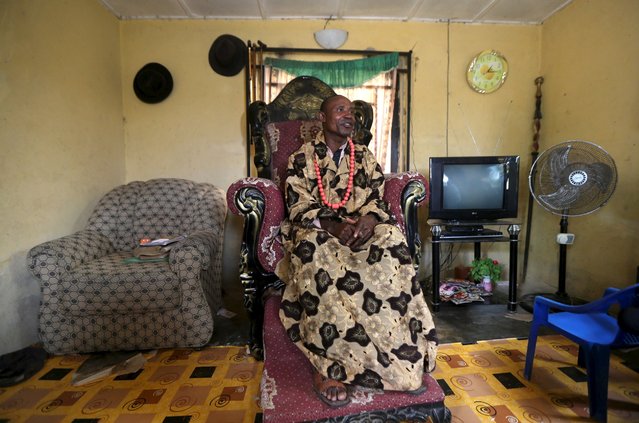
Deputy community chief of Yeneka village Douglas Oguta poses for a portrait in his home on the outskirts of the Bayelsa state capital, Yenagoa, in Nigeria's delta region October 8, 2015. (Photo by Akintunde Akinleye/Reuters)

Deputy community chief of Yeneka village Douglas Oguta poses for a portrait in his home on the outskirts of the Bayelsa state capital, Yenagoa, in Nigeria's delta region October 8, 2015. Tensions are building in the swampland of the Niger Delta as an amnesty that aimed to bring stability to Nigeria's volatile southern region is due to expire at the end of the year. While the region's towns and cities are mostly calm, local residents say kidnappings and armed robberies are on the increase in the mangrove swamps, where most oil wells are located. (Photo by Akintunde Akinleye/Reuters)
Details
17 Oct 2015 08:01:00