Loading...
Done
Mary McHugh mourns her slain fiance Sgt. James Regan at Section 60 of the Arlington National Cemetery

Mary McHugh mourns her slain fiance Sgt. James Regan at “Section 60” of the Arlington National Cemetery May 27, 2007. Regan, a US Army Ranger, was killed by an IED explosion in Iraq. (Photo by John Moore/Getty Images)
Details
22 Oct 2011 09:44:00
An exile Tibetan monk gestures as he makes a point in a dialectics debate with another monk, sitting right, at the Kirti monastery in Dharmsala, India, Monday, January 18, 2016. The debate is an essential part of their training as Buddhist monks. (Photo by Ashwini Bhatia/AP Photo)

An exile Tibetan monk gestures as he makes a point in a dialectics debate with another monk, sitting right, at the Kirti monastery in Dharmsala, India, Monday, January 18, 2016. The debate is an essential part of their training as Buddhist monks. (Photo by Ashwini Bhatia/AP Photo)
Details
19 Jan 2016 13:45:00
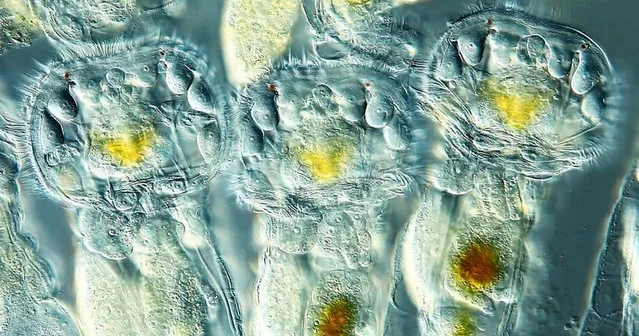
Olympus BioScapes Digital Imaging Competition 2012

Microscope images forge an extraordinary bond between science and art, said Hidenao Tsuchiya, Olympus America's Vice President and General Manager for the Scientific Equipment Group. We founded this competition to focus on the fascinating stories coming out of today's life science research laboratories. The thousands of images that people have shared with the competition over the years reflect some of the most exciting work going on in research today – work that can help shed light on the living universe and ultimately save lives. We look at BioScapes and these beautiful images as sources of education and inspiration to us and the world
Details
23 Dec 2012 15:57:00
2016 Rio Olympics, Judo, Final, Women, 48 kg Bronze Medal Contests, Carioca Arena 2, Rio de Janeiro, Brazil on August 6, 2016. Otgontsetseg Galbadrakh (KAZ) of Kazakhstan and Dayaris Mestre Alvarez (CUB) of Cuba react. (Photo by Kai Pfaffenbach/Reuters)

2016 Rio Olympics, Judo, Final, Women, 48 kg Bronze Medal Contests, Carioca Arena 2, Rio de Janeiro, Brazil on August 6, 2016. Otgontsetseg Galbadrakh (KAZ) of Kazakhstan and Dayaris Mestre Alvarez (CUB) of Cuba react. (Photo by Kai Pfaffenbach/Reuters)
Details
07 Aug 2016 09:37:00
Playboy Bunnies pose for a selfie at the premiere of “The Transporter Refueled” at Playboy Mansion in Los Angeles, California August 25, 2015. The movie opens in the U.S. on September 4. (Photo by Mario Anzuoni/Reuters)

Playboy Bunnies pose for a selfie at the premiere of “The Transporter Refueled” at Playboy Mansion in Los Angeles, California August 25, 2015. The movie opens in the U.S. on September 4. (Photo by Mario Anzuoni/Reuters)
Details
27 Aug 2015 12:17:00
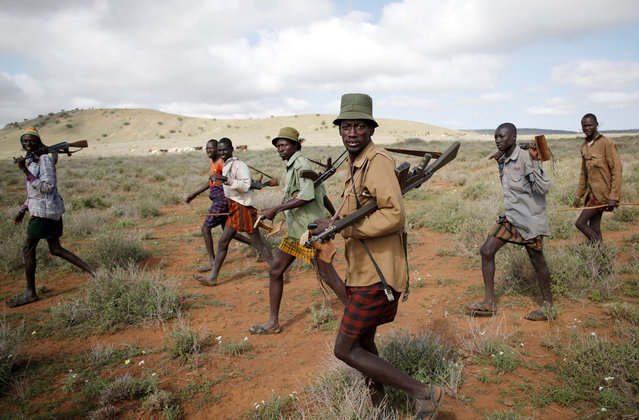
Turkana tribesmen walk with guns to protect their cattle from rival tribes near Baragoy, Kenya August 4, 2017. (Photo by Goran Tomasevic/Reuters)

Turkana tribesmen walk with guns to protect their cattle from rival tribes near Baragoy, Kenya August 4, 2017. (Photo by Goran Tomasevic/Reuters)
Details
05 Aug 2017 08:40:00
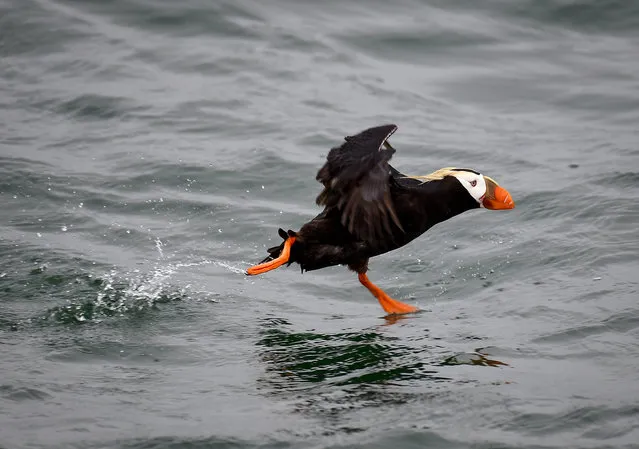
A tufted puffin is seen in Kamchatka Territory, Russia on July 17, 2018. (Photo by Yuri Smityuk/TASS)

A tufted puffin is seen in Kamchatka Territory, Russia on July 17, 2018. (Photo by Yuri Smityuk/TASS)
Details
29 Jul 2018 00:03:00
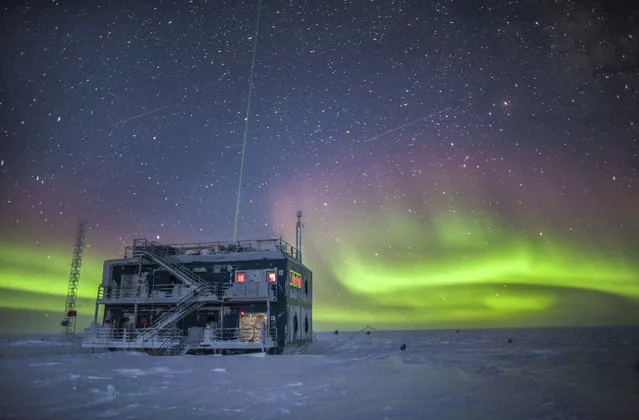
This undated photo provided by NOAA in May 2018 shows aurora australis near the South Pole Atmospheric Research Observatory in Antarctica. When a hole in the ozone formed over Antarctica, countries around the world in 1987 agreed to phase out several types of ozone-depleting chemicals called chlorofluorocarbons (CFCs). Production was banned, emissions fell and the hole shriveled. But according to a study released on Wednesday, May 16, 2018, scientists say since 2013, there’s more of a banned CFC going into the atmosphere. (Photo by Patrick Cullis/NOAA via AP Photo)

This undated photo provided by NOAA in May 2018 shows aurora australis near the South Pole Atmospheric Research Observatory in Antarctica. When a hole in the ozone formed over Antarctica, countries around the world in 1987 agreed to phase out several types of ozone-depleting chemicals called chlorofluorocarbons (CFCs). Production was banned, emissions fell and the hole shriveled. But according to a study released on Wednesday, May 16, 2018, scientists say since 2013, there’s more of a banned CFC going into the atmosphere. (Photo by Patrick Cullis/NOAA via AP Photo)
Details
15 Aug 2018 00:05:00