Loading...
Done
Heterochromia in Animals: Pets With Different Colored Eyes

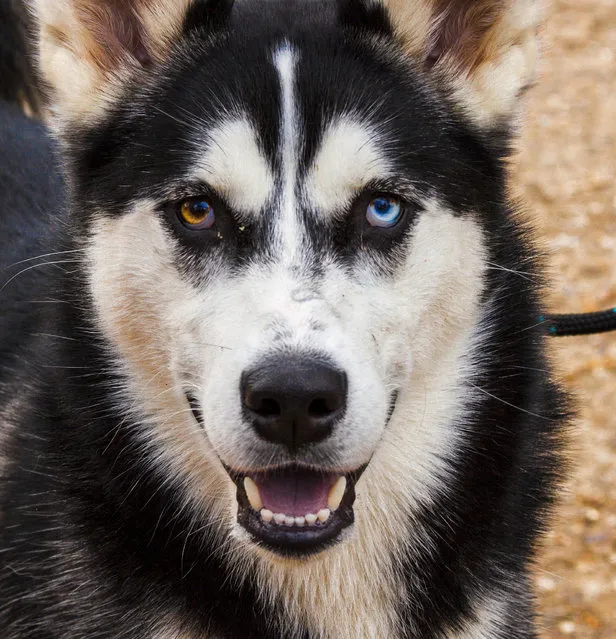
“In anatomy, heterochromia refers to a difference in coloration, usually of the iris (but also of hair or skin). Although infrequently seen in humans, complete heterochromia is more frequently observed in other species, where it almost always involves one blue eye”. – Wikipedia (Photo by StooMathiesen)
Details
24 Jun 2012 12:47:00
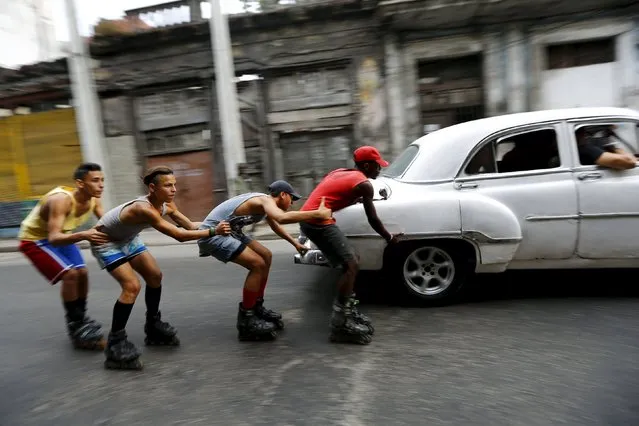
Teenagers on roller skates hold on to each other as they are pulled by a vintage car to move along a street in Havana, Cuba March 19, 2016. (Photo by Ivan Alvarado/Reuters)

Teenagers on roller skates hold on to each other as they are pulled by a vintage car to move along a street in Havana, Cuba March 19, 2016. (Photo by Ivan Alvarado/Reuters)
Details
21 Mar 2016 12:26:00
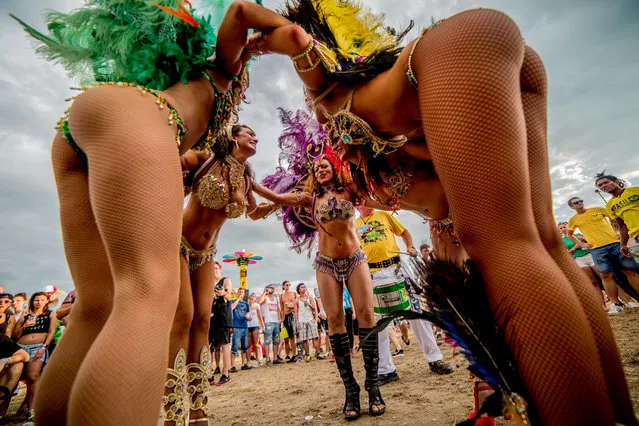
Festival goers having fun at the Balaton Sound music festival in Zamardi next to the Lake of Balaton, 110 km (68 miles) west of Budapest, July 8, 2017. (Photo by Sandor Csudai)

Festival goers having fun at the Balaton Sound music festival in Zamardi next to the Lake of Balaton, 110 km (68 miles) west of Budapest, July 8, 2017. (Photo by Sandor Csudai)
Details
09 Jul 2017 07:55:00
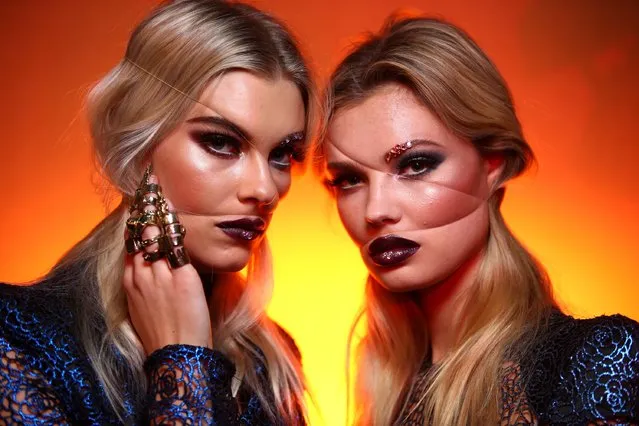
Models pose backstage ahead of the Zhivago show at Mercedes-Benz Fashion Week Resort 17 Collections at Carriageworks on May 16, 2016 in Sydney, Australia. (Photo by Mark Nolan/Getty Images)

Models pose backstage ahead of the Zhivago show at Mercedes-Benz Fashion Week Resort 17 Collections at Carriageworks on May 16, 2016 in Sydney, Australia. (Photo by Mark Nolan/Getty Images)
Details
17 May 2016 12:58:00
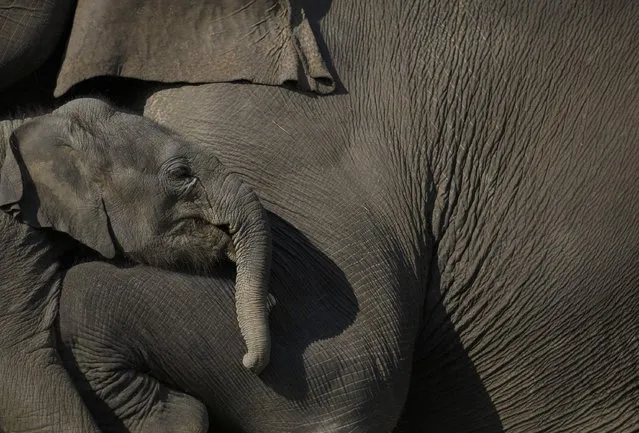
A one and a half months old baby elephant stands close to its mother at Chitwan National Park in Chitwan, south of Kathmandu December 30, 2014. (Photo by Navesh Chitrakar/Reuters)

A one and a half months old baby elephant stands close to its mother at Chitwan National Park in Chitwan, south of Kathmandu December 30, 2014. (Photo by Navesh Chitrakar/Reuters)
Details
01 Jan 2015 13:45:00
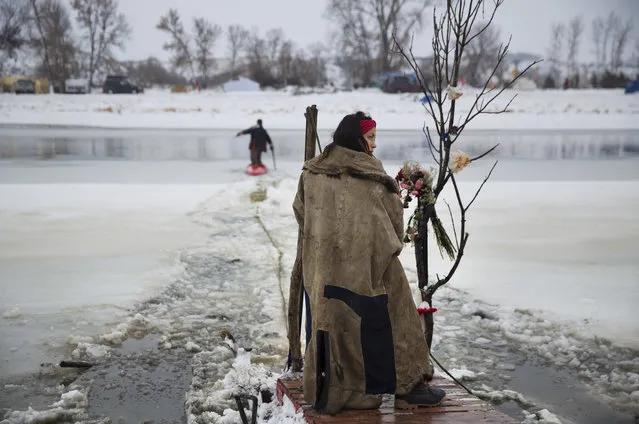
In this Thursday, December 1, 2016 photo, Cat Bigney, part of the Oglala Native American tribe, waits on the shore of the Cannonball river for travelers to arrive by canoe at the Oceti Sakowin camp where people have gathered to protest the Dakota Access oil pipeline in Cannon Ball, N.D. So far, those at the camp have shrugged off the heavy snow, icy winds and frigid temperatures. But if they defy next week's government deadline to abandon the camp, demonstrators know the real deep freeze lies ahead. Life-threatening wind chills and towering snow drifts could mean the greatest challenge is simple survival. (Photo by David Goldman/AP Photo)

In this Thursday, December 1, 2016 photo, Cat Bigney, part of the Oglala Native American tribe, waits on the shore of the Cannonball river for travelers to arrive by canoe at the Oceti Sakowin camp where people have gathered to protest the Dakota Access oil pipeline in Cannon Ball, N.D. So far, those at the camp have shrugged off the heavy snow, icy winds and frigid temperatures. But if they defy next week's government deadline to abandon the camp, demonstrators know the real deep freeze lies ahead. Life-threatening wind chills and towering snow drifts could mean the greatest challenge is simple survival. (Photo by David Goldman/AP Photo)
Details
06 Dec 2016 10:22:00
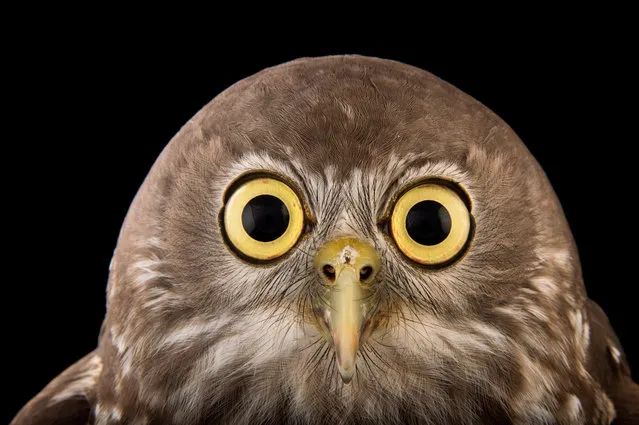
The National Geographic Photo Ark is a travelling exhibition of photographer Joel Sartore’s quest to create a photo archive of biodiversity around the world. So far, Sartore has captured studio portraits of more than 6,000 species – a number that he hopes to double. On 1 July, the ark will open at Melbourne zoo – the first time it has been exhibited in the southern hemisphere. More than 50 portraits will be on display, including many of Australian endangered animals being protected by programs at the zoo itself. These captions have been edited from text supplied by Melbourne zoo. Here: Barking owl. So-named because its call sounds like a barking dog, these birds are native to Australia, Indonesia and Papua New Guinea. In Victoria they are listed as an endangered species, and in 2003 there were estimated to be fewer than 50 breeding pairs. The main threat to the species in Victoria is loss of habitat, especially large trees with hollows in which they can nest and on which many of their prey depend. Apart from a bark, they may utter a chilling scream when they feel threatened. (Photo by Joel Sartore/National Geographic Photo Ark/The Guardian)

The National Geographic Photo Ark is a travelling exhibition of photographer Joel Sartore’s quest to create a photo archive of biodiversity around the world. So far, Sartore has captured studio portraits of more than 6,000 species – a number that he hopes to double. On 1 July, the ark will open at Melbourne zoo – the first time it has been exhibited in the southern hemisphere. More than 50 portraits will be on display, including many of Australian endangered animals being protected by programs at the zoo itself. These captions have been edited from text supplied by Melbourne zoo. Here: Barking owl. (Photo by Joel Sartore/National Geographic Photo Ark/The Guardian)
Details
01 Jul 2017 07:45:00
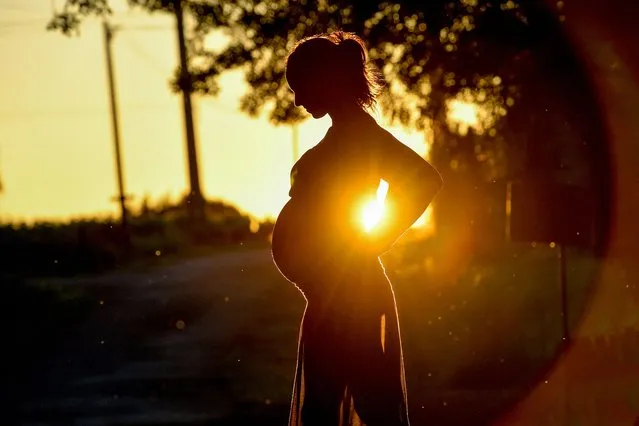
A pregnant woman poses on June 19, 2018 in Vertou, western France. France had an estimated population of 68.4 million by January 1, 2024, representing a further year-on-year increase of 0.3 percent, limited by a marked drop in the birth rate, the INSEE national statistics bureau of France reported on January 16, 2024. In 2023, 678,000 babies were born in France, 6.6 percent fewer than the previous year, the lowest number of births in any year since 1946. Over the same period, there were 631,000 deaths, down 6.5 percent on 2022, a year marked by the consequences of the Covid-19 pandemic and episodes of extreme heat. (Photo by Loic Venance/AFP Photo)

A pregnant woman poses on June 19, 2018 in Vertou, western France. France had an estimated population of 68.4 million by January 1, 2024, representing a further year-on-year increase of 0.3 percent, limited by a marked drop in the birth rate, the INSEE national statistics bureau of France reported on January 16, 2024. In 2023, 678,000 babies were born in France, 6.6 percent fewer than the previous year, the lowest number of births in any year since 1946. Over the same period, there were 631,000 deaths, down 6.5 percent on 2022, a year marked by the consequences of the Covid-19 pandemic and episodes of extreme heat. (Photo by Loic Venance/AFP Photo)
Details
27 Feb 2024 07:29:00