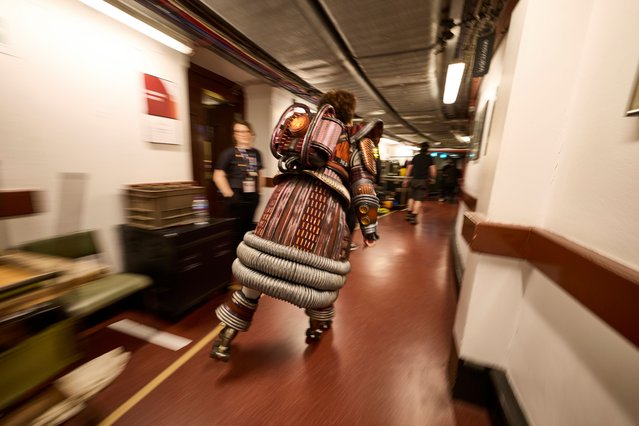
Jade Marvin from Starlight Express gets her skates on for a special number at The Olivier Awards 2025 at The Royal Albert Hall on April 06, 2025 in London, England. (Photo by David Levene/The Guardian)
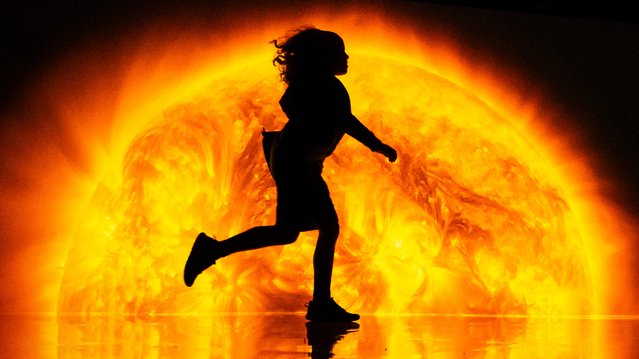
A child explores the ancestry in the stars exhibit that forms part of YOU:MATTER, after the cutting-edge experience opened at the National Science and Media Museum in Bradford, UK on Friday, April 11, 2025. (Photo by Danny Lawson/PA Images via Getty Images)
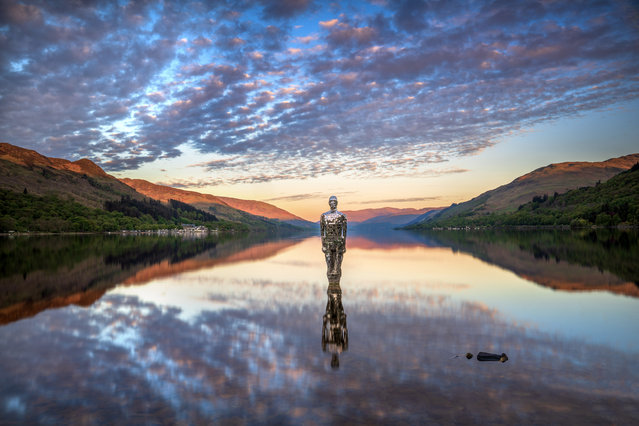
“Still” also known as the “Mirror Man”, created by artist Rob Mulholland which symbolises the physical and spiritual relationship between humans and the natural world, has returned to Loch Earn in St. Fillans on May 9, 2025 after being removed in 2017 due to storm damage. (Photo by Lesley Martin)
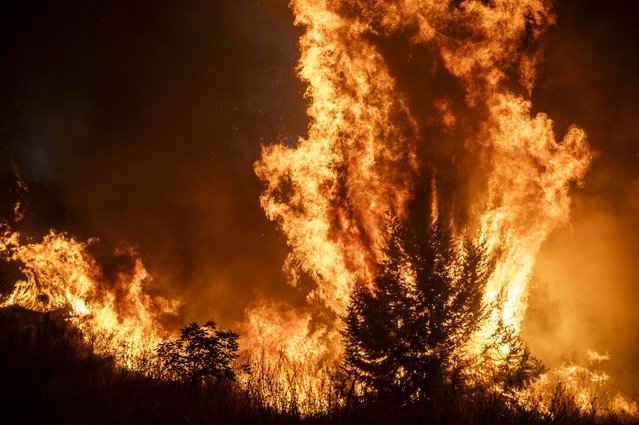
Fire ravages vegetation during the Cerro de los Pinos wildfire on August 04, 2025 in Cáceres, Spain. Firefighters from Cáceres and INFOEX forest firefighters are battling fires, as high temperatures continue to put the Extremadura region at extreme risk of further wildfires. (Photo by Carlos Gil Andreu/Getty Images)
A French bulldog named Rocket takes part in the annual Surf Dog Surf-A-Thon in Del Mar, California, on Sunday, September 7, 2025. (Photo by K.C. Alfred/The San Diego Union-Tribune/Getty Images)
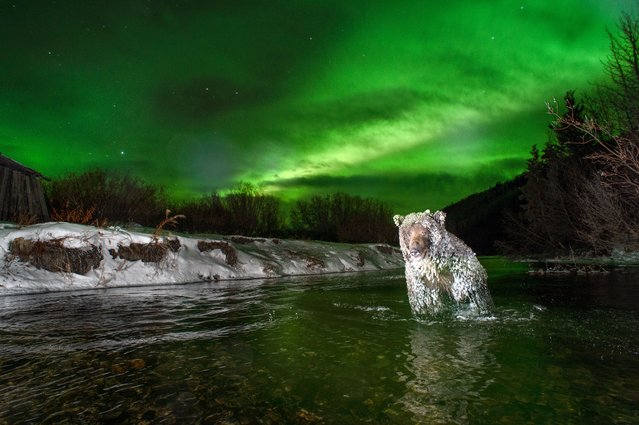
A grizzly bear fishes for salmon under the Northern Lights in Klukshu, Yukon, in the north of Canada on March 3, 2025. The bear makes use of the darkness because the salmon can't see well enough to swim away. (Photo by Peter Mather/Solent News & Photo Agency)
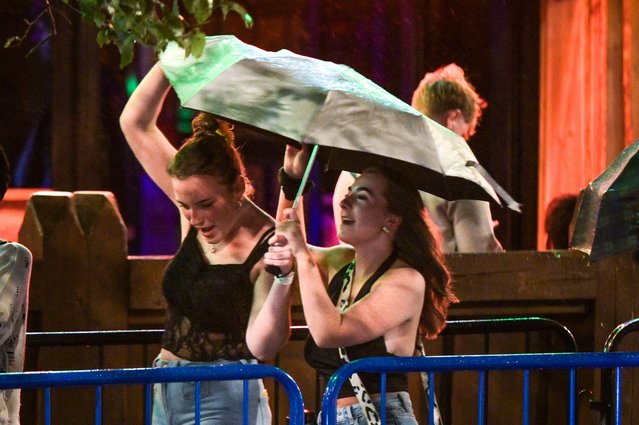
Revellers battled against 40mph winds and driving rain to get to nightclubs in Birmingham city centre on September 21, 2025. The Met Office released a yellow weather warning for strong wind and heavy rain overnight across much of England and Wales. The partygoers used their coats and umbrellas to shelter from the barmy conditions. (Photo by British News and Media/Alamy Live News)
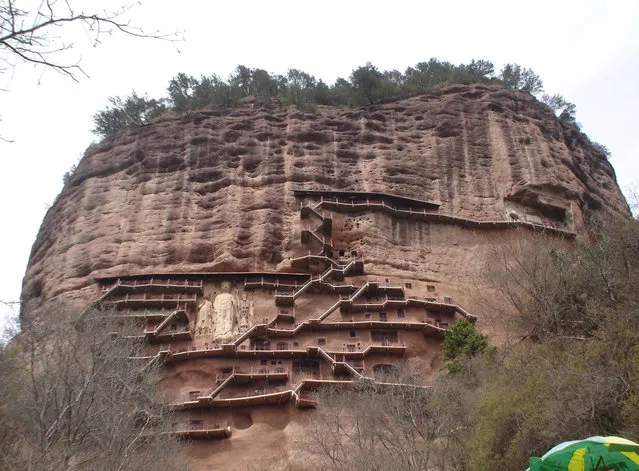
The Maijishan Grottoes are a series of 194 caves cut in the side of the hill of Majishan in Tianshui, Gansu Province, northwest China. This example of rock cut architecture contains over 7,200 Buddhist sculptures and over 1,000 square meters of murals. Construction began in the Later Qin era (384-417 CE).