Loading...
Done


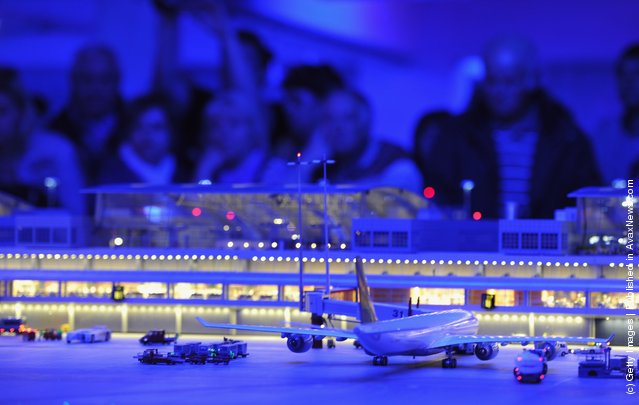
The public get the first view at the opening of the new miniature model Knuffingen Aiport at Miniatur Wunderland on the airport's opening day on May 4, 2011 in Hamburg, Germany. Miniatur Wunderland is the world's largest model railroad landscape, and the model airport, also the world’s largest, goes into operation following 6 years of development and construction and an investment of EUR 3.5 million. The airport is a reproduction of Hamburg’s international airport and includes 40 aircraft that take off and land and 90 vehicles that autonomously move around the runways on May 4, 2011 in Hamburg, Germany. (Photo by Stuart Franklin/Getty Images)
Details
04 May 2011 13:07:00


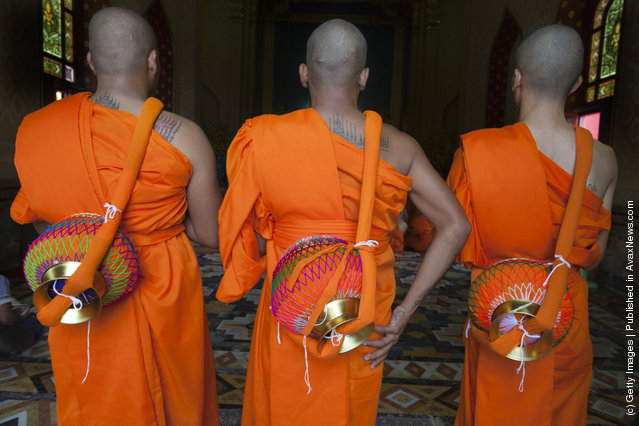
Thai military officers dressed in traditional orange monk robes arrive to attend their official ordination ceremony on July 13, 2011 at the Benchamabopit temple, also known as Marble temple, in Bangkok, Thailand. Eighty four of the military officers were ordinated into the Buddhist community over two days, taking leave of absence from their jobs in the Army for three months during the Buddhist lent period. July 16 will mark the first day of the yearly three-month retreat of Buddhist monks where they will practice meditation in temples and study dharma. (Photo by Paula Bronstein /Getty Images)
Details
14 Jul 2011 09:36:00
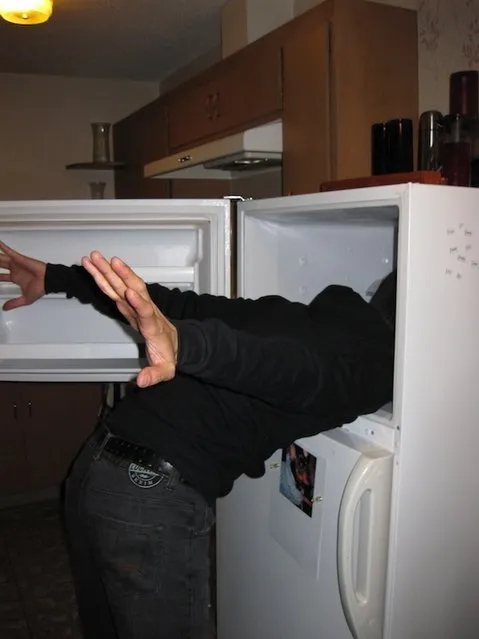
241543903 Heads In Freezer Part 2

241543903 (a.k.a “Heads in Freezers”) is a numerical keyword associated with a photo meme that involves people taking pictures with their heads in the freezer & sharing them online. By tagging a series of image files with a cryptic number, a high level of search engine optimization can be easily achieved. As a result, typing “241543903” into image search engines like Google Images successfully yields pages after pages of pictures showing people’s heads in freezers.
In 2009, David Horvitz started the “Heads in Freezers” meme. Participants took photos of their heads in freezers, tagged them with “241543903” and uploaded them to social media sites like Tumblr.
Details
12 Mar 2014 10:32:00
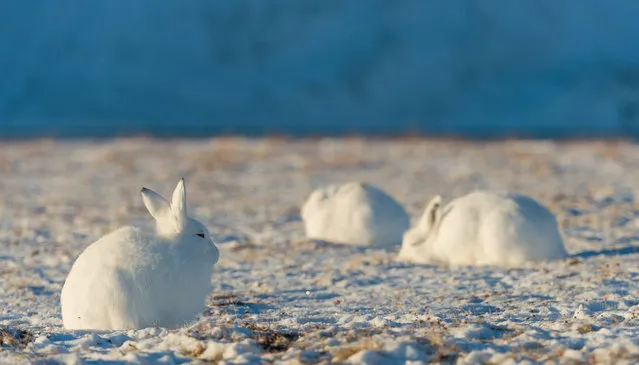
Arctic Hare

The arctic hare, or polar rabbit, is a species of hare which is adapted largely to polar and mountainous habitats. The arctic hare survives with a thick coat of fur and usually digs holes in the ground or under snow to keep warm and sleep. Arctic hares look like rabbits but have shorter ears, are taller when standing, and, unlike rabbits, can thrive in cold climates. They can travel together with many other hares, sometimes huddling with dozens or more, but are usually found alone, taking, in some cases, more than one partner. The arctic hare can run up to 60 kilometres per hour (40 mph). Its predators include the arctic wolf, arctic fox, and ermine.
Details
17 Mar 2014 13:56:00
Rural Daily Life in Radicondoli by Photographer Marco Sgarbi Part 2

For the past 20 years,Marco has divided his time photographing, traveling, and living between italy and France. He regularly participates in workshops in Paris. Sharpening his technical skills and learning to take risks. He has been investigating various photographic styles, including macro-photography of precious stones and insects, portraits and weddings. All of these subjects have given him the opportunity to bring his love for the medium into areas which challenges his capacity to be creative.


See also: Part 1

Details
22 Jun 2014 12:51:00
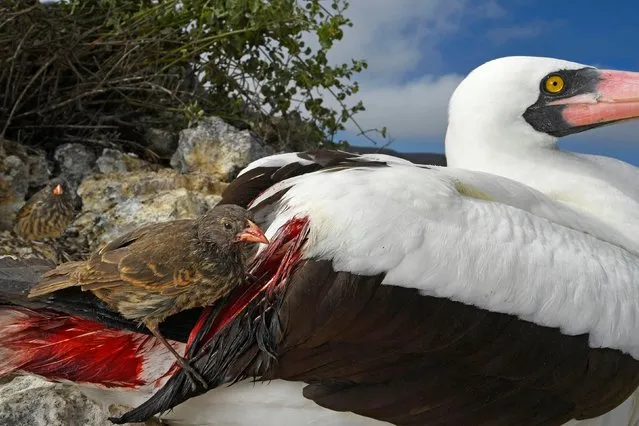
Bloodthirsty by Thomas P Peschak, Germany/South Africa — winner, Behaviour: birds. When rations run short on Wolf Island, in the remote northern Galápagos, the sharp-beaked ground finches become vampires. Their sitting targets are Nazca boobies and other large birds. The finches rely on a scant diet of seeds and insects, which regularly dries up, so they drink blood to survive. ‘I’ve seen more than half a dozen finches drinking from a single Nazca booby,’ says Tom. Rather than leave their nests the boobies tolerate the vampires, and the blood loss doesn’t seem to cause permanent harm. (Photo by Thomas P Peschak/2018 Wildlife Photographer of the Year)

Bloodthirsty by Thomas P. Peschak, Germany/South Africa — winner, Behaviour: birds. When rations run short on Wolf Island, in the remote northern Galápagos, the sharp-beaked ground finches become vampires. Their sitting targets are Nazca boobies and other large birds. The finches rely on a scant diet of seeds and insects, which regularly dries up, so they drink blood to survive. ‘I’ve seen more than half a dozen finches drinking from a single Nazca booby,’ says Tom. Rather than leave their nests the boobies tolerate the vampires, and the blood loss doesn’t seem to cause permanent harm. (Photo by Thomas P. Peschak/2018 Wildlife Photographer of the Year)
Details
19 Oct 2018 00:05:00
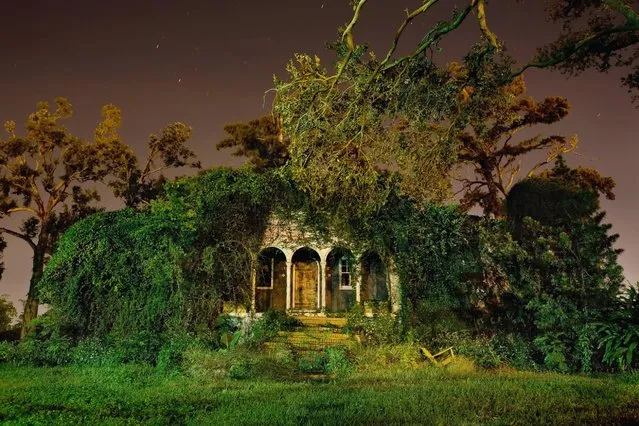
“Telemachus”. Farragut Street, New Orleans, La. Nov. 2006. (Photo by Frank Relle)

Photographer Frank Relle takes long-exposure images of houses in New Orleans. Says Relle, “The city at night comes alive for me. I imagine stories about the people’s lives inside the homes based on the evidence on the outside. My photographs become a portrait without the person. The night obscures details and the lack of information gives possibility”. Photo: “Telemachus”. Farragut Street, New Orleans, La. Nov. 2006. (Photo by Frank Relle)
Details
13 May 2014 08:59:00
Redhead Day Dutch Summer Festival

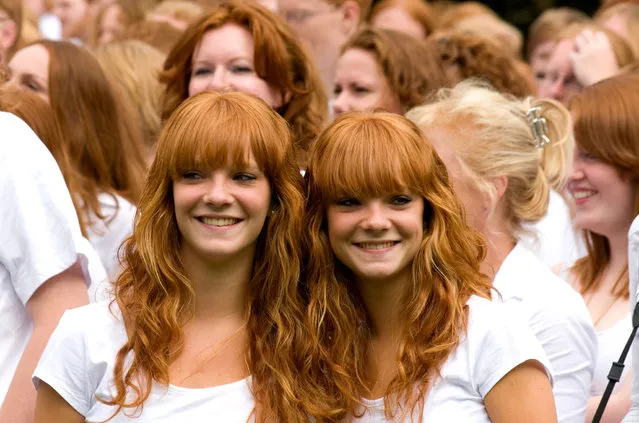
Redhead Day (Roodharigendag in Dutch) is the name of a Dutch summer festival that takes place each first weekend of September in the city of Breda, in the Netherlands. The two-day festival is a gathering of people with natural red hair, but is also focused on art related to the colour red. Activities during the festival are lectures, workshops and demonstrations which are aimed specifically at red-haired people. The festival attracts attendance from 50 countries and is free due to sponsorship of the local government.
Details
16 Jul 2014 12:58:00