Loading...
Done
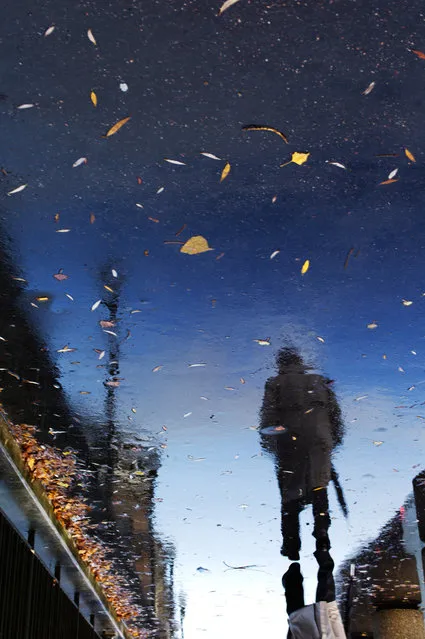
“Reflets” Project by Manuel Plantin aka Yodamanu

“In a nutshell and to prevent my english readers from experiencing eye bleeding after having read too many syntax errors, I’m a french journalist – I work as an editor, not as photographer – who happens to be nuts about photography. Being the happy owner of too many Leica M for a man to shoot, I spend most of my free time shooting my friend and my town, Strasbourg, in b&w and sometimes in colors”. – Manuel Plantin

Photo: “Even detectives got the blues”. Strasbourg, 2011 (Photo by Manuel Plantin)
Details
18 Dec 2012 10:28:00
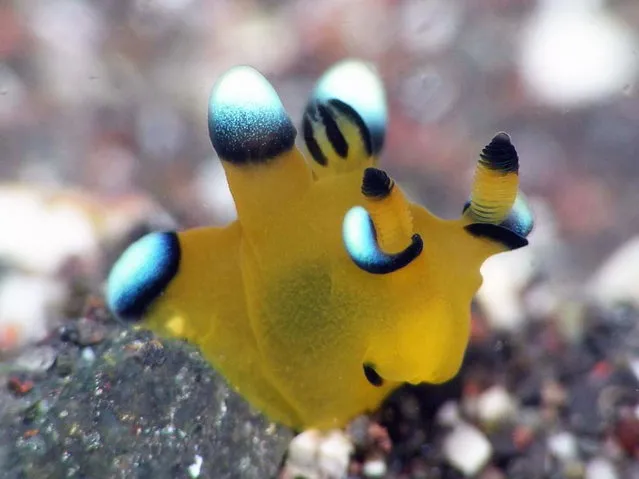
Thecacera Pacifica AKA Pikachu

If you ever wanted to meet a live Pikachu, you might have a hard time finding one. However, there is a creature on this Earth that kind of looks like one. That creature’s name is Thecacera pacifica and it is a species of a sea slug. These little critters can be found in the Indian Ocean from African coast to Indonesia and Vanuatu. Their vibrant orange and blue colors look gorgeous, making it look like some sort of anemone. Also, as you might have guessed from the striking colors of the sea slug, just like most of anemones, this creature is very toxic. Thus, keeping it as a pet isn’t an option.

Details
19 Dec 2014 12:51:00
Portraits Of The Double-Faced Girl By Sebastian Bieniek

Berlin-based artist Sebastian Bieniek unfolds the story of a two-faced female in his series of photographs “doublefaced”. Using an eye pencil and lipstick, bieniek simply draws an image of a face onto the side of skin. The sketch includes only one eye: carefully placed hair hides the rest of the face from view, revealing one, moving eye of the model. Blue, brown, awake, and sleeping variations create portraits with unique expressions and an illustrative sensibility. The 22 photographs of the hybrid girl expose her daily routine – drinking coffee, traveling on the train, taking a shower, and smoking cigarettes – capturing the daily life of a female with two faces.
Details
05 Jul 2015 08:07:00
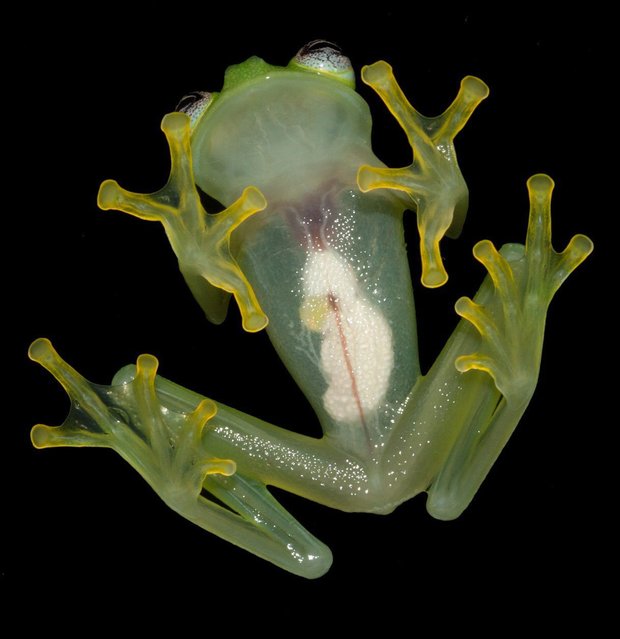
A handout photograph provided by Brian Kubicki of Costa Rican Amphibian Research Center on 26 April 2016 shows a “Crystal frog”, Hyalinobatrachium dianae (H. diane). This frog was discovered by US biologist Brian Kubicki and Costa Ricans Stanley Salazar and Robert Puschendorf in a rainy forest of Costa Rican caribbean after 40 years without notice of any new example of this kind. (Photo by Brian Kubicki/EPA/Costa Rican Amphibian Research Center)

A handout photograph provided by Brian Kubicki of Costa Rican Amphibian Research Center on 26 April 2016 shows a “Crystal frog”, Hyalinobatrachium dianae (H. diane). This frog was discovered by US biologist Brian Kubicki and Costa Ricans Stanley Salazar and Robert Puschendorf in a rainy forest of Costa Rican caribbean after 40 years without notice of any new example of this kind. (Photo by Brian Kubicki/EPA/Costa Rican Amphibian Research Center)
Details
02 May 2015 15:23:00
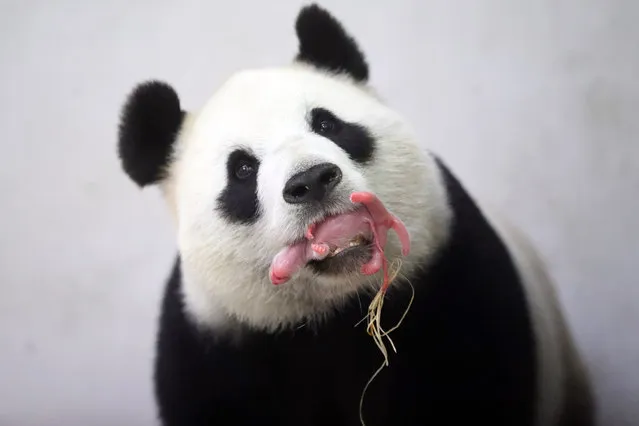
In this image provided by the Pairi Daiza park, giant panda Hao Hao holds her newborn baby in her mouth at the park in Brugelette, Belgium, on Thursday, June 2, 2016. With the help of the Chinese government Hao Hao and her mate Xing Hui arrived in Belgium two years ago and Pairi Daiza adapted its park to build a bamboo forest for them. (Photo by Benoit Bouchez/Pairi Daiza via AP Photo)

In this image provided by the Pairi Daiza park, giant panda Hao Hao holds her newborn baby in her mouth at the park in Brugelette, Belgium, on Thursday, June 2, 2016. With the help of the Chinese government Hao Hao and her mate Xing Hui arrived in Belgium two years ago and Pairi Daiza adapted its park to build a bamboo forest for them. (Photo by Benoit Bouchez/Pairi Daiza via AP Photo)
Details
03 Jun 2016 12:35:00
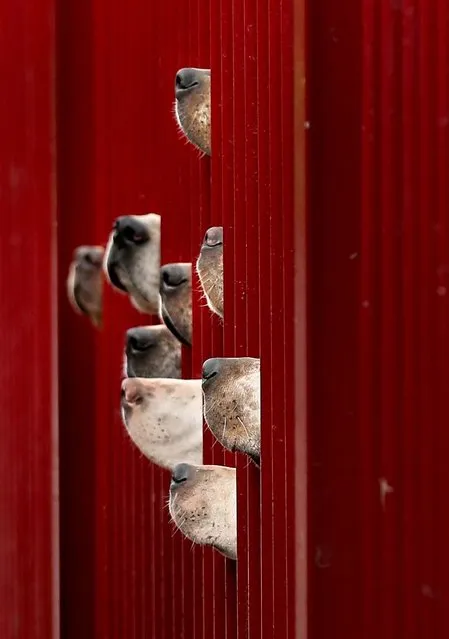
Hounds of The Cheshire Forest Hunt push their snouts through the bars of their kennels as they eagerly await their morning walk in preparation for the start of the new hunting season, in Knutsford, England, on Oktober 31, 2013. The hunting season traditionally starts around November 1st. Although a ban on hunting has been in force since February 2005, many supporters of fox hunting are continuing to call for a repeal of the ban, saying the current law is hard to interpret and enforce.  (Photo by Christopher Furlong/Getty Images)

Hounds of The Cheshire Forest Hunt push their snouts through the bars of their kennels as they eagerly await their morning walk in preparation for the start of the new hunting season, in Knutsford, England, on Oktober 31, 2013. The hunting season traditionally starts around November 1st. Although a ban on hunting has been in force since February 2005, many supporters of fox hunting are continuing to call for a repeal of the ban, saying the current law is hard to interpret and enforce. (Photo by Christopher Furlong/Getty Images)
Details
02 Nov 2013 12:34:00
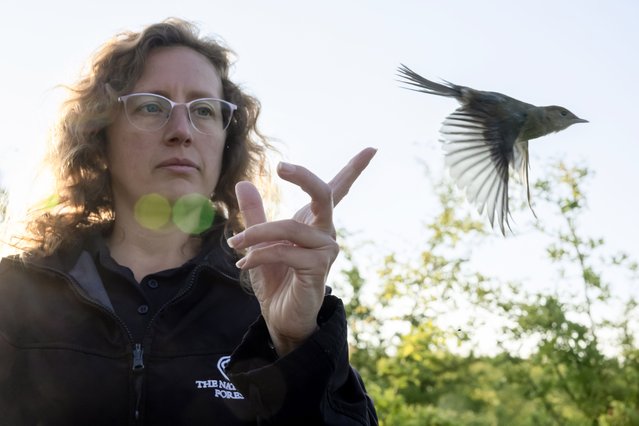
A juvenile blackcap is recorded in the soft light of morning at Minorca, UK, a former open-cast mine near Moira in the National Forest on June 18, 2025. Dr Heather Gilbert, research and evidence manager, checks mist nets among wildflowers and young trees as part of long-term monitoring that shows bird numbers have increased by 48 per cent over 30 years. (Photo by Rod Kirkpatrick/RKP Photography)

A juvenile blackcap is recorded in the soft light of morning at Minorca, UK, a former open-cast mine near Moira in the National Forest on June 18, 2025. Dr Heather Gilbert, research and evidence manager, checks mist nets among wildflowers and young trees as part of long-term monitoring that shows bird numbers have increased by 48 per cent over 30 years. (Photo by Rod Kirkpatrick/RKP Photography)
Details
29 Jun 2025 03:58:00
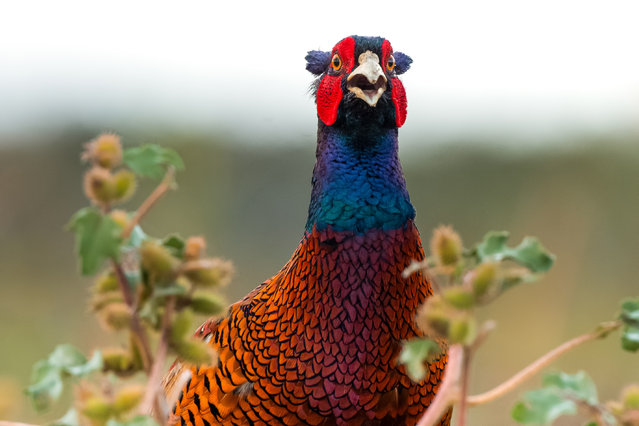
A pheasant is seen among grasses in Bursa, Turkiye on October 07, 2024. Pheasants mostly live in forested areas, thickets and wetlands. Unlike females, male pheasants have a much more remarkable structure with their long tails and feathers in bright and variable colors. Also, they feed on fruits, grains, seeds and invertebrates. (Photo by Alper Tuydes/Anadolu via Getty Images)

A pheasant is seen among grasses in Bursa, Turkiye on October 07, 2024. Pheasants mostly live in forested areas, thickets and wetlands. Unlike females, male pheasants have a much more remarkable structure with their long tails and feathers in bright and variable colors. Also, they feed on fruits, grains, seeds and invertebrates. (Photo by Alper Tuydes/Anadolu via Getty Images)
Details
27 Oct 2024 04:43:00