Loading...
Done
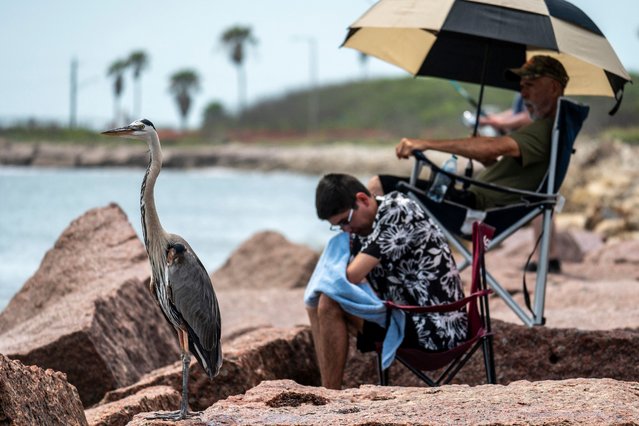
A bird stands near people waiting on South Padre Island to watch the SpaceX Starship rocket launch from Starbase, Texas, on May 27, 2025. SpaceX mission control lost contact with the upper stage of Starship as it leaked fuel, spun out of control, and made an uncontrolled reentry after flying halfway around the world, likely disintegrating over the Indian Ocean, officials said. (Photo by Sergio Flores/AFP Photo)

A bird stands near people waiting on South Padre Island to watch the SpaceX Starship rocket launch from Starbase, Texas, on May 27, 2025. SpaceX mission control lost contact with the upper stage of Starship as it leaked fuel, spun out of control, and made an uncontrolled reentry after flying halfway around the world, likely disintegrating over the Indian Ocean, officials said. (Photo by Sergio Flores/AFP Photo)
Details
17 Jul 2025 03:17:00
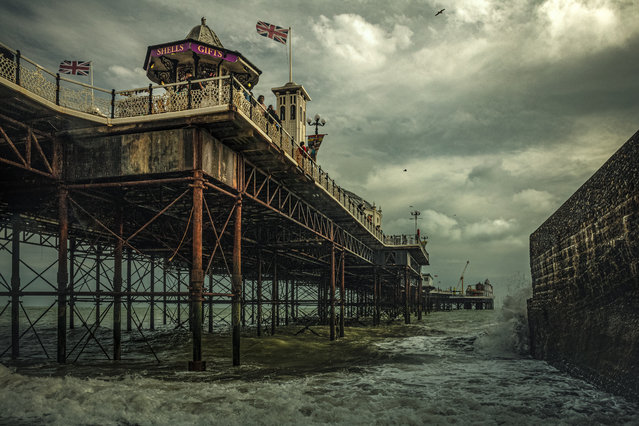
Overall Winner: The Brighton Palace Pier. “Standing in the full force of weather and time: the Brighton Palace Pier. My wife and I have been visiting Brighton for a few years now and I always strive to capture this lovely historic seaside town with a sense of the atmosphere and cinematic interpretation that it instills in me”. (Photo by Michael Marsh/Historic Photographer of the Year 2020)

The winners of the Historic Photographer of the Year Awards 2020 from triphistoric.com celebrate the places and cultural sites around the world that offer a window to the history that exists all around us. This year, restricted by Covid, photographers were called on to scour their photographic archive to share their imagery of those places that dominate our past. Here: The Brighton Palace Pier. (Photo by Michael Marsh/Historic Photographer of the Year 2020)
Details
27 Nov 2020 00:03:00
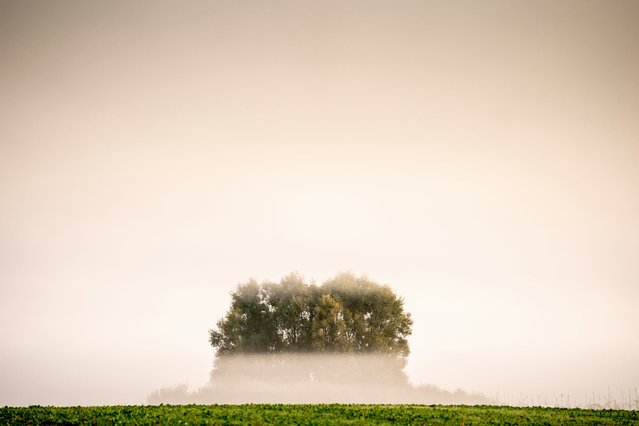
A view of trees shrouded in fog on a late summer morning between Tureby and Slimminge on Zealand, Denmark, 10 September 2021. (Photo by Mads Claus Rasmussen/EPA/EFE)

A view of trees shrouded in fog on a late summer morning between Tureby and Slimminge on Zealand, Denmark, 10 September 2021. (Photo by Mads Claus Rasmussen/EPA/EFE)
Details
12 Nov 2021 08:59:00
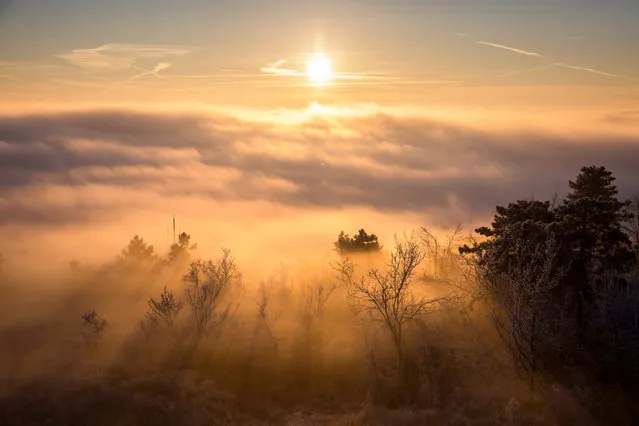
The Sun rises above the forest near Kiskorpad, Hungary, 02 January 2021. (Photo by Gyorgy Varga/EPA/EFE)

The Sun rises above the forest near Kiskorpad, Hungary, 02 January 2021. (Photo by Gyorgy Varga/EPA/EFE)
Details
24 Feb 2021 09:13:00
Rays from the rising sun shine through the foliage of trees as fog covers the ground near the Guckler Karoly Observatory in Budapest, Hungary, 02 January 2017. (Photo by Balazs Mohai/EPA)

Rays from the rising sun shine through the foliage of trees as fog covers the ground near the Guckler Karoly Observatory in Budapest, Hungary, 02 January 2017. (Photo by Balazs Mohai/EPA)
Details
04 Jan 2017 08:15:00
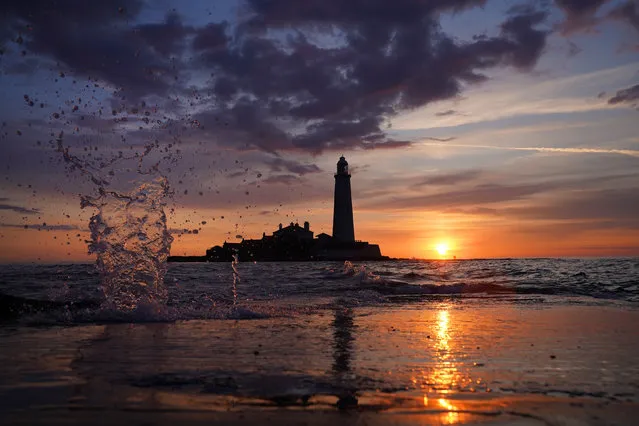
The sunrises at 04.25am at St Mary's Lighthouse in Whitley Bay, on the North East coast of England on Tuesday, June 20, 2023, the day before Summer Solstice – the longest day of the year. (Photo by Owen Humphreys/PA Images via Getty Images)

The sunrises at 04.25am at St Mary's Lighthouse in Whitley Bay, on the North East coast of England on Tuesday, June 20, 2023, the day before Summer Solstice – the longest day of the year. (Photo by Owen Humphreys/PA Images via Getty Images)
Details
16 Sep 2023 02:34:00
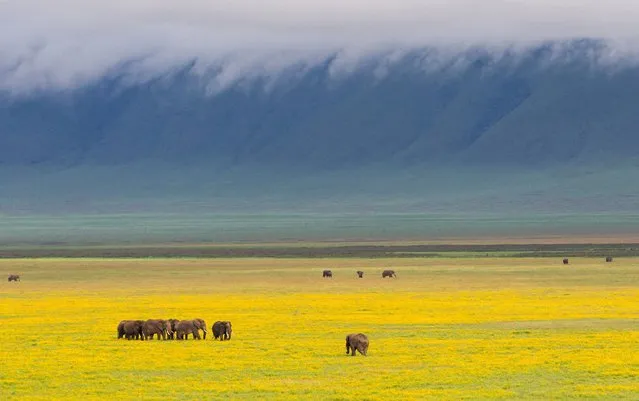
Ngorongoro Crater (Tanzania). At 610m deep and 260 sq km, this is the largest unflooded caldera in the world. A blue-green vision from above it's a haven for engangered wildlife and Maasai livestock. The crater was formed three million years ago when a giant volcano, which could have been as high as Kilimanjaro, exploded and collapsed. The caldera formed the concentric fractures in the crust cracked down to a magma reservoir deep underground. (Photo by John Bryant/Getty Images)

Ngorongoro Crater (Tanzania). At 610m deep and 260 sq km, this is the largest unflooded caldera in the world. A blue-green vision from above it's a haven for engangered wildlife and Maasai livestock. The crater was formed three million years ago when a giant volcano, which could have been as high as Kilimanjaro, exploded and collapsed. The caldera formed the concentric fractures in the crust cracked down to a magma reservoir deep underground. (Photo by John Bryant/Getty Images)
Details
28 Mar 2014 08:08:00
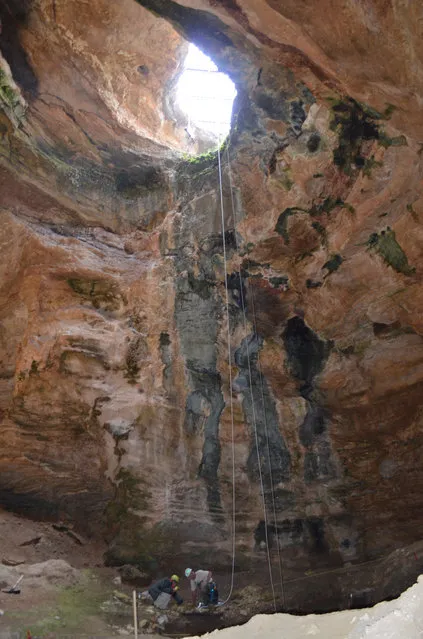
This July 2014 image provided by the Bureau of Land Management shows the interior of the Natural Trap Cave in north-central Wyoming. The cave holds the remains of tens of thousands of animals, including many now-extinct species, from the late Pleistocene period tens of thousands of years ago. Scientists have resumed digging for the first time in more than 30 years. (Photo by AP Photo/Bureau of Land Management)

This July 2014 image provided by the Bureau of Land Management shows the interior of the Natural Trap Cave in north-central Wyoming. The cave holds the remains of tens of thousands of animals, including many now-extinct species, from the late Pleistocene period tens of thousands of years ago. Scientists have resumed digging for the first time in more than 30 years. (Photo by AP Photo/Bureau of Land Management)
Details
10 Aug 2014 10:35:00