Loading...
Done
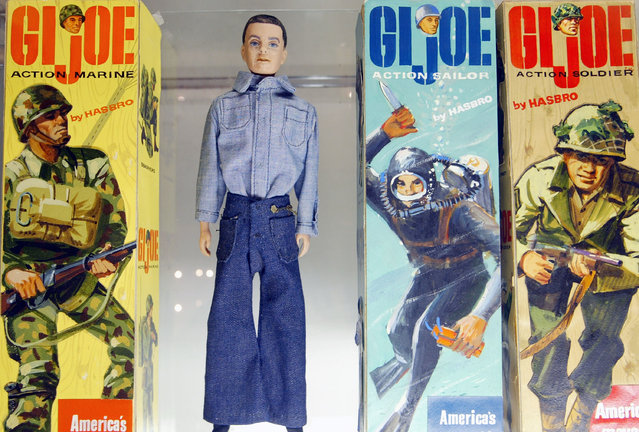
Vintage G.I. Joe figurers are on display at the 2003 Hasbro International G.I. Joe Collectors' Convention June 27, 2003 in Burlingame, California. Hundreds of G.I. Joe fans from around the country are attending the convention to buy, sell and trade G.I. Joe and military action figures. (Photo by Justin Sullivan/Getty Images)

“G.I. Joe is a line of action figures produced by the toy company Hasbro. The term G.I. stands, in popular usage, for Government Issued and after the First World War became a generic term for U.S. soldiers. The origin of the term dates to World War I, when much of the equipment issued to U.S. soldiers was stamped “G.I.”, meaning that it was made from galvanized iron. The development of G.I. Joe led to the coining of the term “action figure”. G.I. Joe's appeal to children has made it an American icon among toys”. – Wikipedia. Photo: Vintage G.I. Joe figurers are on display at the 2003 Hasbro International G.I. Joe Collectors' Convention June 27, 2003 in Burlingame, California. (Photo by Justin Sullivan/Getty Images)
Details
27 Mar 2014 07:46:00
Crew in Britain's first ever full-size reconstructed sea-going Bronze Age boat, paddle out to sea near to the National Maritime Museum as it makes its maiden voyage on March 6, 2013 in Falmouth, England. With a crew of of 18, equipped with Bronze-Age-style wooden paddles, the 15 metre long experimental vessel – a replica of the sort of craft used for long-distance trade between Britain and the continent 4000 years ago – will be used to test prehistoric seafaring methods in a project in collaboration with the University of Exeter and the Falmouth-based National Maritime Museum Cornwall. (Photo by Matt Cardy)

Crew in Britain's first ever full-size reconstructed sea-going Bronze Age boat, paddle out to sea near to the National Maritime Museum as it makes its maiden voyage on March 6, 2013 in Falmouth, England. (Photo by Matt Cardy)
Details
07 Mar 2013 08:48:00
Military Woman Part 3

'Military woman' is a constantly updated gallery of images of women wearing uniform: military, police and so on. We truly hope that our beloved visitors won't remain passive and will take part in this project making it even more interesting! Note that all the images featured in the gallery are taken from publically available sources: their copyright belongs to their respective creators and the trade mark to the owners. ...

See also:Part 1 _ Part 2
Details
11 Mar 2015 10:29:00
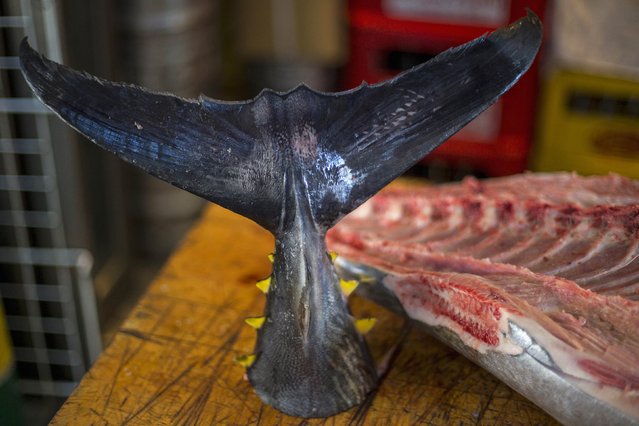
The fin of a tuna is seen on display in the outer part of the Tsukiji fish market, the Jogai Shijo, in Tokyo January 4, 2015. The famous Tsukiji wholesale fish and seafood market, is scheduled to leave its fabled 80-year-old halls to move into bigger, more modern facilities next year ahead of the 2020 Tokyo Olympics. (Photo by Thomas Peter/Reuters)

The fin of a tuna is seen on display in the outer part of the Tsukiji fish market, the Jogai Shijo, in Tokyo January 4, 2015. The famous Tsukiji wholesale fish and seafood market, is scheduled to leave its fabled 80-year-old halls to move into bigger, more modern facilities next year ahead of the 2020 Tokyo Olympics. The outer part of the market, the Jogai Shijo, that caters to the public will stay in its old place, but critics wonder about its chances for survival without the world's biggest fish trading place at its doorsteps. (Photo by Thomas Peter/Reuters)
Details
08 Jan 2015 14:50:00
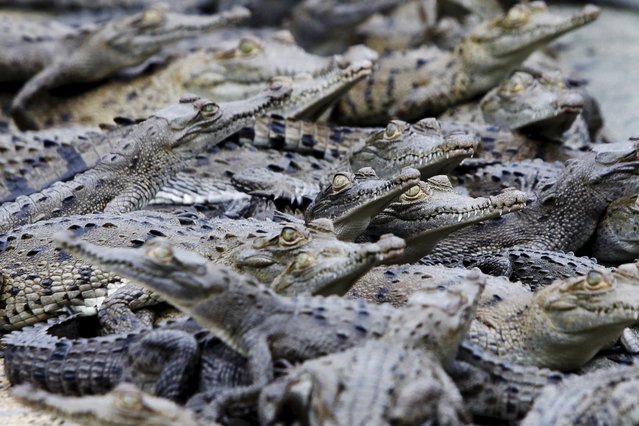
Young acutus crocodile are pictured at Panagator, a sustainable crocodile farm, on the outskirts of Panama City September 11, 2015. Gladys Vallarino, owner of the farm and of a specialty boutique shop selling items made from crocodiles, says the farm looks after more than 19,000 Acutus and Fuscus species of crocodiles and donates five percent of its crocodiles annually to the Panamanian authorities to be put into the wild. (Photo by Carlos Jasso/Reuters)

Young acutus crocodile are pictured at Panagator, a sustainable crocodile farm, on the outskirts of Panama City September 11, 2015. Gladys Vallarino, owner of the farm and of a specialty boutique shop selling items made from crocodiles, says the farm looks after more than 19,000 Acutus and Fuscus species of crocodiles and donates five percent of its crocodiles annually to the Panamanian authorities to be put into the wild, in accordance with the regulations of the CITES (Convention of International Trade in Endangered Species). The handmade fashion items sell for $200 to $3,000. (Photo by Carlos Jasso/Reuters)
Details
13 Sep 2015 13:00:00
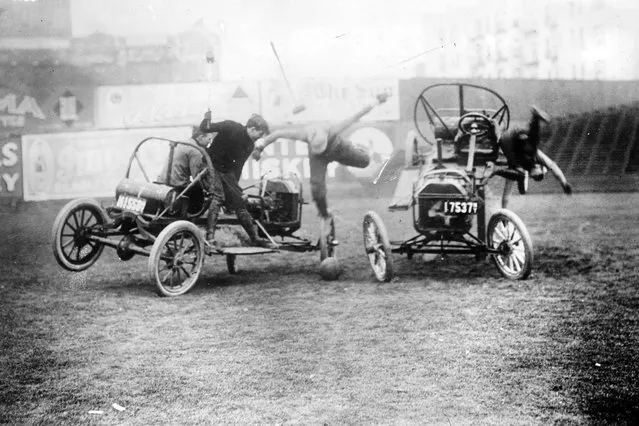
Auto polo, Coney Isl. Between ca. 1910 and ca. 1915. (Photo by George Grantham Bain Collection)

“Automobile polo or Auto polo was a motorsport invented in the United States with rules and equipment similar to equestrian polo but using automobiles instead of horses. The sport was popular at fairs, exhibitions and sports venues across the United States and several areas in Europe from 1911 until the late 1920s; but it was dangerous and carried the risk of injury and death to the participants and spectators”. – Wikipedia. Photo: Auto polo, Coney Isl., between ca. 1910 and ca. 1915. (Photo by George Grantham Bain Collection)

P.S. All pictures are presented in high resolution. To see Hi-Res images – just TWICE click on any picture. In other words, click small picture – opens the BIG picture. Click BIG picture – opens VERY BIG picture (if available; this principle works anywhere on the site AvaxNews).
Details
01 Mar 2013 13:23:00
Two visitors look at an artwork “Home Sweet Home: Pandemic Love 1” created by Hong Kong artist Mak Ying Tung at Art Basel in Hong Kong Wednesday, May 19, 2021. (Photo by Vincent Yu/AP Photo)

Two visitors look at an artwork “Home Sweet Home: Pandemic Love 1” created by Hong Kong artist Mak Ying Tung at Art Basel in Hong Kong Wednesday, May 19, 2021. Art Basel, one of the world's most prestigious modern and contemporary art exhibitions, is returning to Hong Kong in its ninth edition. The prestige art fair is hosting 104 galleries from 23 countries and territories. (Photo by Vincent Yu/AP Photo)
Details
22 May 2021 08:48:00
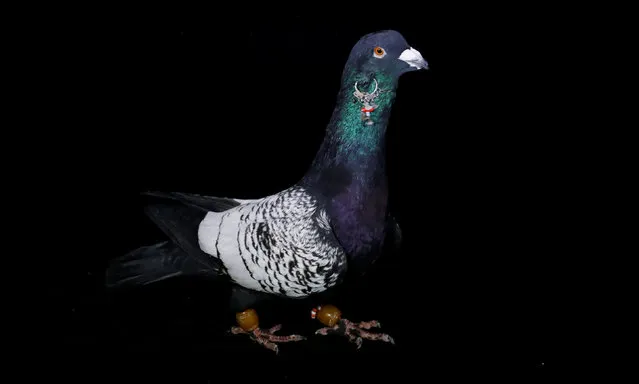
A pigeon, known as Siyah Kinifirli, with an approximate market value of 1000 Turkish Lira ($263), bred by 23-year-old Ismail Ozbek, is pictured in Sanliurfa, Turkey, December 23, 2016. As night-time approaches in Sanliurfa, southeastern Turkey, most of the alleyways of the city's old bazaar are emptying out of buyers and vendors, except for one. The bustle of daytime trading has died down, but on this little street, a stream of men carry cardboard boxes filled with pigeons to a cluster of three teahouses. Here, they sell the birds at Sanliurfa's famed auctions to a dedicated band of pigeon keepers and breeders, a pastime that has been thriving for hundreds of years across the region and over the nearby border into war-torn Syria. In a country where the minimum wage is about 1,400 Liras ($367) a month, enthusiasts regularly easily spend hundreds of dollars for one bird. “I once sold a pair of pigeons for 35,000 Turkish Lira”, says auctioneer Imam Dildas. “This is a passion, a hobby you cannot quit. I've been known to sell the fridge and my wife's gold bracelets to pay for pigeons”. (Photo by Umit Bektas/Reuters)

A pigeon, known as Siyah Kinifirli, with an approximate market value of 1000 Turkish Lira ($263), bred by 23-year-old Ismail Ozbek, is pictured in Sanliurfa, Turkey, December 23, 2016. As night-time approaches in Sanliurfa, southeastern Turkey, most of the alleyways of the city's old bazaar are emptying out of buyers and vendors, except for one. (Photo by Umit Bektas/Reuters)
Details
17 Jan 2017 12:05:00