A girl looks on at a diver dressed as Santa Claus performing during a promotional event for Christmas in Seoul, South Korea on December 3, 2021. (Photo by Kim Hong-Ji/Reuters)
Members of team China perform during the Artistic Swimming Team Free Final at the FINA Swimming World Championships in Gwangju, South Korea, 19 July 2019. (Photo by Antonio Bat/EPA/EFE/Rex Features/Shutterstock)
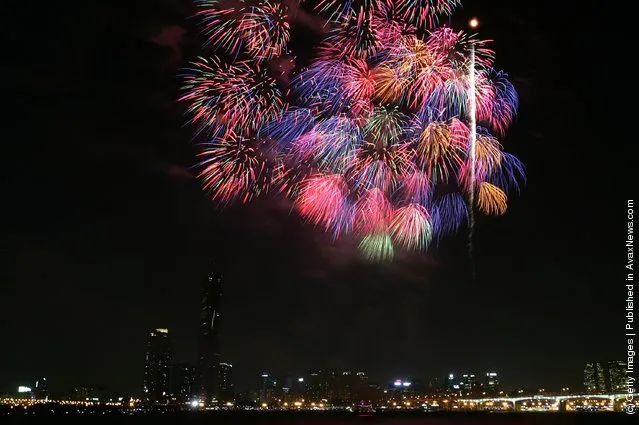
Fireworks illuminate the sky over downtown Seoul during the International fireworks festival 2007 at Han River on October 13, 2007 in Seoul, South Korea. The United States, Japan and South Korea have team was attending the festival. (Photo by Chung Sung-Jun/Getty Images)
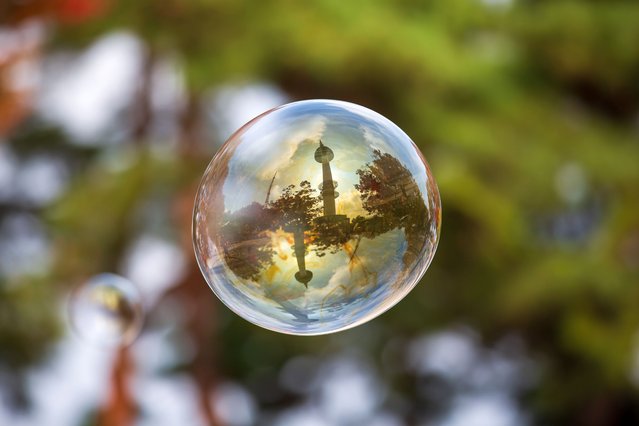
This photo taken on October 23, 2022 shows a soap bubble reflecting the Namsan Seoul Tower at Namsan Park in Seoul, South Korea. (Photo by Xinhua News Agency/Rex Features/Shutterstock)
“We've reached 40km.” – Participants run at the 40km mark of the 2025 Chosun Ilbo Chuncheon Marathon, held in Chuncheon, Gangwon Province, South Korea on the afternoon of the October 26, 2025. (Photo by Park Seong-won)
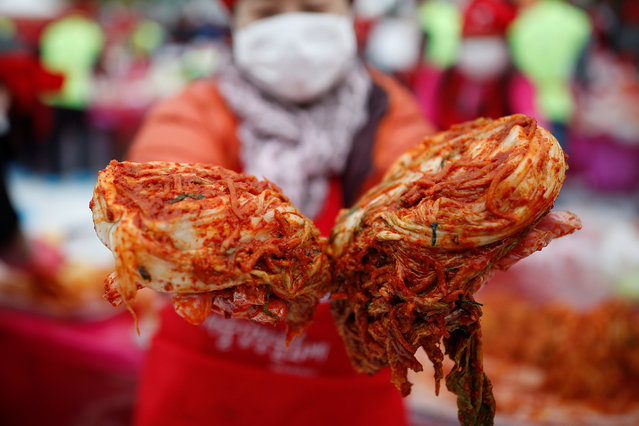
A woman poses for photographs with traditional side dish Kimchi during the Seoul Kimchi Festival in central Seoul, South Korea, November 4, 2016. Kimchi made with cabbage, other vegetables and chili sauce and kimchi is the most popular traditional food in Korea. (Photo by Kim Hong-Ji/Reuters)
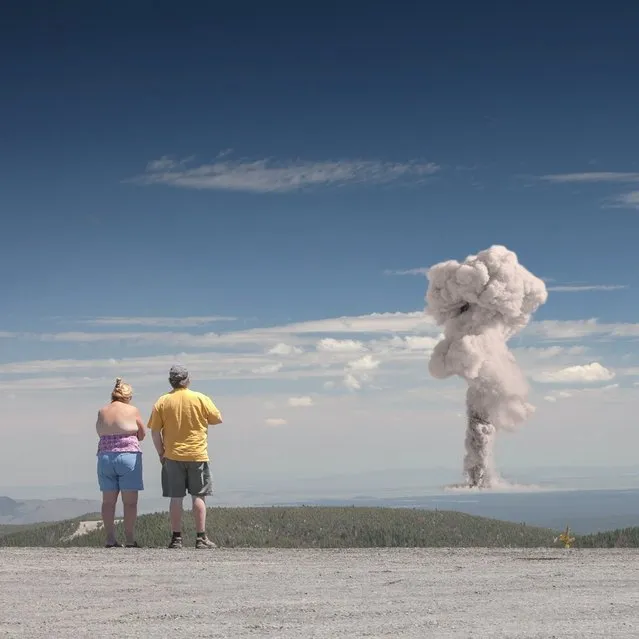
Clay Lipsky has created a great series called Atomic Overlook. The project takes terribly boring scenic shots and combines them with some exciting nuclear testing. “Tourists will line up for anything and I always found humor in vacation destinations that are nothing but a bunch of people looking into a great abyss”, he says. “I understand the allure of a beautiful landscape, but as the world’s population grows so do the lines to view the “nothingness”. Atomic Overlook flips the script on that and gives new purpose to those suntanned masses”. (Photo by Clay Lipsky)
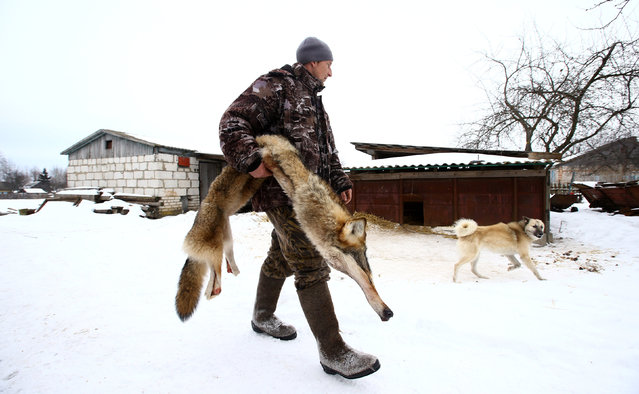
Nikolay Skidan, a hunter, carries the skin of a wolf in the village of Khrapkovo, Belarus February 1, 2017. Wolf fur grows thickest in winter, so Belarussian hunter Vladimir Krivenchik only sets his traps once snow is on the ground. He and his wife live on the edge of the Chernobyl exclusion zone – 2,600 square km of land on the Belarus-Ukraine border that was contaminated by a nuclear disaster in 1986. (Photo by Vasily Fedosenko/Reuters)