Loading...
Done
Split Apple Rock

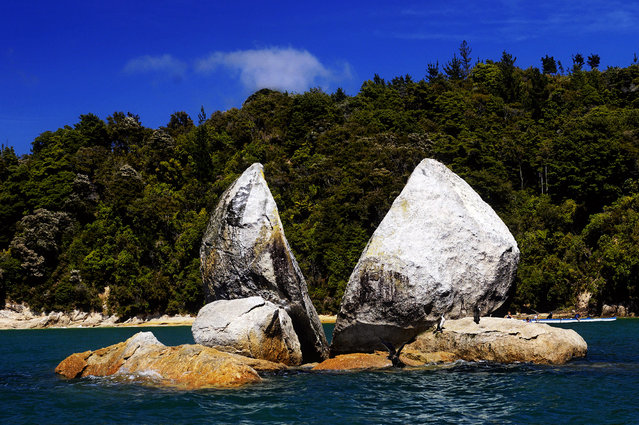
Split Apple Rock is a geological rock formation in The Tasman Bay off the northern coast of the South Island of New Zealand. Made of granite, it is in the shape of an apple which has been cut in half. It is a popular tourist attraction in the waters of the Tasman Sea approximately 50 metres off the coast between Kaiteriteri and Marahau. The rock sits in shallow water at low tide and is accessible by wading. It is also a point of interest for the many tourist boats and pleasure craft which operate along the shores of the Abel Tasman National Park. The cleft to produce two sides of the 'apple' was a natural occurrence. It is unknown when this happened and therefore the cleaving of the rock has attracted mythological explanations.
Details
19 Oct 2013 10:58:00
An Indonesian model wearing a colorful costume participates in a parade during the Batam Island International Culture Festival in Batam Island, Indonesia, 16 December 2017. (Photo by Hotli Simanjuntak/EPA/EFE)

An Indonesian model wearing a colorful costume participates in a parade during the Batam Island International Culture Festival in Batam Island, Indonesia, 16 December 2017. Batam Island, an industrial area in Indonesia, is boosting the tourism sector to improve the economy of its community by eyeing the visitors' boom of next door country Singapore. (Photo by Hotli Simanjuntak/EPA/EFE)
Details
18 Dec 2017 08:14:00
Sri Lanka

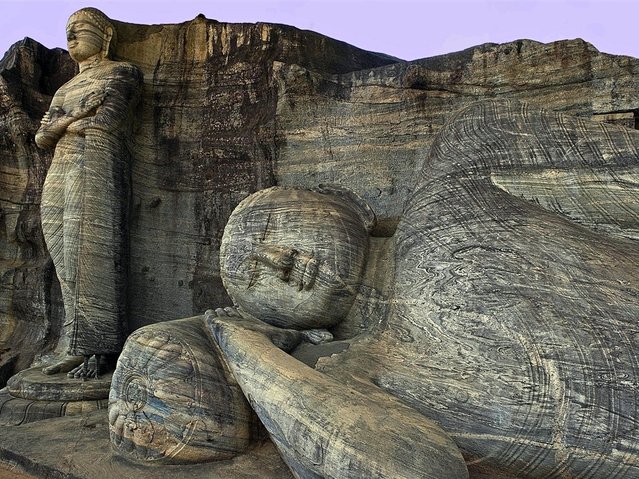
Sri Lanka officially the Democratic Socialist Republic of Sri Lanka, is an island country in the northern Indian Ocean off the southern coast of the Indian subcontinent in South Asia. Known until 1972 as Ceylon Sri Lanka has maritime borders with India to the northwest and the Maldives to the southwest.
Details
24 Aug 2013 08:59:00
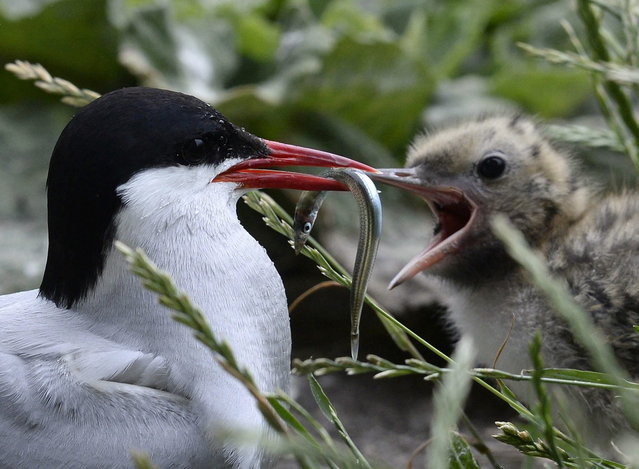
An arctic tern feeds its chick on the Farne Islands off the Northumberland coast, northern England July 8, 2013. (Photo by Nigel Roddis/Reuters)

An arctic tern feeds its chick on the Farne Islands off the Northumberland coast, northern England July 8, 2013. The Farne Islands, which lie off the coast of northeast England, are home to a huge array of wildlife. The islands are owned and protected by the British conservation charity, the National Trust, which says they host some 23 species of seabird, as well as a substantial colony of grey seals, who come to have their pups there in the autumn. Every five years the National Trust carries out a census of the islands' population of puffins, and this year's survey showed there were almost 40,000 nesting pairs on the islands – an 8 percent rise from 2008. (Photo by Nigel Roddis/Reuters)
Details
11 Dec 2013 09:21:00
Kendall Jenkins of Houston kisses the ground after stepping off the Carnival ship Triumph (Photo by AP Photo)

“The Carnival Triumph finally made port on Thursday night, after what should have been an idyllic four-day cruise turned into a grueling week-long ordeal for more than 3,000 passengers and 1,000 crew. Some kissed the ground as they disembarked the ship, while others swore never to go on another cruise again. Many spoke of the well-documented unsanitary conditions on board the 272-metre Triumph, which lost power in the Gulf of Mexico on Sunday”. – Tom Dart and Adam Gabbatt via Guardian

Photo: Kendall Jenkins of Houston kisses the ground after stepping off the Carnival ship Triumph (Photo by AP Photo)
Details
16 Feb 2013 10:36:00


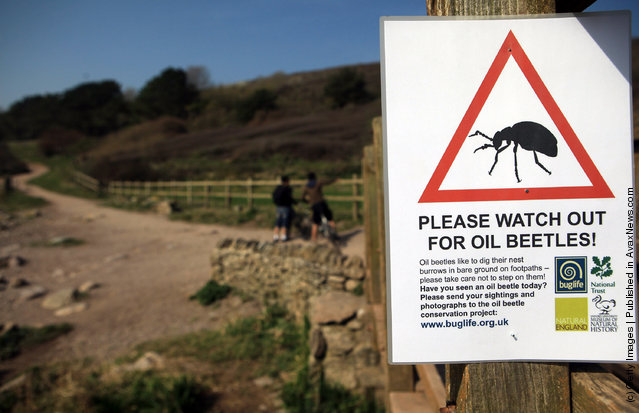
People enjoy the fine weather on the coast at Wembury during the first ever nationwide survey to map the location of the threatened and creatures on March 24, 2011 in near Plymouth, England. Often found on the coast, and particularly in the south west of England, the number of oil beetle species found in the UK has halved in the last 100 years and the survey will help establish the whereabouts of the remaining four species and boost efforts to secure their future. The survey is being launched today by Buglife: The Invertebrate Trust and the National Trust in partnership with Natural England and Oxford University Museum of Natural History. (Photo by Matt Cardy/Getty Images)
Details
25 Mar 2011 15:20:00
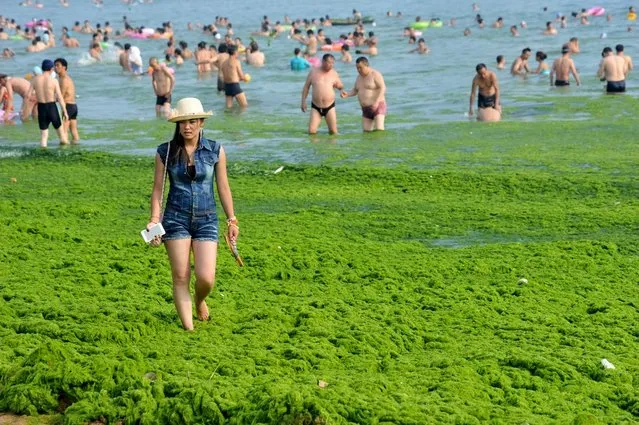
Tourists play at a beach covered by a thick layer of green algae on July 3, 2013 in Qingdao, China. A large quantity of non-poisonous green seaweed, enteromorpha prolifera, hit the Qingdao coast in recent days. More than 20,000 tons of such seaweed has been removed from the city's beaches. (Photo by ChinaFotoPress/ChinaFotoPress)

Tourists play at a beach covered by a thick layer of green algae on July 3, 2013 in Qingdao, China. A large quantity of non-poisonous green seaweed, enteromorpha prolifera, hit the Qingdao coast in recent days. More than 20,000 tons of such seaweed has been removed from the city's beaches. (Photo by China Foto Press)
Details
04 Jul 2013 11:01:00
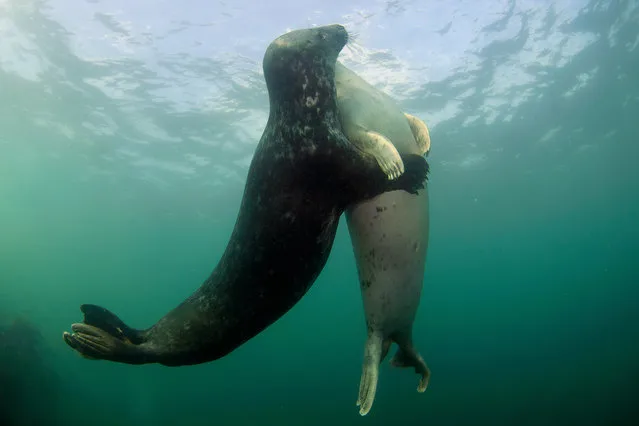
Playful seals. The pair of playful seals swim around each other. Two passionate seals were captured on camera in a tender embrace by underwater photographer Robert Bailey, 50, near the Farne Islands off the Northumberland coast, UK. (Photo by Robert Bailey/Medavia)

Playful seals. The pair of playful seals swim around each other. Two passionate seals were captured on camera in a tender embrace by underwater photographer Robert Bailey, 50, near the Farne Islands off the Northumberland coast, UK. (Photo by Robert Bailey/Medavia)
Details
30 Jul 2014 10:49:00