Loading...
Done
Ultra-orthodox Jewish wedding in Israel. Tens of thousands of Ultra-Orthodox Jews of the Belz Hasidic dynasty gather at the wedding ceremony of Rabbi Shalom Rokach in Kiryat Belz, in Jerusalem, on May 22, 2013. Around 25,000 ultra-orthodox Jews took part, making it one of the biggest weddings of the past few years. (Photo by Gil Cohen)

“Coming back home at 5am sunrise, I was just beginning to digest the grand event I was lucky to witness and cover: the wedding of the grandson of one of the most influential spiritual leaders in Israel’s ultra-Orthodox community...”. – Ronen Zvulun via Reuters. Photo: Ultra-orthodox Jewish wedding in Israel. Tens of thousands of Ultra-Orthodox Jews of the Belz Hasidic dynasty gather at the wedding ceremony of Rabbi Shalom Rokach in Kiryat Belz, in Jerusalem, on May 21, 2013. Around 25,000 ultra-orthodox Jews took part, making it one of the biggest weddings of the past few years. (Photo by Gil Cohen)
Details
24 May 2013 08:02:00
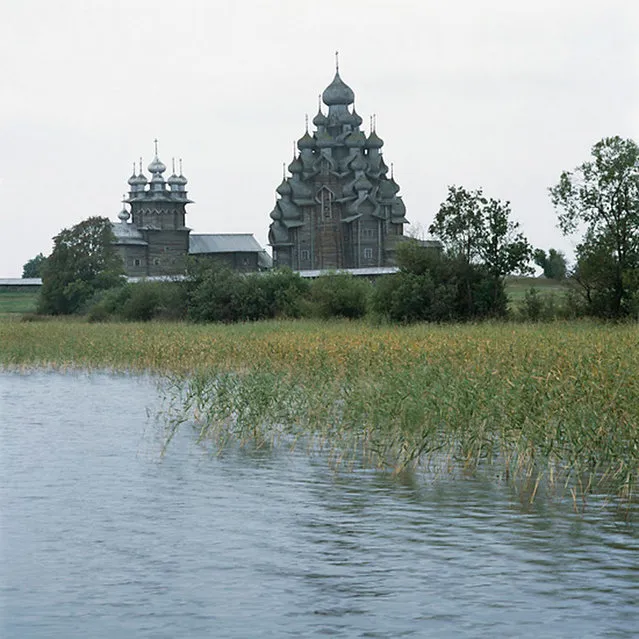
Wooden Churches - Travelling In The Russian North By Richard Davies Part 1

While communism, collectivism, worms, dry rot and casual looting failed to destroy the majestic wooden churches of Russia, it may be ordinary neglect that finally does them in. Dwindled now to several hundred remaining examples, these glories of vernacular architecture lie scattered amid the vastness of the world’s largest country. Just over a decade ago, Richard Davies, a British architectural photographer, struck out on a mission to record the fragile and poetic structures. Austerely beautiful and haunting, “Wooden Churches: Traveling in the Russian North” (White Sea Publishing; $132) is the result. Covering thousands of miles, Mr. Davies described how he and the writer Matilda Moreton tracked down the survivors from among the thousands of onion-domed structures built after Prince Vladimir converted to Christianity in 988.
Details
25 Nov 2013 12:47:00
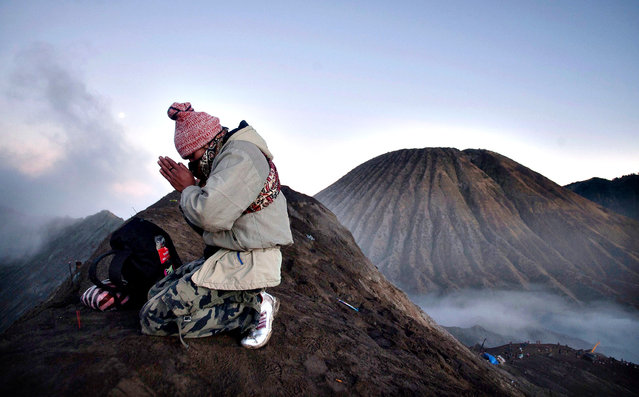
A Tengger tribesman prays at Mount Bromo during the annual Kasada ceremony in East Java on August 12, 2014. The Kasada ceremony is a festival held every 14th day of the Kasada month in the traditional Hindu lunar calender to honour Sang Hyang Widhi (God Almighty) and is based on the legend of Roro Anteng and Joko Seger from the Majapahit Kingdom, from which their Tengger tribe name originates. (Photo by Juni Kriswanto/AFP Photo)

A Tengger tribesman prays at Mount Bromo during the annual Kasada ceremony in East Java on August 12, 2014. The Kasada ceremony is a festival held every 14th day of the Kasada month in the traditional Hindu lunar calender to honour Sang Hyang Widhi (God Almighty) and is based on the legend of Roro Anteng and Joko Seger from the Majapahit Kingdom, from which their Tengger tribe name originates. Hundreds of worshippers from the Tengger tribe offer food and livestock as a symbolic sacrifice which they throw into the crater for the blessings of safety and prosperity to their familyies and community. (Photo by Juni Kriswanto/AFP Photo)
Details
16 Aug 2014 11:19:00
A devotee of the Chinese Bang Neow Shrine, with two plastic guns pierced through his cheeks, takes part in a street procession celebrating the annual vegetarian festival in Phuket September 29, 2014. (Photo by Damir Sagolj/Reuters)

A devotee of the Chinese Bang Neow Shrine, with two plastic guns pierced through his cheeks, takes part in a street procession celebrating the annual vegetarian festival in Phuket September 29, 2014. The festival, featuring face-piercing, spirit mediums and strict vegetarianism celebrates the local Chinese community's belief that abstinence from meat and various stimulants during the ninth lunar month of the Chinese calendar will help them obtain good health and peace of mind. (Photo by Damir Sagolj/Reuters)
Details
29 Sep 2014 10:36:00
A heavily tattooed Japanese woman poses for photographs near Asakusa Temple during the third and final day of Sanja Festival, on May 20, 2018 in Tokyo, Japan. Sanja Festival is one of Japan's major festivals and is held annually in the Asakusa area of Tokyo. The three day event starts with a grand parade with people in traditional costumes performing dances before around a hundred mikoshi (portable shrines) from the local communities are carried to and from Asakusa Temple watched on by an audience of locals and tourists. (Photo by Carl Court/Getty Images)

A heavily tattooed Japanese woman poses for photographs near Asakusa Temple during the third and final day of Sanja Festival, on May 20, 2018 in Tokyo, Japan. Sanja Festival is one of Japan's major festivals and is held annually in the Asakusa area of Tokyo. (Photo by Carl Court/Getty Images)
Details
22 May 2018 07:21:00
Schoolchildren attend their first lesson on Knowledge Day in the town of Turov, Zhytkavichy District, Gomel Region, Belarus on September 1, 2017. Knowledge Day marks the beginning of a new school year in Belarus and is celebrated on September 1. (Photo by Viktor Drachev/TASS via Getty Images)

Though schools around the globe have different start dates, calendars and traditions, the first day of a new term is an exciting time filled with the prospects of gaining more knowledge, making new friends and building community. Here: Schoolchildren attend their first lesson on Knowledge Day in the town of Turov, Zhytkavichy District, Gomel Region, Belarus on September 1, 2017. Knowledge Day marks the beginning of a new school year in Belarus and is celebrated on September 1. (Photo by Viktor Drachev/TASS via Getty Images)
Details
20 Sep 2017 08:00:00
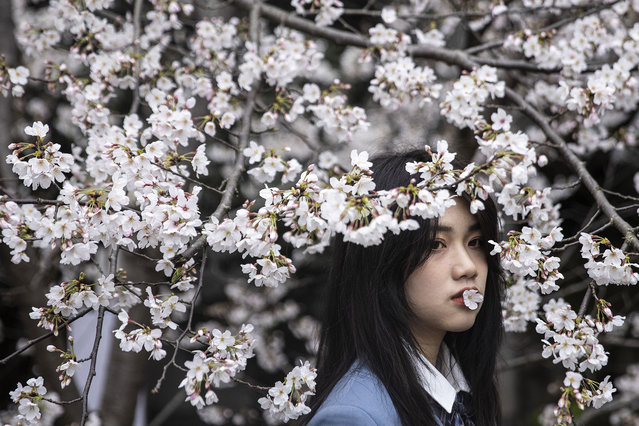
A girl holds a blossom in her mouth while posing for photos under cherry blossom trees at Wuhan University on March 11, 2021 in Wuhan, China. Tourists come to view cherry blossoms at the university during the spring. Wuhan University, first founded in 1893, is widely known as one of the most beautiful universities in China. Last year Wuhan University did not receive guests due to the pandemic lockdown. Currently the limit is 10,000 tourists a day. With no recorded cases of community transmission since May 2020, life for residents is gradually returning to normal. (Photo by Getty Images/China Stringer Network)

A girl holds a blossom in her mouth while posing for photos under cherry blossom trees at Wuhan University on March 11, 2021 in Wuhan, China. Tourists come to view cherry blossoms at the university during the spring. Wuhan University, first founded in 1893, is widely known as one of the most beautiful universities in China. (Photo by Getty Images/China Stringer Network)
Details
16 Mar 2021 09:45:00
Ethnic Cham Muslim people pass the time near their boats on banks of Mekong river in Phnom Penh July 29, 2013. (Photo by Damir Sagolj/Reuters)

Ethnic Cham Muslim people pass the time near their boats on banks of Mekong river in Phnom Penh July 29, 2013. About 100 ethnic Cham families, made up of nomads and fishermen without houses or land who arrived at the Cambodian capital in search of better lives, live on their small boats on a peninsula where the Mekong and Tonle Sap rivers meet, just opposite the city's centre. The community has been forced to move several times from their locations in Phnom Penh as the land becomes more valuable. They fear that their current home, just behind a new luxurious hotel under construction at the Chroy Changva district is only temporary and that they would have to move again soon. (Photo by Damir Sagolj/Reuters)
Details
31 Jul 2013 06:34:00