Loading...
Done
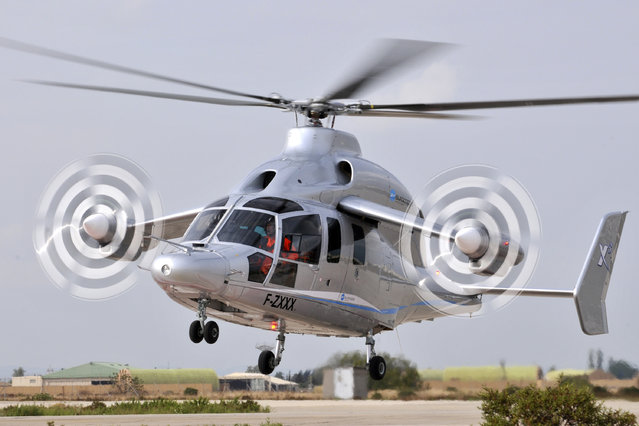
Eurocopter's X³ high-speed hybrid helicopter demonstrator performs, September 6, 2010. The Eurocopter X³ (X-Cubed) is an experimental high-speed compound helicopter developed by Eurocopter (now Airbus Helicopters). (Photo by Reuters/HO/Eurocopter/Penna)

Eurocopter's X³ high-speed hybrid helicopter demonstrator performs, September 6, 2010. The Eurocopter X³ (X-Cubed) is an experimental high-speed compound helicopter developed by Eurocopter (now Airbus Helicopters). A technology demonstration platform for Eurocopter “high-speed, long-range hybrid helicopter” or H³ concept, the X³ achieved 255 knots in level flight on 7 June 2013, setting an unofficial speed record for a helicopter. (Photo by Reuters/HO/Eurocopter/Penna)
Details
21 Sep 2014 11:32:00
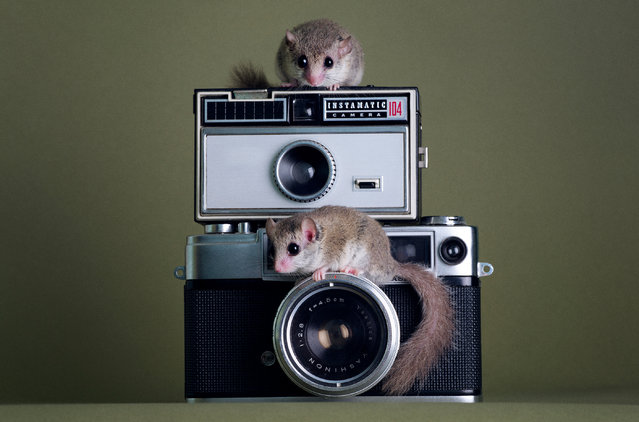
“The most difficult aspect of this shoot was to get each African pygmy dormouse – also known as micro squirrels – on to a separate camera. Once in place, they needed to remain still long enough to get them both in the frame and looking at me. Often solitary, they naturally wanted to move away”. (Photo by David Yeo/Leica Studio Mayfair/The Guardian)

David Yeo’s photography places naturally small species alongside animals that have been selectively bred to be tiny and cute. Here: “The most difficult aspect of this shoot was to get each African pygmy dormouse – also known as micro squirrels – on to a separate camera. Once in place, they needed to remain still long enough to get them both in the frame and looking at me. Often solitary, they naturally wanted to move away”. (Photo by David Yeo/Leica Studio Mayfair/The Guardian)
Details
24 Oct 2017 08:20:00
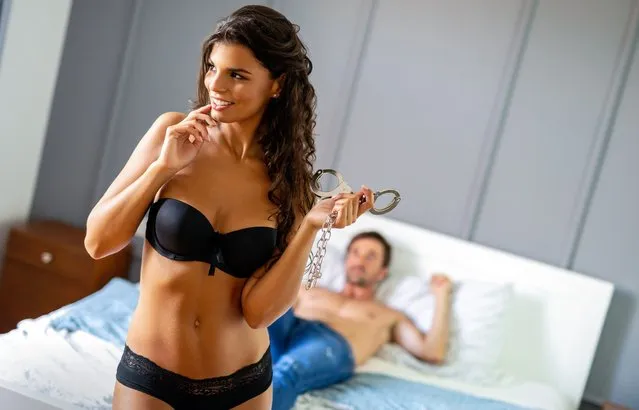
Woman and man playing domination games in bed. (Photo by NDAB Creativity/Rex Features/Shutterstock)

Woman and man playing domination games in bed. (Photo by NDAB Creativity/Rex Features/Shutterstock)
Details
09 Aug 2023 00:00:00
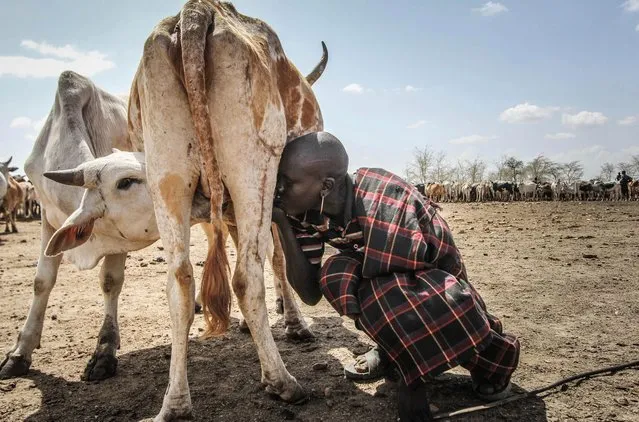
Cattle are the most important way of livelihood for the Karamojong: they provide milk, meat, blood and money when sold, Karamoja, Uganda, February 2017. (Photo by Sumy Sadurni/Barcroft Images)

Cattle are the most important way of livelihood for the Karamojong: they provide milk, meat, blood and money when sold, Karamoja, Uganda, February 2017. (Photo by Sumy Sadurni/Barcroft Images)
Details
17 Feb 2017 00:02:00
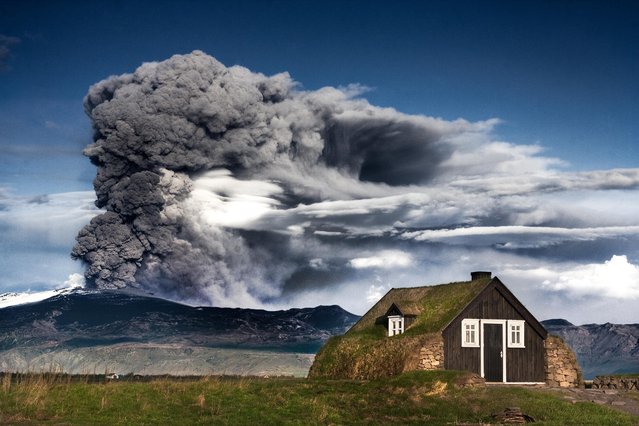
Replica of an old traditional Icelandic house from the 1800 with eruption of Iceland's Eyjafjallajökull volcano, 2013. (Photo by Ingólfur Bjargmundsson/Getty Images)

Replica of an old traditional Icelandic house from the 1800 with eruption of Iceland's Eyjafjallajökull volcano, 2013. (Photo by Ingólfur Bjargmundsson/Getty Images)
Details
17 May 2017 08:24:00
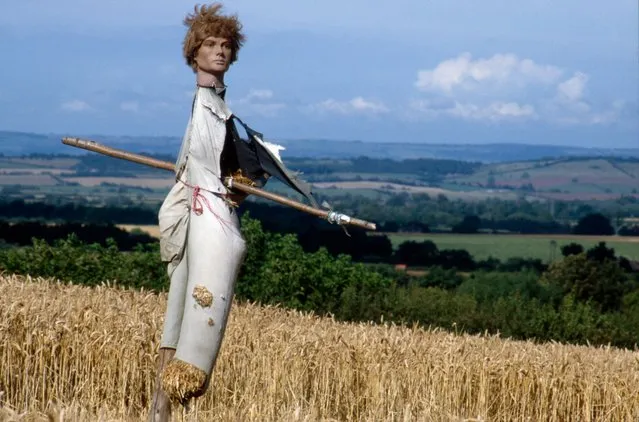
“The ripening crops eloquently signify that the scarecrow’s work is done. Few remain to see their task fulfilled because if they become entangled in the harvesting machinery it causes serious damage”. (Photo by Colin Garratt)

When Colin Garratt went to photograph the traditional sentinels of the British countryside, he found they ranged from the dapper to the downright sinister. “They are not from the anaesthetised world of the craft fair”, says Colin Garratt, “but are the direct descendants of the ancient spectres which have haunted the landscape for centuries”. The Scarecrow Exhibition is at Geddes Gallery, London, from 25 to 30 March. (Photo by Colin Garratt)
Details
29 Mar 2016 11:46:00
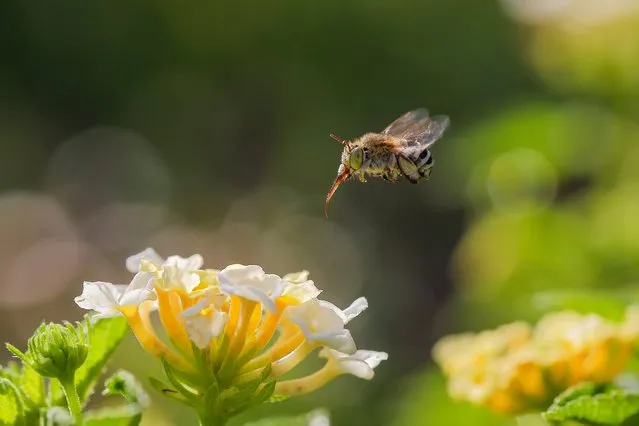
“Tasty Nature” by Dipesh Bhatt. “The blue banded bee (Amegilla cingulata) is pointing this sheath towards the flowers in preparation for sipping nectar”. Taken in Gujarat, India. (Photo by Dipesh Bhatt/2016 Royal Society of Biology Photographer of the Year competition)

“Tasty Nature” by Dipesh Bhatt. “The blue banded bee (Amegilla cingulata) is pointing this sheath towards the flowers in preparation for sipping nectar”. Taken in Gujarat, India. (Photo by Dipesh Bhatt/2016 Royal Society of Biology Photographer of the Year competition)
Details
30 Sep 2016 09:32:00
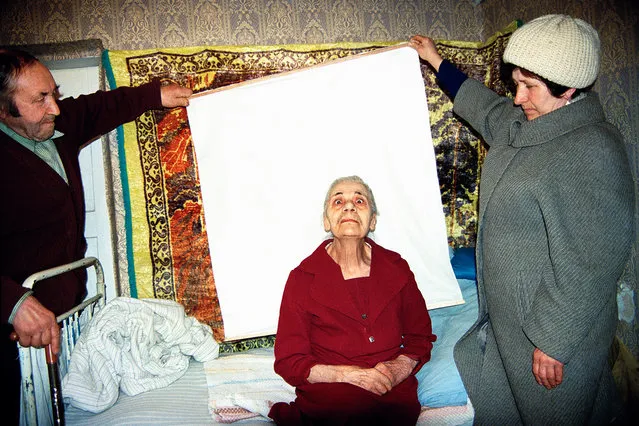
He was provided with black and white film, and would photograph as many as 60 people a day, against a portable white backdrop. But he also carried a wide-angle camera with expensive C-41 colour film, and took his own photo portraits. (Photo by Alexander Chekmenev/The Guardian)

In 1994, after the fall of the Soviet Union, all Ukrainians had to get a new passport – and photographer Alexander Chekmenev was on hand to take their photos. The snatched extra shots he took are remarkable in their honesty and tenderness. (Photo by Alexander Chekmenev/The Guardian)
Details
30 Dec 2016 10:22:00