Loading...
Done
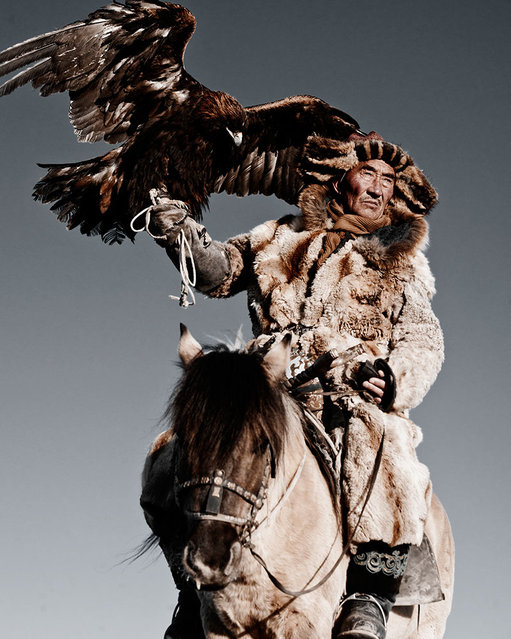
Fine Horses And Fierce Eagles Are The wings Of The Kazakh

The Kazakhs are the descendants of Turkic, Mongolic and Indo-Iranian tribes and Huns that populated the territory between Siberia and the Black Sea. They are a semi-nomadic people and have roamed the mountains and valleys of western Mongolia with their herds since the 19th century. The ancient art of eagle hunting is one of many traditions and skills that the Kazakhs have, in recent decades, been able to hold on to. They rely on their clan and herds, believing in pre-Islamic cults of the sky, the ancestors, fire and the supernatural forces of good and evil spirits.
Details
20 Feb 2014 12:12:00
Underground River

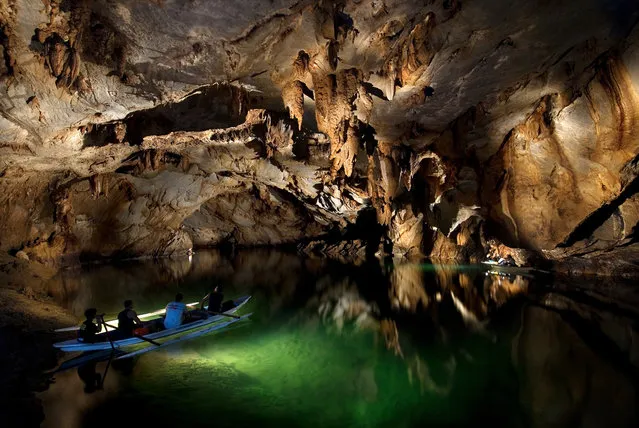
The Puerto Princesa Subterranean River National Park is located about 50 kilometres (30 mi) north of the city centre of Puerto Princesa, Palawan, Philippines. The river is also called Puerto Princesa Underground River. The national park is located in the Saint Paul Mountain Range on the northern coast of the island. It is bordered by St. Paul Bay to the north and the Babuyan River to the east. The City Government of Puerto Princesa has managed the National Park since 1992. The park is also known as St. Paul's Subterranean River National Park, or St. Paul Underground River. The entrance to the Subterranean River is a short hike from the town of Sabang.
Details
16 Jul 2012 11:37:00
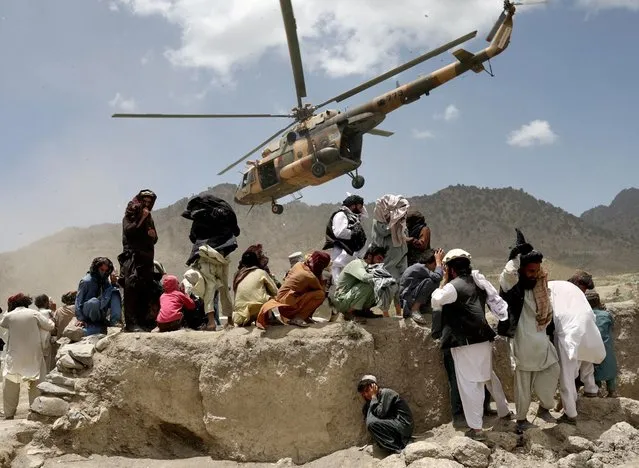
A Taliban helicopter takes off after bringing aid to the site of an earthquake in Gayan, Afghanistan on June 23, 2022. (Photo by Ali Khara/Reuters)

A Taliban helicopter takes off after bringing aid to the site of an earthquake in Gayan, Afghanistan on June 23, 2022. A powerful earthquake struck a rugged, mountainous region of eastern Afghanistan early Wednesday, killing at least 1,000 people and injuring 1,500 more in one of the country's deadliest quakes in decades, the state-run news agency reported. (Photo by Ali Khara/Reuters)
Details
25 Jun 2022 05:55:00
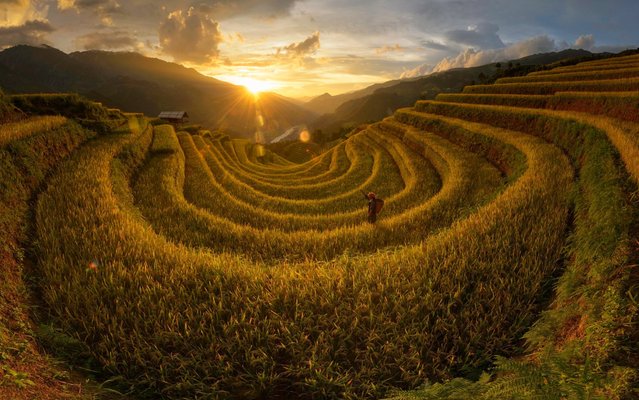
Lush green rice terraces sprawl over 2,200 hectares of mountainside ready to be harvested. These stunning images, captured by photographer Saravut Whanset, show the incredible terraces throughout the course of the day, including at sunrise and sunset. Workers tend to the fields, with each terrace between 1 and 1.5 metres wide, while wooden huts stand on stilts on the mountainside. The beautiful panoramic pictures were taken in Mu Cang Chai, Vietnam, with the fields located at the foot of the Hoang Lien Son mountain range, 1,000 metres above sea level. (Photo by Saravut Whanset/Solent News and Photo Agency)

Lush green rice terraces sprawl over 2,200 hectares of mountainside ready to be harvested. These stunning images, captured by photographer Saravut Whanset, show the incredible terraces throughout the course of the day, including at sunrise and sunset. Workers tend to the fields, with each terrace between 1 and 1.5 metres wide, while wooden huts stand on stilts on the mountainside. The beautiful panoramic pictures were taken in Mu Cang Chai, Vietnam, with the fields located at the foot of the Hoang Lien Son mountain range, 1,000 metres above sea level. (Photo by Saravut Whanset/Solent News and Photo Agency)
Details
13 Nov 2017 07:21:00
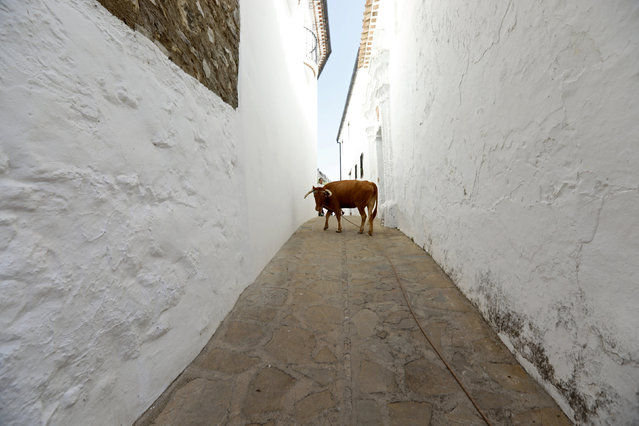
A heifer, tied with a rope, turns during “Toro de Cuerda” in the white village of Villaluenga del Rosario, southern Spain September 3, 2016. Dazzling clusters of cube-shaped houses perched on top of Andalusia's olive tree-studded mountains, the “Pueblos Blancos”, or white villages, of southern Spain are named for the lime wash the buildings are painted with to keep the interiors cool. The labyrinths of narrow alleyways are a throwback to when this region was known as Al-Andalus and was part of a medieval Muslim territory. While this region is stunningly beautiful and a big draw to tourists visiting the south of Spain, it is also one of the poorest areas in the country and has one of the highest unemployment rates in the European Union. (Photo by Marcelo del Pozo/Reuters)

A heifer, tied with a rope, turns during “Toro de Cuerda” in the white village of Villaluenga del Rosario, southern Spain September 3, 2016. Dazzling clusters of cube-shaped houses perched on top of Andalusia's olive tree-studded mountains, the “Pueblos Blancos”, or white villages, of southern Spain are named for the lime wash the buildings are painted with to keep the interiors cool. The labyrinths of narrow alleyways are a throwback to when this region was known as Al-Andalus and was part of a medieval Muslim territory. While this region is stunningly beautiful and a big draw to tourists visiting the south of Spain, it is also one of the poorest areas in the country and has one of the highest unemployment rates in the European Union. (Photo by Marcelo del Pozo/Reuters)
Details
20 Oct 2016 11:09:00
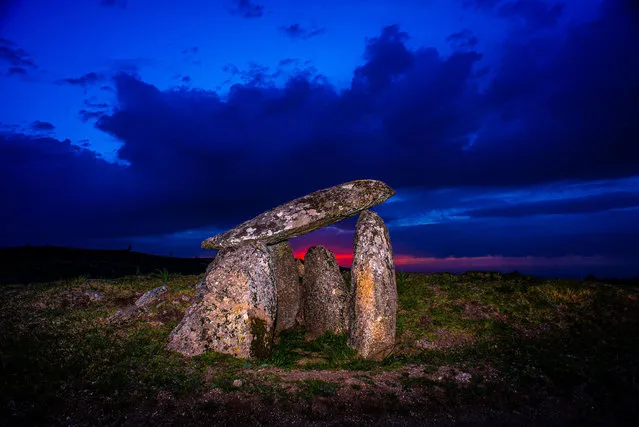
Serra da Aboboreira Megalithic Set (Meninas do Crasto) on September 24, 2023 in Baiao, Portugal. Since 1978 that Serra da Aboboreira (Aboboreira Mountains) has been the scene of a systematic study of its archeological values, among which are the monuments known as megalithic. These are funerary monuments designing the landscape. These dolmens were constructed with stones (lithos) of medium or large dimensions (mega), which were laid in a, more or less, vertical position. Over these, it was still placed a lid, also of stone. These containers were covered by an artificial mound of earth and stones (dolmen). (Photo by Octavio Passos/Getty Images)

Serra da Aboboreira Megalithic Set (Meninas do Crasto) on September 24, 2023 in Baiao, Portugal. Since 1978 that Serra da Aboboreira (Aboboreira Mountains) has been the scene of a systematic study of its archeological values, among which are the monuments known as megalithic. These are funerary monuments designing the landscape. These dolmens were constructed with stones (lithos) of medium or large dimensions (mega), which were laid in a, more or less, vertical position. Over these, it was still placed a lid, also of stone. These containers were covered by an artificial mound of earth and stones (dolmen). (Photo by Octavio Passos/Getty Images)
Details
28 Dec 2023 21:07:00
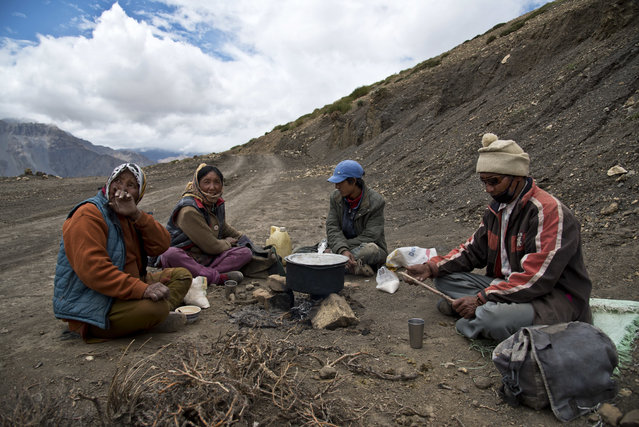
In this August 17, 2016, photo, from left to right, Chhering Chodom, 60, Tashi Yangzom, 50, Lobsang Chhering, 27, and Dorje Tandup, 58, drink milk tea on the side of the road. For centuries, the sleepy valley nestled in the Indian Himalayas remained a hidden Buddhist enclave forbidden to outsiders. Enduring the harsh year-round conditions of the high mountain desert, the people of Spiti Valley lived by a simple communal code – share the Earth's bounty, be hospitable to neighbors, and eschew greed and temptation at all turns. That's all starting to change, for better or worse. Since India began allowing its own citizens as well as outsiders to visit the valley in the early 1990s, tourism and trade have boomed. And the marks of modernization, such as solar panels, asphalt roads and concrete buildings, have begun to appear around some of the villages that dot the remote landscape at altitudes above 4,000 meters (13,000 feet). (Photo by Thomas Cytrynowicz/AP Photo)

In this August 17, 2016, photo, from left to right, Chhering Chodom, 60, Tashi Yangzom, 50, Lobsang Chhering, 27, and Dorje Tandup, 58, drink milk tea on the side of the road. For centuries, the sleepy valley nestled in the Indian Himalayas remained a hidden Buddhist enclave forbidden to outsiders. Enduring the harsh year-round conditions of the high mountain desert, the people of Spiti Valley lived by a simple communal code – share the Earth's bounty, be hospitable to neighbors, and eschew greed and temptation at all turns. That's all starting to change, for better or worse. (Photo by Thomas Cytrynowicz/AP Photo)
Details
15 Sep 2016 09:22:00
A monarch butterfly rests on the ground at the Sierra Chincua butterfly sanctuary on a mountain in Angangeo, Michoacan November 24, 2016. Angangueo is a town and municipality located in far eastern Michoacán state in central Mexico noted for its history of mining and its location in the Monarch Butterfly Biosphere Reserve. The Monarch Butterfly Biosphere Reserve is a World Heritage Site containing most of the over-wintering sites of the eastern population of the monarch butterfly. The reserve is located in the Trans-Mexican Volcanic Belt pine-oak forests ecoregion on the border of Michoacán and State of Mexico, 100 km (62 miles), northwest of Mexico City. Millions of butterflies arrive in the reserve annually. Butterflies only inhabit a fraction of the 56,000 hectares of the reserve from October–March. (Photo by Carlos Jasso/Reuters)

A monarch butterfly rests on the ground at the Sierra Chincua butterfly sanctuary on a mountain in Angangeo, Michoacan November 24, 2016. Angangueo is a town and municipality located in far eastern Michoacán state in central Mexico noted for its history of mining and its location in the Monarch Butterfly Biosphere Reserve. The Monarch Butterfly Biosphere Reserve is a World Heritage Site containing most of the over-wintering sites of the eastern population of the monarch butterfly. (Photo by Carlos Jasso/Reuters)
Details
26 Nov 2016 10:20:00