Loading...
Done
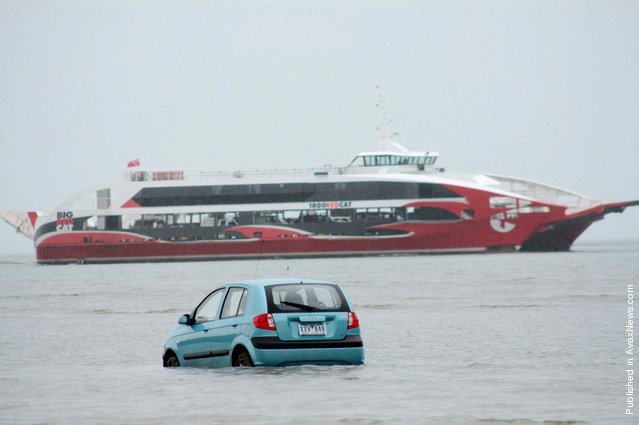
Three Japanese tourists had to abandon plans to drive to Stradbroke Island off the Queensland coast when their hire car became bogged in mangrove mud, on March 15, 2012 near Stradbroke Island, Australia

Three Japanese tourists had to abandon plans to drive to Stradbroke Island off the Queensland coast when their hire car became bogged in mangrove mud, on March 15, 2012 near Stradbroke Island, Australia. (Photo by Chris McCormack/Fairfax Media).
Details
19 Mar 2012 12:08:00
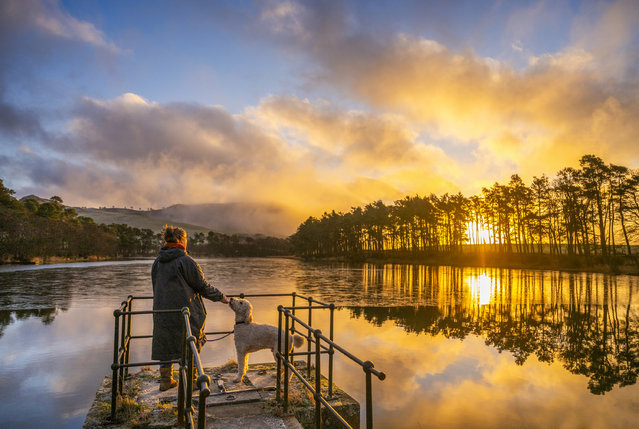
Sandy Bell stands with her golden doodle dog Ozzy looking out at the golden sunrise breaking through the tree on a cold and frosty morning at Bowden Loch near Melrose in the Scottish Borders, South Scotland on February 7, 2025. (Photo by Phil Wilkinson/The Times)

Sandy Bell stands with her golden doodle dog Ozzy looking out at the golden sunrise breaking through the tree on a cold and frosty morning at Bowden Loch near Melrose in the Scottish Borders, South Scotland on February 7, 2025. (Photo by Phil Wilkinson/The Times)
Details
14 Apr 2025 04:10:00
1952:  Shepherds from the north wear their traditional heavy woollen mantles as they stand ready to shear sheep with sycthe-like shears

Shepherds from the north wear their traditional heavy woollen mantles as they stand ready to shear sheep with sycthe-like shears. (Photo by Three Lions/Getty Images). Circa 1952
Details
03 Dec 2011 13:34:00
In this November 19, 2015 photo, Ester Melendez feeds banana porridge to her nine-month-old daughter Dina, in Pichiquia, an Ashaninka indigenous community in Peru's Junin region. Incursions and assaults by loggers, miners, colonists and leftist guerrillas have reduced the lands of the Ashaninka people in the Peruvian Amazon, leaving many of the 97,000 members of the group malnourished, despite efforts by the government and independent organizations to help. (Photo by Rodrigo Abd/AP Photo)

In this November 19, 2015 photo, Ester Melendez feeds banana porridge to her nine-month-old daughter Dina, in Pichiquia, an Ashaninka indigenous community in Peru's Junin region. Incursions and assaults by loggers, miners, colonists and leftist guerrillas have reduced the lands of the Ashaninka people in the Peruvian Amazon, leaving many of the 97,000 members of the group malnourished, despite efforts by the government and independent organizations to help. (Photo by Rodrigo Abd/AP Photo)
Details
10 Dec 2015 08:00:00
A lioness drinks after being fed by senior keeper Glynn Hennessy at ZSL London Zoo on August 10, 2016 in London, England. Today marks World Lion Day which highlights the first global campaign to celebrate the importance and plight of lions worldwide. (Photo by Carl Court/Getty Images)

A lioness drinks after being fed by senior keeper Glynn Hennessy at ZSL London Zoo on August 10, 2016 in London, England. Today marks World Lion Day which highlights the first global campaign to celebrate the importance and plight of lions worldwide. (Photo by Carl Court/Getty Images)
Details
14 Aug 2016 10:12:00
A general view of Hong Kong's business district is seen Thursday, August 1, 2013. (Photo by Vincent Yu/AP Photo)

A general view of Hong Kong's business district is seen Thursday, August 1, 2013. (Photo by Vincent Yu/AP Photo)
Details
21 Apr 2014 10:01:00
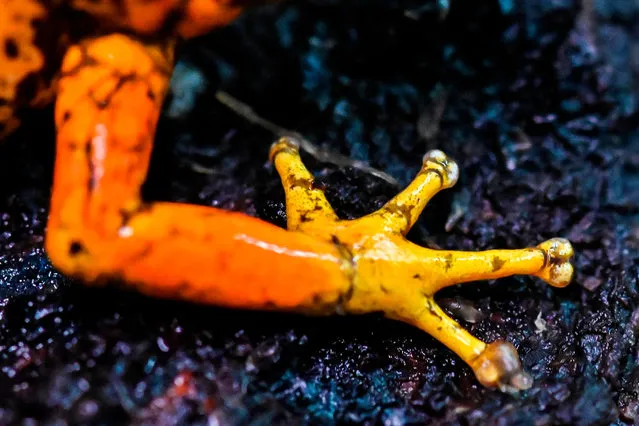
A leg of a “diablito” frog (Oophaga sylvatica) is photographed in a laboratory at a laboratory in the zoo of Cali, Colombia, on July 19, 2019. Colombia is the second country with the largest number of amphibians in the world after Brazil. More than 40% of amphibian species worldwide are in danger of extinction. (Photo by Luis Robayo/AFP Photo)

A leg of a “diablito” frog (Oophaga sylvatica) is photographed in a laboratory at a laboratory in the zoo of Cali, Colombia, on July 19, 2019. Colombia is the second country with the largest number of amphibians in the world after Brazil. More than 40% of amphibian species worldwide are in danger of extinction. (Photo by Luis Robayo/AFP Photo)
Details
28 Nov 2020 00:03:00
The Lun-class Ekranoplane was used by the Soviet Navy starting in 1987, and wasn't retired until the late 1990s, after the Soviet Union's fall. (Igor113)

“The Lun-class ekranoplan (NATO reporting name Duck) was a ground effect vehicle (GEV) designed by Rostislav Evgenievich Alexeev and used by the Soviet and Russian navies from 1987 until sometime in the late 1990s. It “flew” using the lift generated by the ground effect of its large wings when close to the surface of the water – about four metres or less. Although they might look similar and/or have related technical characteristics, ekranoplans like the Lun are not aircraft, seaplanes, hovercraft, or hydrofoils – ground effect is a separate technology altogether. The International Maritime Organization classifies these vehicles as maritime ships. The name Lun comes from the Russian for harrier”. – Wikipedia (Photo by Igor113)
Details
08 Aug 2014 10:51:00