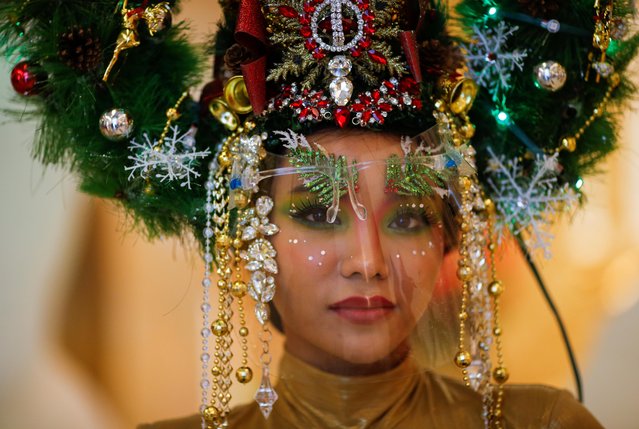
A performer wears a face shield at a shopping center on New Year's Eve during the coronavirus disease (COVID-19) outbreak, in Bangkok, Thailand on December 31, 2020. (Photo by Soe Zeya Tun/Reuters)
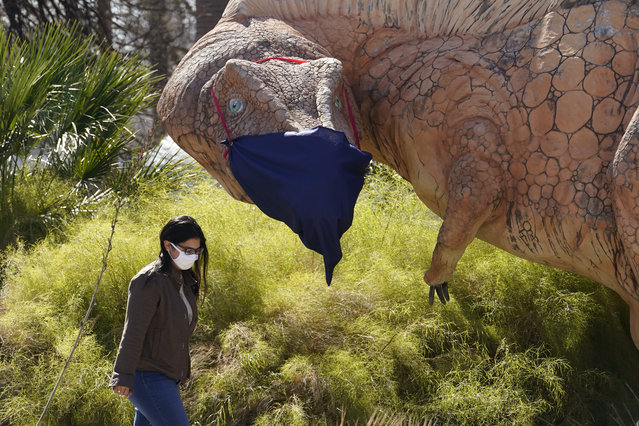
A woman wearing a face mask to protect against the spread of COVID-19 walks past a mask clad Acrocanthosaurus display at the Witte Museum, Thursday, January 28, 2021, in San Antonio. (Photo by Eric Gay/AP Photo)
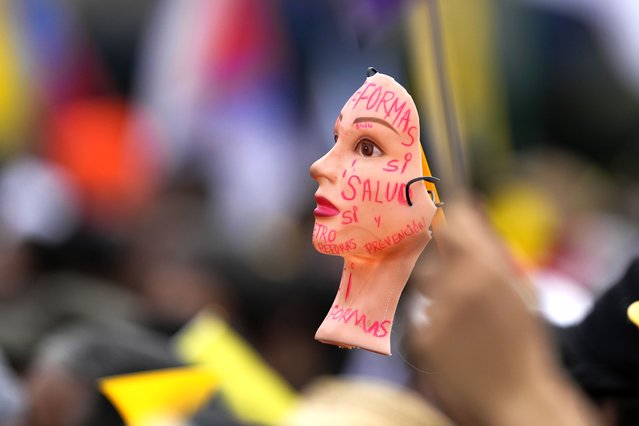
A doll's face is covered with supportive messages for government-proposed reforms during the International Workers' Day march in Bogota, Colombia, May 1, 2024. (Photo by Fernando Vergara/AP Photo)
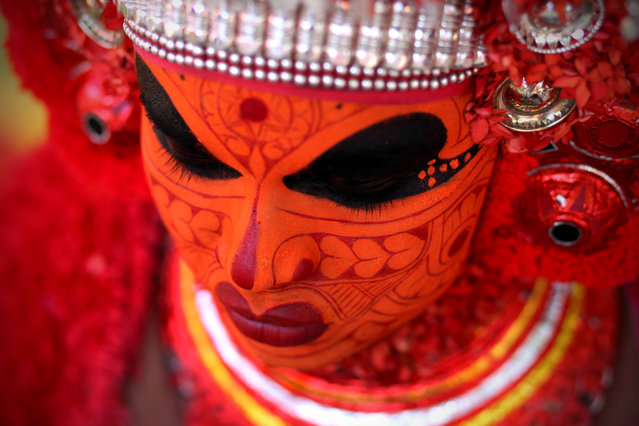
“Theyyam”. Preparation for the Theyyam performance in the surroundings of Kasaragod city. Theyyam is a popular ritual dance form of North Kerala, particularly in Kannur and Kasargod districts. The Theyyam represents a mythological, divine or heroic character. Make up of Theyyams is done by specialist. There are different types of face painting for which primarily and secondary colours are used. Therefore it is essential that the makeup man should have perfect knowledge of primary and secondary colour combinations. Sometimes, it takes several hours to paint each face. Photo location: Kasaragod, India. (Photo and caption by Rafal Ziejewski/National Geographic Photo Contest)
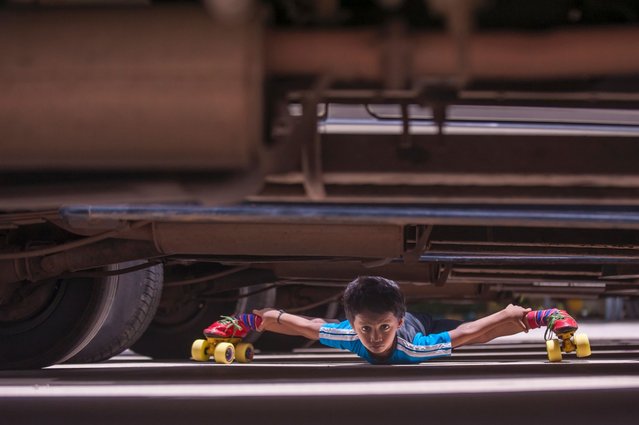
A super flexible schoolboy has become a limbo legend - by roller-skating under 39 cars in a row. It took six-year-old Gagan Satish just 29 seconds to cover a distance of nearly 70 metres with his face just five inches from the ground. (Photo by Arkaprava Ghosh/Barcroft Media India)
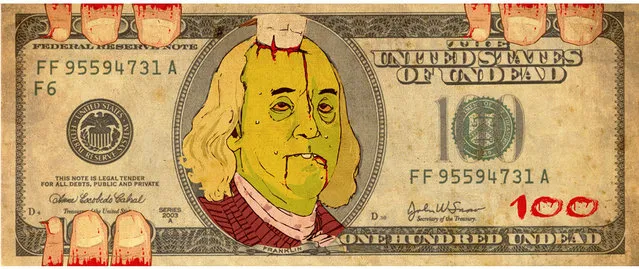
Though we have “In God we trust” written on our banknotes, we didn’t go as far as putting Jesus on them. Martin Joubert, however, decided to correct this injustice and placed the face of Jesus on one of his 100 dollar designs. Though some may view it as sacrilege, Jesus surely wouldn’t mind seeing his face on the banknote of one of the most pious nations in the world. In our opinion, however, the monopoly man is the most appropriate substitute for the Ben Franklin. (Photo by Martin Joubert)
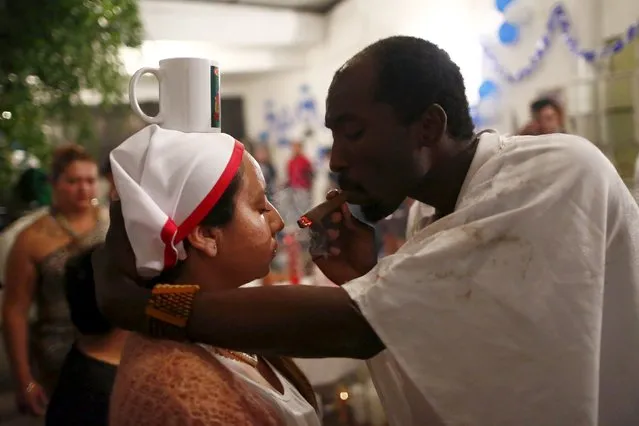
A voodoo priest smokes in the face of a woman as she holds a cup on her head during a voodoo ceremony in honor of Kouzen Zaka, also known as St. Isidro, in Mexico City, May 2, 2015. According to Haitain voodoo, Kouzen Zaka is the patron of work, whose patronage will help with employment and safeguard crops from robbers. (Photo by Edgard Garrido/Reuters)
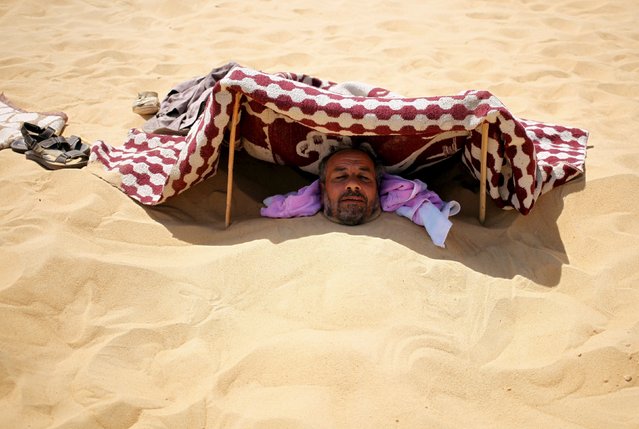
A patient buried in the hot sand looks out from under a shade that protects his face from the sun in Siwa, Egypt, August 12, 2015. In the searing heat of summer in western Egypt, at the hottest time of the day, sufferers of rheumatism, joint pain, infertility or impotence lie buried neck-deep in the sand of Siwa near Dakrour Mountain. Locals say taking a sand bath is a natural therapy with powers to cure many medical conditions. (Photo by Asmaa Waguih/Reuters)