Loading...
Done
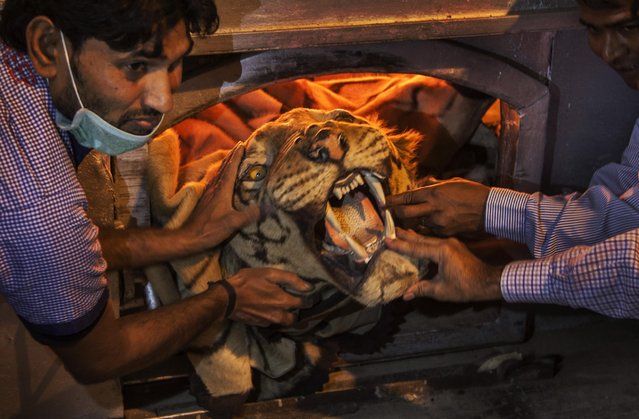
Indian authorities hold a tiger skin as they set fire to a stockpile of illegal wildlife parts at the Delhi Zoo in New Delhi, India, Sunday, November 2, 2014. A stockpile of tiger skins, elephant tusks, rhino horns and other illegal animal parts were burned Sunday in an effort to discourage wildlife smuggling in South Asia. (Photo by Tsering Topgyal/AP Photo)

Indian authorities hold a tiger skin as they set fire to a stockpile of illegal wildlife parts at the Delhi Zoo in New Delhi, India, Sunday, November 2, 2014. A stockpile of tiger skins, elephant tusks, rhino horns and other illegal animal parts were burned Sunday in an effort to discourage wildlife smuggling in South Asia. (Photo by Tsering Topgyal/AP Photo)
Details
03 Nov 2014 12:44:00
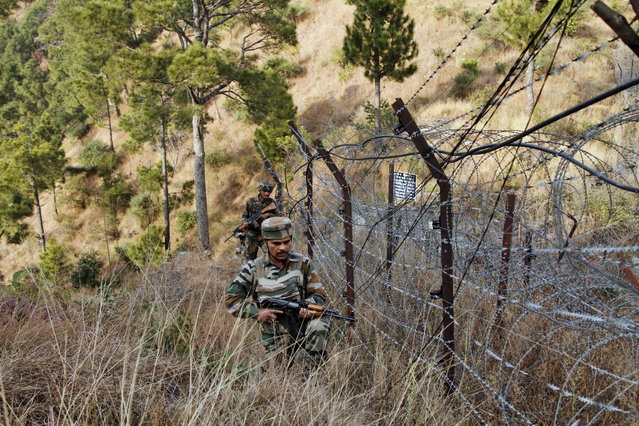
In this December 23, 2013 photo, Indian army soldiers patrol near one of their forward post at the Line of Control (LOC), that divides Kashmir between India and Pakistan, at Krishna Ghati (KG Sector) in Poonch, 290 kilometers (180 miles) from Jammu, India. (Photo by Channi Anand/AP Photo)

In this December 23, 2013 photo, Indian army soldiers patrol near one of their forward post at the Line of Control (LOC), that divides Kashmir between India and Pakistan, at Krishna Ghati (KG Sector) in Poonch, 290 kilometers (180 miles) from Jammu, India. The military commanders of longtime rivals India and Pakistan met on Tuesday in a bid to stop frequent cross-border attacks in disputed Kashmir which escalated tensions in the region in recent months. (Photo by Channi Anand/AP Photo)
Details
29 Dec 2013 08:18:00
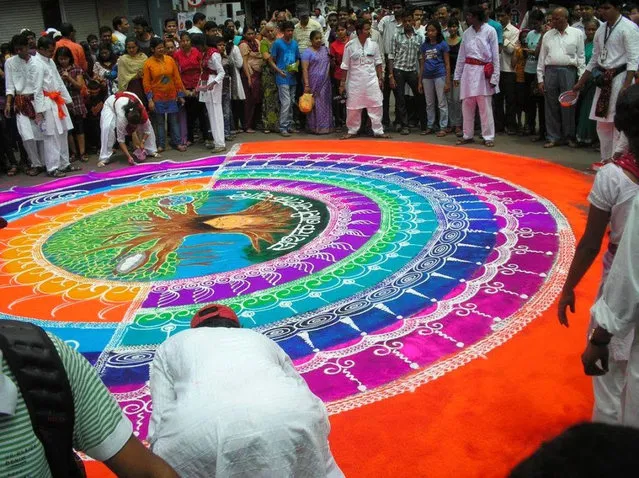
Rangoli Folk Art From India

Rangoli, also known as kolam or Muggu, is a folk art from India in which patterns are created on the floor in living rooms or courtyards using materials such as colored rice, dry flour, colored sand or flower petals. It is usually made during Diwali, Onam, Pongal and other Indian festivals. They are meant to be sacred welcoming areas for the Hindu deities. The ancient symbols have been passed down through the ages, from each generation to the next, keeping both the art form and the tradition alive. Similar practices are followed in different Indian states: in Tamil Nadu, there is Kolam in Tamil Nadu; Mandana in Rajasthan; Chaookpurna in Chhattisgarh; Alpana in West Bengal; Aripana in Bihar; Chowk pujan in Uttar Pradesh; Muggu in Andhra Pradesh and others.
Details
16 Jun 2014 10:37:00
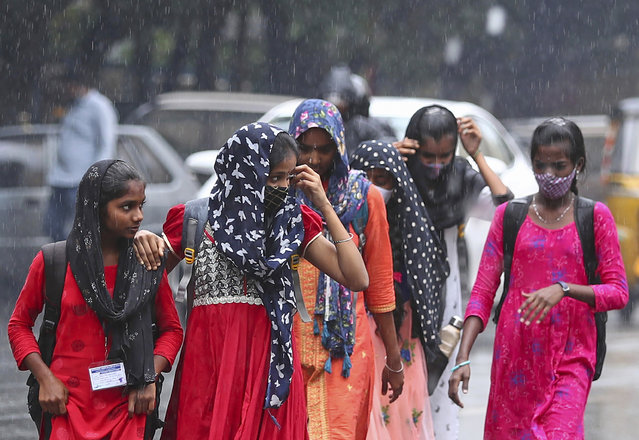
People walk in the rain in Hyderabad, India, Saturday, November 20, 2021. (Photo by Mahesh Kumar A./AP Photo)

People walk in the rain in Hyderabad, India, Saturday, November 20, 2021. More than a dozen people have died and dozens are reported missing in the southern Indian state of Andhra Pradesh after days of heavy rains, authorities said. (Photo by Mahesh Kumar A./AP Photo)
Details
27 Nov 2021 07:40:00
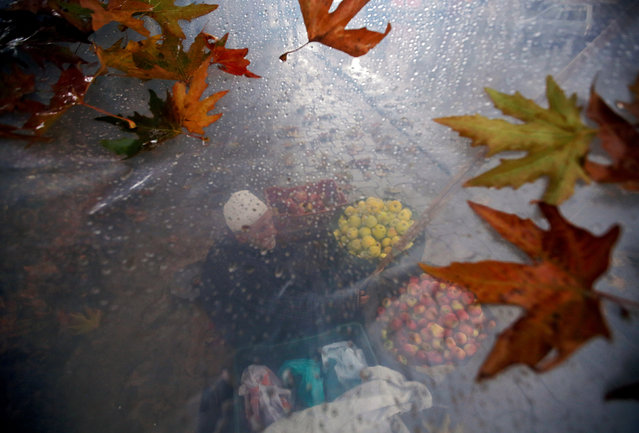
A roadside vendor selling apples is seen through a plastic sheet that he uses to cover himself from rain, in Srinagar November 14, 2018. (Photo by Danish Ismail/Reuters)

A roadside vendor selling apples is seen through a plastic sheet that he uses to cover himself from rain, in Srinagar, Indian state of Jammu and Kashmir on November 14, 2018. (Photo by Danish Ismail/Reuters)
Details
29 Nov 2018 00:05:00
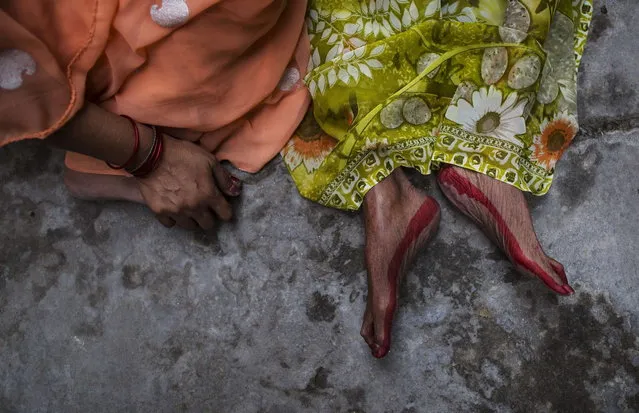
A relative (L) of Champa Devi, 88, sits next to her body, minutes after her death at Mukti Bhavan (Salvation House) at Varanasi, in the northern Indian state of Uttar Pradesh, June 21, 2014. (Photo by Danish Siddiqui/Reuters)

A relative (L) of Champa Devi, 88, sits next to her body, minutes after her death at Mukti Bhavan (Salvation House) at Varanasi, in the northern Indian state of Uttar Pradesh, June 21, 2014. The city of Varanasi, on the banks of the River Ganges, is widely considered Hinduism's holiest city and many Hindus believe that dying there and having their remains scattered in the Ganges allows their soul to escape a cycle of death and rebirth, attaining “moksha” or salvation. “Mukti Bhavan” or “Salvation House”, is a charity-run hostel that caters for people who wish to come to Varanasi to die. Guests can normally stay up to two weeks after which, if they haven't yet passed away, they are gently asked to leave. (Photo by Danish Siddiqui/Reuters)
Details
24 Jul 2014 12:32:00
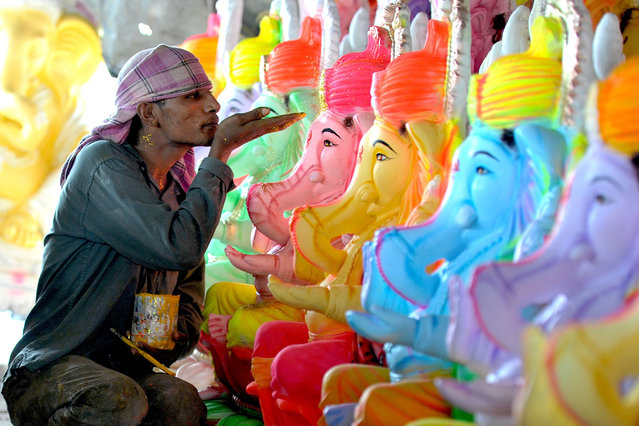
An Indian artists uses sparkles to decorate statues of the Hindu god Lord Ganesh ahead of the forthcoming Ganesh Chaturthi festival at a workshop in Hyderabad on August 29, 2016. The statues are being prepared for the Ganesh Chaturthi festival a popular eleven-day long Hindu religious festival in India which will be celebrated from September 5 to 15. (Photo by Noah Seelam/AFP Photo)

An Indian artists uses sparkles to decorate statues of the Hindu god Lord Ganesh ahead of the forthcoming Ganesh Chaturthi festival at a workshop in Hyderabad on August 29, 2016. The statues are being prepared for the Ganesh Chaturthi festival a popular eleven-day long Hindu religious festival in India which will be celebrated from September 5 to 15. (Photo by Noah Seelam/AFP Photo)
Details
31 Aug 2016 11:54:00
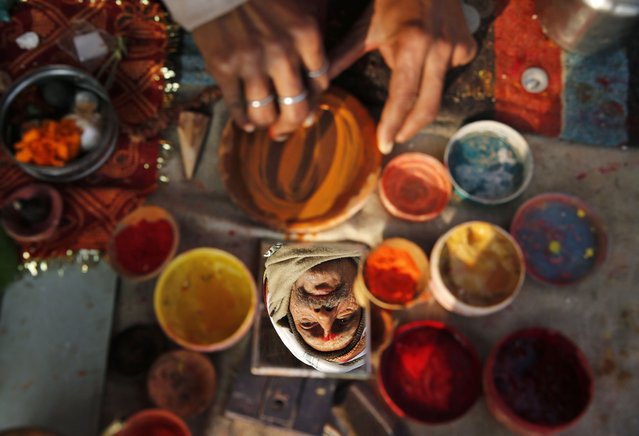
A Hindu holy man is reflected on a mirror as he prepares a bowl of vermillion powder for devotees near “Sangam”, the confluence of holy rivers of Ganges, Yamuna and the mythical Saraswati, during the annual traditional fair of Magh Mela in Allahabad, in the northern Indian state of Uttar Pradesh, India, Tuesday, January 6, 2015. (Photo by Rajesh Kumar Singh/AP Photo)

A Hindu holy man is reflected on a mirror as he prepares a bowl of vermillion powder for devotees near “Sangam”, the confluence of holy rivers of Ganges, Yamuna and the mythical Saraswati, during the annual traditional fair of Magh Mela in Allahabad, in the northern Indian state of Uttar Pradesh, India, Tuesday, January 6, 2015. Hundreds of thousands of devout Hindus are expected to take holy dips at the confluence during the astronomically auspicious period of over 45 days celebrated as Magh Mela. (Photo by Rajesh Kumar Singh/AP Photo)
Details
07 Jan 2015 13:41:00