Loading...
Done
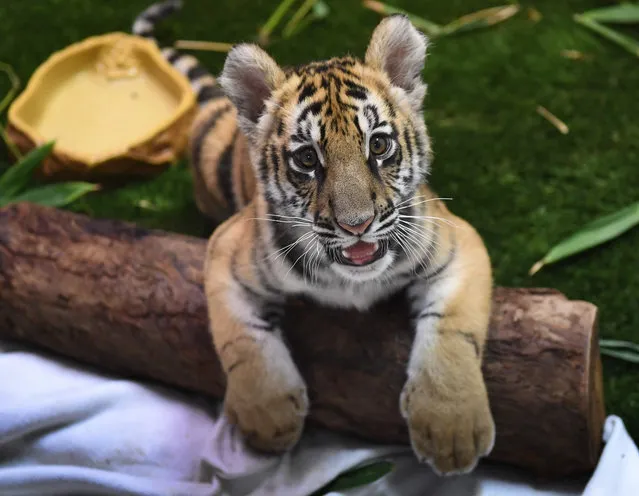
A young Bengal tiger cub smuggled into the US and seized at the Mexico border is displayed for the media during Operation Jungle Book at the US Fish and Wildlife Service in Torrance, California on October 20, 2017. Operation Jungle Book, a law enforcement initiative led by the US Fish and Wildlife Service that targeted wildlife smuggling, resulting in federal criminal charges against defendants who allegedly participated in the illegal importation and/ or transportation of numerous animal species – including a tiger, monitor lizards, cobras, Asian “lucky” fish, exotic songbirds and several coral species. (Photo by Mark Ralston/AFP Photo)

A young Bengal tiger cub smuggled into the US and seized at the Mexico border is displayed for the media during Operation Jungle Book at the US Fish and Wildlife Service in Torrance, California on October 20, 2017. Operation Jungle Book, a law enforcement initiative led by the US Fish and Wildlife Service that targeted wildlife smuggling, resulting in federal criminal charges against defendants who allegedly participated in the illegal importation and/ or transportation of numerous animal species – including a tiger, monitor lizards, cobras, Asian “lucky” fish, exotic songbirds and several coral species. (Photo by Mark Ralston/AFP Photo)
Details
29 Oct 2017 08:30:00
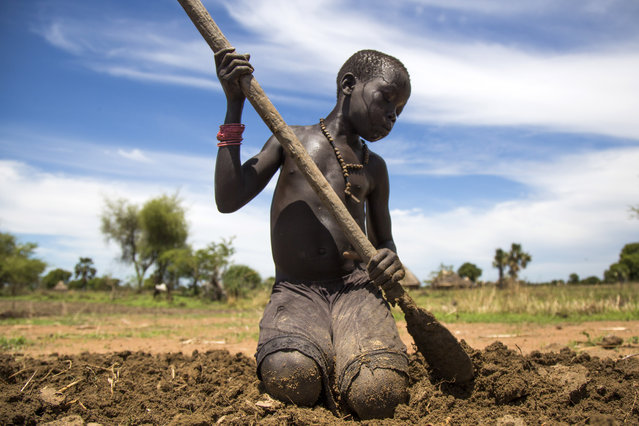
Nyibol Lual, 13 years old, helps her family to prepare the land for cultivation on May 31, 2017, in Panthau, Northern Bahr al Ghazal, South Sudan. The family has a small land where they cultivate sorghum. An estimated 63 per cent of the population in Northern Bahr al Ghazal is experiencing severe food insecurity, according to the latest Integrated Food Security Phase Classification (IPC) report. The situation is particularly bad in Aweil West and Aweil South counties, where the exhaustion of household food stocks and growing dependence on financially inaccessible markets have left the population facing Emergency levels of food insecurity. (Photo by Albert Gonzalez Farran/AFP Photo)

Nyibol Lual, 13 years old, helps her family to prepare the land for cultivation on May 31, 2017, in Panthau, Northern Bahr al Ghazal, South Sudan. The family has a small land where they cultivate sorghum. An estimated 63 per cent of the population in Northern Bahr al Ghazal is experiencing severe food insecurity, according to the latest Integrated Food Security Phase Classification (IPC) report. The situation is particularly bad in Aweil West and Aweil South counties, where the exhaustion of household food stocks and growing dependence on financially inaccessible markets have left the population facing Emergency levels of food insecurity. (Photo by Albert Gonzalez Farran/AFP Photo)
Details
01 Jun 2017 10:10:00
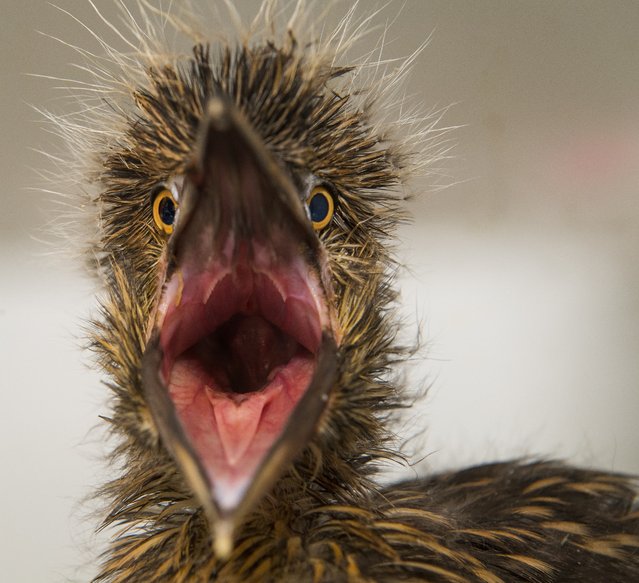
A baby Black-crowned Night Heron squawks in its incubator while being cared for at City Wildlife rescue and rehabilitation center in Washington, DC on May 31, 2017. The heron is one of several that have been brought to CW by the staff at The National Zoo over the past few years. The heron is a native bird and has made an established rookery inside the zoo grounds over a hundred years ago.  Every year at this time, some of the chicks get pushed or fall out of the nest and require human care.  Because the birds are native and not part of the Smithsonian collection, they partnered with CW to rehabilitate the herons for re-release back to the flock inside Zoo. They're reintroduced back to their flock so that they can migrate together in the Fall. The Black-crowned heron usually migrates from the DC area down to southeast North Carolina, some going as far as Jacksonville, FL in winter. The Black-crowned heron is the species of greatest conservation need in the District of Columbia because their numbers are in such rapid decline due to habitat loss. (Photo Linda Davidson/The Washington Post)

A baby Black-crowned Night Heron squawks in its incubator while being cared for at City Wildlife rescue and rehabilitation center in Washington, DC on May 31, 2017. The heron is one of several that have been brought to CW by the staff at The National Zoo over the past few years. (Photo Linda Davidson/The Washington Post)
Details
04 Jun 2017 08:04:00
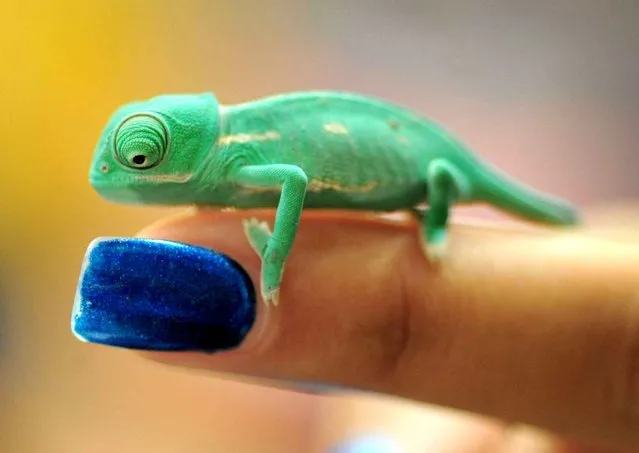
A one month old Turquoise colored Green Veiled Chameleon perches on a finger in the Cardin's Chameleons boothat Repticon 2014 Sunday, August 3, 2014 in Jacksonville, Fla. The vendor specializes in captive bred and born Veiled Chameleons and this particular specimen cost $40.00. (Photo by Bob Self/AP Photo/The Florida Times-Union)

A one month old Turquoise colored Green Veiled Chameleon perches on a finger in the Cardin's Chameleons boothat Repticon 2014 Sunday, August 3, 2014 in Jacksonville, Fla. The vendor specializes in captive bred and born Veiled Chameleons and this particular specimen cost $40.00. The Repticon reptile and Exotic Animal show made its stop in Jacksonville over Saturday and Sunday offering a variety of cold blooded critters and related supplies for sale at the University Center on the University of North Florida campus. The show, which travels nationally stops in Jacksonville several times a year according to event vendor team leader Patty Healey. (Photo by Bob Self/AP Photo/The Florida Times-Union)
Details
09 Aug 2014 11:36:00
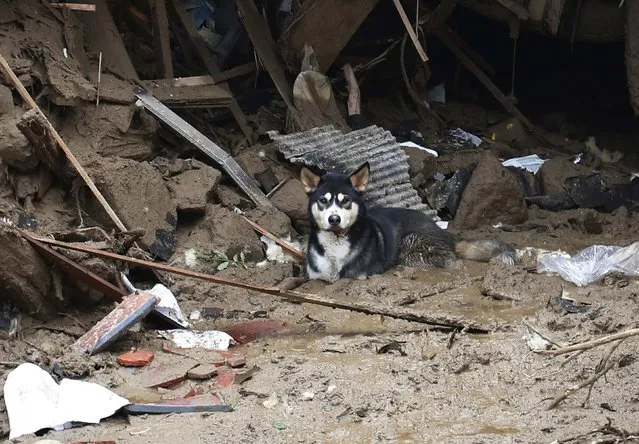
A dog takes a rest under a destroyed house at a site where a landslide swept through a residential area at Asaminami ward in Hiroshima, western Japan, August 20, 2014. (Photo by Toru Hanai/Reuters)

A dog takes a rest under a destroyed house at a site where a landslide swept through a residential area at Asaminami ward in Hiroshima, western Japan, August 20, 2014. At least 36 people, including several children, were killed in Japan on Wednesday, when landslides triggered by torrential rain slammed into the outskirts of the western city of Hiroshima, and the toll could rise further, police said. Seven people were missing after a month's worth of rain fell overnight, loosening slopes already saturated by heavy rain over the past few weeks. (Photo by Toru Hanai/Reuters)
Details
21 Aug 2014 10:13:00
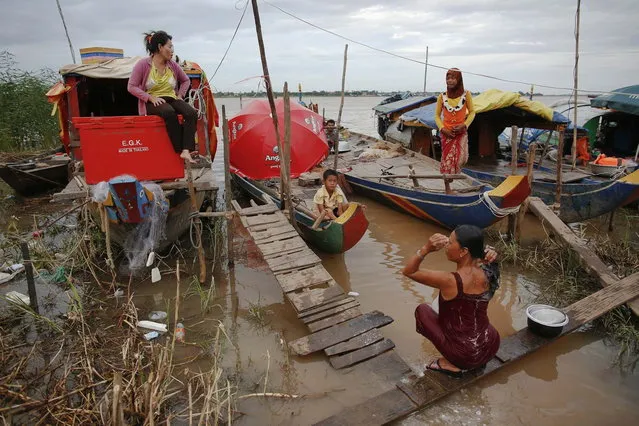
Ethnic Cham Muslim people pass the time near their boats on banks of Mekong river in Phnom Penh July 29, 2013. (Photo by Damir Sagolj/Reuters)

Ethnic Cham Muslim people pass the time near their boats on banks of Mekong river in Phnom Penh July 29, 2013. About 100 ethnic Cham families, made up of nomads and fishermen without houses or land who arrived at the Cambodian capital in search of better lives, live on their small boats on a peninsula where the Mekong and Tonle Sap rivers meet, just opposite the city's centre. The community has been forced to move several times from their locations in Phnom Penh as the land becomes more valuable. They fear that their current home, just behind a new luxurious hotel under construction at the Chroy Changva district is only temporary and that they would have to move again soon. (Photo by Damir Sagolj/Reuters)
Details
31 Jul 2013 06:34:00
World's Ugliest Dog

It's that time of year again when dogs with unusually large heads, hairless bodies and other oddities compete to be the World's Ugliest Dog. This year's winner? A 2-year-old mutt named Peanut, whose wild white and brown hair, bulging eyes and protruding teeth belie his sweet, energetic personality. Peanut's owner, Holly Chandler of Greenville, North Carolina, says he was seriously burned as a puppy and she wants to use her pet to raise awareness about animal abuse. She plans to use the $1,500 prize to pay for other animals' veterinary bills. The contest, held at the Sonoma-Marin Fairgrounds in Petaluma, California, is in its 26 year. The dogs are scored by a three-judge panel in several categories, including special or unusual attributes, personality and natural ugliness.
Details
24 Jun 2014 10:04:00
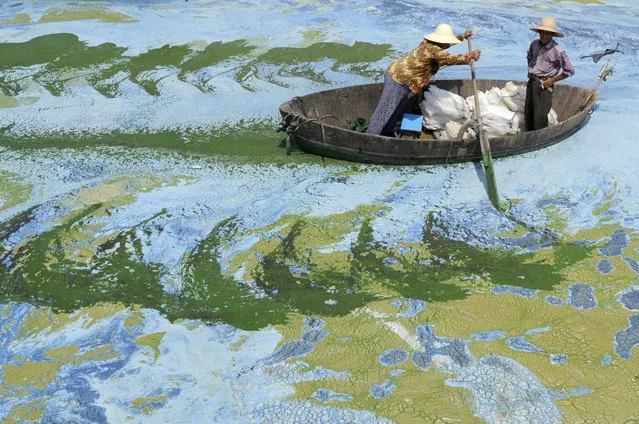
Fishermen row a boat in the algae-filled Chaohu Lake in Hefei, Anhui province, June 19, 2009. The country has invested 51 billion yuan ($7.4 billion) towards the construction of 2,712 projects for the treatment of eight rivers and lakes including Huaihe River, Haihe River, Liaohe River, Chaohu Lake, Dianchi Lake, Songhua River, the Three Gorges region of the Yangtze River and its upstream area, Xinhua News Agency reported. (Photo by Jianan Yu/Reuters)

Growing cities, overuse of fertilizers and factory wastewater have degraded China's water supplies to the extent that half the nation's rivers and lakes are severely polluted. China aims to spend $850 billion to improve filthy water supplies over the next decade, but even such huge outlays may do little to reverse damage caused by decades of pollution and overuse in Beijing's push for rapid economic growth. Photo: Fishermen row a boat in the algae-filled Chaohu Lake in Hefei, Anhui province, June 19, 2009. (Photo by Jianan Yu/Reuters)
Details
03 Aug 2014 08:01:00