Loading...
Done
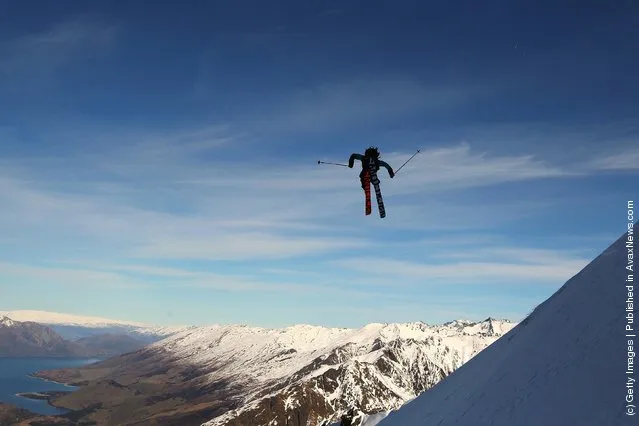
Freeskier Chris Booth of Australia launches off a drop during the World Heli Challenge freestyle day in backcountry at Minaret Station on July 31, 2011 in Wanaka, New Zealand

“Freestyle skiing is an acrobatic form of technical and aerial skiing. It is organized into a number of different disciplines”. – Wikipedia

Photo: Freeskier Chris Booth of Australia launches off a drop during the World Heli Challenge freestyle day in backcountry at Minaret Station on July 31, 2011 in Wanaka, New Zealand. (Photo by Cameron Spencer/Getty Images)
Details
31 Jul 2011 14:02:00
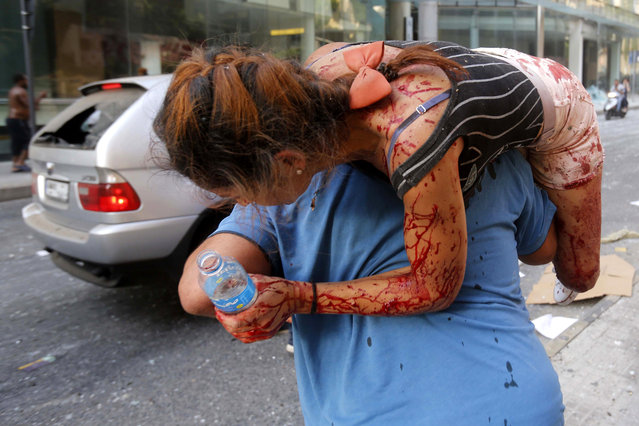
A man carries away an injured girl while walking through debris past in the Achrafiyeh district in the centre of Lebanon's capital Beirut on August 4, 2020, following an explosion at the nearby port of Beirut. (Photo by The Mega Agency/Stringer)

A man carries away an injured girl while walking through debris past in the Achrafiyeh district in the centre of Lebanon's capital Beirut on August 4, 2020, following an explosion at the nearby port of Beirut. (Photo by The Mega Agency/Stringer)
Details
06 Feb 2021 09:01:00
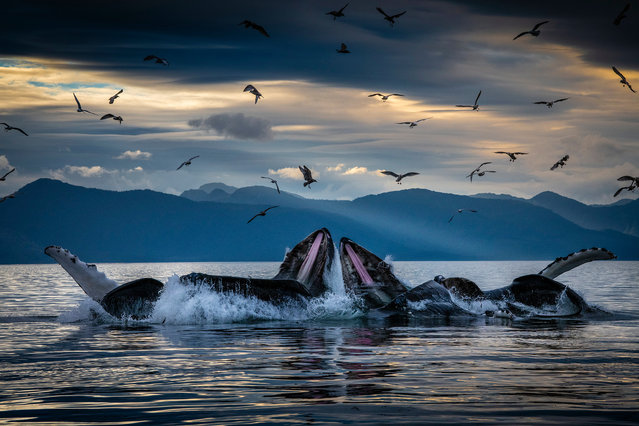
“Secrets of the Whales”. Skerry’s photographs celebrate the lives and culture of whales, illuminating recent research and their diverse behaviours. His latest work focuses on four key species: sperm whales, humpbacks, orca and beluga whales. Humpback whales bubble-net feeding off the coast of Alaska. They work cooperatively to feed on herring by blowing a perfect ring of bubbles underwater to form a net encircling the fish. The whales then swim up through the centre of the bubble net with their mouths open. (Photo by Brian Skerry/National Geographic Photo/Visa pour l'Image)

“Secrets of the Whales”. Skerry’s photographs celebrate the lives and culture of whales, illuminating recent research and their diverse behaviours. His latest work focuses on four key species: sperm whales, humpbacks, orca and beluga whales. Humpback whales bubble-net feeding off the coast of Alaska. They work cooperatively to feed on herring by blowing a perfect ring of bubbles underwater to form a net encircling the fish. The whales then swim up through the centre of the bubble net with their mouths open. (Photo by Brian Skerry/National Geographic Photo/Visa pour l'Image)
Details
04 Sep 2021 09:02:00
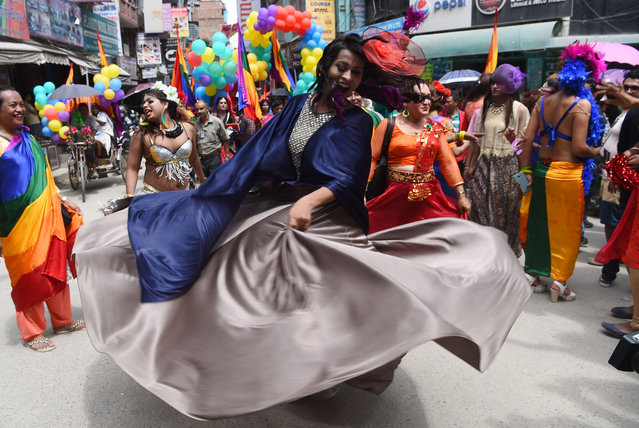
Nepali members of the LGBT community take part in a Gay Pride parade in Kathmandu on August 8, 2017. Scores of gays, lesbians, transvestites and transsexuals from across the country took part in the rally to spread their campaign for sexual rights in the country. In 2013 Nepal introduced citizenships with a third gender option and began issuing passports reflecting the same in 2015. (Photo by Prakash Mathema/AFP Photo)

Nepali members of the LGBT community take part in a Gay Pride parade in Kathmandu on August 8, 2017. Scores of gays, lesbians, transvestites and transsexuals from across the country took part in the rally to spread their campaign for sexual rights in the country. In 2013 Nepal introduced citizenships with a third gender option and began issuing passports reflecting the same in 2015. (Photo by Prakash Mathema/AFP Photo)
Details
09 Aug 2017 07:43:00
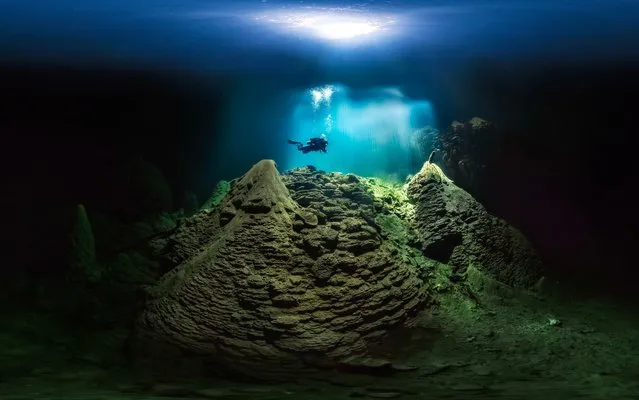
Cave Diver, Anhumas Abyss, Bonito, Brazil: The Anhumas Abyss is an underground cavern with a crystal-clear lake below, more than 260 feet (79 m) deep. A visitor must enter through a narrow opening at the top of the chamber and rappel into the cave. Snorkeling and scuba diving in the lake reveal amazing scenery. Distinctive, conical limestone stalagmites and stalactites occupy the lake and the surrounding area, some reaching 65 feet (20 m) high. “One must rappel about 235 feet (72 m) to get down into this deep lake. The photo was taken at a depth of 50 feet (15 m). It was a challenge to create the image because of the high contrast, plus the diver could not see into the darkness, making communication impossible”. (Photo by Marcio Cabral/Nature’s Best Photography Awards 2017)

Cave Diver, Anhumas Abyss, Bonito, Brazil: The Anhumas Abyss is an underground cavern with a crystal-clear lake below, more than 260 feet (79 m) deep. A visitor must enter through a narrow opening at the top of the chamber and rappel into the cave. Snorkeling and scuba diving in the lake reveal amazing scenery. Distinctive, conical limestone stalagmites and stalactites occupy the lake and the surrounding area, some reaching 65 feet (20 m) high. (Photo by Marcio Cabral/Nature’s Best Photography Awards 2017)
Details
26 Oct 2017 08:10:00
Idiots - iPhone Parody

Barcelona-based visual effects/3D animation company Big Lazy Robot brings us a beautiful animated video that uses an alternate robotic world to satirize our dependence on technology.

Details
11 Sep 2014 13:19:00
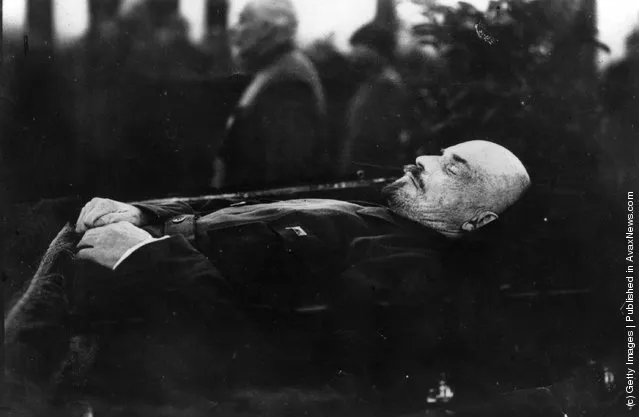
1924:  Vladimir Ilyich Lenin lying in state in the Kremlin

Photo: Vladimir Ilyich Lenin (1870 – 1924) lying in state in the Kremlin. (Photo by Hulton Archive/Getty Images). 1924

Important! For the same article in Russian language click here.

Something quite intriguing is happening within Russian-speaking internet during the last few – should you type a fully academic inquiry (at least, according to Russian academic requirements) in national search engines for "Lenin's mausoleum" – the first thing you get (even in top 10 searches) is website pages talking about black magic and occult. Website authors view this construction differently, but unconditionally agree on one thing: the mausoleum of the "leader of the world proletariat” – the essence of a magical artifact, a sort of “energy vampire”. It was built with a certain purpose: to drain the energy out of miserable Soviet citizens on one hand; and to poison the anthroposphere of one-sixth part of the earth with its vibes (the exact territory that was occupied by the former Soviet Union), depriving the Russian people of will to resist on the other hand. Complete nonsense? No doubt. Nevertheless, an intriguing one. Well, probably because some oddities do exist in mausoleum's history. These oddities are the thing we are going to discuss this time. First, let me refresh you memory on the subject.
Details
16 Oct 2011 11:27:00
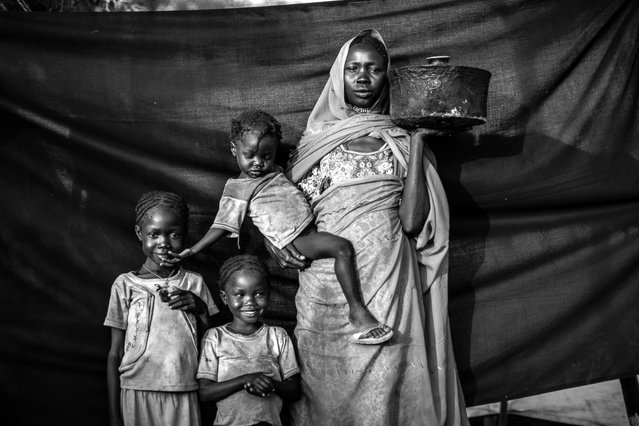
Magbola Alhadi, 20, and her three children pose for a portrait in Jamam refugee camp in Maban County, South Sudan on August 11th, 2012. Magboola and her family weathered aerial bombing raids for several months, but decided it was time to leave their village of Bofe the night that soldiers arrived and opened fire. (Photo by Brian Sokol/Panos Pictures)

Magbola Alhadi, 20, and her three children pose for a portrait in Jamam refugee camp in Maban County, South Sudan on August 11th, 2012. Magboola and her family weathered aerial bombing raids for several months, but decided it was time to leave their village of Bofe the night that soldiers arrived and opened fire. With her three children, she travelled for 12 days from Bofe to the town of El Fudj, on the South Sudanese border. The most important thing that Magboola was able to bring with her is the saucepan she holds in this photograph. It wasn't the largest pot that she had in Bofe, but it was small enough she could travel with it, yet big enough to cook sorghum for herself and her three daughters (from left: Aduna Omar, 6, Halima Omar, 4, and Arfa Omar, 2) during their journey. (Photo by Brian Sokol/Panos Pictures)
Details
18 Sep 2015 15:04:00