Loading...
Done
A group of dust covered child labourers gather for a portrait in the brick kiln in Kathmandu Valley, Nepal, 22 February 2015. Bleak photos identify the children working their fingers to the bone in Nepalís brick kilns. Photographer Jan Mˆller Hansen documented the conditions of the brick kilns in Kathmandu Valley, Nepal between 2013 and 2016 while he lived and worked in the area. Jan estimates between 150,000 and 175,000 people are employed in the 200 brick kilns littering the Kathmandu Valley. (Photo by Jan Moeller Hansen/Barcroft Images)

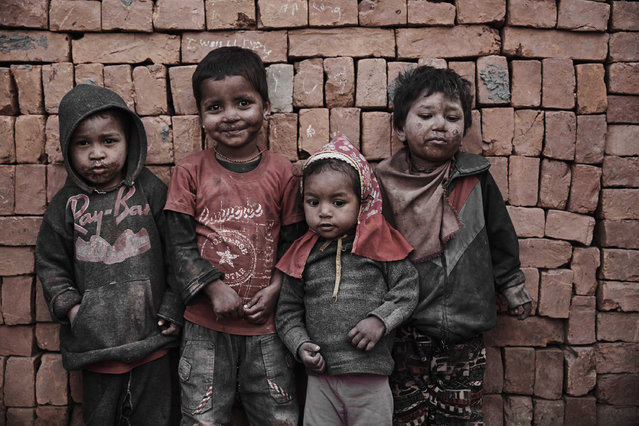
A group of dust covered child labourers gather for a portrait in the brick kiln in Kathmandu Valley, Nepal, 22 February 2015. Bleak photos identify the children working their fingers to the bone in Nepalís brick kilns. Photographer Jan Mˆller Hansen documented the conditions of the brick kilns in Kathmandu Valley, Nepal between 2013 and 2016 while he lived and worked in the area. Jan estimates between 150,000 and 175,000 people are employed in the 200 brick kilns littering the Kathmandu Valley. (Photo by Jan Moeller Hansen/Barcroft Images)
Details
04 Feb 2017 01:04:00
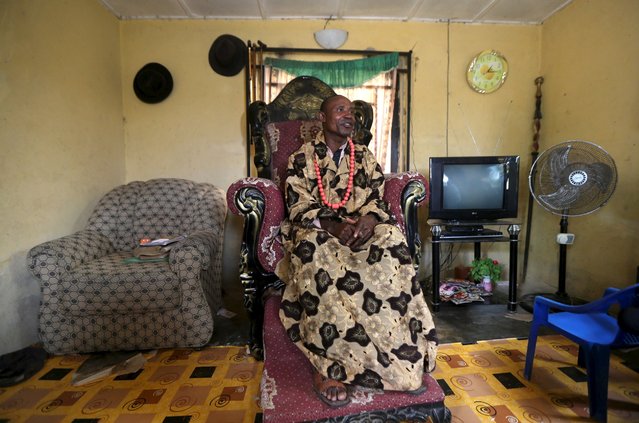
Deputy community chief of Yeneka village Douglas Oguta poses for a portrait in his home on the outskirts of the Bayelsa state capital, Yenagoa, in Nigeria's delta region October 8, 2015. (Photo by Akintunde Akinleye/Reuters)

Deputy community chief of Yeneka village Douglas Oguta poses for a portrait in his home on the outskirts of the Bayelsa state capital, Yenagoa, in Nigeria's delta region October 8, 2015. Tensions are building in the swampland of the Niger Delta as an amnesty that aimed to bring stability to Nigeria's volatile southern region is due to expire at the end of the year. While the region's towns and cities are mostly calm, local residents say kidnappings and armed robberies are on the increase in the mangrove swamps, where most oil wells are located. (Photo by Akintunde Akinleye/Reuters)
Details
17 Oct 2015 08:01:00
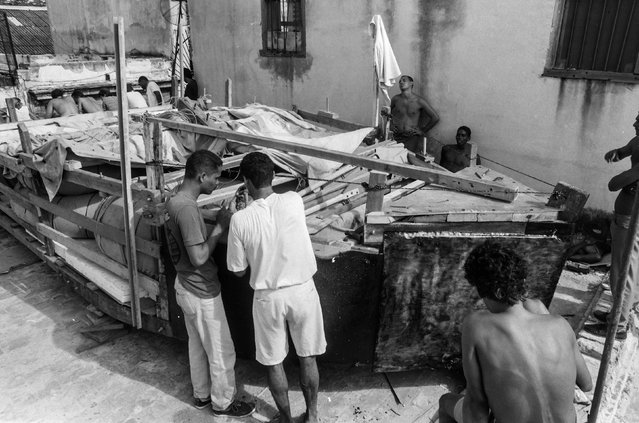
Rolando Pujol Rodriguez photographed the Cuban raft exodus in 1994, and twenty years later Enrique de la Osa took portraits of some of the people who made it to the United States, in this story which combines archive and present day images. Here: People put the finishing touches to a makeshift boat on a rooftop before lowering it onto a truck and launching it into the Straits of Florida towards the U.S., on the last day of the 1994 Cuban raft exodus in Havana, in this September 13, 1994 file photo. (Photo by Rolando Pujol Rodriguez/Reuters)

Rolando Pujol Rodriguez photographed the Cuban raft exodus in 1994, and twenty years later Enrique de la Osa took portraits of some of the people who made it to the United States, in this story which combines archive and present day images. Here: People put the finishing touches to a makeshift boat on a rooftop before lowering it onto a truck and launching it into the Straits of Florida towards the U.S., on the last day of the 1994 Cuban raft exodus in Havana, in this September 13, 1994 file photo. (Photo by Rolando Pujol Rodriguez/Reuters)
Details
13 Nov 2014 14:07:00
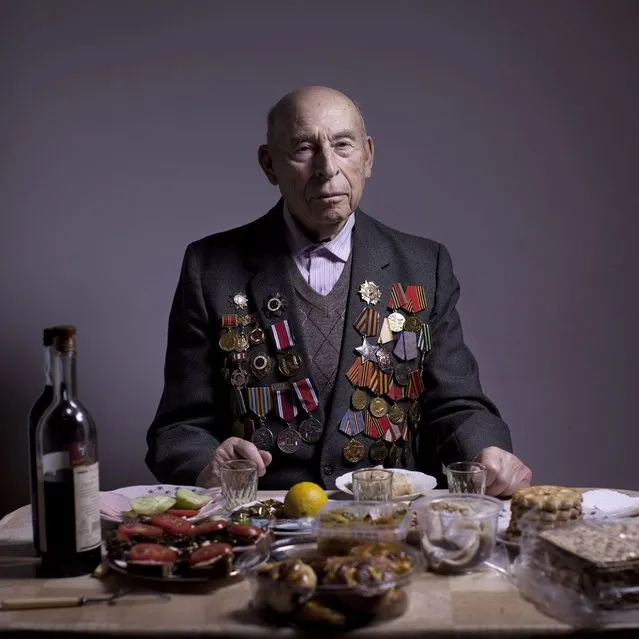
In this photo made Thursday, April 11, 2013, Soviet Jewish World War Two veteran Boris Ginsburg poses for a portrait at his house in the southern Israeli city of Ashdod. Ginsburg, born in Belorussia, was kept by a German garrison in the Lenin ghetto since 1941 until its destruction by partisan units in September 1942. (Photo by Oded Balilty/AP Photo)

In this photo made Thursday, April 11, 2013, Soviet Jewish World War Two veteran Boris Ginsburg poses for a portrait at his house in the southern Israeli city of Ashdod. Ginsburg, born in Belorussia, was kept by a German garrison in the Lenin ghetto since 1941 until its destruction by partisan units in September 1942. In 1942 he joined the partisans for two years and in 1944 he joined the Red Army as a combat soldier and fought till the and of the war. Ginsubrg demobilized in 1947 and immigrated to Israel in 2001. About 500,000 Soviet Jews served in the Red Army during World War Two, and the majority of those still alive today live in Israel. (Photo by Oded Balilty/AP Photo)
Details
07 May 2013 08:08:00
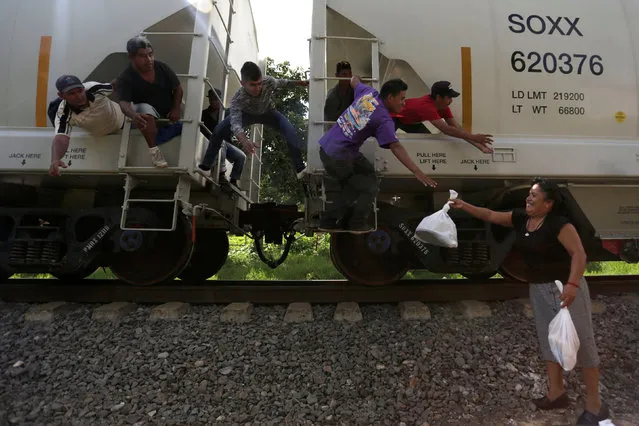
A woman from a group called “Las Patronas” (The bosses), a charitable organization that feeds Central American immigrants who travel atop a freight train known as “La Bestia”, passes food and water to immigrants on their way to the border with the United States, at Amatlan de los Reyes, in Veracruz state, Mexico October 22, 2016. (Photo by Daniel Becerril/Reuters)

A woman from a group called “Las Patronas” (The bosses), a charitable organization that feeds Central American immigrants who travel atop a freight train known as “La Bestia”, passes food and water to immigrants on their way to the border with the United States, at Amatlan de los Reyes, in Veracruz state, Mexico October 22, 2016. (Photo by Daniel Becerril/Reuters)
Details
18 Nov 2016 10:55:00
A truck laden with logs travels in Araribóia Indigenous Reserve, Maranhão, Brazil on August 7, 2015. Loggers have been stealing hardwood trees from indigenous lands in Brazil. The Guardians of the Forest are an armed militia formed by the Guajajara tribe to protect their reserve. (Photo by Bonnie Jo Mount/The Washington Post)

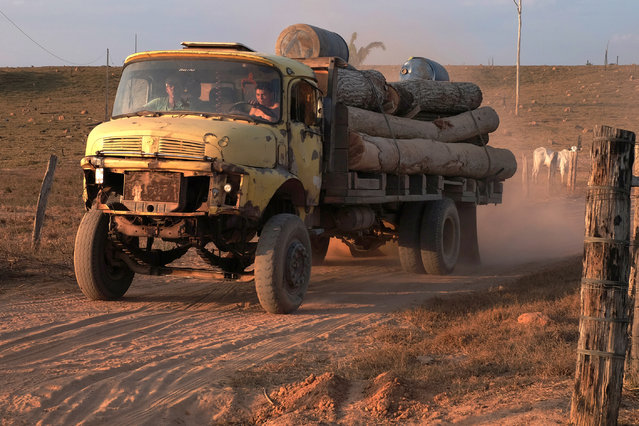
A truck laden with logs travels in Araribóia Indigenous Reserve, Maranhão, Brazil on August 7, 2015. Loggers have been stealing hardwood trees from indigenous lands in Brazil. The Guardians of the Forest are an armed militia formed by the Guajajara tribe to protect their reserve. (Photo by Bonnie Jo Mount/The Washington Post)
Details
09 Oct 2015 08:00:00
Cooked and coloured eggs travel along the production line at the Schrall coloured eggs company in the Austrian Village of Diendorf March 16, 2015. (Photo by Leonhard Foeger/Reuters)

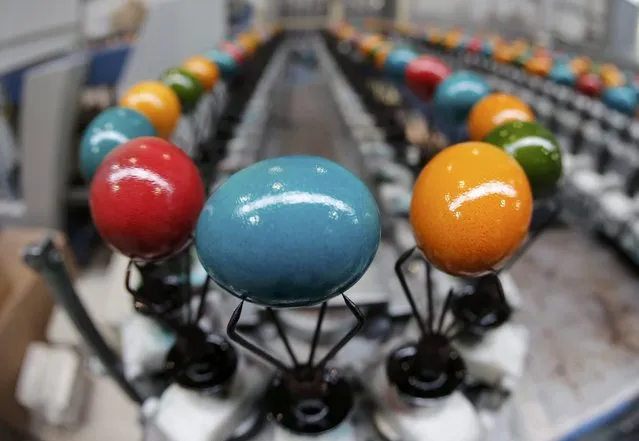
Cooked and coloured eggs travel along the production line at the Schrall coloured eggs company in the Austrian Village of Diendorf March 16, 2015. Schrall is one of Austria's biggest Easter and coloured eggs producers and makes between eight and 10 million coloured eggs throughout year. (Photo by Leonhard Foeger/Reuters)
Details
17 Mar 2015 12:26:00
Yu Jietao, 26-year-old wood carver, sits in his homemade wooden car along a street in Guangfeng county of Shangrao, Jiangxi province, China February 9, 2015. The car can travel as fast as 30 km (18.6 miles) per hour, local media reported. (Photo by Reuters/Stringer)

Yu Jietao, 26-year-old wood carver, sits in his homemade wooden car along a street in Guangfeng county of Shangrao, Jiangxi province, China February 9, 2015. The car can travel as fast as 30 km (18.6 miles) per hour, local media reported. (Photo by Reuters/Stringer)
Details
13 May 2015 10:51:00