Loading...
Done


Thousands of people were watching the Shoreham Air Show when it turned to horror as a Hawker Hunter plane crashed into a busy bypass, hitting at least four cars – including a wedding limousine.

More Information
Details
25 Aug 2015 10:07:00
Spectacular images offering insight into the lives of the Huaorani people in the Ecuadorian Amazon have been revealed showing how they use traditional methods to hunt monkeys for food. The stunning pictures were taken by conservation photographer Pete Oxford from Torquay, Devon in the Ecuadorian Amazon. “The Huaorani Indians are a forest people highly in tune with their environment. Many are now totally acculturated since the 1950s by missionaries”, said Pete. “Today they face radical change to their culture to the proximity of oil exploration within their territory and the Yasuni National Park and Biosphere Reserve, they are vastly changed. Some still live very traditionally and for this shoot, through my Huaorani friend, a direct relative of those photographed he wanted to depict them as close to their original culture as possible. They still largely hunt with blow pipes and spears eating a lot of monkeys and peccaries”. The Huaorani are also known as the Waorani, Waodani or the Waos and are native Amerindians. Their lands are located between the Curaray and Napo rivers and speak the Huaorani language. Pete says that during his visit he was welcomed into the group and hopes that ancient cultures can be saved. Here: The tribe were seen celebrating after a hunter returned to camp with a wild pig. (Photo by Pete Oxford/Mediadrumworld.com)

Spectacular images offering insight into the lives of the Huaorani people in the Ecuadorian Amazon have been revealed showing how they use traditional methods to hunt monkeys for food. The stunning pictures were taken by conservation photographer Pete Oxford from Torquay, Devon in the Ecuadorian Amazon. Here: The tribe were seen celebrating after a hunter returned to camp with a wild pig. (Photo by Pete Oxford/Mediadrumworld.com)
Details
20 Jan 2017 07:58:00
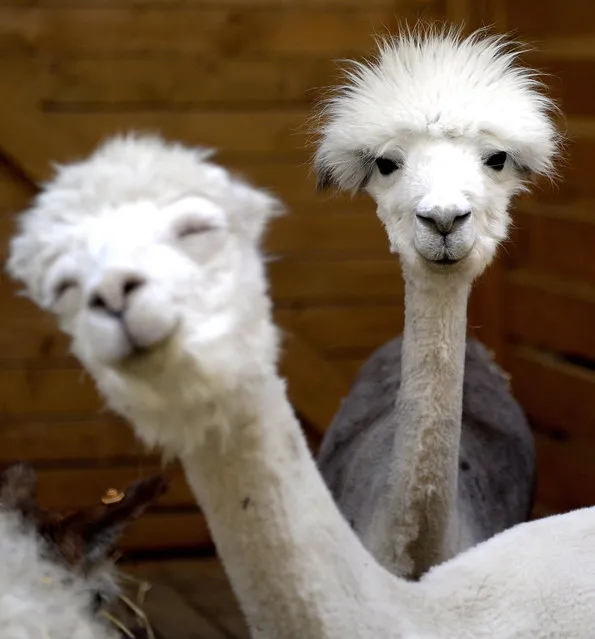
Alpacas peek out of their box in Kielnarowa, Poland, June 11, 2014. A total of 35 female and 3 male alpacas were imported from Chile by the Rzeszow University of Information Technology and Management Center Zoo to be used for the therapy of children. Alpacas also provide one of the most expensive wools. (Photo by Darek Demanowicz/EPA)

Alpacas peek out of their box in Kielnarowa, Poland, June 11, 2014. A total of 35 female and 3 male alpacas were imported from Chile by the Rzeszow University of Information Technology and Management Center Zoo to be used for the therapy of children. Alpacas also provide one of the most expensive wools. (Photo by Darek Demanowicz/EPA)
Details
14 Jun 2014 12:13:00
In this picture made available Thursday July 11, 2013 a  zoo-keeper presents three of twelve ferret babies at Eekholt Zoo in Grossenaspe, Germany,  Wednesday July 10, 2013. The ferret babies were born May 25, 2013. (Photo by Markus Scholz/AP Photo/Dpa)

In this picture made available Thursday July 11, 2013 a zoo-keeper presents three of twelve ferret babies at Eekholt Zoo in Grossenaspe, Germany, Wednesday July 10, 2013. The ferret babies were born May 25, 2013. (Photo by Markus Scholz/AP Photo/Dpa)
Details
14 Jul 2013 08:16:00
Mara Salvatrucha (MS) gang members show off their weapons in the Las Victorias district of San Salvador. (Photo by Adam Hinton)

Mara Salvatrucha (MS) gang members show off their weapons in the Las Victorias district of San Salvador. In March 2012, the two largest gangs in El Salvador - the Mara Salvatrucha (MS) and the Barrio 18 (M18) - agreed on a truce following secret negotiations between gang leaders in prison which were mediated by a bishop and a former rebel leader. It is unclear whether the decision was the idea of the gangs themselves or whether they were encouraged by the government. (Photo by Adam Hinton)
Details
23 Oct 2013 11:59:00


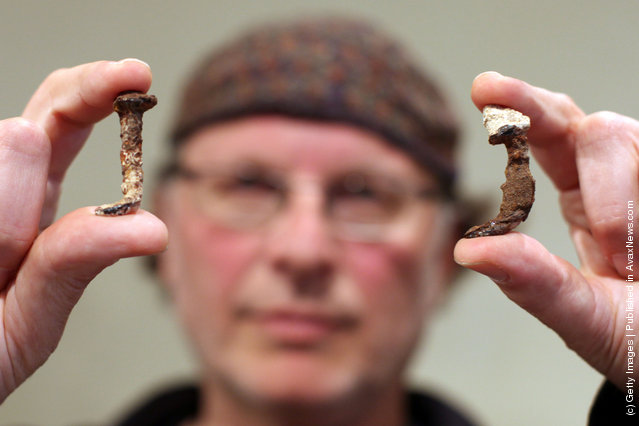
Canadian-Israeli film director Simcha Jacobovici holds two nails during a press conference on April 12, 2011. Jacobovici believes that the two nails discovered in a Jerusalem cave were used in the crucifixion of Jesus Christ. Jacobovici claims that the nails were tracked to an archeology laboratory in Tel Aviv, and though cannot be 100 per cent certain that they are the nails used in the crucifixion of Jesus, he claims if “you put two and two together and they seem to imply that these are the nails”. Experts at the Israel Antiquities Authority though cast doubt on Jacobovici's claims, and suggest that nails are commonly found in such locations. (Photo by Lior Mizrahi/Getty Images)
Details
13 Apr 2011 06:48:00


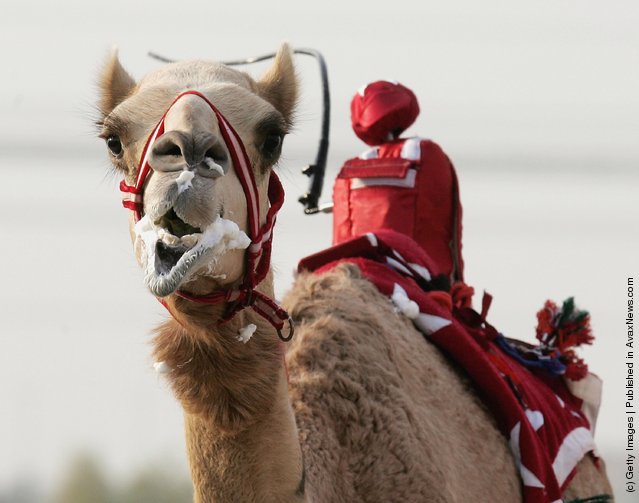
A camel foams at the mouth as he is whipped by a robot jockey during a race at Nad al-Sheba on December 6, 2006 in Dubai, United Arab Emirates. This is the first season that robotic jockeys have been used to race camels in Dubai. Controversially children from India were used to ride the camels in past seasons. These robot jockeys costing 15000GBP and up, were designed in Geneva and include shock absorbers and GPS tracking systems. The camel's owners control them from their speeding four wheel drives at the side of the track. (Photo by Chris Jackson/Getty Images)
Details
01 May 2011 09:01:00
 Activists protesting cuts in subsidies to solar power in Germany protest outside the building where Vice Chancellor and Economy Minister Philipp Roesler and Environment Minister Norbert Roettgen were announcing the cuts

Activists protesting cuts in subsidies to solar power in Germany protest outside the building where Vice Chancellor and Economy Minister Philipp Roesler and Environment Minister Norbert Roettgen were announcing the cuts on February 23, 2012 in Berlin, Germany. (Photo by Sean Gallup/Getty Images)
Details
24 Feb 2012 11:29:00