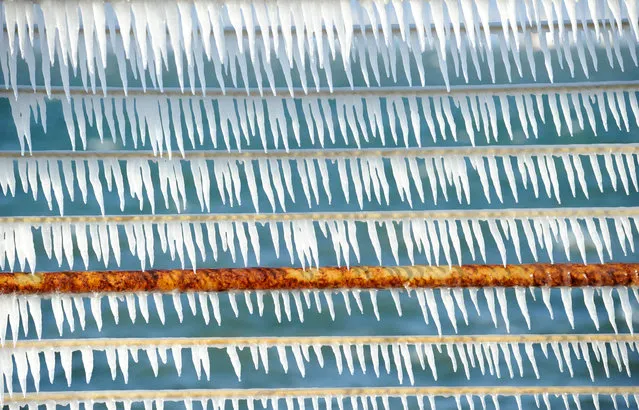
Icicles are seen on a handrail along the coast at Donggang business district in Dalian, Liaoning province, China on December 27, 2018. (Photo by Reuters/China Stringer Network)
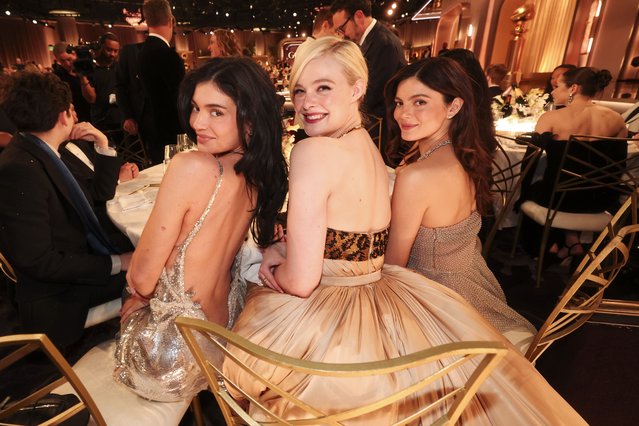
Kylie Jenner, Elle Fanning, Monica Barbaro during the 82nd Annual Golden Globes held at The Beverly Hilton on January 05, 2025 in Beverly Hills, California. (Photo by Christopher Polk/GG2025/Penske Media via Getty Images)
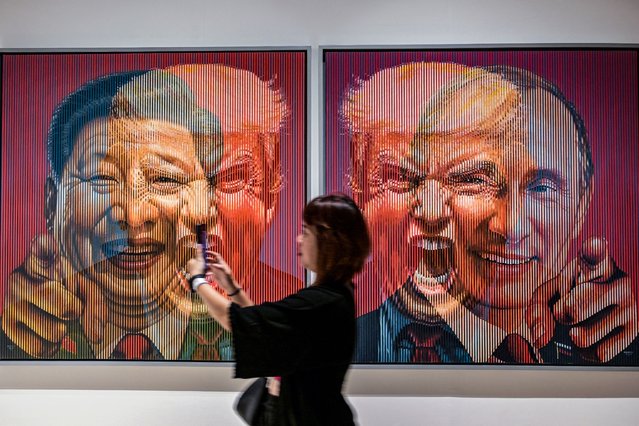
A visitor stands near an art installation portraying China's President Xi Jinping, U.S. President Donald Trump and Russia's President Vladimir Putin during the ARTSUBS exhibition in Surabaya, Indonesia on August 2, 2025. (Photo by Juni Kriswanto/AFP Photo)
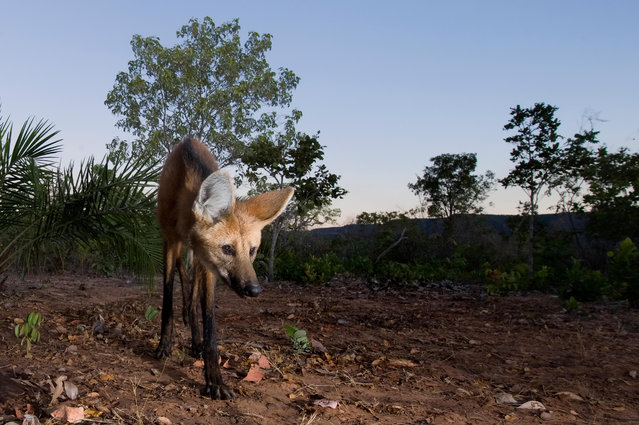
Global wildlife populations will decline by 67% by 2020 unless urgent action is taken to reduce human impact on species and ecosystems, warns the biennial Living Planet Index report from WWF (World Wide Fund for Nature) and ZSL (Zoological Society of London). From elephants to eels, here are some of the wildlife populations most affected by human activity. Here: The maned wolf is among the large mammals in the Brazilian Cerrado that are threatened by the increasing conversion of grasslands into farmland for grazing and growing crops. (Photo by Ben Cranke/Nature Picture Library/Alamy Stock Photo)
A Sotheby's employee poses with a “Return of the Jedi” promotional C-3PO Helmet 1983, estimated at £15,000-£25,000 created by George Lucas' visual effects company during a photocall at Sotheby's in London, Britain on December 6, 2019. (Photo by Thomas Mukoya/Reuters)
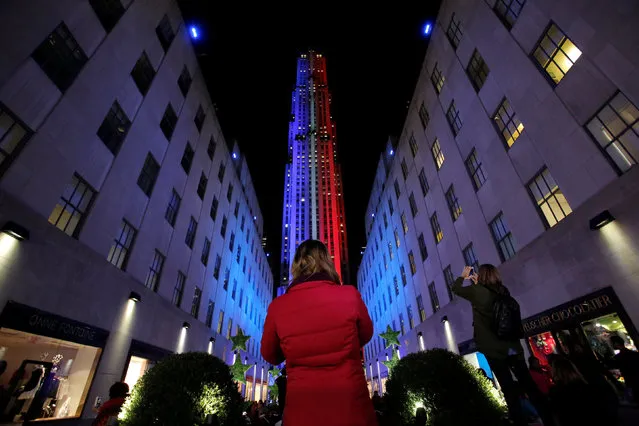
People take pictures of 30 Rockefeller Plaza as it is lit in the colors of the Democratic and Republican parties ahead of the U.S presidential election in Manhattan, New York, U.S., November 7, 2016. (Photo by Andrew Kelly/Reuters)
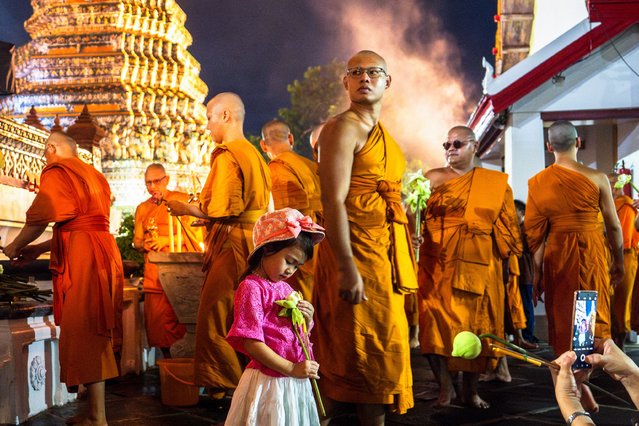
A young worshipper holds a lotus flower as Buddhist monks gather at Wat Arun Buddhist temple during Asaha Bucha day in Bangkok on July 20, 2024. (Photo by Chanakarn Laosarakham/AFP Photo)