Loading...
Done


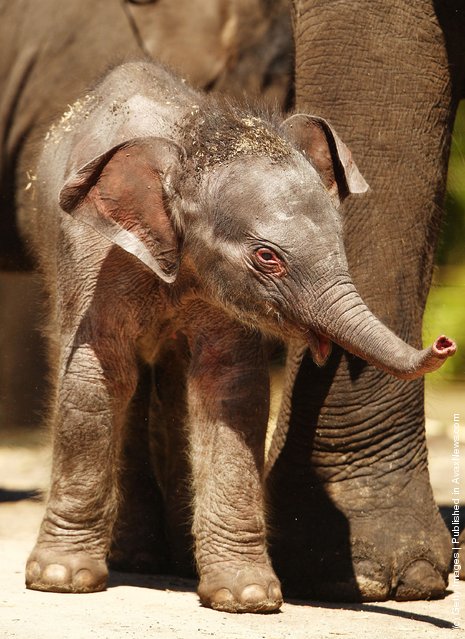
Taronga's first female elephant calf explores the paddock with her mother Pak Boon at Taronga Zoo on November 3, 2010 in Sydney, Australia. The 120kg elephant was born at 1:12am and is Taronga's first female calf and fifth born to The Australian Conservation Management Plan for endangered elephants. The calf will be given a Thai name to reflect the herds' cultural origin. (Photo by Brendon Thorne/Getty Images)
Details
16 Apr 2011 11:01:00
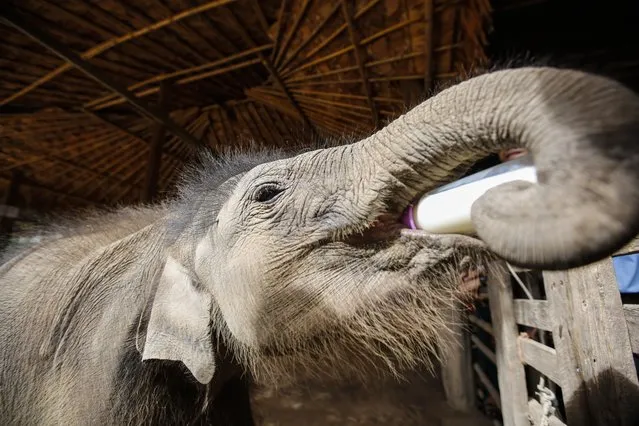
Mary, 8-months-old female orphan elephant, drinks milk at Winga Baw Elephant Conservation Camp during the ceremony to mark World Elephant Day at Bago Region, Myanmar, 12 August 2017. (Photo by Lynn Bo Bo/EPA/EFE)

Mary, 8-months-old female orphan elephant, drinks milk at Winga Baw Elephant Conservation Camp during the ceremony to mark World Elephant Day at Bago Region, Myanmar, 12 August 2017. Winga Baw Elephant Conservation Camp, 34-hectare former timber camp for logs located in Bago Region, currently has 14 elephants and was opened for recreation for locals as well as for tourists. World Elephant Day is marked annually on 12 August. (Photo by Lynn Bo Bo/EPA/EFE)
Details
15 Aug 2017 07:47:00
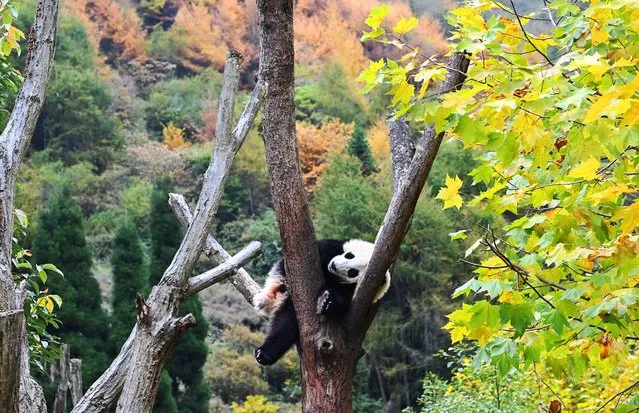
Giant pandas are playing and foraging inside the Shenshuping base of China Conservation and Research Center for the Giant Panda in Wolong National Nature Reserve on November 3, 2021 in Aba Tibetan and Qiang Autonomous Prefecture, Sichuan Province of China. Shenshuping base sits in Aba Tibetan and Qiang Autonomous Prefecture and is committed to the panda's breeding and reproduction. It is the largest conservation and research center for giant pandas along with the bases in Dujiangyan and Ya'an cities in Sichuan. (Photo by An Yuan/China News Service via Getty Images)

Giant pandas are playing and foraging inside the Shenshuping base of China Conservation and Research Center for the Giant Panda in Wolong National Nature Reserve on November 3, 2021 in Aba Tibetan and Qiang Autonomous Prefecture, Sichuan Province of China. (Photo by An Yuan/China News Service via Getty Images)
Details
09 Nov 2021 07:23:00
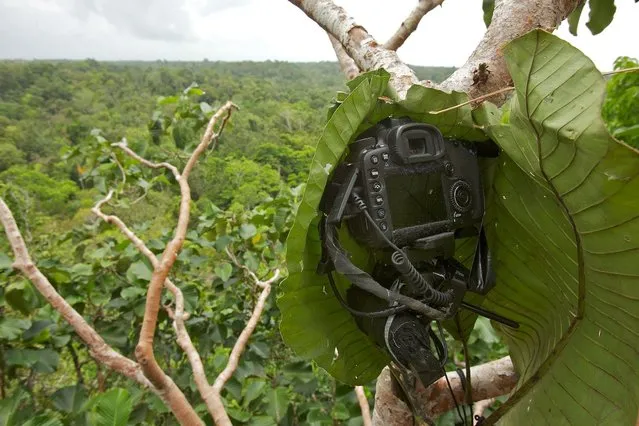
Tim Laman - Wildlife Photojournalist

Tim Laman is a field biologist and wildlife photojournalist. His pioneering research in the rain forest canopy in Borneo led to a PhD from Harvard and his first National Geographic article in 1997. Since then, he has pursued his passion for exploring wild places and documenting little-known and endangered wildlife by becoming a regular contributor to National Geographic. He has eighteen articles to his credit to date, all of which have had a conservation message. Some have focused on endangered species such as Orangutans or Hornbills, while others, such as a series of articles on Conservation International’s Biodiversity Hotspots, have highlighted regions under intense pressure.
Details
14 Sep 2013 10:13:00
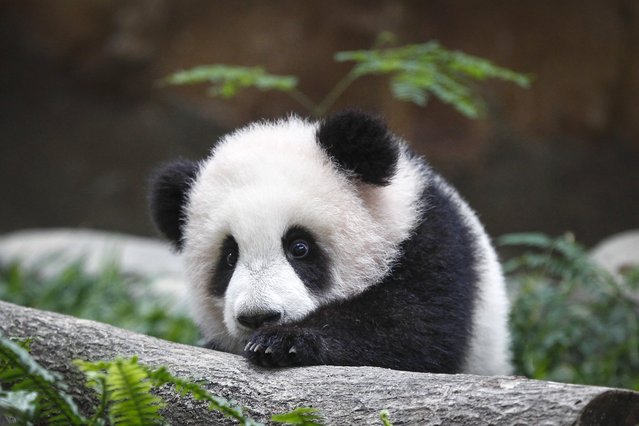
A 6-month old female giant panda cub, an offspring of Xing Xing, formerly known as Fu Wa and Liang Liang, formerly known as Feng Yi, plays at the Giant Panda Conservation Center at the National Zoo in Kuala Lumpur, Malaysia, Thursday, February 18, 2016. (Photo by Joshua Paul/AP Photo)

A 6-month old female giant panda cub, an offspring of Xing Xing, formerly known as Fu Wa and Liang Liang, formerly known as Feng Yi, plays at the Giant Panda Conservation Center at the National Zoo in Kuala Lumpur, Malaysia, Thursday, February 18, 2016. (Photo by Joshua Paul/AP Photo)
Details
21 Feb 2016 11:20:00
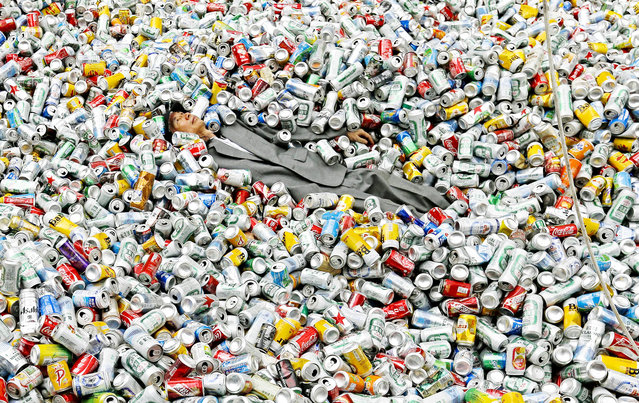
Taiwanese-US artist Chin Chih Yang poses for a photograph with 30,000 aluminum cans after his performance called “Kill Me or Change” in Taipei, Taiwan, 23 April 2016. “Kill Me or Change!” is a performance piece that aims to raise awareness of the benefits of recycling and, encourage people to recycle to conserve resources. (Photo by Ritchie B. Tongo/EPA)

Taiwanese-US artist Chin Chih Yang poses for a photograph with 30,000 aluminum cans after his performance called “Kill Me or Change” in Taipei, Taiwan, 23 April 2016. “Kill Me or Change!” is a performance piece that aims to raise awareness of the benefits of recycling and, encourage people to recycle to conserve resources. (Photo by Ritchie B. Tongo/EPA)
Details
24 Apr 2016 09:53:00
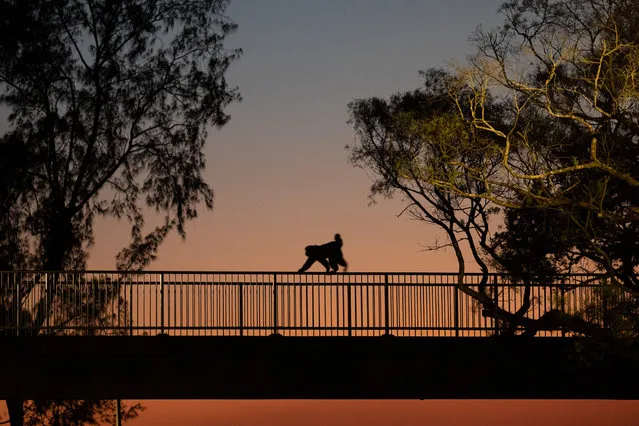
A macaque crosses a pedestrian overpass in Hong Kong, China, 08 November 2021. According the Agriculture, Fisheries and Conservation Department, AFCD, the total population of wild monkeys in Hong Kong is about 1,800, distributed in 30 social troops. (Photo by Jerome Favre/EPA/EFE)

A macaque crosses a pedestrian overpass in Hong Kong, China, 08 November 2021. According the Agriculture, Fisheries and Conservation Department, AFCD, the total population of wild monkeys in Hong Kong is about 1,800, distributed in 30 social troops. (Photo by Jerome Favre/EPA/EFE)
Details
15 Nov 2021 08:44:00
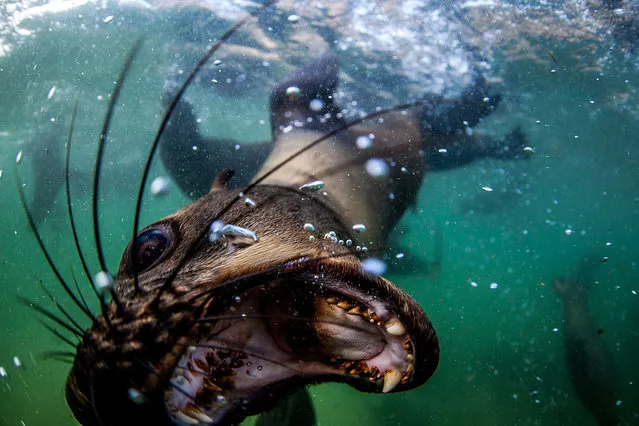
A seal playfully tries to bite the camera, taken on February 2016 in Plettenberg Bay, South Africa. A group of friendly seals get up close and personal with the camera. The pod of brown fur seals, also known as “cape fur seals”, were shot in Plettenberg Bay in South Africa by dive tour operator Rainer Schimpf. The playful creatures prove they are not camera shy in the slightest as they they swim upside down, grin widely and attempt to bite the camera lens. (Photo by Rainer Schimpf/Barcroft Media)

A seal playfully tries to bite the camera, taken on February 2016 in Plettenberg Bay, South Africa. A group of friendly seals get up close and personal with the camera. The pod of brown fur seals, also known as “cape fur seals”, were shot in Plettenberg Bay in South Africa by dive tour operator Rainer Schimpf. The playful creatures prove they are not camera shy in the slightest as they they swim upside down, grin widely and attempt to bite the camera lens. (Photo by Rainer Schimpf/Barcroft Media)
Details
13 Apr 2016 09:38:00