Loading...
Done
Baby Fennec Fox

“The fennec fox or fennec (Vulpes zerda) is a small nocturnal fox found in the Sahara of North Africa. Its most distinctive feature is its unusually large ears, which serve to dissipate heat”. – Wikipedia. (Photo by In Cherl Kim)
Details
14 Sep 2012 12:15:00
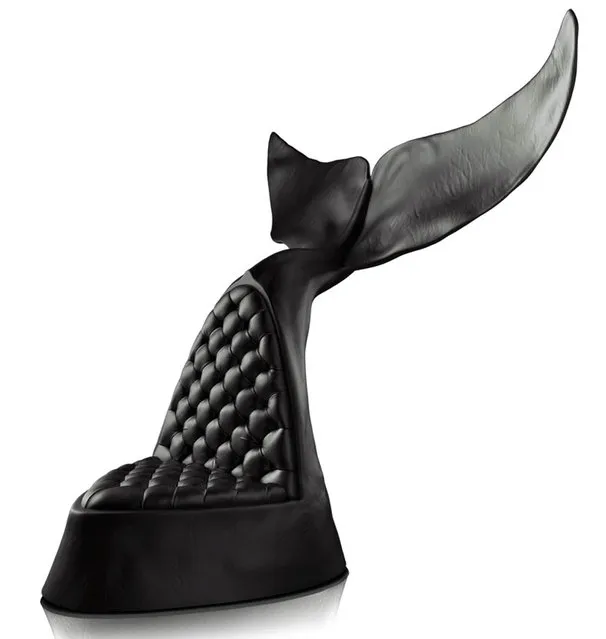
Animal Chair By Maximo Riera

Spanish artist Maximo Riera has produced a miniature series of his animal chair collection. The models are created entirely using nylon and a type of 3D printing called SLS (selective laser sintering).The process enables the small objects to achieve the best possible quality, resistance and lightest weight. based on the large-scale designs that combined animals and furniture into one item, the unconventional and peculiar compositions are still apparent in these latest versions.
Details
24 Jul 2014 06:44:00
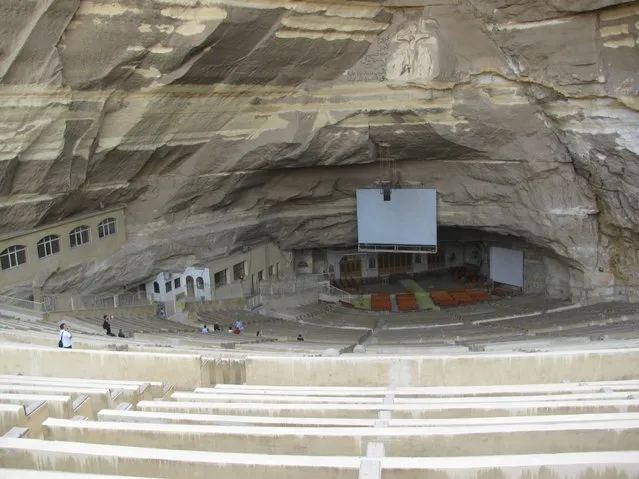
Cave Church Mountain

Located in the Mokattam Mountain in southeastern Cairo, Egypt, the Monastery of Saint Simon or the Cave Church is a beautiful and mystical location. The area is also known under the name of the “garbage city” because of the large population of garbage collectors or Zabbaleen that live here and who are the descendants of farmers who started migrating from Upper Egypt to Cairo in the 1940s.
Details
25 Sep 2013 12:58:00
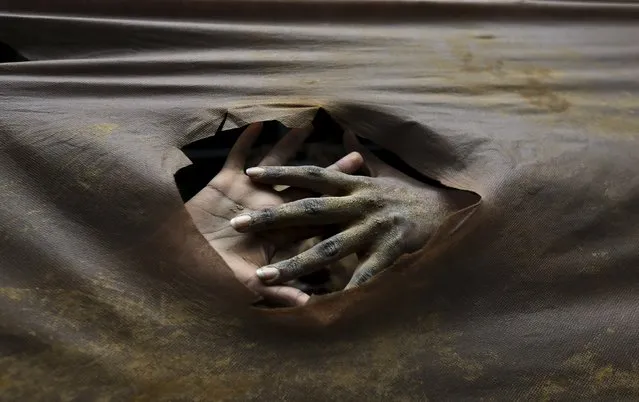
An environmental activist performs during a protest in front of the headquarters of Brazilian mining company Vale SA in downtown Rio de Janeiro, Brazil, November 16, 2015. (Photo by Sergio Moraes/Reuters)

An environmental activist performs during a protest in front of the headquarters of Brazilian mining company Vale SA in downtown Rio de Janeiro, Brazil, November 16, 2015. The collapse of two dams at a Brazilian mine, owned by Vale SA and BHP Billiton Ltd, has cut off drinking water for quarter of a million people and saturated waterways downstream with dense orange sediment that could wreck the ecosystem for years to come. Nine people were killed, 19 are still listed as missing and 500 people were displaced from their homes when the dams burst at an iron ore mine in southeastern Brazil on November 5. (Photo by Sergio Moraes/Reuters)
Details
18 Nov 2015 08:00:00
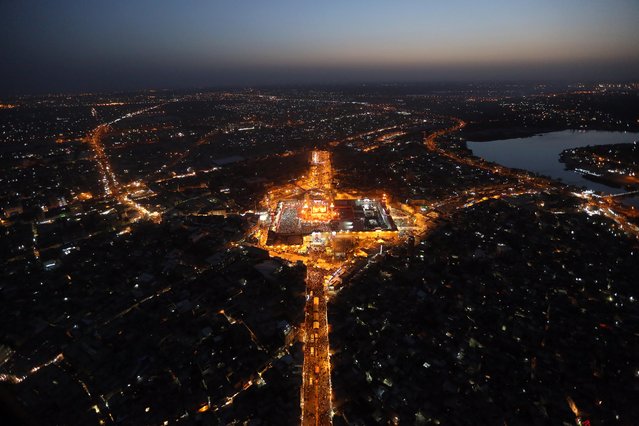
An aerial view of the holy Muslim Shiite shrine of Imam Moussa al-Kazim as pilgrims gather to commemorate his death, in the Shiite district of Kazimiyah, Baghdad, Iraq, Wednesday, May 13, 2015. (Photo by Hadi Mizban/AP Photo)

An aerial view of the holy Muslim Shiite shrine of Imam Moussa al-Kazim as pilgrims gather to commemorate his death, in the Shiite district of Kazimiyah, Baghdad, Iraq, Wednesday, May 13, 2015. The anniversary of 8th century Shiite Imam Moussa al- Kazim drew tens of thousands of Shiites from all walks to converge on his golden-domed shrine in northern Baghdad. The pilgrims typically march to the shrine while hundreds of tents are erected to offer them free food, drinks and services. (Photo by Hadi Mizban/AP Photo)
Details
14 May 2015 12:08:00
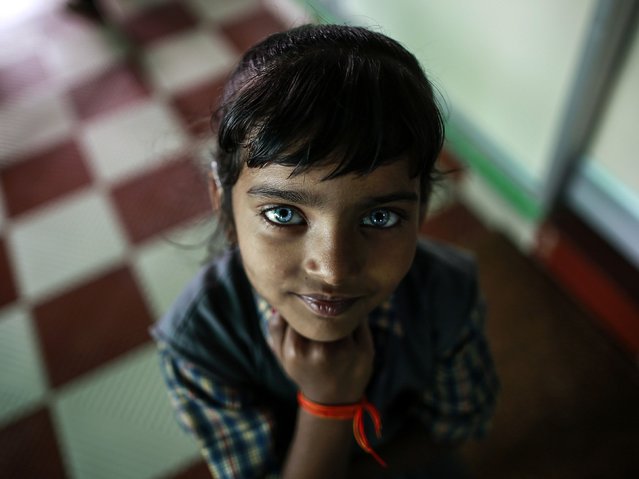
A girl who suffers from hearing and speech disorders reacts to the camera at a rehabilitation centre supported by Bhopal Medical Appeal, for children who were born with mental and physical disabilities, in Bhopal November 11, 2014.(Photo by Danish Siddiqui/Reuters)

A girl who suffers from hearing and speech disorders reacts to the camera at a rehabilitation centre supported by Bhopal Medical Appeal, for children who were born with mental and physical disabilities, in Bhopal November 11, 2014. The rehabilitation centre only treats families they believe have been affected by the Union Carbide gas leak 30 years ago. Human rights groups say that thousands of tonnes of hazardous waste remain buried underground, and the government has conceded it is contaminated. There has, however, been no long-term epidemiological research which conclusively proves that birth defects are directly related to the drinking of the contaminated water. (Photo by Danish Siddiqui/Reuters)
Details
30 Nov 2014 12:00:00
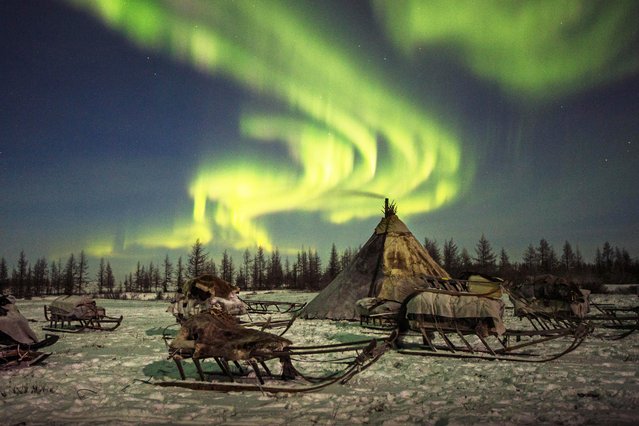
An empty camp is shown beneath a colourful sky in Siberia, December 2016. (Photo by Timothy Allen/Barcroft Productions)

A British photographer has captured life at the “edge of the world”. Timothy Allen, best known for his work on BBC's Human Planet, trekked through the freezing Siberian wilderness for 16 days as he joined part of an 800km migration of reindeer in the Yamal-Nenets region – a name that roughly translates to “edge of the world”. The stunning pictures feature the nomadic Nenets tribe, who drink blood to survive in -45°C temperatures. Timothy's epic journey, which will be revealed in an eight-minute documentary on Animal Planet USA, saw him travel across the bleak terrain of the frozen Ob River with the Nenets people in December last year. Here: An empty camp is shown beneath a colourful sky in Siberia, December 2016. (Photo by Timothy Allen/Barcroft Productions)
Details
19 Sep 2017 07:48:00
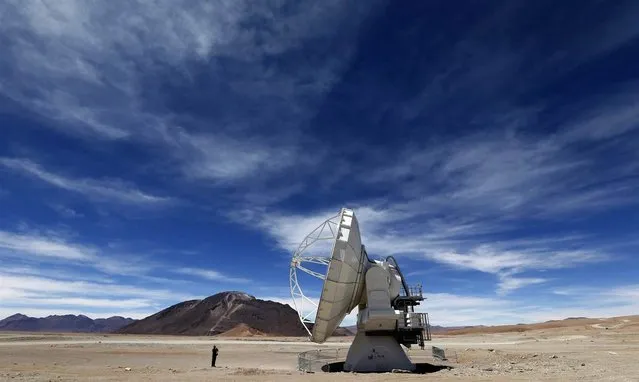
A man takes a photo of a radio antenna that's part of the Atacama Large Milimeter Array Observatory on March 12, 2013 at Llano de Chajnantor, about 43 miles (70 kilometers) from San Pedro de Atacama, Chile. The $1.5 billion ALMA facility, which had its official inauguration on March 13, is considered the world's most expensive ground-based observatory. (Photo by Felipe Trueba/EPA)

A man takes a photo of a radio antenna that's part of the Atacama Large Milimeter Array Observatory on March 12, 2013 at Llano de Chajnantor, about 43 miles (70 kilometers) from San Pedro de Atacama, Chile. The $1.5 billion ALMA facility, which had its official inauguration on March 13, is considered the world's most expensive ground-based observatory. (Photo by Felipe Trueba/EPA)
Details
03 Apr 2013 09:25:00