Loading...
Done
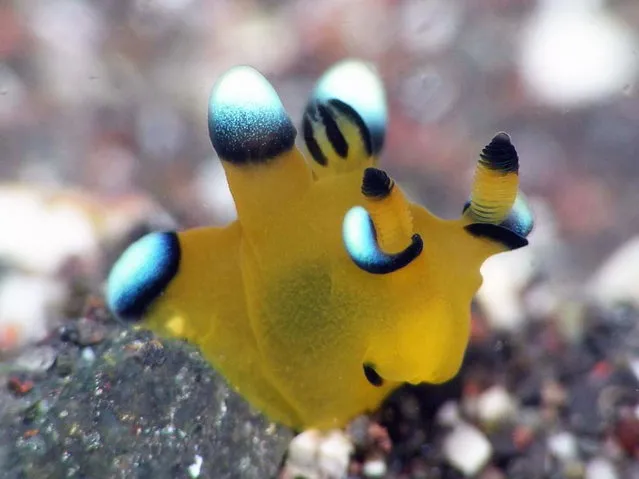
Thecacera Pacifica AKA Pikachu

If you ever wanted to meet a live Pikachu, you might have a hard time finding one. However, there is a creature on this Earth that kind of looks like one. That creature’s name is Thecacera pacifica and it is a species of a sea slug. These little critters can be found in the Indian Ocean from African coast to Indonesia and Vanuatu. Their vibrant orange and blue colors look gorgeous, making it look like some sort of anemone. Also, as you might have guessed from the striking colors of the sea slug, just like most of anemones, this creature is very toxic. Thus, keeping it as a pet isn’t an option.

Details
19 Dec 2014 12:51:00
Dongchuan Red Lands, China

Dongchuan is a rural place located in the area of Wumeng Mountains. This place became one of the most favored destination spots for Chinese photographers all because of its red soil. The Wumeng’s scenery was first discovered in mid-90s. The first photographers who came here shot some award-winning photos, which made them keep the location of this place a secret. With time, however, more people found out about this place, making them want to visit these arid mountains. The contrasting red soil, yellow buckwheat, and brilliant blue skies make this place a paradise for photographers.
Details
29 Jan 2015 10:59:00
Metal Cats By Alexandra Crockett

Alexandra Crockett, a musician and jewelry designer, has been present and active in the metal community since the age of 15 and is currently a doctoral student in the Bay Area. Beginning her idea for the book by doing promotional photos for bands and friends she would cat-sit for, she found an interesting dynamic between men in the metal scene and their cats. The idea for the book formed around giving accolades to local musicians and artists in the metal scene, while also bringing to light no-kill shelters and their importance for animal rights.
Details
08 Sep 2014 08:47:00
Employee Sandra Jaeckel adjusts a ribbon around the neck of a giant chocolate Easter bunny at the production facility at Confiserie Felicitas chocolates maker in Hornow. (Photo by Sean Gallup/Getty Images)

Employee Sandra Jaeckel, at the photographer's request, adjusts a ribbon around the neck of a giant chocolate Easter bunny at the production facility at Confiserie Felicitas chocolates maker on April 9, 2014 in Hornow, Germany. Easter is among the busiest times of year for the chocolatier, which produces Easter bunnies and eggs in a wide variety of sizes and styles. Founded by Belgian expats Goedele Matthyssen and Peter Bientsman the company will soon celebrate its 21st year. (Photo by Sean Gallup/Getty Images)
Details
14 Apr 2014 08:32:00
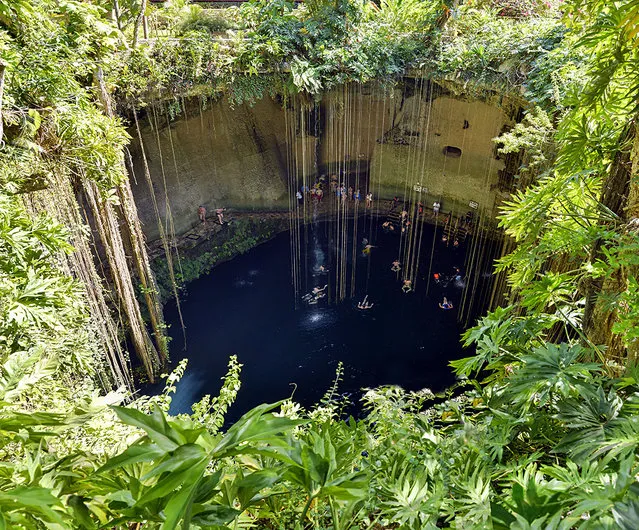
Cenote In Mexico

A cenote is a natural phenomenon, a sinkhole in the Earth’s surface. The Yucatan Peninsula in Mexico has an estimated 7,000 cenotes because it is primarily made up of porous limestone. For millions of years, rainfall slowly ate away at the limestone and a huge system of underground caves and caverns was formed. Many filled with water from rain or from the underground water table. When the roof of a water filled cave collapses, a cenote is born. The water found in a cenote may be fresh water, salt water, or both. Structurally it may be completely open, like a lake, almost completely closed with just a small opening at the top, or somewhere in between.
Details
06 Oct 2013 09:45:00
Belarusian workers works at a felt boot factory in Smilovichi, some 35km from Minsk, Belarus, 16 January 2012. (Photo by Tatyana Zenkovich/EPA)

The Smilovichi Felting Factory in Belarus was founded in 1928, when Smilovichi was a small Jewish settlement of craftsmen. Five of those craftsmen organized a small artel (a cooperative association of craftsmen who all live and work together), which produced warm boots called “valenki” for cold weather. Photo: Belarusian workers works at a felt boot factory in Smilovichi, some 35km from Minsk, Belarus, 16 January 2012. (Photo by Tatyana Zenkovich/EPA)
Details
18 Oct 2013 10:02:00
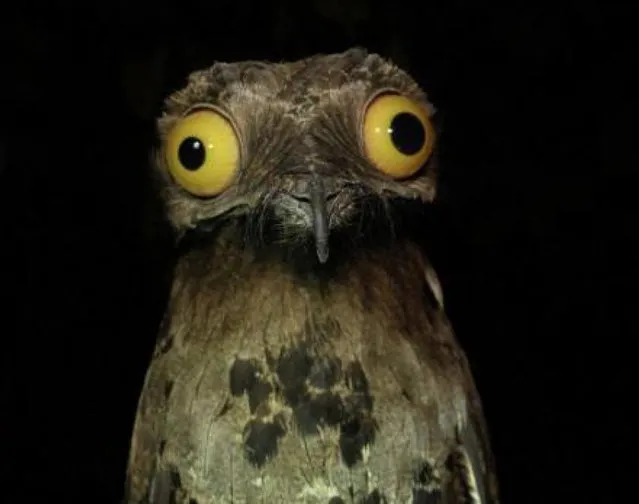
Nightjars And Pooto Bird

Potoos (family Nyctibiidae) are a group of near passerine birds related to the nightjars and frogmouths. They are sometimes called Poor-me-ones, after their haunting calls. There are seven species in one genus, Nyctibius, in tropical Central and South America.
These are nocturnal insectivores which lack the bristles around the mouth found in the true nightjars. They hunt from a perch like a shrike or flycatcher. During the day they perch upright on tree stumps, camouflaged to look like part of the stump. The single spotted egg is laid directly on the top of a stump.
Details
20 Jan 2014 14:34:00
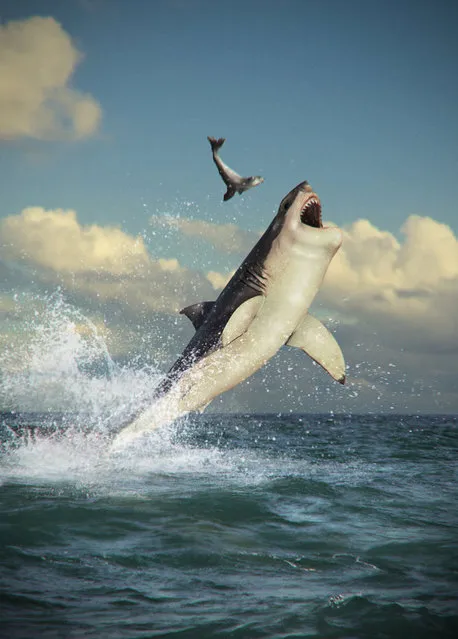
Perfect Predators: White Sharks

The great white shark, Carcharodon carcharias, also known as the great white, white pointer, white shark, or white death, is a species of large lamniform shark which can be found in the coastal surface waters of all the major oceans. The great white shark is mainly known for its size, with the largest individuals known to have approached or exceeded 6 m (20 ft) in length, and 2,268 kg (5,000 lb) in weight. This shark reaches its maturity around 15 years of age and can have a life span of over 30 years.
Details
01 Apr 2013 10:02:00