Loading...
Done
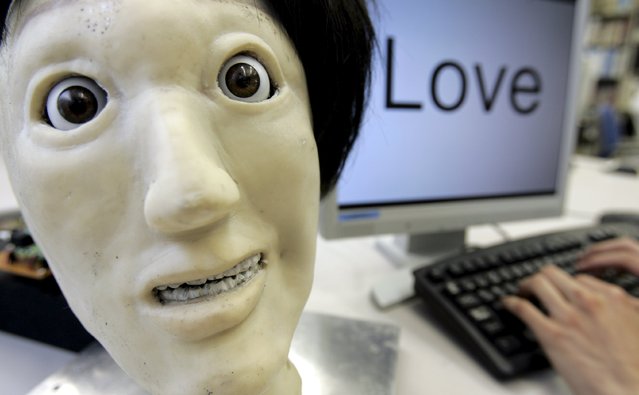
A humanoid robot named Kansei, meaning “sensibility” in Japanese, makes a facial expression depicting “happiness”, next to the word “Love” during a demonstration at a laboratory of Meiji University's Robot and Science Institute in Kawasaki, south of Tokyo in this June 4, 2007 file photo. (Photo by Yuriko Nakao/Reuters)

A humanoid robot named Kansei, meaning “sensibility” in Japanese, makes a facial expression depicting “happiness”, next to the word “Love” during a demonstration at a laboratory of Meiji University's Robot and Science Institute in Kawasaki, south of Tokyo in this June 4, 2007 file photo. Three-fourths of robot installations over the next decade are expected to be concentrated in four areas: transportation equipment, including the automotive sector; computer and electronic products; electrical equipment and machinery. Labor costs have climbed in countries such as China that have been popular for outsourcing production, while technological advances for robots allow them to be more flexible and perform more tasks. (Photo by Yuriko Nakao/Reuters)
Details
17 Apr 2015 09:39:00
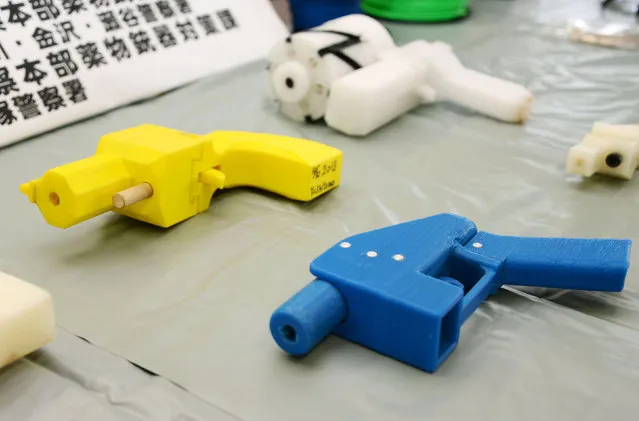
Seized plastic handguns which were created using 3D printing technology are displayed at Kanagawa police station in Yokohama, south of Tokyo, in this photo taken by Kyodo May 8, 2014. (Photo by Reuters/Kyodo)

Seized plastic handguns which were created using 3D printing technology are displayed at Kanagawa police station in Yokohama, south of Tokyo, in this photo taken by Kyodo May 8, 2014. Yoshimoto Imura became the first man to be arrested in Japan for illegal possession of two guns he created himself using 3D printing technology, Japanese media said on Thursday. The 27-year-old, a college employee in the city of Kawasaki, was arrested after police found video online posted by Imura claiming to have produced his own guns. Gun possession is strictly regulated in Japan. Police raided Imura's home and found five guns, two of which could fire real bullets, Japanese media said. (Photo by Reuters/Kyodo)
Details
12 May 2014 10:46:00


“Itasha (痛車), literally “painmobile”, is a Japanese term for an otaku fad of individuals decorating the bodies of their cars with fictional characters of anime, manga, or video games (especially bishōjo game or eroge). These characters are predominately “cute” female. The decorations usually involve paint schemes and stickers. Automobiles are called Itasha, while similar motorcycles and bicycles are called itansha (痛単車) and itachari (痛チャリ), respectively”. – Wikipedia


Photo: A visitor takes pictures of an anime-decorated «Itasha» car displayed during the “Moe Fes in Washimiya” at Washimiya Town Hall on July 18, 2009 in Washimiya, Saitama, Japan. Itasha, a word derived from “itai” (painful) and “sha” (car), are vehicles decorated with mostly female characters from Japanese manga, anime and video games. (Photo by Kiyoshi Ota/Getty Images)
Details
02 May 2011 08:38:00
Japanese actress and singer Anna Sawai, left, winner of the award for outstanding lead actress in a drama series for “Shogun”, and Hiroyuki Sanada, winner of the awards for outstanding lead actor in a drama series, and outstanding drama series for “Shogun” pose in the press room during the 76th Primetime Emmy Awards on Sunday, Sept. 15, 2024, at the Peacock Theater in Los Angeles. (Photo by Jae C. Hong/AP Photo)

Japanese actress and singer Anna Sawai, left, winner of the award for outstanding lead actress in a drama series for “Shogun”, and Hiroyuki Sanada, winner of the awards for outstanding lead actor in a drama series, and outstanding drama series for “Shogun” pose in the press room during the 76th Primetime Emmy Awards on Sunday, Sept. 15, 2024, at the Peacock Theater in Los Angeles. (Photo by Jae C. Hong/AP Photo)
Details
16 Jan 2026 11:20:00
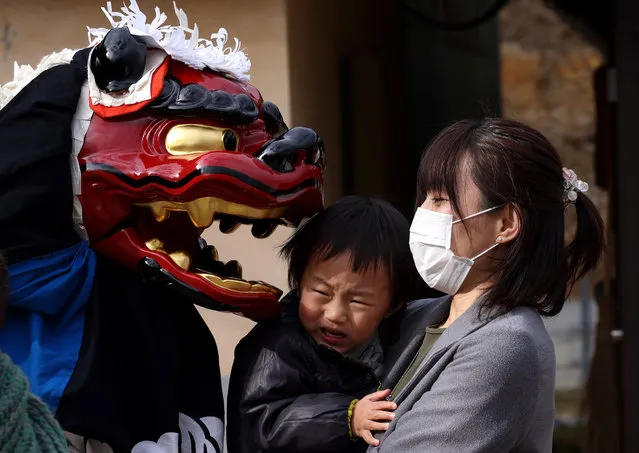
A performer wearing a lion mask performs the Ise Daikagura lion dance at the remote village of Yamanawa on February 08, 2021 in Ryuo, Japan. Ise Daikagura is a group of traditional Lion Dance performers who pray in front of farmers houses and businesses for good grain harvests and disease-free lives. Performers play sacred music using drums and flutes with two lion mask dancers. A lion mask is considered a symbol of God, who enters the house and performs in front of the Shinto God, a statue placed inside the house, mostly in the kitchen. These prayers are called “Kamodo Barai”. After the prayers, they are gifted with money, rice, sake and Japanese sweets from the householders. A group can travel for more than one hundred days to thousands of households and businesses throughout rural-villages in western Japan, and pray to those who are unable to visit the country’s most sacred shrine, the Grand Ise Shrine in Mie Prefecture. The group started its performance in the Edo era between 1603 to 1868 according to Japanese history. The Japanese government designated it as an important folk cultural national property in 1981. (Photo by Buddhika Weerasinghe/Getty Images)

A performer wearing a lion mask performs the Ise Daikagura lion dance at the remote village of Yamanawa on February 08, 2021 in Ryuo, Japan. Ise Daikagura is a group of traditional Lion Dance performers who pray in front of farmers houses and businesses for good grain harvests and disease-free lives. (Photo by Buddhika Weerasinghe/Getty Images)
Details
18 Feb 2021 09:27:00
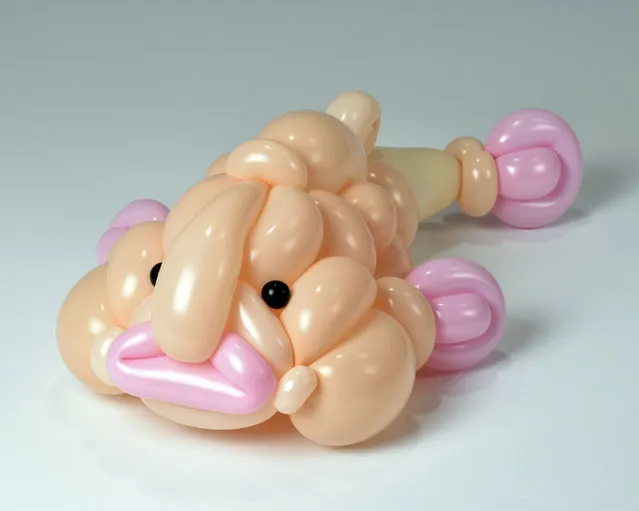
Blobfish by Masayoshi Matsumoto. (Photo by Masayoshi Matsumoto/Caters News Agency)

A Japanese artist is making a name for himself by creating animal sculptures out of balloons. Masayoshi Matsumoto, 29, has thus far created a wide range of intricate figures from the animal kingdom. Here: Blobfish by Masayoshi Matsumoto. (Photo by Masayoshi Matsumoto/Caters News Agency)
Details
01 Oct 2019 00:03:00
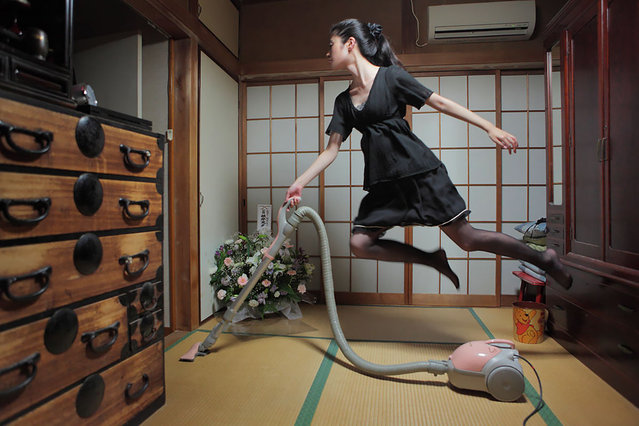
Levitating Girl' Natsumi Hayashi

Natsumi Hayashi is a Japanese artist known for her fixation with levitating. Two years, ago, the photographer began posting portraits online of herself floating in mid-air. The magical project – titled “Today's Levitation” – is the subject of a playful survey of her year-long obsession with flying.
Details
27 Dec 2015 08:00:00
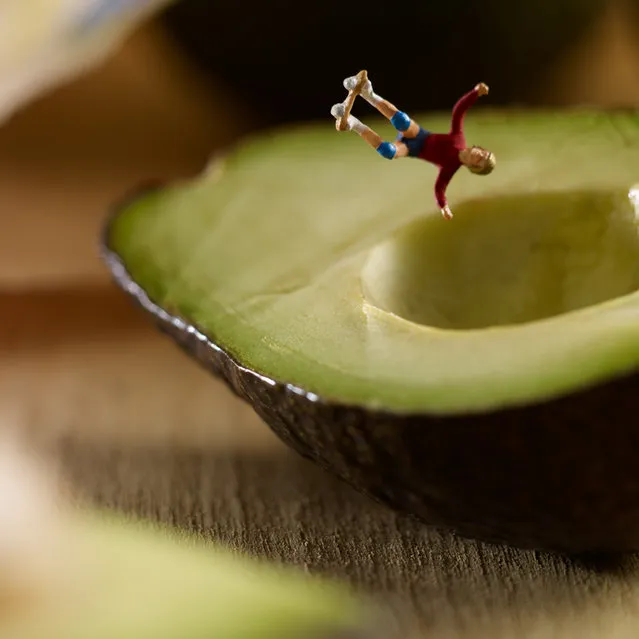
Minimiam By Akiko Ida & Pierre Javelle Part 2

Minimiam is a project of the Japanese photographer Akiko Ida and French photographer Pierre Javelle. They met studying photography at the Paris “Arts Décoratifs” art school. The project has been ongoing since 2002 and was inspired by the married couple’s profession as commercial food photographers.
Details
12 Jun 2014 09:24:00