Loading...
Done
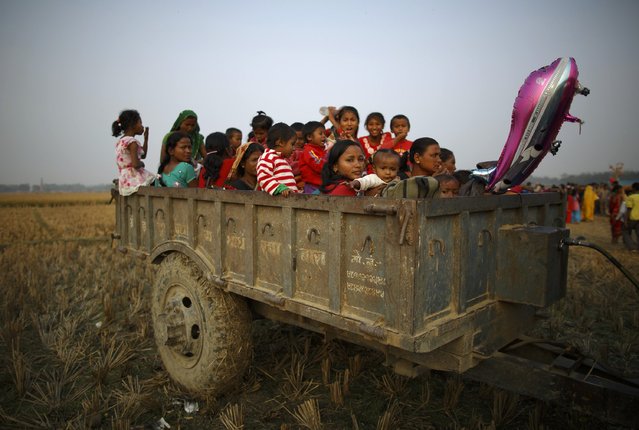
Family and friends sit in a vehicle trailer, where they will spend the night, near the enclosure for buffalos awaiting sacrifice on the eve of the sacrificial ceremony for the “Gadhimai Mela” festival in Bariyapur November 27, 2014. (Photo by Navesh Chitrakar/Reuters)

Family and friends sit in a vehicle trailer, where they will spend the night, near the enclosure for buffalos awaiting sacrifice on the eve of the sacrificial ceremony for the “Gadhimai Mela” festival in Bariyapur November 27, 2014. The festival renowned for its large number of animal sacrifices, is held every five years at the Gadhimai Temple where devotees from Nepal and bordering India will sacrifice buffaloes, goats and birds while offering prayers to Gadhimai, the goddess of power. (Photo by Navesh Chitrakar/Reuters)
Details
28 Nov 2014 12:03:00
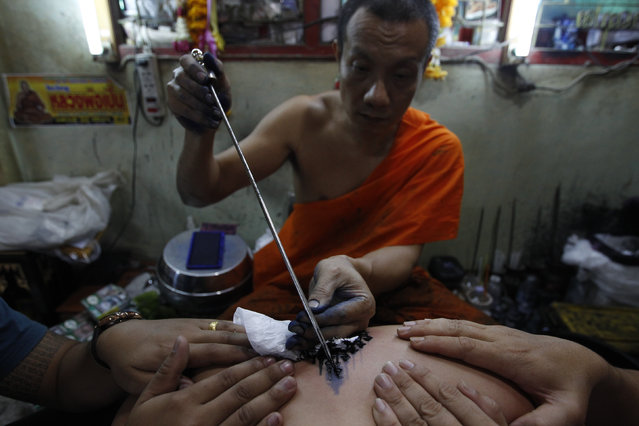
A Buddhist monk uses a traditional needle to tattoo the body of a man at Wat Bang Phra in Nakhon Pathom province on the outskirts of Bangkok, Thailand,  March 18, 2016. (Photo by Chaiwat Subprasom/Reuters)

A Buddhist monk uses a traditional needle to tattoo the body of a man at Wat Bang Phra in Nakhon Pathom province on the outskirts of Bangkok, Thailand, March 18, 2016. Believers from across Thailand travel to the monastery to have their bodies adorned with tattoos and to pay their respects to the temple's master tattooist. They believe the tattoos have mystical powers, ward off bad luck and protect them from harm. (Photo by Chaiwat Subprasom/Reuters)
Details
19 Mar 2016 12:44:00
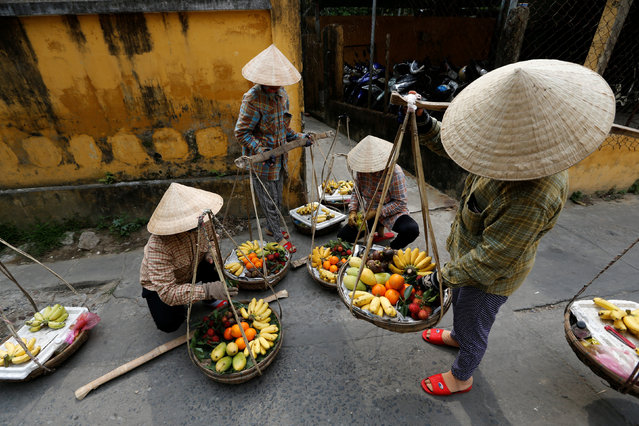
Women wearing traditional hats, known as a non la, sell fruits in Hoi An, Vietnam April 4, 2016. (Photo by Jorge Silva/Reuters)

Women wearing traditional hats, known as a non la, sell fruits in Hoi An, Vietnam April 4, 2016. The non la hats are made of readily available materials such as palm leaves, tree bark and bamboo and are visible everywhere in the city, a UNESCO World Heritage site. Hoi An's history as a busy trading port is evident throughout its architecture, a mix of eras and styles, with traditional wooden Vietnamese houses, Chinese temples and French colonial buildings. (Photo by Jorge Silva/Reuters)
Details
11 May 2016 11:32:00
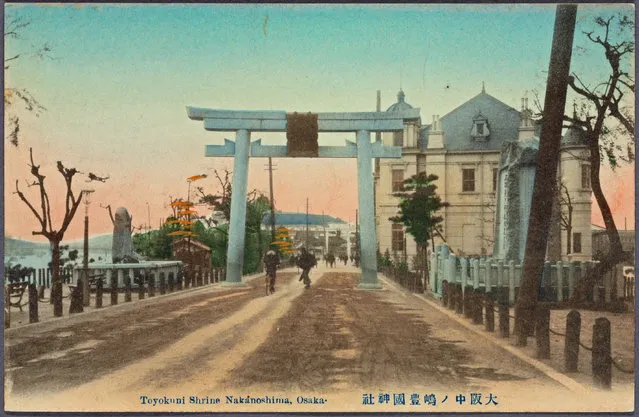
Toyokuni Shrine Nakanoshima, Osaka, Japan. (Photo by New York Public Library/Caters News)

These timeless postcards offer an eye-opening glimpse into life in Japan in the early 20th century. Taken from hand-colored photographs, the postcards showcase the still beauty of the country, depicting a nation on the cusp of modernization. The images feature solemn fishermen, bustling streets, temples and shrines: a country yet to be influenced by Western culture. The tinting effect brings out the rich colors of the natural surroundings, with trees, flowers and cherry blossoms jumping from the original black-and-white images. Here: Toyokuni Shrine Nakanoshima, Osaka, Japan. (Photo by New York Public Library/Caters News)
Details
02 Apr 2016 09:33:00
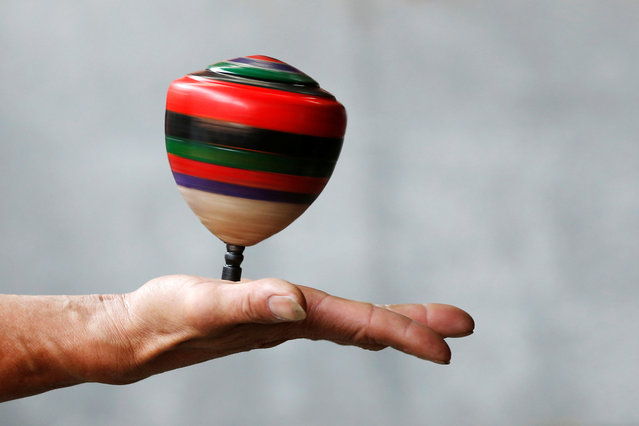
A spinning top is seen on a hand during a performance at Sanxia old street in New Taipei City, Taiwan May 8, 2016. (Photo by Tyrone Siu/Reuters)

A spinning top is seen on a hand during a performance at Sanxia old street in New Taipei City, Taiwan May 8, 2016. Taiwan's ancient folk art of spinning tops is kept alive by a group of enthusiasts who perform intricate tricks with the toys at a temple in Taipei, the capital. (Photo by Tyrone Siu/Reuters)
Details
11 May 2016 11:24:00
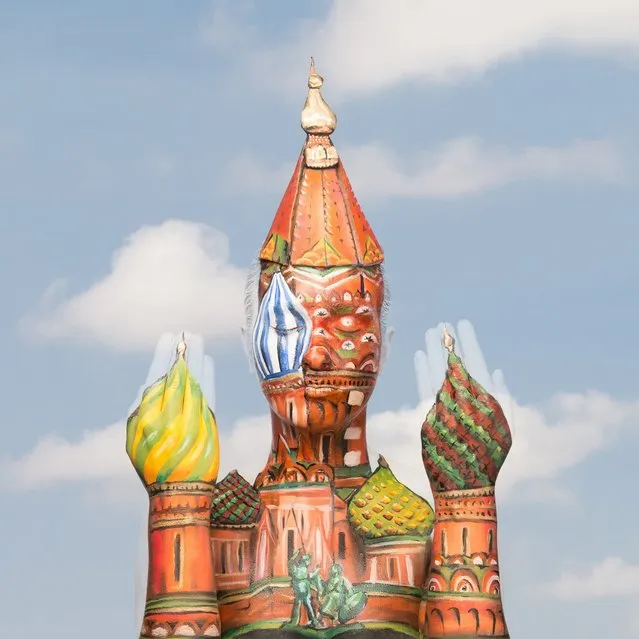
Body Painter By Emma Fay

There is something frightening and at the same time appealing in the living sculptures of 27-year-old British artist Emma Fay. Body art in conjunction with the flexibility of acrobats and fantasy of the artist using water-based paints, a brush and sponge, is transformed into a beautiful work of art. It is not immediately possible to make out the human body in the picture. First you look at the landscape and suddenly begin to distinguish someone’s arm, or neck. Or you look into the eyes of an amazing bull, and it turns out that it is perfectly folded back. Lovely people, temples are and wonderful people-insects are.
Details
10 Jan 2016 08:02:00


“Itasha (痛車), literally “painmobile”, is a Japanese term for an otaku fad of individuals decorating the bodies of their cars with fictional characters of anime, manga, or video games (especially bishōjo game or eroge). These characters are predominately “cute” female. The decorations usually involve paint schemes and stickers. Automobiles are called Itasha, while similar motorcycles and bicycles are called itansha (痛単車) and itachari (痛チャリ), respectively”. – Wikipedia


Photo: A visitor takes pictures of an anime-decorated «Itasha» car displayed during the “Moe Fes in Washimiya” at Washimiya Town Hall on July 18, 2009 in Washimiya, Saitama, Japan. Itasha, a word derived from “itai” (painful) and “sha” (car), are vehicles decorated with mostly female characters from Japanese manga, anime and video games. (Photo by Kiyoshi Ota/Getty Images)
Details
02 May 2011 08:38:00
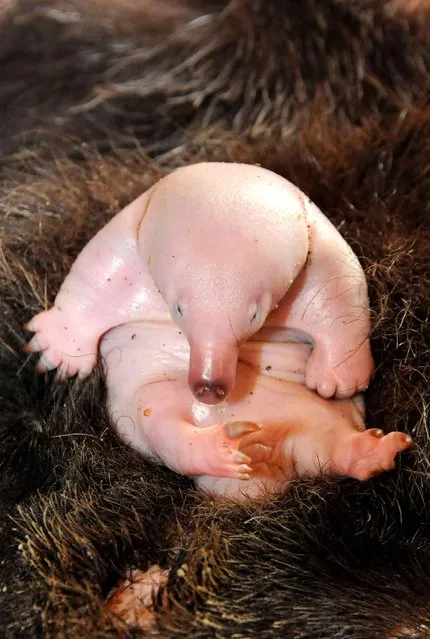
It's a 30-day-old Echidna baby, known as a “puggle” – one of only 24 ever bred in captivity. The proud parents are Tippy and Pickle of Australia Zoo. The tiny baby, whose s*x has not yet been identified, hatched from a soft egg and will continue to develop and nurse inside Tippy's warm pouch. (Photo by Australia Zoo/Rex/Sipa Press)

It's a 30-day-old Echidna baby, known as a “puggle” – one of only 24 ever bred in captivity. The proud parents are Tippy and Pickle of Australia Zoo. The tiny baby, whose s*x has not yet been identified, hatched from a soft egg and will continue to develop and nurse inside Tippy's warm pouch. (Photo by Australia Zoo/Rex/Sipa Press)
Details
21 Sep 2013 10:30:00