Loading...
Done
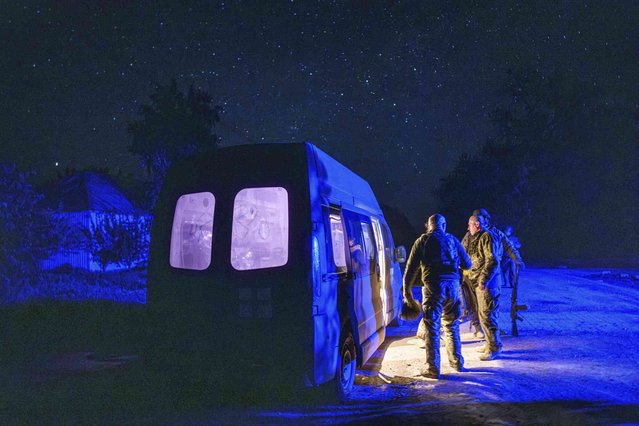
Ukrainian soldiers who just came from battle stand near an ambulance at a 47th Brigade field hospital near Avdiivka, in Ukraine’s Donetsk region, on Friday, May 10, 2024. (Photo by Evgeniy Maloletka/AP Photo)

Ukrainian soldiers who just came from battle stand near an ambulance at a 47th Brigade field hospital near Avdiivka, in Ukraine’s Donetsk region, on Friday, May 10, 2024. (Photo by Evgeniy Maloletka/AP Photo)
Details
13 Jul 2024 03:58:00
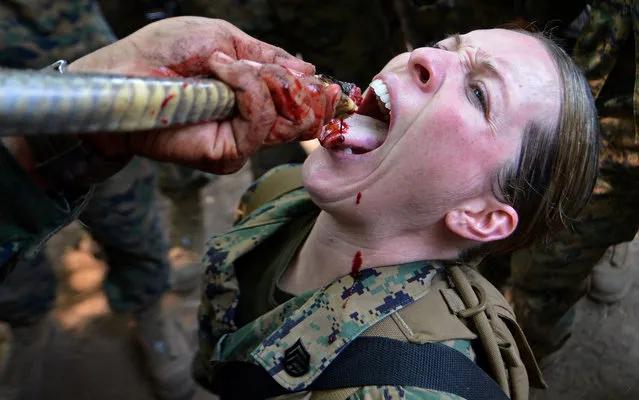
In a military base in the Thai province of Chon Buri February 20 U.S. Marines Navy with Thailand began their studies in jungle survival. The event is held in joint military exercises “Cobra Gold 2013”. During a jungle survival program February 20, 2013 taught by Royal Thai Special Forces in Sannapit, Thailand, U.S. Marines learned to catch cobras and drink their fresh blood, not to mention eat forest insects and pull the heads off of chicken. The training was part of Operation Cobra Gold 13, the 32nd edition of international military exercises hosted by the Thai. According to a U.S. Marines press release, Cobra Gold is the largest exercise of its kind in Asia and incorporates troops from five other nations in addition to the U.S. and Thailand. The Daily Mail reports that the Marines were invited to experience the local custom of drinking cobra blood after being taught to catch and kill cobras in the wild. As CNN notes, Cobra blood is believed to be a panacea and aphrodiasic in parts of Southeast Asia. In Jakarta, vendors can earn over $100 a night selling shots of cobra blood mixed with liquor. (Photo by Pornchai Kittiwongsakul/AFP Photo)

During a jungle survival program February 20, 2013 taught by Royal Thai Special Forces in Sannapit, Thailand, U.S. Marines learned to catch cobras and drink their fresh blood, not to mention eat forest insects and pull the heads off of chicken. The training was part of Operation Cobra Gold 13, the 32nd edition of international military exercises hosted by the Thai. According to a U.S. Marines press release, Cobra Gold is the largest exercise of its kind in Asia and incorporates troops from five other nations in addition to the U.S. and Thailand. The Daily Mail reports that the Marines were invited to experience the local custom of drinking cobra blood after being taught to catch and kill cobras in the wild. As CNN notes, Cobra blood is believed to be a panacea and aphrodiasic in parts of Southeast Asia. In Jakarta, vendors can earn over $100 a night selling shots of cobra blood mixed with liquor. (Photo by Pornchai Kittiwongsakul/AFP Photo)
Details
23 Feb 2013 11:52:00
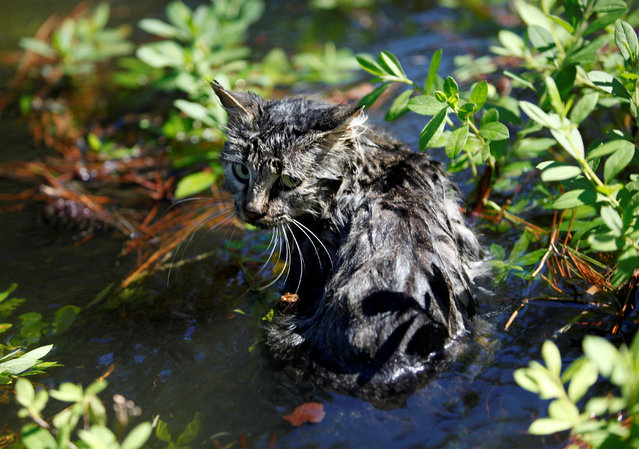
A cat sits in the flooding waters from Hurricane Matthew in downtown Nichols, South Carolina, October 10, 2016. (Photo by Randall Hill/Reuters)

A cat sits in the flooding waters from Hurricane Matthew in downtown Nichols, South Carolina, October 10, 2016. (Photo by Randall Hill/Reuters)
Details
14 Dec 2016 08:03:00
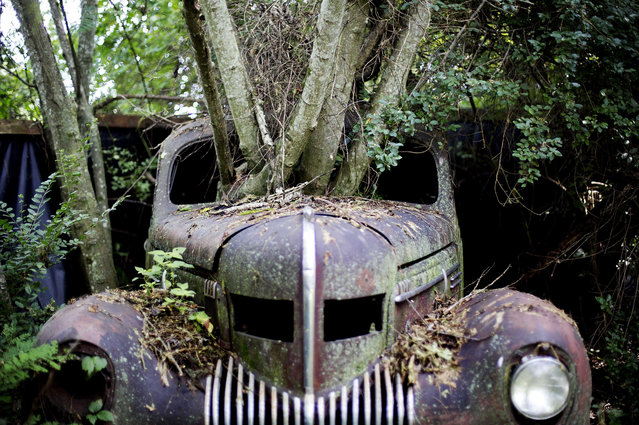
Trees grow through the windshield of a 1937 Chrysler Imperial as it sits at Old Car City, the world's largest known classic car junkyard Thursday, July 16, 2015, in White, Ga. Many of the cars have never moved in over 30 years and in some cases, trees now grow through them, even lifting some off the ground. (Photo by David Goldman/AP Photo)

Trees grow through the windshield of a 1937 Chrysler Imperial as it sits at Old Car City, the world's largest known classic car junkyard Thursday, July 16, 2015, in White, Ga. Over 4,000 classic cars decorate 32 acres of forest which have been turned into a junkyard museum by owner Walter Dean Lewis. The two grew up playing in the cars on the lot which started as a general store selling auto parts in 1931 by Lewis' parents. Lewis stopped selling parts about six years ago when he realized he could sustain the business more as a museum, charging $15 for visitors just looking, and $25 for photographers. Many of the cars have never moved in over 30 years and in some cases, trees now grow through them, even lifting some off the ground. (Photo by David Goldman/AP Photo)
Details
17 Jul 2015 13:14:00
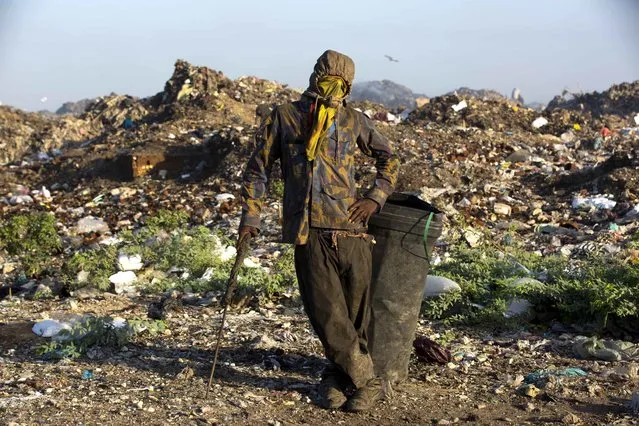
In this August 24, 2018 photo, Changlair Aristide pauses for a portrait, wearing his protective clothing, including an old U.N. peacekeeper's jacket he found in the trash, before scavenging the Truitier landfill in the Cite Soleil slum of Port-au-Prince, Haiti. Before 2004, Aristide recalled having enough money to splurge on shoes, T-shirts and pants, but this year he could not buy his kids anything new for the school year. “Life is like that, up and down”, Aristide said. “They'll go to school anyway, even if I have to sell my pig. I love them”. (Photo by Dieu Nalio Chery/AP Photo)

In this August 24, 2018 photo, Changlair Aristide pauses for a portrait, wearing his protective clothing, including an old U.N. peacekeeper's jacket he found in the trash, before scavenging the Truitier landfill in the Cite Soleil slum of Port-au-Prince, Haiti. Before 2004, Aristide recalled having enough money to splurge on shoes, T-shirts and pants, but this year he could not buy his kids anything new for the school year. “Life is like that, up and down”, Aristide said. “They'll go to school anyway, even if I have to sell my pig. I love them”. (Photo by Dieu Nalio Chery/AP Photo)
Details
03 Oct 2018 00:03:00
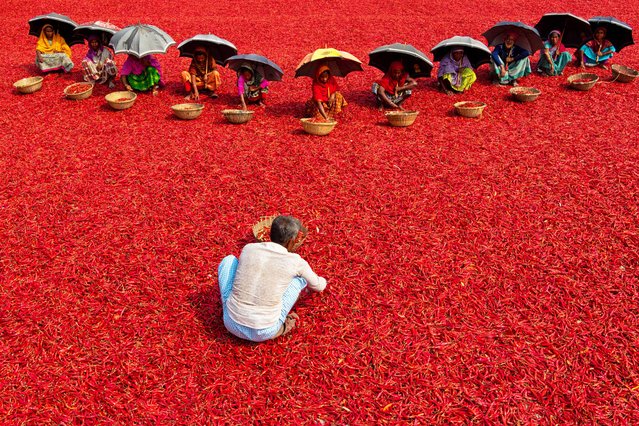
Rows of workers shelter under umbrellas from the scorching heat as they painstakingly sort through a red carpet of millions of chilli peppers in Bogra, Bangladesh on October 3, 2023. They sort the rotten and broken chilli peppers out to separate the poor quality ones which won't sell. In a line, the pickers who are paid less than £3 for a 10-hour shift slowly move forward with their baskets to separate the bad from the good after the chilies have been dried in the sun for a week. The dried & sorted chillies are then packaged and taken to the local market where they are brought mainly by companies to be made into chilli powder. The workers sort them in a warm environment, with temperatures reaching up to 45°C. More than 5,000 people work in almost 100 chilli farms in the Bogra district of Bangladesh to supply local spice companies with chillies for their recipes. Known as “Lal Morich” to the locals, chilli peppers are a major part of Bengali cuisine and are used as part of a combination of spices for various meat dishes, including chicken and beef. (Photo by Joy Saha/Rex Features/Shutterstock)

Rows of workers shelter under umbrellas from the scorching heat as they painstakingly sort through a red carpet of millions of chilli peppers in Bogra, Bangladesh on October 3, 2023. They sort the rotten and broken chilli peppers out to separate the poor quality ones which won't sell. In a line, the pickers who are paid less than £3 for a 10-hour shift slowly move forward with their baskets to separate the bad from the good after the chilies have been dried in the sun for a week. (Photo by Joy Saha/Rex Features/Shutterstock)
Details
21 Oct 2023 04:04:00
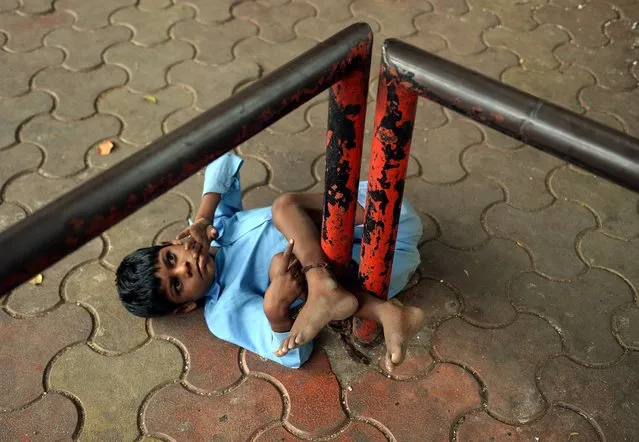
In this photograph taken on May 20, 2014 nine year old Indian boy Lakhan Kale is tied with a cloth rope around his ankle, to a bus-stop pole in Mumbai. (Photo by Punit Paranjpe/AFP Photo)

In this photograph taken on May 20, 2014 nine year old Indian boy Lakhan Kale is tied with a cloth rope around his ankle, to a bus-stop pole in Mumbai. The nine-year-old boy dressed in blue lay listlessly on the pavement in the scorching Mumbai summer afternoon, his ankle tethered with rope to a bus stop, unheeded by pedestrians strolling past. Lakhan Kale cannot hear or speak and suffers from cerebral palsy and epilepsy, so his grandmother and carer tied him up to keep him safe while she went to work, selling toys and flower garlands on the city's roadsides. (Photo by Punit Paranjpe/AFP Photo)
Details
04 Jul 2014 09:54:00
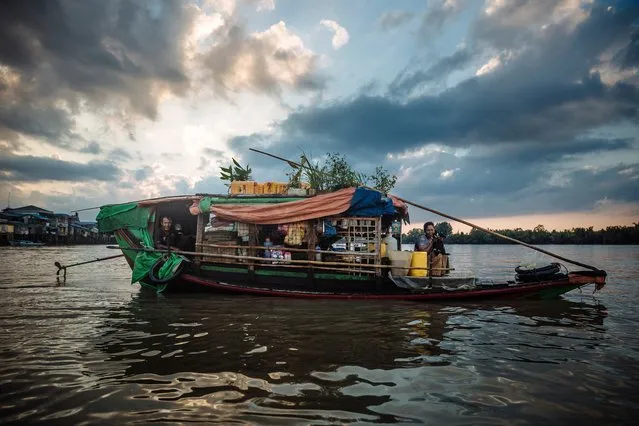
Tin and Naing win live on a small boat which they sail throughout the Delta region in Myanmar. The former gardeners once had a home on land but it was destroyed when a powerful cyclone ravaged the area in 2008. Since then, the couple have not been able to afford to rebuild their home, so they live on the boat from which they sell fish paste to make a living. (Photo by Muse Mohammed/IOM)

The ferocity of crises worldwide is forcing a record number of people to flee their homes, seeking some form of safety within their own country or across international borders. There are 65.3 million displaced people worldwide, including 21.3 million refugees. Most have lost their homes to armed conflict or natural disasters but other factors, such as extreme poverty and climate change, also drive displacement. The International Organisation for Migration commissioned photojournalist Muse Mohammed to document the plight of the displaced. (Photo by Muse Mohammed/IOM)
Details
02 Jan 2017 12:04:00