Loading...
Done
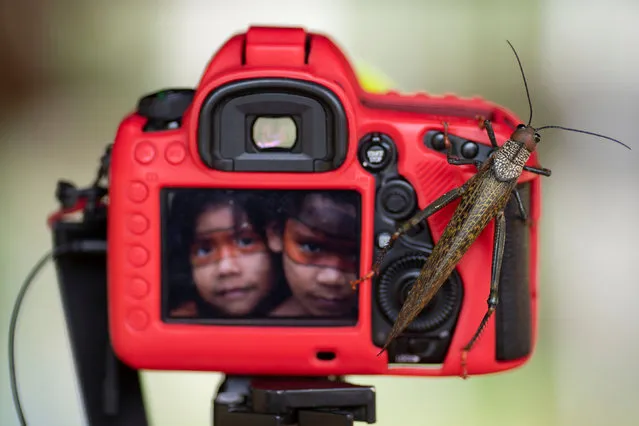
A grasshopper rests on a photographic camera during a meeting in the village of Alto Jamari called to face the threat of armed land grabbers invading the Uru-eu-wau-wau Indigenous Reservation near Campo Novo de Rondonia, Brazil on January 30, 2019. (Photo by Ueslei Marcelino/Reuters)

A grasshopper rests on a photographic camera during a meeting in the village of Alto Jamari called to face the threat of armed land grabbers invading the Uru-eu-wau-wau Indigenous Reservation near Campo Novo de Rondonia, Brazil on January 30, 2019. (Photo by Ueslei Marcelino/Reuters)
Details
16 Mar 2019 00:03:00
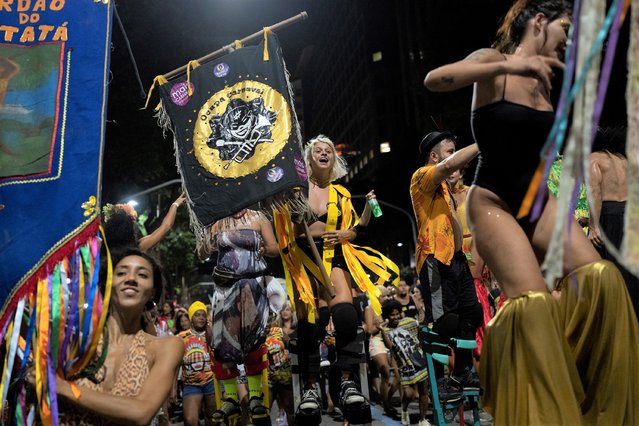
Revellers of street parties known as blocos, dance during a protest against restrictions by city officials in Rio de Janeiro, Brazil, Wednesday, April 13, 2022. City Hall has banned the street parties during Carnival celebrations, which were delayed by almost two months due to the pandemic. (Photo by Silvia Izquierdo/AP Photo)

Revellers of street parties known as blocos, dance during a protest against restrictions by city officials in Rio de Janeiro, Brazil, Wednesday, April 13, 2022. City Hall has banned the street parties during Carnival celebrations, which were delayed by almost two months due to the pandemic. (Photo by Silvia Izquierdo/AP Photo)
Details
01 May 2022 04:59:00
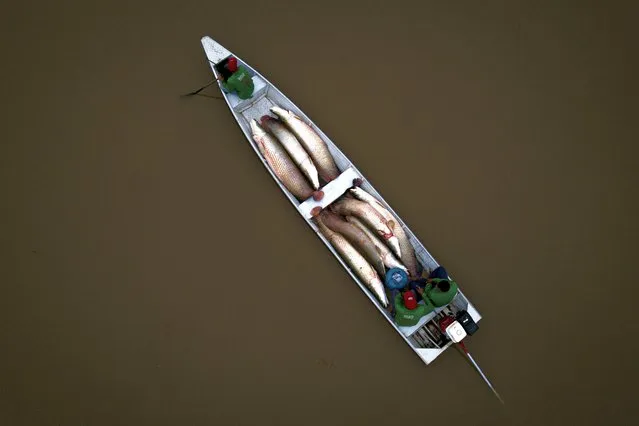
A boat transports Pirarucu fish to a processing ship, in the San Raimundo settlement lake, in Carauari, Brazil, Tuesday, September 6, 2022, published November 3. The giant fish not so long ago nearly vanished. The illegal and unsustainable fishing left river and Indigenous communities struggling to catch their staple food. (Photo by Jorge Saenz/AP Photo)

A boat transports Pirarucu fish to a processing ship, in the San Raimundo settlement lake, in Carauari, Brazil, Tuesday, September 6, 2022, published November 3. The giant fish not so long ago nearly vanished. The illegal and unsustainable fishing left river and Indigenous communities struggling to catch their staple food. (Photo by Jorge Saenz/AP Photo)
Details
21 Dec 2022 03:26:00
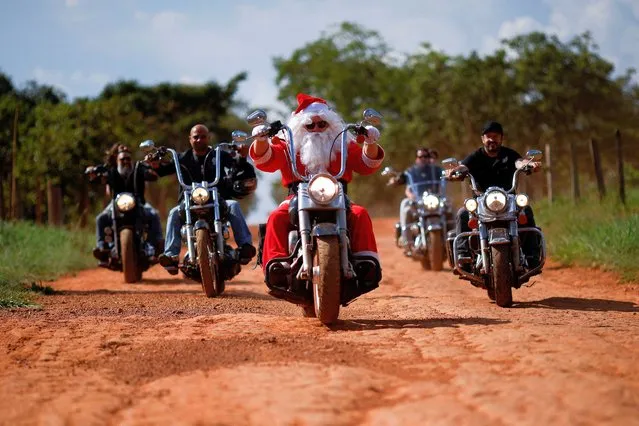
A motorcyclist, Helton Garcia dressed as Santa Claus, rides his motorcycle before handing out gifts to children in a rural school in Santo Antonio do Descoberto, state of Goias, Brazil on December 10, 2023. (Photo by Adriano Machado/Reuters)

A motorcyclist, Helton Garcia dressed as Santa Claus, rides his motorcycle before handing out gifts to children in a rural school in Santo Antonio do Descoberto, state of Goias, Brazil on December 10, 2023. (Photo by Adriano Machado/Reuters)
Details
15 Dec 2023 06:06:00
Teenagers playing with mud started the Bloco da Lama in 1986 and it has since become an annual event in the city of Paraty, Brazil. Hundreds of people wrestle, coat each other in mud and throw it around to the sound of samba and reggaeton at a carnival beach party on February 18, 2023. Clothes are optional, but mud is not. (Photo by Fabio Teixeira/SIPA Press/Profimedia)

Teenagers playing with mud started the Bloco da Lama in 1986 and it has since become an annual event in the city of Paraty, Brazil. Hundreds of people wrestle, coat each other in mud and throw it around to the sound of samba and reggaeton at a carnival beach party on February 18, 2023. Clothes are optional, but mud is not. (Photo by Fabio Teixeira/SIPA Press/Profimedia)
Details
24 Jun 2024 04:09:00


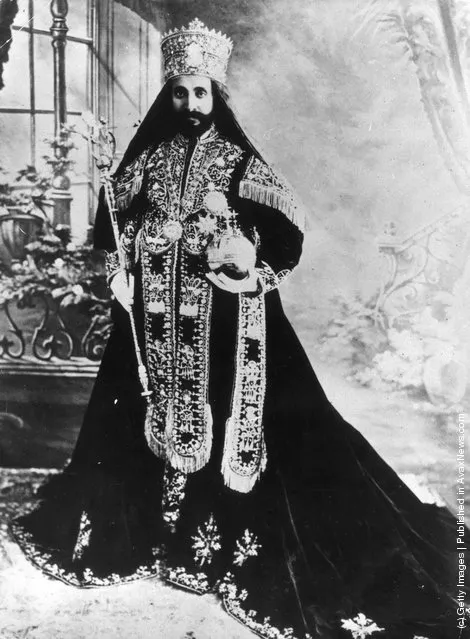
“Haile Selassie I (23 July 1892 – 27 August 1975), born Tafari Makonnen, was Ethiopia's regent from 1916 to 1930 and Emperor of Ethiopia from 1930 to 1974. The heir to a dynasty that traced its origins to the 13th century, and from there by tradition back to King Solomon and Queen Makeda, Empress of Axum, known in the Abrahamic tradition as the Queen of Sheba. Haile Selassie is a defining figure in both Ethiopian and African history.

Haile Selassie is revered as the returned Messiah of the Bible, God incarnate, among the Rastafari movement, the number of followers of which is estimated between 200,000 and 800,000. Begun in Jamaica in the 1930s, the Rastafari movement perceives Haile Selassie as a messianic figure who will lead a future golden age of eternal peace, righteousness, and prosperity. He himself remained an Ethiopian Orthodox Christian throughout his life”. – Wikipedia

Photo: Negusa Negasti, Emperor of Ethiopia Haile Selassie I, known as “Lord of Lords”, “The Conquering Lion of the tribe of Judah”, “Light of the world”, “Elect of God”, in full ceremonial regalia following his coronation. (Photo by Hulton Archive/Getty Images)

Details
21 Jun 2011 11:04:00
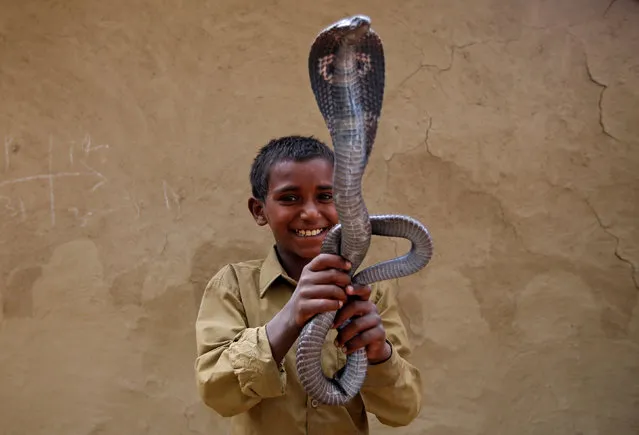
Ravi Nath poses for a photograph with a cobra snake in Jogi Dera (Snake charmers settlement), in the village of Baghpur, in the central state of Uttar Pradesh, India November 10, 2016. (Photo by Adnan Abidi/Reuters)

Ravi Nath poses for a photograph with a cobra snake in Jogi Dera (Snake charmers settlement), in the village of Baghpur, in the central state of Uttar Pradesh, India November 10, 2016. An ancient tribe of snake charmers, known as Saperas, have thrived over the generations by catching venomous snakes and making them dance to their music. Snakes are revered by Hindus in India and snake charmers are considered the followers of Lord Shiva, the blue-skinned Hindu god who is usually portrayed wearing a king cobra around his neck. (Photo by Adnan Abidi/Reuters)
Details
26 Jan 2017 13:06:00
A picture made available on 13 May 2016 shows A Tiwa girl performing her traditional dance as they celebrated the Wanchuwa festival in Karbi Anglong District of Assam state, India, 11 May 2016. Wanchuwa is one of the most important festivals of the Tiwa tribal community living in the hills as it is related with agriculture which is the mainstay of their economy. Tiwas pray for a bountiful harvest during this festival and to protect their crops from pest and other natural calamities. (Photo by EPA/Stringer)

A picture made available on 13 May 2016 shows A Tiwa girl performing her traditional dance as they celebrated the Wanchuwa festival in Karbi Anglong District of Assam state, India, 11 May 2016. Wanchuwa is one of the most important festivals of the Tiwa tribal community living in the hills as it is related with agriculture which is the mainstay of their economy. Tiwas pray for a bountiful harvest during this festival and to protect their crops from pest and other natural calamities. Tiwa is a major tribe of Assam state who practice Jhum or shifting cultivation for their living in the hills. (Photo by EPA/Stringer)
Details
14 May 2016 11:45:00