Loading...
Done
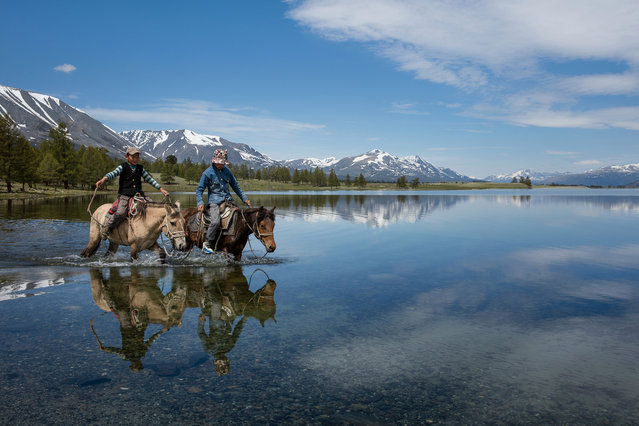
Joel said documenting the Kazakh nomad summer migration was really an epic journey – a time travel journey – and at the same time was possible to get an understanding of how the balance of nature is still possible in Altai Mountains, Mongolia, June 2015. (Photo by Joel Santos/Barcroft Images)

Joel said documenting the Kazakh nomad summer migration was really an epic journey – a time travel journey – and at the same time was possible to get an understanding of how the balance of nature is still possible in Altai Mountains, Mongolia, June 2015. (Photo by Joel Santos/Barcroft Images)
Details
30 Nov 2016 13:23:00
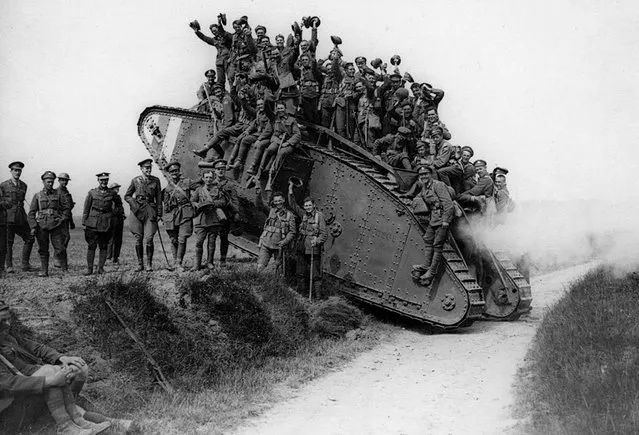
These black-and-white photos are taken from the new book “Armoured Warfare in the First World War 1916 – 1918” by Anthony Tucker-Jones and published by Pen & Sword Military. “Interestingly the British, French and Germans took completely different approaches with varying results”. The British military produced “Little Willie” in Autumn 1915 weighing 18 tonnes, which had a crew of two plus four gunners. “Inspired by a tracked artillery tractor “Little Willie” was referred to as a water tank – hence the name tank – to ensure secrecy”, said Anthony. “This led to the strange looking Mark I with its peculiar rhomboid shape, designed to cross trenches with guns in sponsons on either side. The Germans saw the tank as unchivalrous and were slow to grasp its utility. They favoured the Stormtrooper (specialist soldiers used to infiltrate enemy trenches) and artillery, not the tank”, said Anthony. “However, they didn’t hesitate to make use of captured British tanks. Although the tank helped secure victory and German soldiers dubbed it “Germany’s Downfall” the country was ultimately brought to its knees by the Allies blockade”. Here: British troops hitch a ride on a Mark IV after the massed tank fleet spearheading attack at Cambrai on November 20, 1917. (Photo by Anthony Tucker-Jones/Mediadrumworld.com)

These black-and-white photos are taken from the new book “Armoured Warfare in the First World War 1916 – 1918” by Anthony Tucker-Jones and published by Pen & Sword Military. Here: British troops hitch a ride on a Mark IV after the massed tank fleet spearheading attack at Cambrai on November 20, 1917. (Photo by Anthony Tucker-Jones/Mediadrumworld.com)
Details
23 Feb 2017 00:02:00
Fireplace for children, Trondheim, Norway, by Haugen/Zohar. The children of Trondheim come to sit around the fire and tell stories in this whimsical cone hut, made with materials recycled from a construction site. (Photo by Jason Havneraas/The Guardian)

Fireplace for children, Trondheim, Norway, by Haugen/Zohar. The children of Trondheim come to sit around the fire and tell stories in this whimsical cone hut, made with materials recycled from a construction site. (Photo by Jason Havneraas/The Guardian)
Details
17 Mar 2017 00:04:00
An Indian Runner duck searches for food on a snow-covered meadow in Aitrang, southern Germany, Wednesday. April 19, 2017. (Photo by Karl-Josef Hildenbrand/DPA via AP Photo)

An Indian Runner duck searches for food on a snow-covered meadow in Aitrang, southern Germany, Wednesday. April 19, 2017. (Photo by Karl-Josef Hildenbrand/DPA via AP Photo)
Details
23 Apr 2017 08:45:00
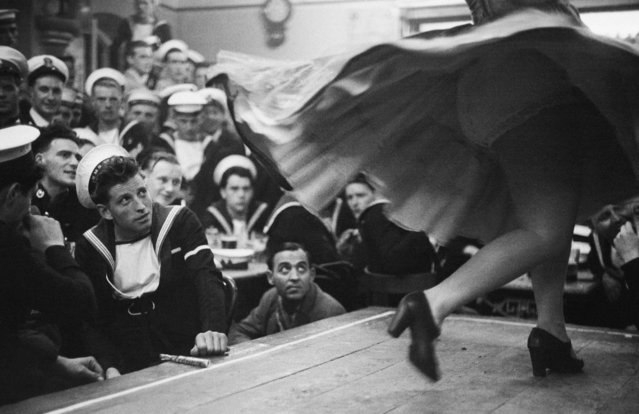
British sailors taking shore leave on the British dependency of Gibraltar visit the Suiza Bar to watch a Spanish dancer perform on August 05, 1954. These Spanish entertainers are under contract and must return over the border by 11 o'clock. (Photo by Bert Hardy/Getty Images)

British sailors taking shore leave on the British dependency of Gibraltar visit the Suiza Bar to watch a Spanish dancer perform on August 05, 1954. These Spanish entertainers are under contract and must return over the border by 11 o'clock. (Photo by Bert Hardy/Getty Images)
Details
19 May 2017 08:48:00
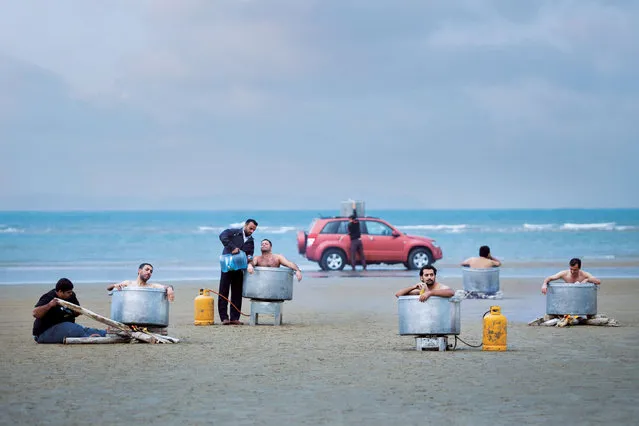
Public Space series, 2015. This series by Morteza Niknahad and Behnam Zakeri tends toward cinema, taking an almost cartoonish view of modern life in Iran. This work was inspired by the social life of dolphins. (Photo by Morteza Niknahad and Behnam Zakeri/The Guardian)

Public Space series, 2015. This series by Morteza Niknahad and Behnam Zakeri tends toward cinema, taking an almost cartoonish view of modern life in Iran. This work was inspired by the social life of dolphins. (Photo by Morteza Niknahad and Behnam Zakeri/The Guardian)
Details
19 Jul 2017 08:26:00
Amazing World By Al Hogue

Light is the sole reason why life exists. It provides us with warmth; it allows us to see; it nourishes all the living things on this planet. Many painters, especially the masters of Old Renaissance Period, have recognized the importance of light and its intimate connection with nature and life itself. In their paintings they gave tribute to light, giving the impression that their paintings had a light source hidden within them. Al Hogue, the artist who created the paintings that you see before you, has studied their techniques for many years. As time went by, light permeated not only his paintings by also his life, becoming his sole philosophy.
Details
06 Mar 2015 06:03:00
Ma Jiaqi, 5, and her mother arrive at Beijing Railway Station for their train to Changchun of Jilin province, in Beijing, China, January 25, 2016. (Photo by Jason Lee/Reuters)

Ma Jiaqi, 5, and her mother arrive at Beijing Railway Station for their train to Changchun of Jilin province, in Beijing, China, January 25, 2016. According to traffic police, over 2.9 billion trips will be made around China during the 40-day Spring Festival travel rush, which started on January 24. (Photo by Jason Lee/Reuters)
Details
26 Jan 2016 12:27:00