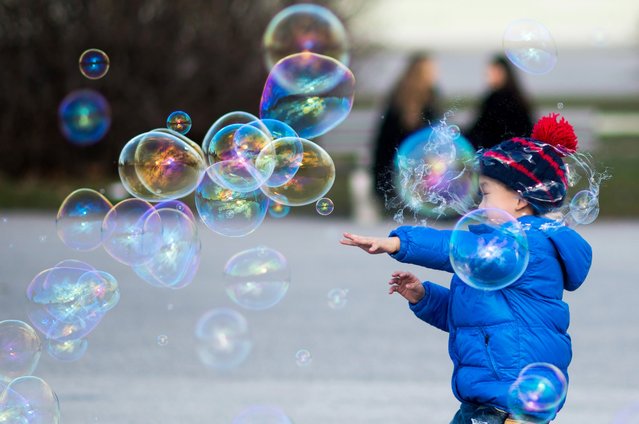
A young boy plays with soap bubbles near Hofburg Palace at Heldenplatz, one of the top tourists attractions in Vienna, Austria, January 26, 2016. (Photo by Christian Bruna/EPA)
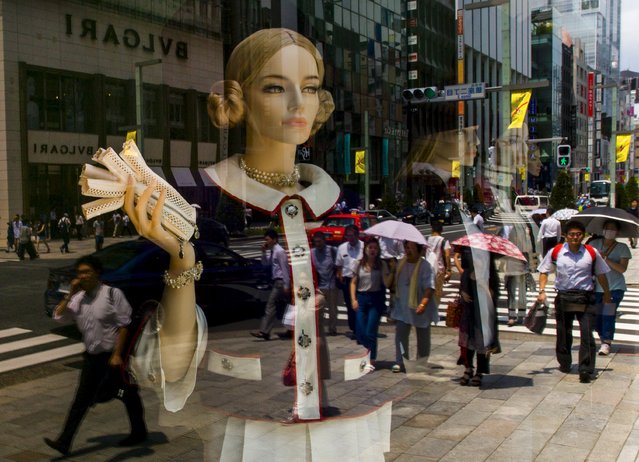
People are reflected in a shop window as they walk along a street in a shopping district in Tokyo, Japan June 25, 2015. (Photo by Thomas Peter/Reuters)
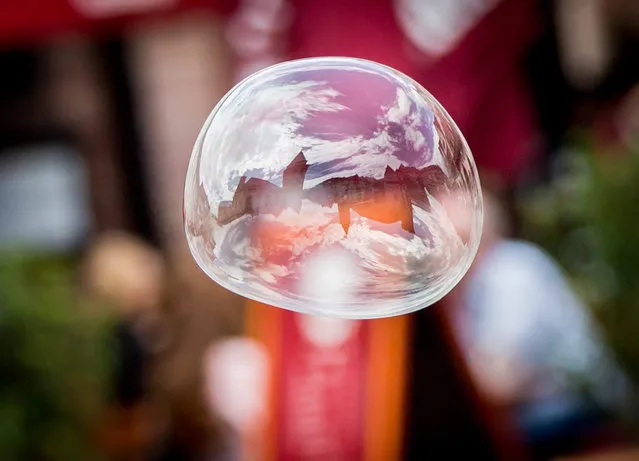
A blurred panaroma of Roemerberg historic center is reflected in a soap bubble in Frankfurt am Main, Germany, 09 July 2015. (Photo by Frank Rumpenhorst/EPA)
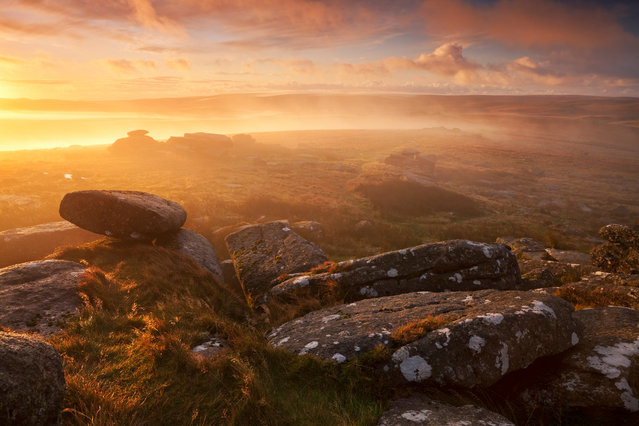
Sunrise over a moor viewed from Littaford Tor, Dartmoor, UK, 2016. Autumn visits the windswept moors and granite tors of Dartmoor earlier than the rest of the south-west. While there aren’t many trees here, autumn shades appear in golden ferns and tan heather. Littaford Tors, near Two Bridges and a mile from Princetown, is a short walk and can be combined with a visit to the adjacent Wistman’s Wood. (Photo by Stuart Holmes)
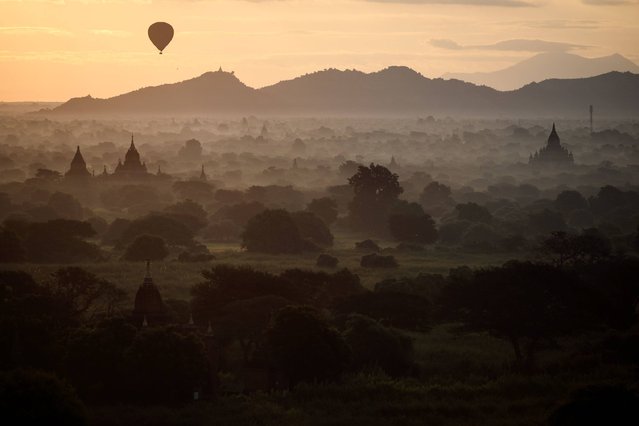
In this picture taken on November 28, 2016, a hot-air balloon carrying tourists sails over the archeological site at sunrise in Bagan. Located in central Myanmar, Bagan is home to more than 2,000 ancient Buddhist monuments deeply revered in the Buddhist-majority nation and is one of the country's most popular tourist destinations. (Photo by Dale De La Rey/AFP Photo)
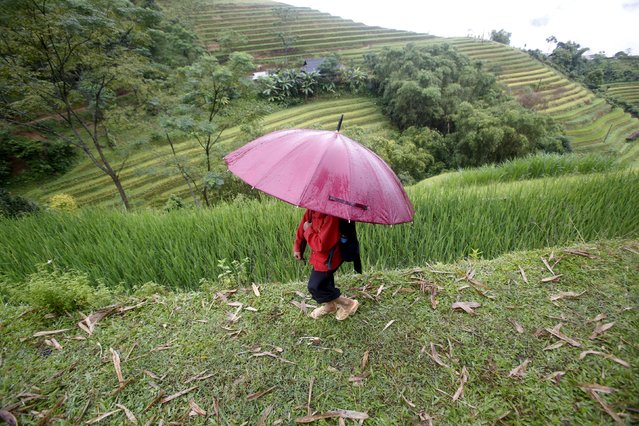
A pupil of the Dao ethnic tribe returns home from school along a hillside path at Suoi Thau village in Hoang Su Phi district of Vietnam's northern province of Ha Giang, located at the border with China, September 18, 2015. (Photo by Reuters/Kham)
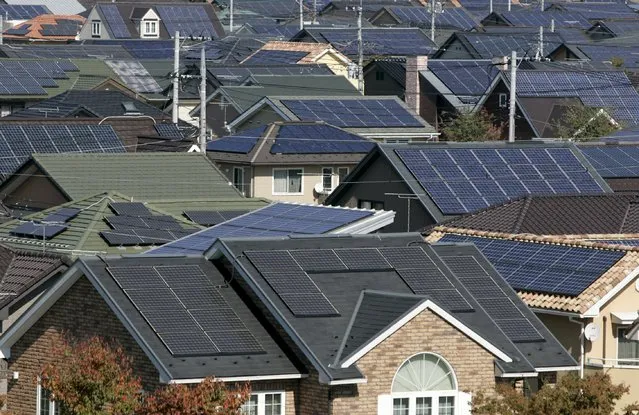
Rooftops of solar powered houses are pictured in Ota, 80 km northwest of Tokyo in this October 28, 2008 file photo. One by one, Japan is turning off the lights at the giant oil-fired power plants that propelled it to the ranks of the world's top industrialised nations. With nuclear power in the doldrums after the Fukushima disaster, it's solar energy that is becoming the alternative. Solar power is set to become profitable in Japan as early as this quarter, according to the Japan Renewable Energy Foundation (JREF), freeing it from the need for government subsidies and making it the last of the G7 economies where the technology has become economically viable. (Photo by Yuriko Nakao/Reuters)