Loading...
Done
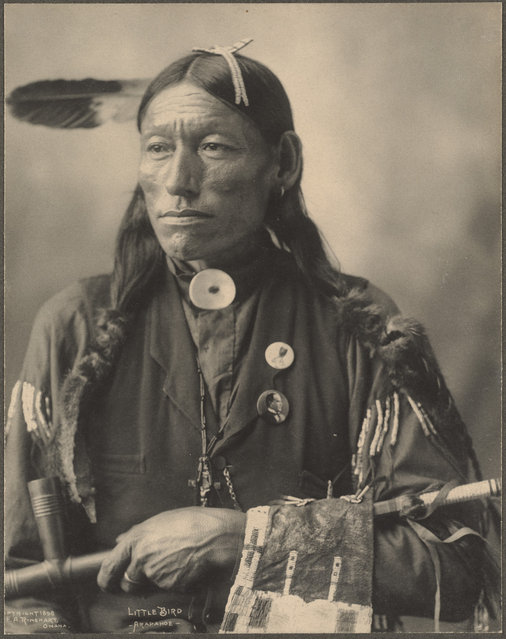
Little Bird, Arapahoe, 1899. (Photo by Frank A. Rinehart)

Frank A. Rinehart, a commercial photographer in Omaha, Nebraska, was commissioned to photograph the 1898 Indian Congress, part of the Trans-Mississippi International Exposition. More than five hundred Native Americans from thirty-five tribes attended the conference, providing the gifted photographer and artist an opportunity to create a stunning visual document of Native American life and culture at the dawn of the 20th century. Photo: Little Bird, Arapahoe, 1899. (Photo by Frank A. Rinehart)
Details
25 Apr 2013 11:30:00
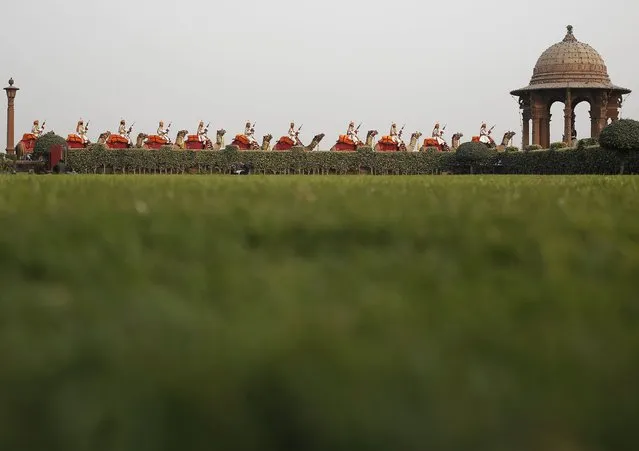
India's Border Security Force (BSF) soldiers ride their camels during a rehearsal for the “Beating the Retreat” ceremony in New Delhi, India, January 27, 2016. (Photo by Anindito Mukherjee/Reuters)

India's Border Security Force (BSF) soldiers ride their camels during a rehearsal for the “Beating the Retreat” ceremony in New Delhi, India, January 27, 2016. The ceremony symbolises retreat after a day on the battlefield, and marks the official end of the Indian Republic Day celebrations. It is held every year on January 29. (Photo by Anindito Mukherjee/Reuters)
Details
29 Jan 2016 11:55:00


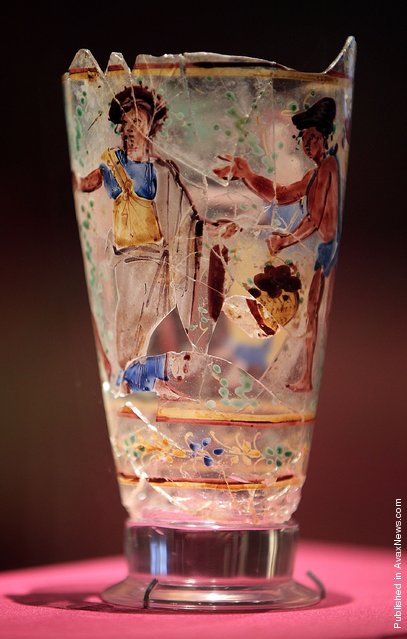
Indian ivory furniture legs in the shape of a goddess from the first century AD are displayed in the 'Afghanistan Crossroads of the Ancient World' exhibition at The British Museum on March 1, 2011 in London, England. Displaying treasures that were in great danger during the years of civil war and Taliban rule, these surviving artifacts reveal Afghanistan's ancient culture, its fragility and its remarkable place in world history. The exhibition opens to the public on March 3 and runs until July 3, 2011. (Photo by Peter Macdiarmid/Getty Images). LONDON, ENGLAND – MARCH 01
Details
07 Mar 2011 14:39:00
Sculputure by Anish Kapoor

“Anish Kapoor CBE RA (born 12 March 1954) is a British sculptor of Indian birth. Born in Mumbai (Bombay), Kapoor has lived and worked in London since the early 1970s when he moved to study art, first at the Hornsey College of Art and later at the Chelsea School of Art and Design”. – Wikipedia

Photo: Workmen install a large-scale sculputure by Anish Kapoor at the Lisson Gallery on October 10, 2006 in London, England. (Photo by Gareth Cattermole/Getty Images)
Details
07 Aug 2011 11:15:00
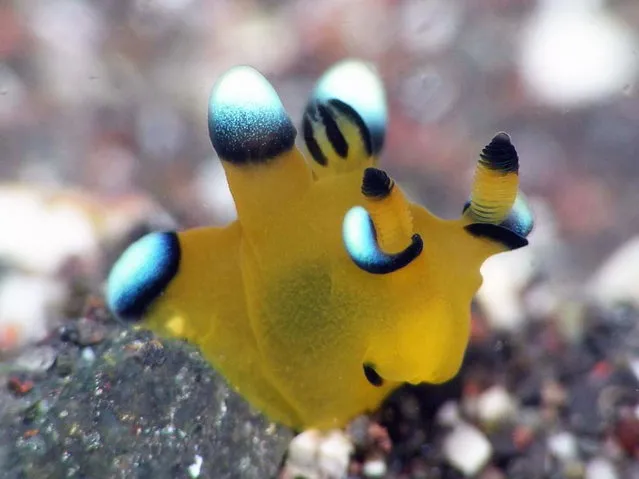
Thecacera Pacifica AKA Pikachu

If you ever wanted to meet a live Pikachu, you might have a hard time finding one. However, there is a creature on this Earth that kind of looks like one. That creature’s name is Thecacera pacifica and it is a species of a sea slug. These little critters can be found in the Indian Ocean from African coast to Indonesia and Vanuatu. Their vibrant orange and blue colors look gorgeous, making it look like some sort of anemone. Also, as you might have guessed from the striking colors of the sea slug, just like most of anemones, this creature is very toxic. Thus, keeping it as a pet isn’t an option.

Details
19 Dec 2014 12:51:00
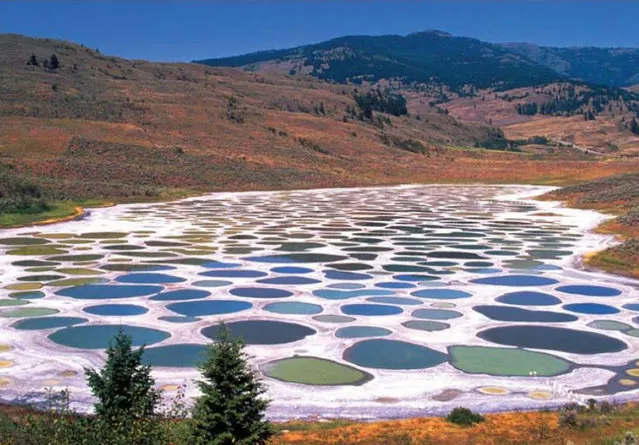
Kliluk, the Spotted Lake, Canada

Originally known to the First Nations of the Okanagan Valley as Khiluk, which was- and remains today revered as a sacred site producing therapeutic waters. During World War I the minerals of Spotted Lake were used in manufacturing ammunition. Later the area came under the control of the Ernest Smith Family, for a term of about 40 years. In 1979 Smith attempted to create interest in a spa at the lake. The First Nations responded with an effort to buy the lake; in October 2001 they finally struck a deal. First Nations arranged the purchase of 22 hectares of land for a total of $720,000, and contributed about 20% of the cost. The Indian Affairs Department paid the remainder.
Details
06 Mar 2015 12:59:00
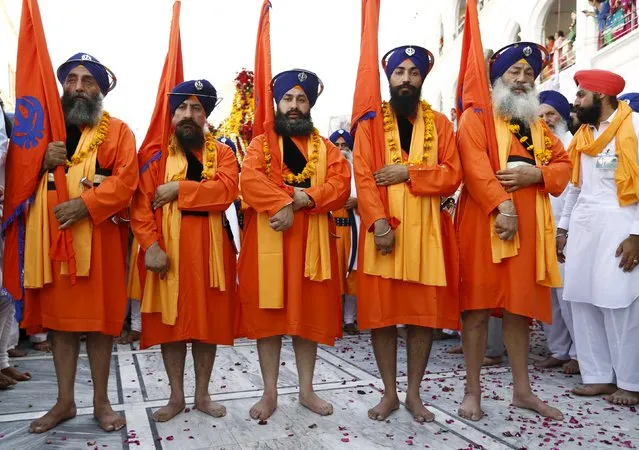
Sikh devotees participate in the Baisakhi festival at Panja Sahib shrine in Hassan Abdel April 13, 2015. (Photo by Caren Firouz/Reuters)

Sikh devotees participate in the Baisakhi festival at Panja Sahib shrine in Hassan Abdel April 13, 2015. Hundreds of Indian Sikh pilgrims arrived into Pakistan to celebrate the Baisakhi festival with Pakistani Sikhs at the shrines of Panja Sahib and Nankana Sahib, the birth place of Sikh faith founder Guru Nanak Dev. (Photo by Caren Firouz/Reuters)
Details
14 Apr 2015 10:42:00
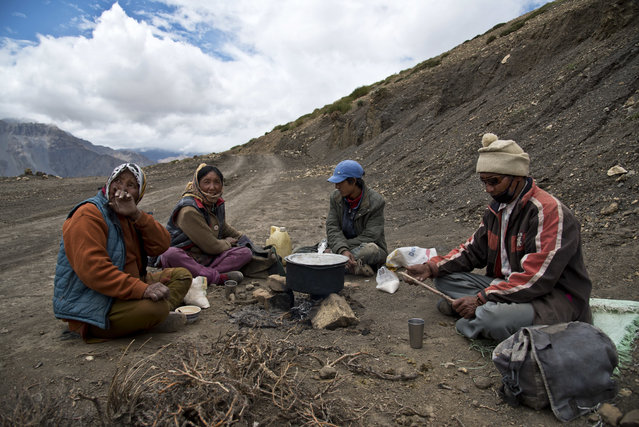
In this August 17, 2016, photo, from left to right, Chhering Chodom, 60, Tashi Yangzom, 50, Lobsang Chhering, 27, and Dorje Tandup, 58, drink milk tea on the side of the road. For centuries, the sleepy valley nestled in the Indian Himalayas remained a hidden Buddhist enclave forbidden to outsiders. Enduring the harsh year-round conditions of the high mountain desert, the people of Spiti Valley lived by a simple communal code – share the Earth's bounty, be hospitable to neighbors, and eschew greed and temptation at all turns. That's all starting to change, for better or worse. Since India began allowing its own citizens as well as outsiders to visit the valley in the early 1990s, tourism and trade have boomed. And the marks of modernization, such as solar panels, asphalt roads and concrete buildings, have begun to appear around some of the villages that dot the remote landscape at altitudes above 4,000 meters (13,000 feet). (Photo by Thomas Cytrynowicz/AP Photo)

In this August 17, 2016, photo, from left to right, Chhering Chodom, 60, Tashi Yangzom, 50, Lobsang Chhering, 27, and Dorje Tandup, 58, drink milk tea on the side of the road. For centuries, the sleepy valley nestled in the Indian Himalayas remained a hidden Buddhist enclave forbidden to outsiders. Enduring the harsh year-round conditions of the high mountain desert, the people of Spiti Valley lived by a simple communal code – share the Earth's bounty, be hospitable to neighbors, and eschew greed and temptation at all turns. That's all starting to change, for better or worse. (Photo by Thomas Cytrynowicz/AP Photo)
Details
15 Sep 2016 09:22:00