Loading...
Done
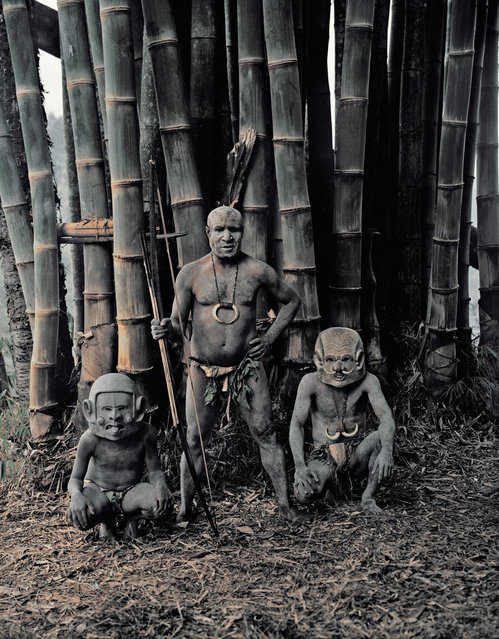
“Asaro from the Eastern Highlands”. The mudmen could not cover their faces with mud because the people of Papua New Guinea thought that the mud from the Asaro river was poisonous. So instead of covering their faces with this alleged poison, they made masks from pebbles that they heated and water from the waterfall, with unusual designs such as long or very short ears either going down to the chin or sticking up at the top, long joined eyebrows attached to the top of the ears, horns and sideways mouths. (Jimmy Nelson)

“Asaro from the Eastern Highlands”. The mudmen could not cover their faces with mud because the people of Papua New Guinea thought that the mud from the Asaro river was poisonous. So instead of covering their faces with this alleged poison, they made masks from pebbles that they heated and water from the waterfall, with unusual designs such as long or very short ears either going down to the chin or sticking up at the top, long joined eyebrows attached to the top of the ears, horns and sideways mouths. (Photo and caption by Jimmy Nelson)
Details
20 Oct 2013 08:54:00
Bella Hadid arrives at the amfAR Gala Cannes 2017 at Hotel du Cap-Eden-Roc on May 25, 2017 in Cap d'Antibes, France. (Photo by Michael Buckner/Variety/Rex Features/Shutterstock)

Bella Hadid arrives at the amfAR Gala Cannes 2017 at Hotel du Cap-Eden-Roc on May 25, 2017 in Cap d'Antibes, France. (Photo by Michael Buckner/Variety/Rex Features/Shutterstock)
Details
28 May 2017 07:40:00
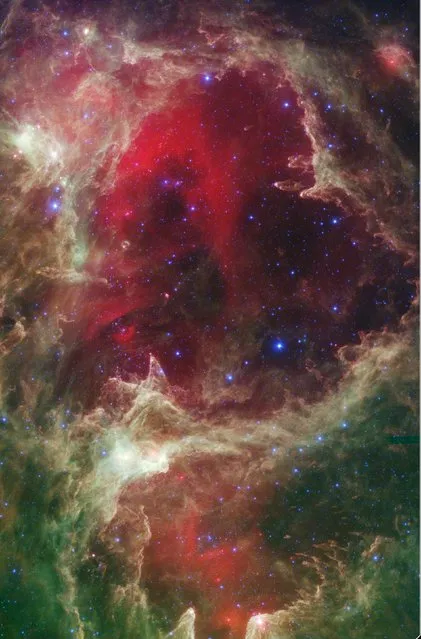
An infrared portrait from NASA's Spitzer Space Telescope which shows generations of stars is seen in this undated NASA handout image released February 14, 2013. In this wispy star-forming region, called W5, the oldest stars can be seen as blue dots in the centers of the two hollow cavities (other blue dots are background and foreground stars not associated with the region). Red shows heated dust that pervades the region's cavities, while green highlights dense clouds. (Photo by NASA/Reuters/JPL-Caltech/Harvard-Smithsonian/Handout)

An infrared portrait from NASA's Spitzer Space Telescope which shows generations of stars is seen in this undated NASA handout image released February 14, 2013. In this wispy star-forming region, called W5, the oldest stars can be seen as blue dots in the centers of the two hollow cavities (other blue dots are background and foreground stars not associated with the region). Red shows heated dust that pervades the region's cavities, while green highlights dense clouds. (Photo by NASA/Reuters/JPL-Caltech/Harvard-Smithsonian/Handout)
Details
03 Mar 2013 08:44:00
General atmosphere on Shipyard Island, the venue of the 24th Sziget (Island) Festival in Northern Budapest, Hungary, 14 August 2016. (Photo by Mohai Balázs/Rockstar Photographers)

General atmosphere on Shipyard Island, the venue of the 24th Sziget (Island) Festival in Northern Budapest, Hungary, 14 August 2016. (Photo by Mohai Balázs/Rockstar Photographers)
Details
16 Aug 2016 10:02:00
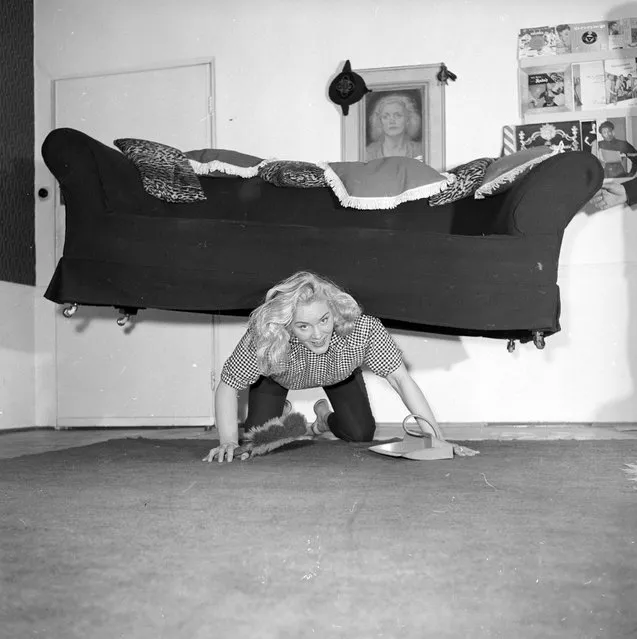
Glamorous strongwoman Joan Rhodes exercises her strength whilst tackling housework in her flat in Hampstead, north London, March 1958. (Photo by Ken Harding/BIPs)

Glamorous strongwoman Joan Rhodes exercises her strength whilst tackling housework in her flat in Hampstead, north London, March 1958. (Photo by Ken Harding/BIPs). P.S. All pictures are presented in high resolution.
Details
05 Jun 2015 06:44:00
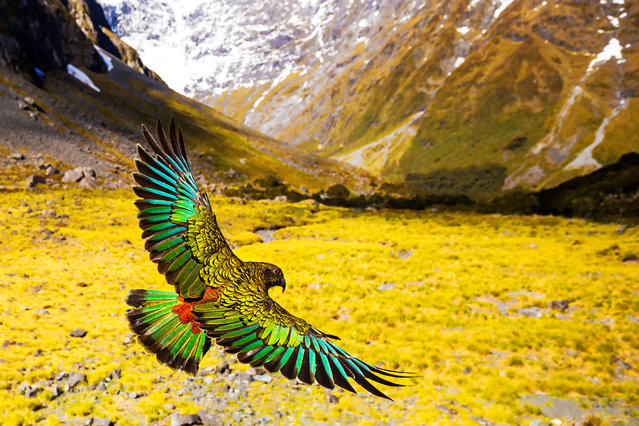
Kea are the only true alpine parrots in the world and thrive as cunning opportunists in the freezing conditions of the Southern Alps. Kea are thought to have developed their wide array of food-finding strategies during the last great ice age, where they learned to adapt using their unusual powers of curiosity. (Photo by Tom Walker/BBC Pictures/The Guardian)

Kea are the only true alpine parrots in the world and thrive as cunning opportunists in the freezing conditions of the Southern Alps. Kea are thought to have developed their wide array of food-finding strategies during the last great ice age, where they learned to adapt using their unusual powers of curiosity. (Photo by Tom Walker/BBC Pictures/The Guardian)
Details
19 Jul 2016 13:03:00
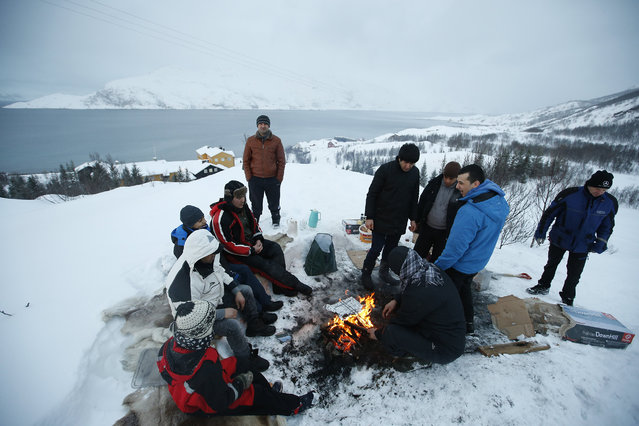
In this photo taken Tuesday, February 2, 2016, asylum seekers gather round a fire as they cook a meal overlooking the temporary Altnes camp refugee camp on the island of Seiland, northern Norway. (Photo by Alastair Grant/AP Photo)

In this photo taken Tuesday, February 2, 2016, asylum seekers gather round a fire as they cook a meal overlooking the temporary Altnes camp refugee camp on the island of Seiland, northern Norway. Waiting for their asylum claims to be processed, hundreds of people in emergency shelters in Hammerfest and neighboring towns are slowly getting used to the extreme climate and unfamiliar customs of the High North. They say they have adapted to the cold – the temperature rarely drops below minus 10 degrees C (14 F) along the coast, though it gets much colder further inland. It’s the darkness that throws them off. (Photo by Alastair Grant/AP Photo)
Details
18 Feb 2016 13:22:00
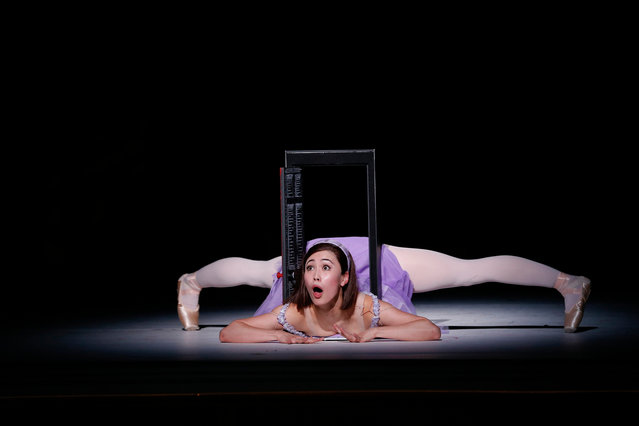
Ako Kondo as Alice, on stage. (Photo by Jeff Busby/The Guardian)

Christopher Wheeldon’s Alice’s Adventures in Wonderland is the biggest production the Australian Ballet has ever undertaken and it’s also one of the most spectacular. Created for the Royal Ballet and designed by Bob Crowley, it involves puppetry, optical illusions, major setpieces and immersive projections, as well as costumes that some dancers have to actually climb into. Here: Ako Kondo as Alice, on stage September 11, 2017 in Melbourne, Australia. (Photo by Jeff Busby/The Guardian)
Details
22 Sep 2017 07:18:00