Cuban soldiers receive combat training at the Cadets School “Antonio Maceo” November 28, 2001, 30 kilometers East of Havana. (Photo by Jorge Rey/Getty Images)
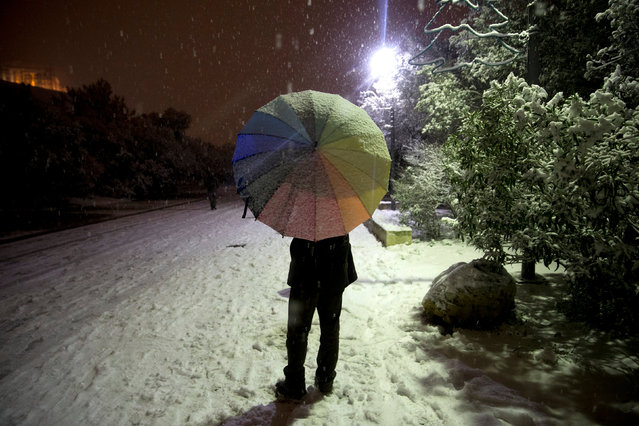
A man holds his umbrella during snowfall on the Areopagitou pedestrian street beneath the Acropolis hill during snowfall in Athens, Greece, January 10, 2017. (Photo by Alkis Konstantinidis/Reuters)
A bride gets tested for the coronavirus disease (COVID-19) at a nucleic acid testing site, following the coronavirus disease (COVID-19) outbreak in Shanghai, China on November 15, 2022. (Photo by Aly Song/Reuters)
A worker pushes a wheelbarrow past a mural in Doha on November 8, 2022, ahead of the Qatar 2022 FIFA World Cup football tournament. (Photo by Gabriel Bouys/AFP Photo)
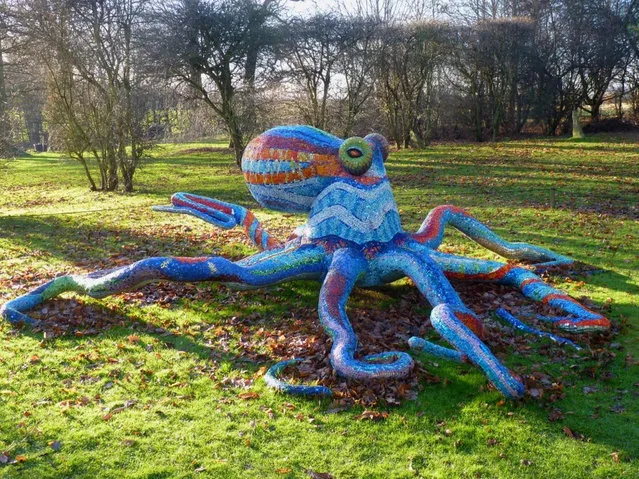
Marialuisa Tadeis sculpture is very large compared to a life size octopus. The sculptures are made of steel and concrete. They are then turned into a mosaic using hand cut glass. The texture is bumpy because of the mosaic but is smooth on the glass. The main idea behind the sculpture is to explore spiritual and symbolic representation.
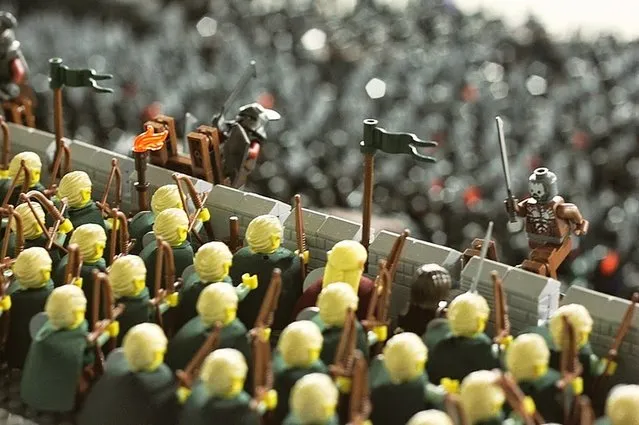
Based on the layout of Helm’s Deep featured in Peter Jackson’s film adaptation, this 150,000 brick set piece is astounding. The artists, who go by the names Rich-K and Big J, apparently, nail the atmosphere and scale of the conflict of one Lord of the Rings most iconic scenes. At the time these photos were taken, the model was about 90% complete, with an estimated four months worth of work. The time, money and personal investment that must have gone into this project is impressive.
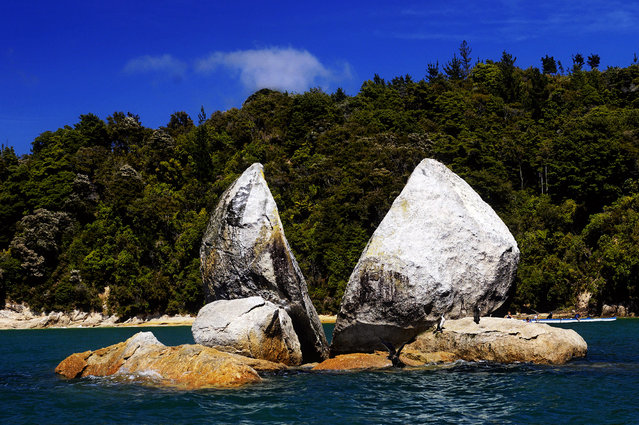
Split Apple Rock is a geological rock formation in The Tasman Bay off the northern coast of the South Island of New Zealand. Made of granite, it is in the shape of an apple which has been cut in half. It is a popular tourist attraction in the waters of the Tasman Sea approximately 50 metres off the coast between Kaiteriteri and Marahau. The rock sits in shallow water at low tide and is accessible by wading. It is also a point of interest for the many tourist boats and pleasure craft which operate along the shores of the Abel Tasman National Park. The cleft to produce two sides of the 'apple' was a natural occurrence. It is unknown when this happened and therefore the cleaving of the rock has attracted mythological explanations.
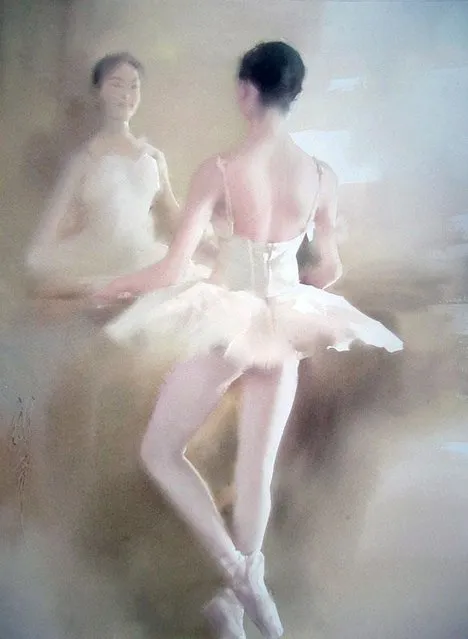
Liu Yi, Chinese painter, was born in Shanghai in 1958. He was a Fine Arts graduate from the Hua Dong University for Education. He did his postgraduate study of watercolor painting at the China College of Fine Arts. He lectures at university for painting and design. He is a member of the Chinese Artists Association and is also a member of the Watercolor Painting Artists Association. He is the retired Deputy President of the Shanghai Watercolor Painting Society, and is currently the Deputy Principal of the Shanghai Arts and Technical College. He is a very accomplished watercolor painter in China.