Loading...
Done
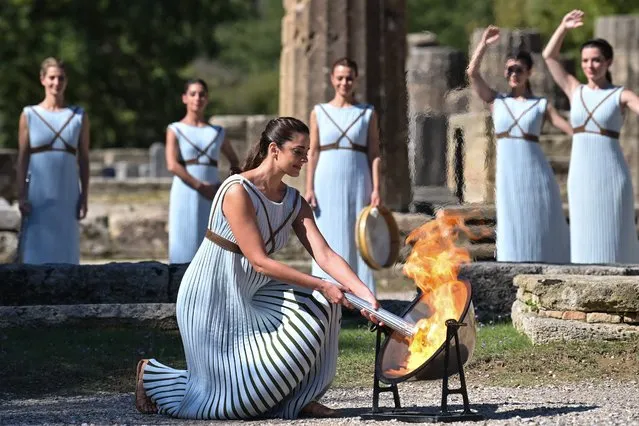
Greek actress Xanthi Georgiou, playing the role of the High Priestess, lights up the torch during the flame lighting ceremony for the Beijing 2022 Winter Olympics at the Ancient Olympia archeological site, birthplace of the ancient Olympics in southern Greece on October 18, 2021. The Olympic flame will once again be lit in an empty stadium on Ovtober 18, 2021, as it starts its truncated journey to Beijing for the Winter Games in February. Like the ceremony in March 2020 to light the flame for Tokyo, and like those Games, which were put back a year, Monday's ceremony is a victim of coronavirus restrictions. (Photo by Aris Messinis/AFP Photo)

Greek actress Xanthi Georgiou, playing the role of the High Priestess, lights up the torch during the flame lighting ceremony for the Beijing 2022 Winter Olympics at the Ancient Olympia archeological site, birthplace of the ancient Olympics in southern Greece on October 18, 2021. The Olympic flame will once again be lit in an empty stadium on Ovtober 18, 2021, as it starts its truncated journey to Beijing for the Winter Games in February. Like the ceremony in March 2020 to light the flame for Tokyo, and like those Games, which were put back a year, Monday's ceremony is a victim of coronavirus restrictions. (Photo by Aris Messinis/AFP Photo)
Details
19 Oct 2021 08:13:00
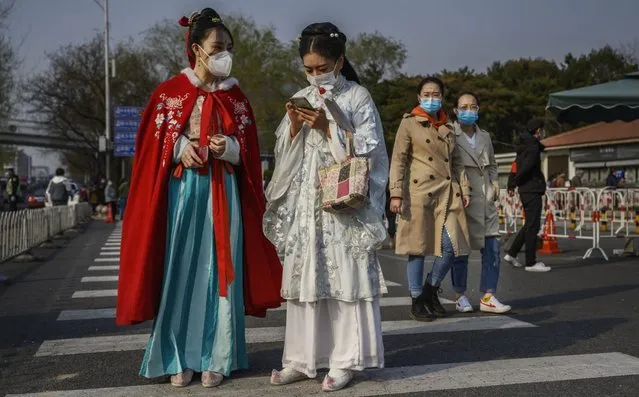
Chinese women wear protective masks as they are dressed in traditional clothing from the Qing Dynasty era outside a park on March 29, 2020 in Beijing, China. A limited section of the iconic tourist site was re-opened to the public this week allowing a smaller number of visitors to reserve tickets online in advance and to enter after passing health screening. With the pandemic hitting hard across the world, China recorded its first day with no new domestic cases of the coronavirus last week, since the government imposed sweeping measures to keep the disease from spreading. For two months, millions of people across China have been restricted in how they move from their homes, while other cities have been locked down in ways that appeared severe at the time but are now being replicated in other countries trying to contain the virus. Officials believe the worst appears to be over in China, though there are concerns of another wave of infections as the government attempts to reboot the worlds second largest economy. In Beijing, it is mandatory to wear masks outdoors, retail stores operate on reduced hours, restaurants employ social distancing among patrons, and tourist attractions at risk of drawing large crowds remain closed. Monitoring and enforcement of virus-related measures and the quarantine of anyone arriving to Beijing is carried out by neighborhood committees and a network of Communist Party volunteers who wear red arm bands. A primary concern for Chinese authorities remains the arrival of flights from Europe and elsewhere, given the exposure of passengers in regions now regarded as hotbeds for transmission. Since January, China has recorded more than 81,000 cases of COVID-19 and at least 3200 deaths, mostly in and around the city of Wuhan, in central Hubei province, where the outbreak first started. (Photo by Kevin Frayer/Getty Images)

Chinese women wear protective masks as they are dressed in traditional clothing from the Qing Dynasty era outside a park on March 29, 2020 in Beijing, China. A limited section of the iconic tourist site was re-opened to the public this week allowing a smaller number of visitors to reserve tickets online in advance and to enter after passing health screening. (Photo by Kevin Frayer/Getty Images)
Details
01 Apr 2020 00:05:00


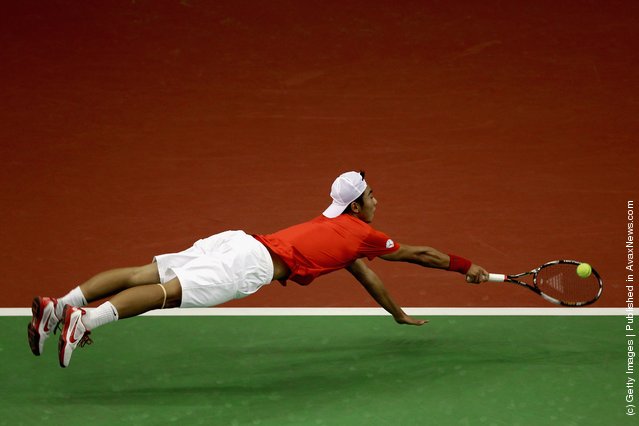
Zhang Ze of China in action during his Oceania zone group1 match against Bernard Tomic of Australia of the 2011 Davis Cup on July 8, 2011 in Beijing, China. (Photo by Lintao Zhang/Getty Images)
Details
13 Jul 2011 10:21:00
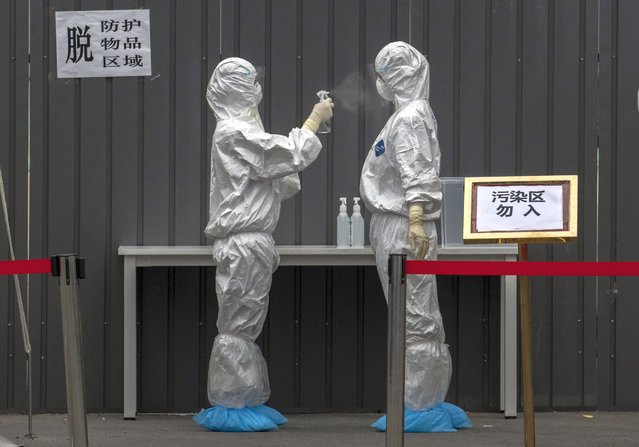
Chinese epidemic control workers wear protective suits as they disinfect each other after performing nucleic acid swab test for COVID-19 on citizens at a government testing site in Xicheng District during an organized tour on June 24, 2020 in Beijing, China. While Chinese government medical officials have said they believe they have controlled the spread, authorities are trying to contain the outbreak linked to the Xinfadi wholesale food market, Beijing's biggest supplier of produce and meat. More than 2.5 million people have undergone nucleic acid tests for COVID-19 at dozens of sites across the city in recent days, with officials using contact tracing to target high and middle risk areas and people who may have had contact with the market or food that came from there. Several neighborhoods have been locked down and a number of other food markets have been closed, The outbreak has triggered fears of a second wave of infection after 56 straight days with no domestically transmitted cases in the capital. (Photo by Kevin Frayer/Getty Images)

Chinese epidemic control workers wear protective suits as they disinfect each other after performing nucleic acid swab test for COVID-19 on citizens at a government testing site in Xicheng District during an organized tour on June 24, 2020 in Beijing, China. While Chinese government medical officials have said they believe they have controlled the spread, authorities are trying to contain the outbreak linked to the Xinfadi wholesale food market, Beijing's biggest supplier of produce and meat. (Photo by Kevin Frayer/Getty Images)
Details
26 Jun 2020 00:01:00
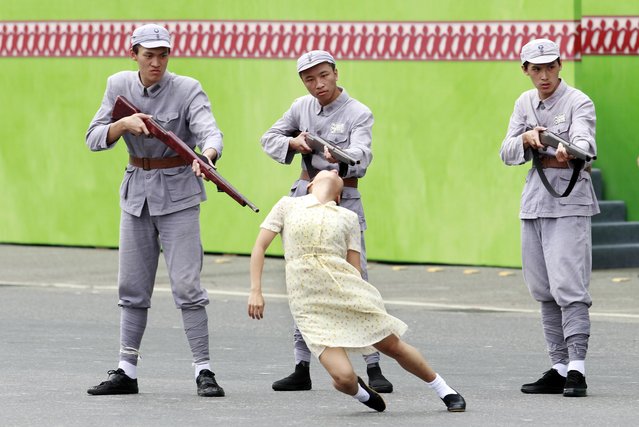
Performers re-enact the 1947 massacre of Taiwanese intellectuals by mainland China's Nationalists troops during the inauguration ceremony of Taiwan's President Tsai Ing-wen in Taipei, Taiwan, Friday, May 20, 2016. Taiwan inaugurated Tsai as its first female president on Friday, returning the pro-independence Democratic Progressive Party to power amid new concerns over increasingly fractious relations with Beijing and a flagging economy. (Photo by Chiang Ying-ying/AP Photo)

Performers re-enact the 1947 massacre of Taiwanese intellectuals by mainland China's Nationalists troops during the inauguration ceremony of Taiwan's President Tsai Ing-wen in Taipei, Taiwan, Friday, May 20, 2016. Taiwan inaugurated Tsai as its first female president on Friday, returning the pro-independence Democratic Progressive Party to power amid new concerns over increasingly fractious relations with Beijing and a flagging economy. (Photo by Chiang Ying-ying/AP Photo)
Details
21 May 2016 11:09:00
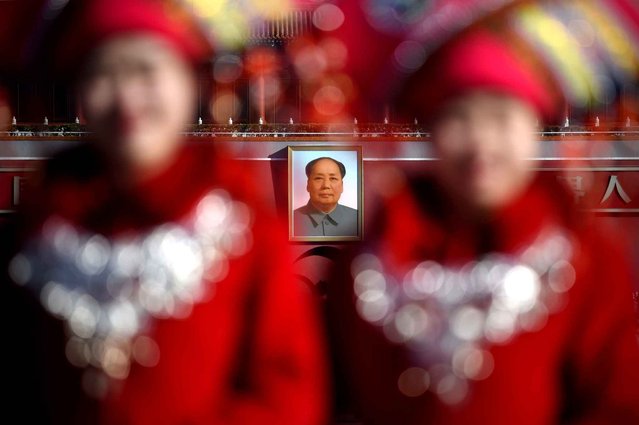
A portrait of late communist leader Mao Zedong is seen behind two hostesses as they pose for a picture at the Tiananmen Square during the 3nd plenary session of the National People's Congress in Beijing on March 13, 2016. China's Communist-controlled parliament opened its annual session on March 5 and is expected to appove a new five-year plan to tackle slowing growth in the world's second-largest economy. (Photo by Wang Zhao/AFP Photo)

A portrait of late communist leader Mao Zedong is seen behind two hostesses as they pose for a picture at the Tiananmen Square during the 3nd plenary session of the National People's Congress in Beijing on March 13, 2016. China's Communist-controlled parliament opened its annual session on March 5 and is expected to appove a new five-year plan to tackle slowing growth in the world's second-largest economy. (Photo by Wang Zhao/AFP Photo)
Details
14 Mar 2016 10:31:00
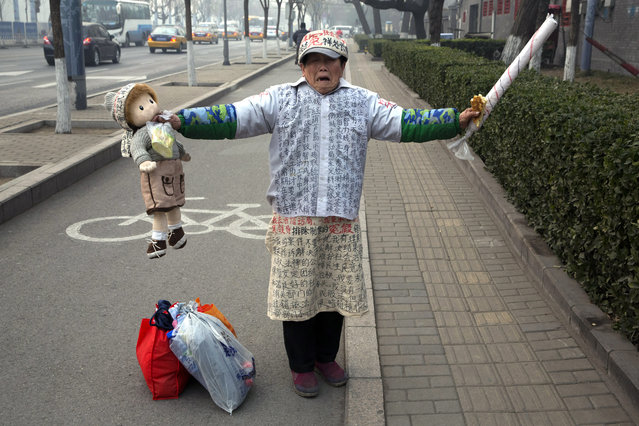
A petitioner with her grievances written on her clothes walks along a street in Beijing Tuesday, December 22, 2015. After months behind bars, Pu Zhiqiang, one of China's most prominent human rights lawyers, left a detention center Tuesday after receiving a suspended prison sentence in a case involving online comments critical of the ruling Communist Party. (Photo by Ng Han Guan/AP Photo)

A petitioner with her grievances written on her clothes walks along a street in Beijing Tuesday, December 22, 2015. After months behind bars, Pu Zhiqiang, one of China's most prominent human rights lawyers, left a detention center Tuesday after receiving a suspended prison sentence in a case involving online comments critical of the ruling Communist Party. (Photo by Ng Han Guan/AP Photo)
Details
26 Dec 2015 08:05:00
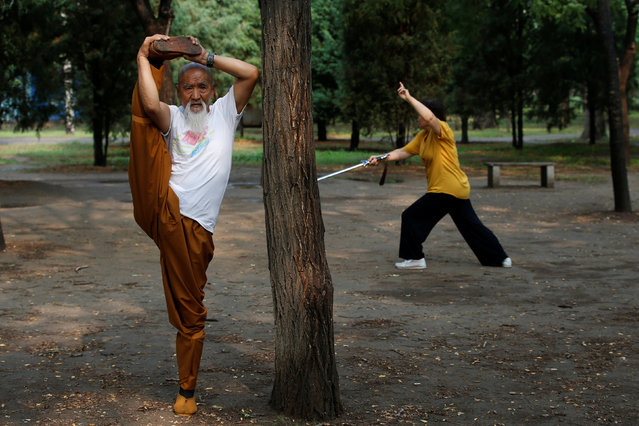
Kung Fu master Li Liangui practices 'Suogugong' Kung Fu and his wife Liang Xiaoyan (R) practices Qigong at a park in Beijing, China, June 30, 2016. (Photo by Kim Kyung-Hoon/Reuters)

Kung Fu master Li Liangui practices “Suogugong” Kung Fu and his wife Liang Xiaoyan (R) practices Qigong at a park in Beijing, China, June 30, 2016. For 50 years, kung fu master Li Liangui has been contorting his body into eye-watering positions while practising one of the more unusual and less popular Chinese martial art forms. The 70-year-old is an expert in suogugong, or body shrinking kung fu, where practitioners dislocate their bones to help them achieve unlikely positions and feats. (Photo by Kim Kyung-Hoon/Reuters)
Details
17 Sep 2016 10:27:00