Loading...
Done
This picture taken on November 9, 2014 shows sharks for sale as a man removes the fins at a traditional market in Tanjung Luar in Lombok, West Nusa Teggara. Hundreds of sharks are hauled ashore every day at a busy market on the central Indonesian island of Lombok, the hub of a booming trade that provides a livelihood for local fishermen but is increasingly alarming environmentalists. (Photo by Sonny Tumbelaka/AFP Photo)

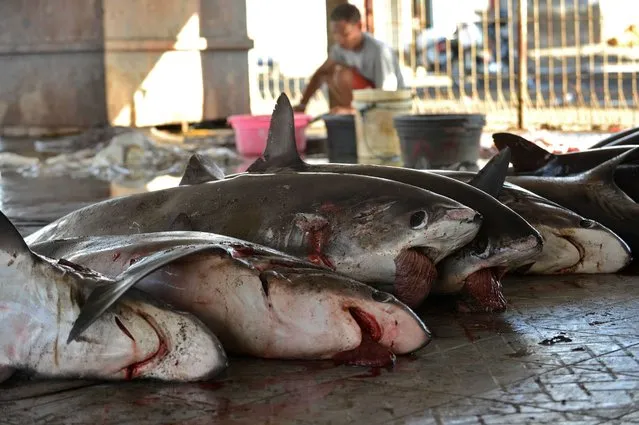
This picture taken on November 9, 2014 shows sharks for sale as a man removes the fins at a traditional market in Tanjung Luar in Lombok, West Nusa Teggara. Hundreds of sharks are hauled ashore every day at a busy market on the central Indonesian island of Lombok, the hub of a booming trade that provides a livelihood for local fishermen but is increasingly alarming environmentalists. The fins are sold to other Asian nations, including Singapore, Hong Kong and Taiwan, where shark-fin soup is considered a delicacy. (Photo by Sonny Tumbelaka/AFP Photo)
Details
23 Dec 2014 13:52:00
A cat wears a “Tsunagaru Col” gadget next to a smart phone displaying the connected app, at the Anicall Corp booth during the Wearable Device Technology Expo in Tokyo January 14, 2015. The gadget (“Tsunagaru” means connection) for animals tracks information about pets, such as the location and other animals the pet might be interacting with, with the purpose of providing “social networking” for animals. (Photo by Yuya Shino/Reuters)

A cat wears a “Tsunagaru Col” gadget next to a smart phone displaying the connected app, at the Anicall Corp booth during the Wearable Device Technology Expo in Tokyo January 14, 2015. The gadget (“Tsunagaru” means connection) for animals tracks information about pets, such as the location and other animals the pet might be interacting with, with the purpose of providing “social networking” for animals. The expo runs until January 16 as a part of Japan's largest electronic exhibition expected to attract around 77,000 visitors, according to organisers. (Photo by Yuya Shino/Reuters)
Details
16 Jan 2015 12:57:00
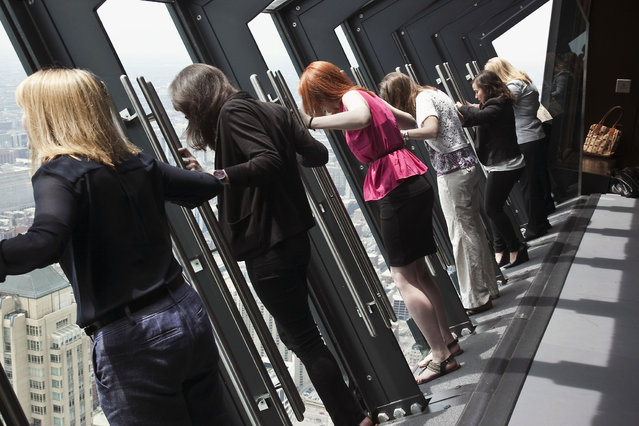
In this Thursday, May 8, 2014 photo, guests look down from the Tilt!, a new tourist attraction that provides guests a unique view of the downtown area from the 94th floor of the John Hancock Building, after it was unveiled in Chicago. People hold onto handrails as the glass and steel facade tilts forward 30 degrees. (Photo by Ashlee Rezin/AP Photo/Sun-Times Media)

In this Thursday, May 8, 2014 photo, guests look down from the Tilt!, a new tourist attraction that provides guests a unique view of the downtown area from the 94th floor of the John Hancock Building, after it was unveiled in Chicago. People hold onto handrails as the glass and steel facade tilts forward 30 degrees. (Photo by Ashlee Rezin/AP Photo/Sun-Times Media)
Details
10 May 2014 14:30:00
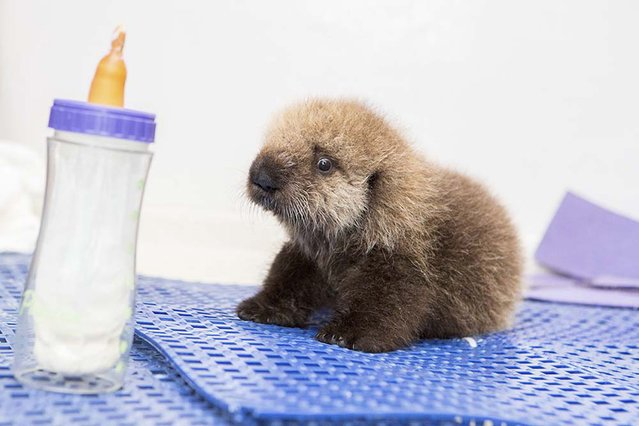
A five-week-old orphaned Southern Sea Otter pup rests on a rubber mat after arriving at the Shedd Aquarium's Abbott Oceanarium in Chicago, Illinois October 28, 2014 in this handout photo provided to Reuters on November 5, 2014. The stranded pup was found on September 30 on Coastways Beach in California and was rescued the next day to be brought back to health at the Monterey Bay Aquarium. (Photo by Brenna Hernandez/Reuters/Shedd Aquarium)

A five-week-old orphaned Southern Sea Otter pup rests on a rubber mat after arriving at the Shedd Aquarium's Abbott Oceanarium in Chicago, Illinois October 28, 2014 in this handout photo provided to Reuters on November 5, 2014. The stranded pup was found on September 30 on Coastways Beach in California and was rescued the next day to be brought back to health at the Monterey Bay Aquarium. Southern sea otters were listed as “threatened” under the U.S. Endangered Species Act in 1977. (Photo by Brenna Hernandez/Reuters/Shedd Aquarium)
Details
08 Nov 2014 13:15:00
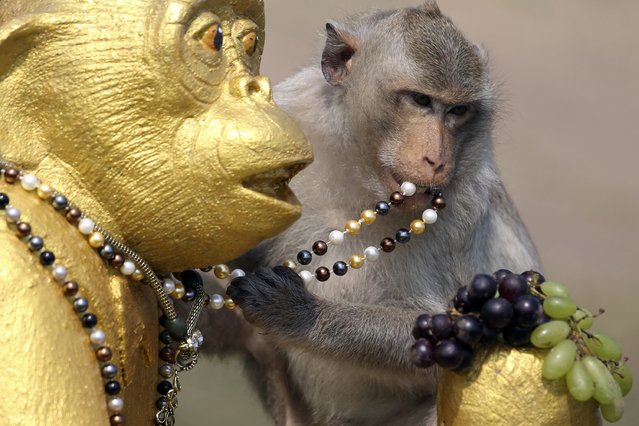
A long-tailed macaque grabs a necklace from a statue during the annual Monkey Buffet Festival at the Pra Prang Sam Yot temple in Lopburi, north of Bangkok November 30, 2014. The festival provides food and drinks to the local monkey population, which numbers more than 2,000, to thank them for drawing tourists to the town. (Photo by Damir Sagolj/Reuters)

A long-tailed macaque grabs a necklace from a statue during the annual Monkey Buffet Festival at the Pra Prang Sam Yot temple in Lopburi, north of Bangkok November 30, 2014. The festival provides food and drinks to the local monkey population, which numbers more than 2,000, to thank them for drawing tourists to the town. (Photo by Damir Sagolj/Reuters)
Details
01 Dec 2014 14:22:00
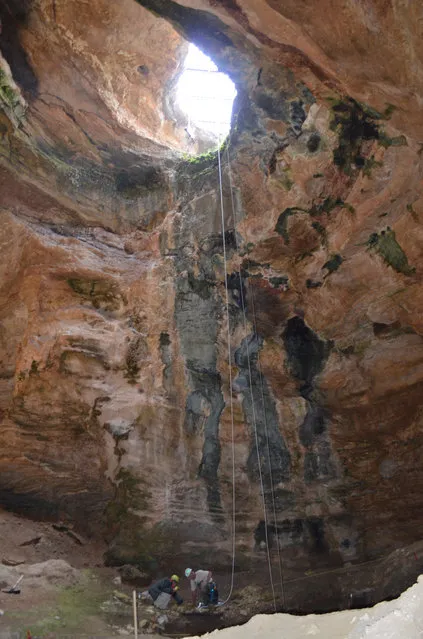
This July 2014 image provided by the Bureau of Land Management shows the interior of the Natural Trap Cave in north-central Wyoming. The cave holds the remains of tens of thousands of animals, including many now-extinct species, from the late Pleistocene period tens of thousands of years ago. Scientists have resumed digging for the first time in more than 30 years. (Photo by AP Photo/Bureau of Land Management)

This July 2014 image provided by the Bureau of Land Management shows the interior of the Natural Trap Cave in north-central Wyoming. The cave holds the remains of tens of thousands of animals, including many now-extinct species, from the late Pleistocene period tens of thousands of years ago. Scientists have resumed digging for the first time in more than 30 years. (Photo by AP Photo/Bureau of Land Management)
Details
10 Aug 2014 10:35:00
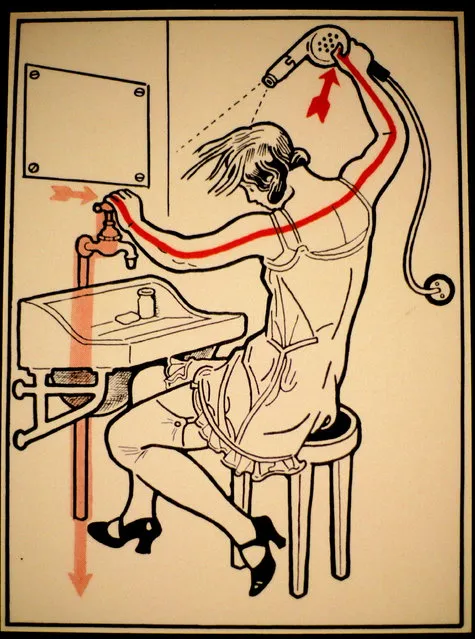
The book “Elektroschutz in 132 Bildern” (Electrical Protection in 132 Pictures) was published in Vienna in the early 1900s by a Viennese physician named Stefan Jellinek (1878-1968, a founder of the Electro-Pathological Museum). The pictures are nice and direct and unambiguous; they teach, graphically, that the surest way to kill yourself with electricity is to form a complete path from source (usually the bright red arrow) to ground (the screened back, pink arrow). Arrowheads provide the path for current flow. (Photo by The Vienna Technical Museum)

The book “Elektroschutz in 132 Bildern” (Electrical Protection in 132 Pictures) was published in Vienna in the early 1900s by a Viennese physician named Stefan Jellinek (1878-1968, a founder of the Electro-Pathological Museum). The pictures are nice and direct and unambiguous; they teach, graphically, that the surest way to kill yourself with electricity is to form a complete path from source (usually the bright red arrow) to ground (the screened back, pink arrow). Arrowheads provide the path for current flow. (Photo by The Vienna Technical Museum)
Details
11 Aug 2014 11:10:00
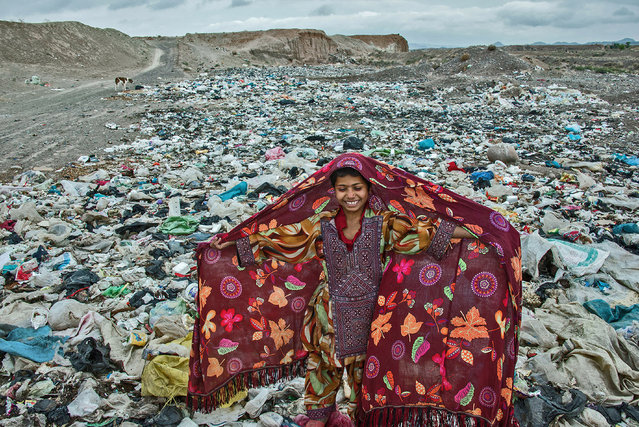
An undated handout image provided by UNICEF Germany on 20 December 2016 shows the “UNICEF Photo of the Year 2016” by Iranian freelance photographer Arez Ghaderi. Ghaderi won the first prize for his picture of a girl in a makeshift tent city in the Razavi Khorasan province, Iran, it was announced at a ceremony in Berlin, Germany on 20 December 2016. (Photo by Ariz Ghaderi/EPA/UNICEF Deutschland)

An undated handout image provided by UNICEF Germany on 20 December 2016 shows the “UNICEF Photo of the Year 2016” by Iranian freelance photographer Arez Ghaderi. Ghaderi won the first prize for his picture of a girl in a makeshift tent city in the Razavi Khorasan province, Iran, it was announced at a ceremony in Berlin, Germany on 20 December 2016. (Photo by Ariz Ghaderi/EPA/UNICEF Deutschland)
Details
23 Nov 2017 08:32:00