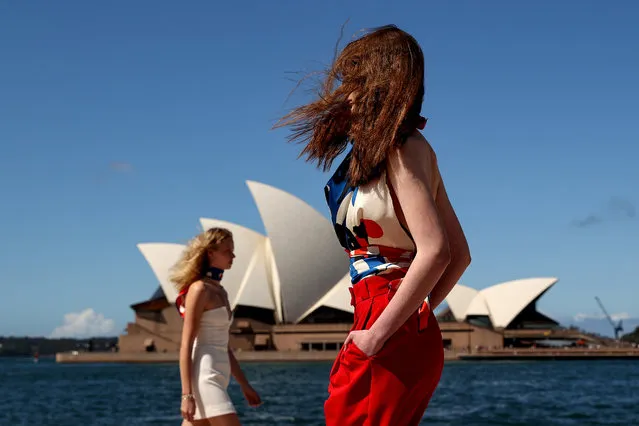
A model walks the runway during the Shona Joy “Le Long de la Côte” collection launch runway on September 21, 2023 in Sydney, Australia. (Photo by Brendon Thorne/Getty Images)
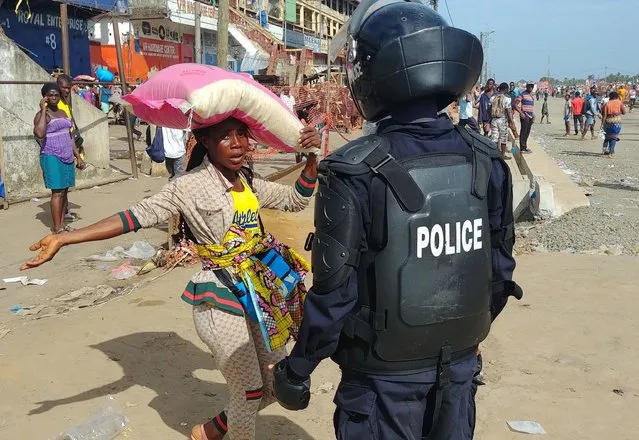
A police officer chases shoppers to clear the streets of the Red Light market on the first day of lockdown to stop the spread of the coronavirus disease (COVID-19) in Monrovia, Liberia on April 11, 2020. (Photo by Derick Snyder/Reuters)
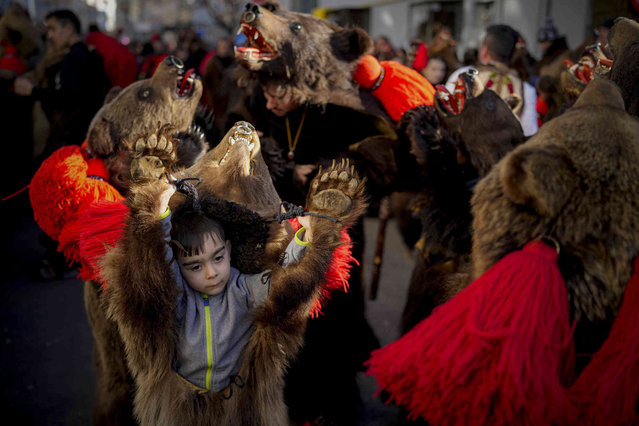
Children wearing bear fur costumes dance during a parade in Comanesti, Romania, Friday, December 30, 2022. In pre-Christian rural traditions, dancers wearing colored costumes or animal furs, toured from house to house in villages singing and dancing to ward off evil. (Photo by Vadim Ghirda/AP Photo)
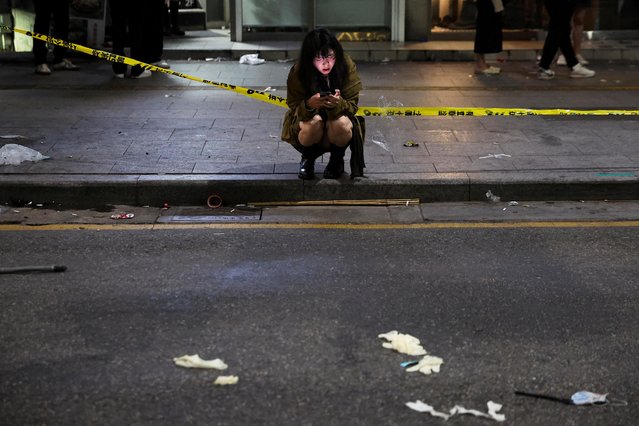
A woman uses a phone near the scene where many people died and were injured in a stampede during a Halloween festival in Seoul, South Korea on October 30, 2022. (Photo by Kim Hong-ji/Reuters)
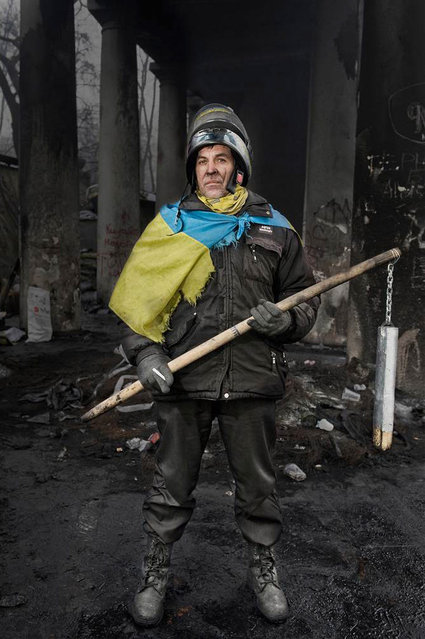
This man patrols the main front beside the access point to Lobanovskyi Dynamo Stadium, an area where the barricades are weak. For months now, he has slept very little. He is a carpenter.
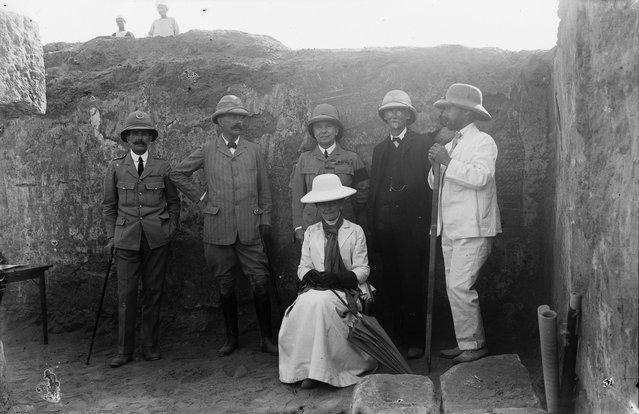
The city of Meroë laid undiscovered for two millennia before British archaeologist John Garstang excavated it in the early 20th century. Garstang took the radical decision to document his discoveries with photography – and immortalised an ancient world. “Meroë: Africa’s Forgotten Empire” is being shown until 14 September at Garstang Museum of Archaeology, Liverpool. Here: A group visiting the excavations at Meroë, including (from left) Midwinter Bey, director of Sudan Railways; Lord Kitchener; General Sir Francis Reginald Wingate, Sirdar of the Egyptian Army; Professor Archibald Sayce; John Garstang; and Lady Catherine Wingate, 1911. (Photo by Garstang Museum of Archaeology)