Loading...
Done
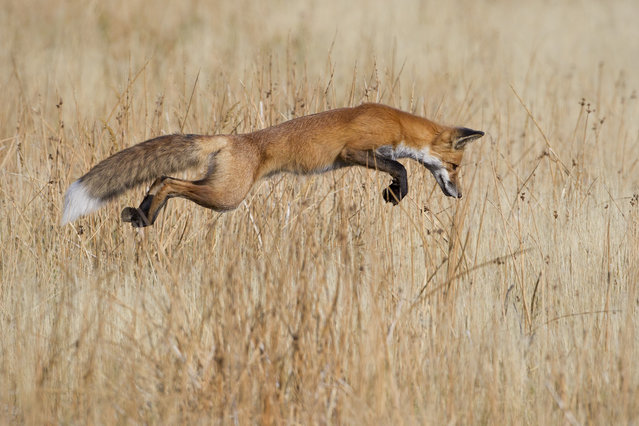
Canada: “Lucky pounce”. (Photo by Connor Stefanison/Wildlife Photographer of the Year 2013)

The winners of The London’s Natural History Museum's prestigious Wildlife Photographer of the Year for 2013 have finally been unveiled. Selected from almost 43,000 entries from 96 countries, the winners offer a glimpse of the stunning array of natural beauty on our planet. Photo: Canada: “Lucky pounce”. “Anticipating the pounce – that was the hardest part”, says Connor, who had come to Yellowstone National Park, Wyoming, USA, in search of wildlife as much as the spectacular landscape. He had found this fox, his first ever, on his last day in the park. It was so absorbed in hunting that Connor had plenty of time to get out of the car and settle behind a rock. It quartered the grassland, back and forth, and then started staring intently at a patch of ground, giving Connor just enough warning of the action to come. When it sprung up, Connor got his shot. And when it landed, the fox got his mouse. (Photo by Connor Stefanison/Wildlife Photographer of the Year 2013)
Details
17 Oct 2013 08:12:00


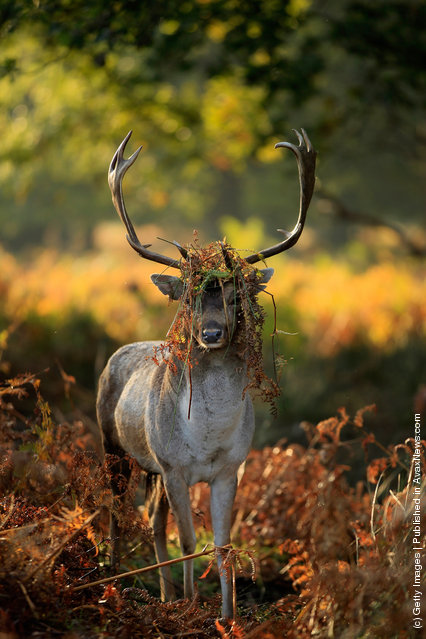
A deer forages for food in the early morning sun as cooler temperatures bring on the autumn season at Dunham Massey on on October 11, 2010 in Lymm, England. Shortening daylight hours and cooler weather brings on the rutting season for Red and Fallow deer herds and Autumn foliage colours across Britain. (Photo by Christopher Furlong/Getty Images)
Details
02 Jul 2011 13:25:00
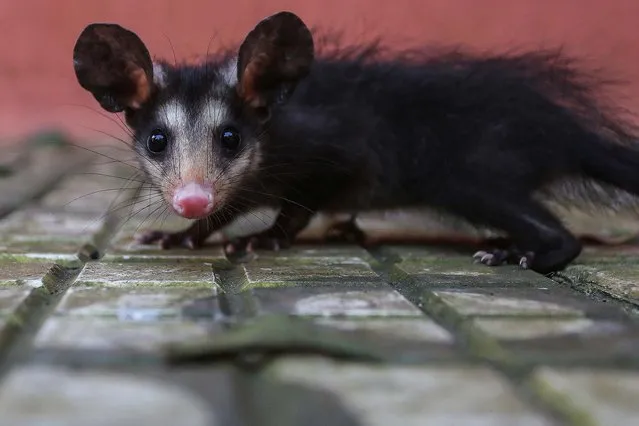
Photo taken on September 19, 2015 shows a baby Brazilian opossum at the “Parque Estoril” zoo in Sao Bernardo do Campo of Sao Paulo, Brazil. According to local press, the “Parque Estoril” zoo houses currently 23 orphan cubs of wild animals rescued in the south region of Sao Paulo, victims of illegal wildlife trade or problems caused by urban growth. (Photo by Rahel Patrasso/Xinhua via ZUMA Wire)

Photo taken on September 19, 2015 shows a baby Brazilian opossum at the “Parque Estoril” zoo in Sao Bernardo do Campo of Sao Paulo, Brazil. According to local press, the “Parque Estoril” zoo houses currently 23 orphan cubs of wild animals rescued in the south region of Sao Paulo, victims of illegal wildlife trade or problems caused by urban growth. According to the zoo, all the animals arrived in the last three months, and many of them, not being able to be reintroduced to their natural habitat, will be used as examples in environmental education classes. (Photo by Rahel Patrasso/Xinhua via ZUMA Wire)
Details
26 Sep 2015 08:00:00
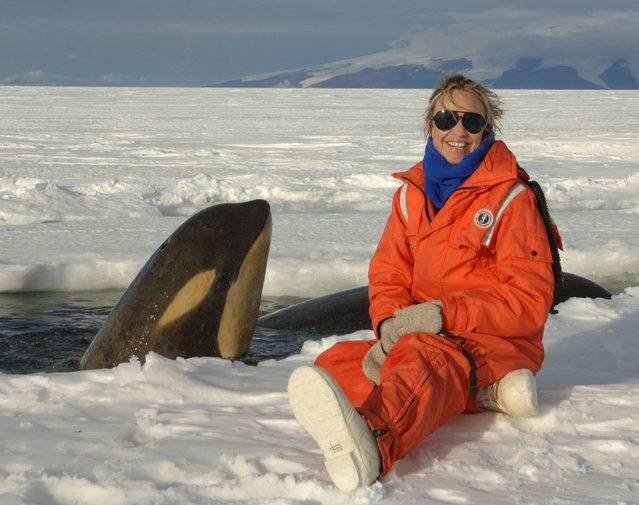
Killer Whales In McMurdo

Dr. Lisa Ballance (NOAA Fisheries Service) with a curious calf – this is a Type C killer whale, a fish-eater.
Details
06 Sep 2013 08:43:00
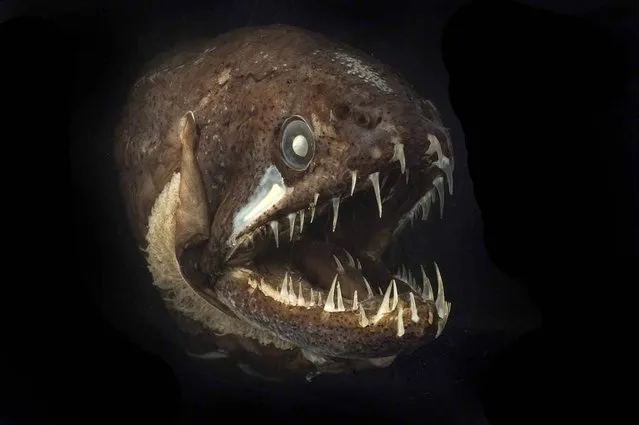
Imagine living in the sea where it is permanently dark, cold, and food is hard to find. For many animals at depth, it may be weeks to months between meals. If you find something to eat, you have to hang on to it

Imagine living in the sea where it is permanently dark, cold, and food is hard to find. For many animals at depth, it may be weeks to months between meals. If you find something to eat, you have to hang on to it. This is why so many deep-sea fishes have lots of big teeth. This dragonfish, spotted off the coast of Australia, even has teeth on its tongue. They would be terrifying animals ... if they weren’t the size of a banana. (Photo by Julian Finn/Museum Victoria)
Details
21 May 2012 12:14:00
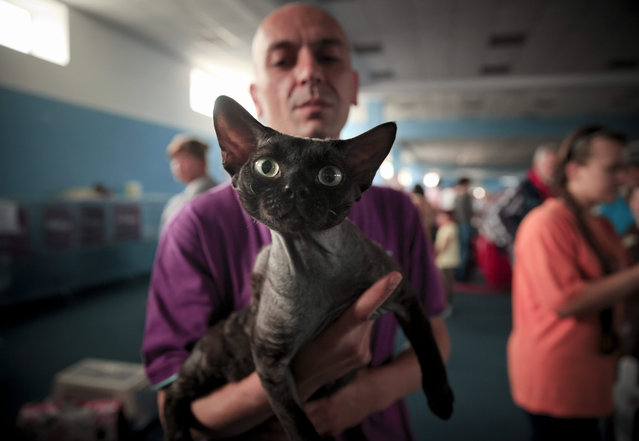
A dark Devon Rex cat is held by its owner during a competition in Bucharest, Romania, Saturday, September 26, 2015. More than 300 cats entered the international feline beauty competition in the Romanian capital. (Photo by Vadim Ghirda/AP Photo)

A dark Devon Rex cat is held by its owner during a competition in Bucharest, Romania, Saturday, September 26, 2015. More than 300 cats entered the international feline beauty competition in the Romanian capital. (Photo by Vadim Ghirda/AP Photo)
Details
28 Sep 2015 08:07:00
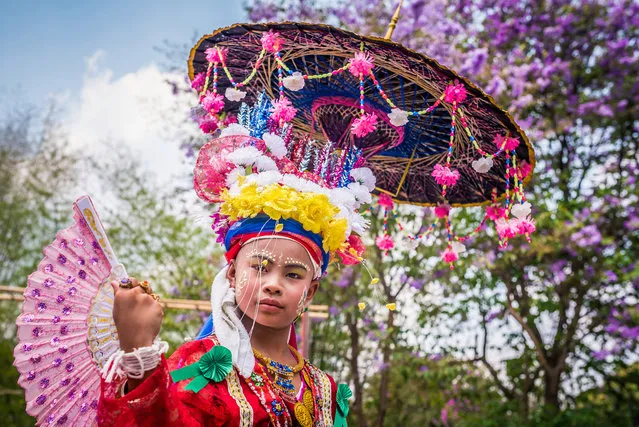
An initiate sprays out his fan as he enjoys the view from atop his father's shoulders during the ceremony in Mae Hong Son, Thailand, April 2016. (Photo by Claudio Sieber/Barcroft Images)

An initiate sprays out his fan as he enjoys the view from atop his father's shoulders during the ceremony in Mae Hong Son, Thailand, April 2016. (Photo by Claudio Sieber/Barcroft Images)
Details
01 Dec 2016 11:46:00
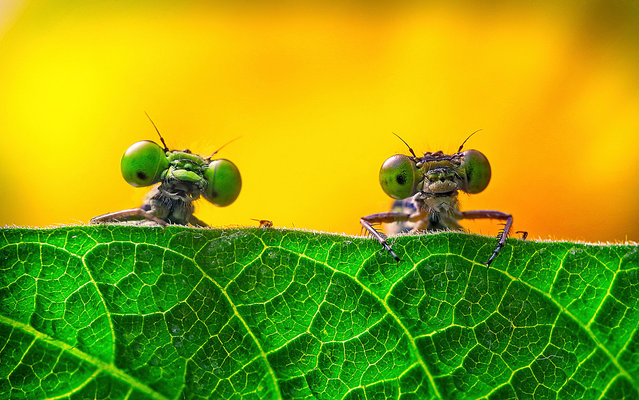
Shortlisted: “Two big eyes” by Miao Yong (Zejiang province, China). Damselflies look over the leaves. “I was photographing insects in a park near my home when suddenly I found two damselflies in the grass. They kept flying and it was very difficult to focus until suddenly they parked behind a leaf”. (Photo by Miao Yong/2017 Royal Society of Biology Photographer of the Year)

Shortlisted: “Two big eyes” by Miao Yong (Zejiang province, China). Damselflies look over the leaves. “I was photographing insects in a park near my home when suddenly I found two damselflies in the grass. They kept flying and it was very difficult to focus until suddenly they parked behind a leaf”. (Photo by Miao Yong/2017 Royal Society of Biology Photographer of the Year)
Details
16 Oct 2017 09:04:00