Loading...
Done
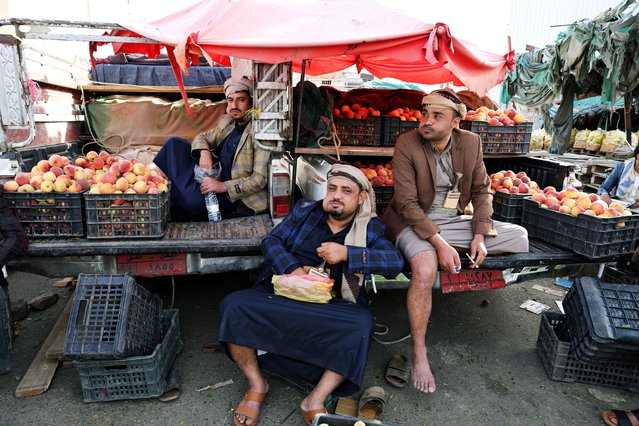
Fruit vendors chew qat, a mild stimulant, amid concerns of the spread of the coronavirus disease (COVID-19) at a fruit market in Sanaa, Yemen on June 1, 2020. (Photo by Khaled Abdullah/Reuters)

Fruit vendors chew qat, a mild stimulant, amid concerns of the spread of the coronavirus disease (COVID-19) at a fruit market in Sanaa, Yemen on June 1, 2020. (Photo by Khaled Abdullah/Reuters)
Details
07 Jul 2020 00:03:00
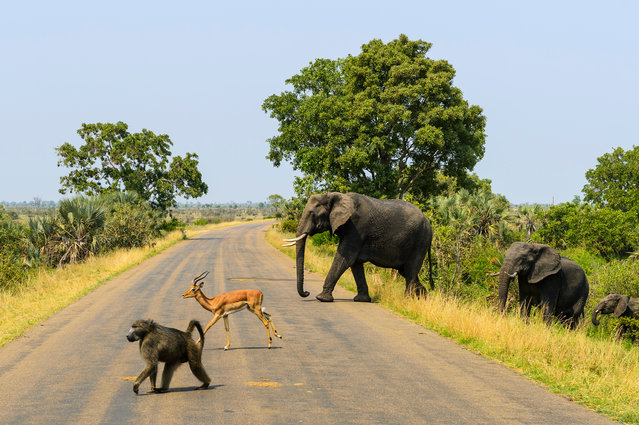
“This was taken on a safari in Kruger national park, South Africa. The scene was like something straight out of a storybook: a wild baboon, impala and elephant crossing the road together, all lined up neatly in a row”. (Photo by Will Clarke/The Guardian)

This month’s selection of travel imagery mixes quiet moments and superlative views. The overall 2018 prize is a West Greenland trip with Wild Photography Holidays. Here: “This was taken on a safari in Kruger national park, South Africa. The scene was like something straight out of a storybook: a wild baboon, impala and elephant crossing the road together, all lined up neatly in a row”. (Photo by Will Clarke/The Guardian)
Details
02 Aug 2018 00:05:00
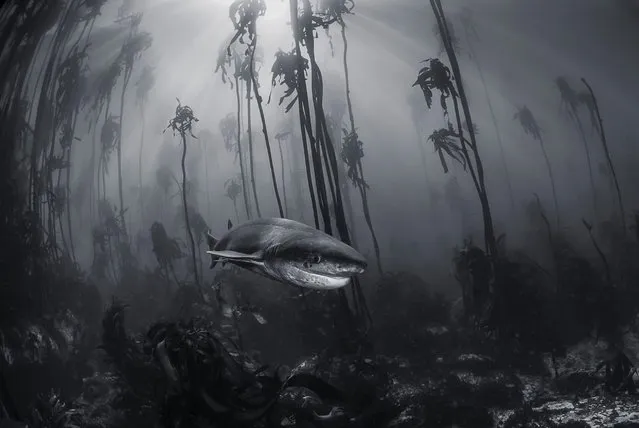
Mystical Forest. Tracey Jennings photographed this seven-gill shark in a kelp forest just off the shore of Simon's Town near Cape Town, South Africa. You don't need to travel far from cities to visit Narnia. This 7 gill shark was photographed in a kelp forest just off the shore of Simonstown near Cape Town, South Africa. (Photo by Tracey Jennings/National Geographic Travel Photographer of the Year Contest)

Mystical Forest. Tracey Jennings photographed this seven-gill shark in a kelp forest just off the shore of Simon's Town near Cape Town, South Africa. You don't need to travel far from cities to visit Narnia. This 7 gill shark was photographed in a kelp forest just off the shore of Simonstown near Cape Town, South Africa. (Photo by Tracey Jennings/National Geographic Travel Photographer of the Year Contest)
Details
24 May 2016 09:32:00
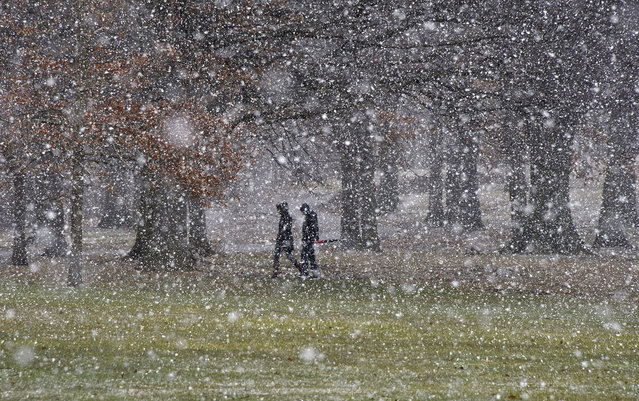
People cross Flagstaff Hill as the snow starts to fall, in Schenley Park, on their way to the Carnegie Mellon University campus, Tuesday, March 20, 2018, in the Oakland section of Pittsburgh. Yet another powerful storm bore down on the Northeast on Tuesday, with wind-whipped snow falling in parts of Pennsylvania and New Jersey as people grumbled and complained about a first day of spring that looked an awful lot like the last weeks of winter. (Photo by Darrell Sapp/Pittsburgh Post-Gazette via AP Photo)

People cross Flagstaff Hill as the snow starts to fall, in Schenley Park, on their way to the Carnegie Mellon University campus, Tuesday, March 20, 2018, in the Oakland section of Pittsburgh. Yet another powerful storm bore down on the Northeast on Tuesday, with wind-whipped snow falling in parts of Pennsylvania and New Jersey as people grumbled and complained about a first day of spring that looked an awful lot like the last weeks of winter. (Photo by Darrell Sapp/Pittsburgh Post-Gazette via AP Photo)
Details
07 Apr 2018 00:01:00
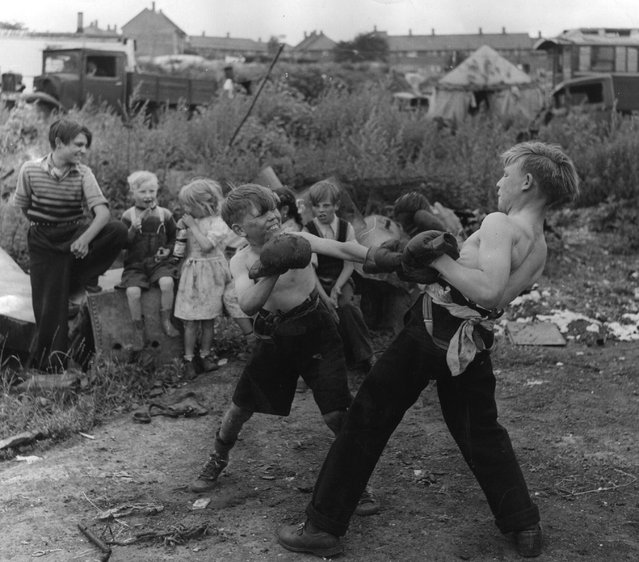
The unromantic gypsies. Children boxing in a gypsy camp in Kent, England on July 1, 1951. Like all boys these gypsy lads like to try their hand at boxing. Encouraged by their friends they fight it out on Corke's Meadow. Few Romanies now live a life of wandering romance. Most are like the three hundred squatters of Corke's Meadow, Kent, which is part of a “gypsy problem” that involves about 100,000 today. Of those about 25,000 can be rightly called gypsies, the rest are Mumpers and Posh-rats and Hobos. Corke's Meadow has both kinds. “Picture Post” cameraman Bert Hardy photographs the Corke's Meadow gypsies in their encampment. (Photo by Hulton-Deutsch Collection/Corbis via Getty Images)

The unromantic gypsies. Children boxing in a gypsy camp in Kent, England on July 1, 1951. Like all boys these gypsy lads like to try their hand at boxing. Encouraged by their friends they fight it out on Corke's Meadow. Few Romanies now live a life of wandering romance. Most are like the three hundred squatters of Corke's Meadow, Kent, which is part of a “gypsy problem” that involves about 100,000 today. Of those about 25,000 can be rightly called gypsies, the rest are Mumpers and Posh-rats and Hobos. Corke's Meadow has both kinds. “Picture Post” cameraman Bert Hardy photographs the Corke's Meadow gypsies in their encampment. (Photo by Hulton-Deutsch Collection/Corbis via Getty Images)
Details
12 Mar 2017 00:01:00
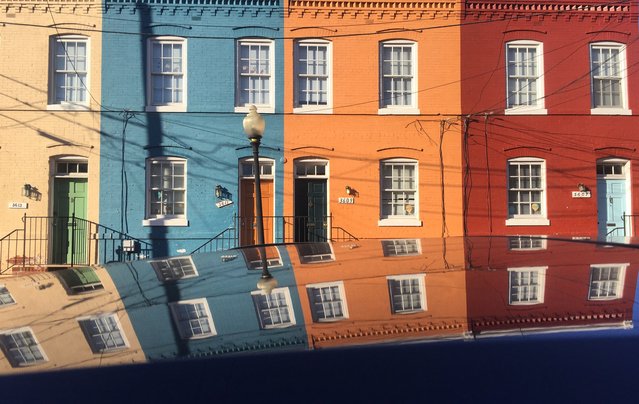
A group of colorful row houses are reflected on to the top of a black car parked on 3600 block of N street in  the Georgetown section of Washington DC, February 16, 2017. (Photo by John McDonnell/The Washington Post)

A group of colorful row houses are reflected on to the top of a black car parked on 3600 block of N street in the Georgetown section of Washington DC, February 16, 2017. (Photo by John McDonnell/The Washington Post)
Details
13 May 2017 09:28:00
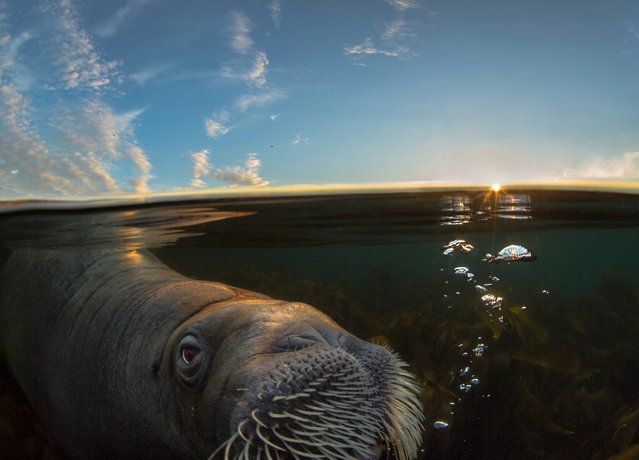
The Wildscreen festival is the world’s biggest celebration of screen-based natural history storytelling which takes place every two years in Bristol. Here: “Walrus in Midnight Sun”. Walrus feed mostly on bivalves in productive, shallow and often sandy habitats in the Arctic. This individual, though, arrived on a beach outside Tromsø, northern Norway, and found comfort on a stranded dead sperm whale. After two weeks he approached Audun, and only half a metre away he stretched his tusk forward and touched his hand gently. “This was one of the most memorable moments of my life”, Rikardsen says. He named the 500kg male Buddy. After two months, the dead whale was decomposed and Buddy suddenly disappeared. (Photo by Audun Rikardsen/Wildscreen 2016)

The Wildscreen festival is the world’s biggest celebration of screen-based natural history storytelling which takes place every two years in Bristol. Here: “Walrus in Midnight Sun”. Walrus feed mostly on bivalves in productive, shallow and often sandy habitats in the Arctic. This individual, though, arrived on a beach outside Tromsø, northern Norway, and found comfort on a stranded dead sperm whale. After two weeks he approached Audun, and only half a metre away he stretched his tusk forward and touched his hand gently. “This was one of the most memorable moments of my life”, Rikardsen says. He named the 500kg male Buddy. After two months, the dead whale was decomposed and Buddy suddenly disappeared. (Photo by Audun Rikardsen/Wildscreen 2016)
Details
07 Oct 2016 10:02:00
Cosplayers wearing face masks pose for a picture at the China Digital Entertainment Expo and Conference (ChinaJoy) in Shanghai, following the coronavirus disease (COVID-19) outbreak, China on July 31, 2020. (Photo by Aly Song/Reuters)

Cosplayers wearing face masks pose for a picture at the China Digital Entertainment Expo and Conference (ChinaJoy) in Shanghai, following the coronavirus disease (COVID-19) outbreak, China on July 31, 2020. (Photo by Aly Song/Reuters)
Details
02 Aug 2020 00:07:00