Loading...
Done
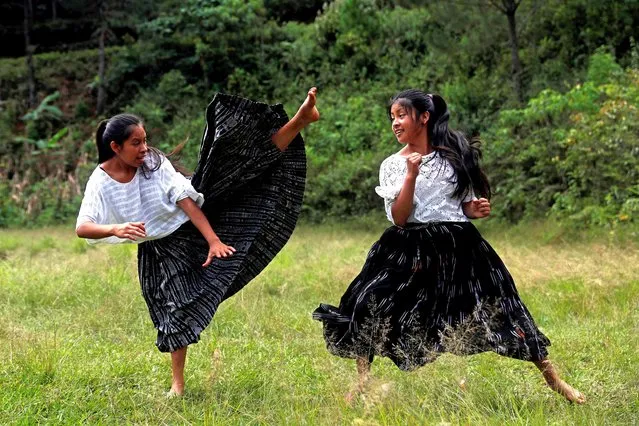
Indigenous Q'eqchi girls practice taekwondo with their teacher, Danny Coy, on a dirt court in the middle of the village in Tipulcan village, San Pedro Carcha, Guatemala, on 25 November 2019 (issued 27 November 2019). Tipulcan village girls learn taekwondo to combat sexist violence and harassment they have suffered in their community in northern Guatemala. (Photo by Esteban Biba/EPA/EFE)

Indigenous Q'eqchi girls practice taekwondo with their teacher, Danny Coy, on a dirt court in the middle of the village in Tipulcan village, San Pedro Carcha, Guatemala, on 25 November 2019 (issued 27 November 2019). Tipulcan village girls learn taekwondo to combat sexist violence and harassment they have suffered in their community in northern Guatemala. (Photo by Esteban Biba/EPA/EFE)
Details
01 Dec 2019 00:07:00
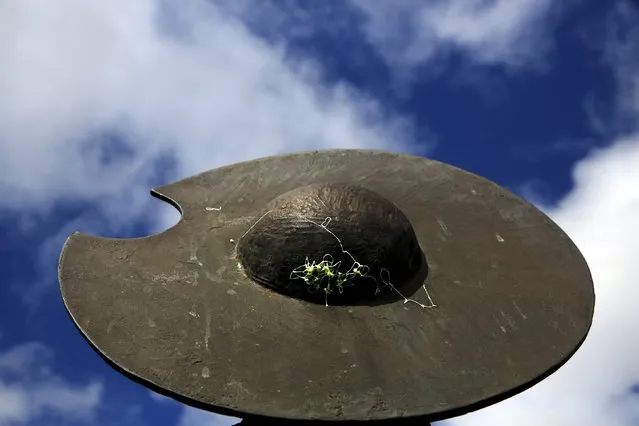
A sculpture of Don Quixote shows him wearing the basin he mistook for the enchanted helmet of the fictional Moorish king Mambrino in Alcazar de San Juan, Spain, April 5, 2016. (Photo by Susana Vera/Reuters)

A sculpture of Don Quixote shows him wearing the basin he mistook for the enchanted helmet of the fictional Moorish king Mambrino in Alcazar de San Juan, Spain, April 5, 2016. The arid central Spanish region of La Mancha is the setting for “Don Quixote”, the seventeenth-century novel by Miguel de Cervantes. Four hundred years after his death, references to the characters of Don Quixote, his loyal squire Sancho Panza and his beautiful lady Dulcinea abound in the surrounding villages from sweet treats to theatre productions involving livestock. Cervantes did not give away the name of the birthplace of Don Quixote, a middle-aged gentleman who becomes obsessed with chivalrous ideals. But many identify the village of Argamasilla de Alba as his hometown. The anniversary of Cervantes’ death is marked on the 23 April. (Photo by Susana Vera/Reuters)
Details
21 Apr 2016 12:32:00
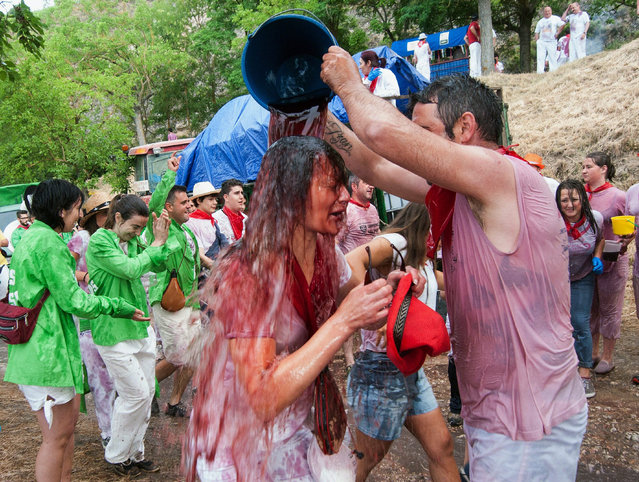
People pour wine at each other during the traditional “Battle of Wine” held as part of the Haro Wine Festival in the La Rioja region in Haro, Spain, 29 June 2016. Every year on 29 June inhabitants and tourists celebrate San Pedro's day by trowing at each other thousands of liters of Riojan wine. (Photo by Abel Alonso/EPA)

People pour wine at each other during the traditional “Battle of Wine” held as part of the Haro Wine Festival in the La Rioja region in Haro, Spain, 29 June 2016. Every year on 29 June inhabitants and tourists celebrate San Pedro's day by trowing at each other thousands of liters of Riojan wine. (Photo by Abel Alonso/EPA)
Details
30 Jun 2016 11:51:00
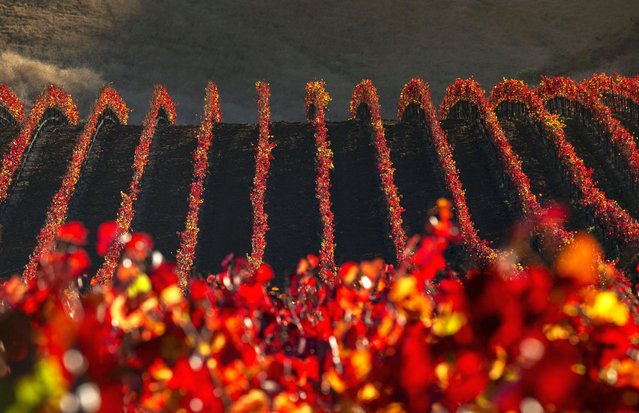
Pinot noir vineyards in the famed Sta. Rita Hills AVA turn a vivid red, orange, and yellow, signaling the end of the grape harvest and approach of winter as viewed on November 26, 2023, near Buellton, California. Following the notoriety from the Academy Award-winning film Sideways, this buccolic farming region north of Santa Barbara has become a popular Wine Country stop for global and domestic tourists traveling between San Francisco and Los Angeles. (Photo by George Rose/Getty Images)

Pinot noir vineyards in the famed Sta. Rita Hills AVA turn a vivid red, orange, and yellow, signaling the end of the grape harvest and approach of winter as viewed on November 26, 2023, near Buellton, California. Following the notoriety from the Academy Award-winning film Sideways, this buccolic farming region north of Santa Barbara has become a popular Wine Country stop for global and domestic tourists traveling between San Francisco and Los Angeles. (Photo by George Rose/Getty Images)
Details
01 Feb 2025 03:30:00
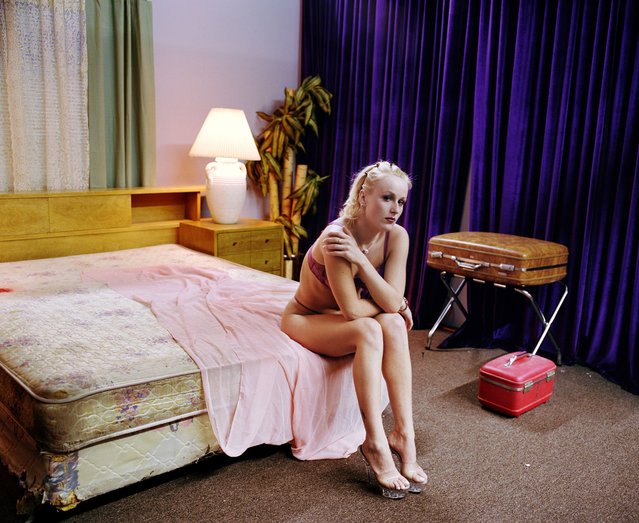
«Sharon Wild (from the series The Valley)», 2001. Larry Sultan grew up in California’s San Fernando Valley, which was a source of inspiration for a number of his projects. His series The Valley (2004) addresses the use of ordinary homes as sets for pornographic films, and asks why the ideal of middle-class domesticity lends itself to this most curious form of cultural appropriation. (Photo by Larry Sultan)

«Sharon Wild (from the series The Valley)», 2001. Larry Sultan grew up in California’s San Fernando Valley, which was a source of inspiration for a number of his projects. His series The Valley (2004) addresses the use of ordinary homes as sets for pornographic films, and asks why the ideal of middle-class domesticity lends itself to this most curious form of cultural appropriation. (Photo by Larry Sultan)
Details
03 Aug 2025 03:50:00
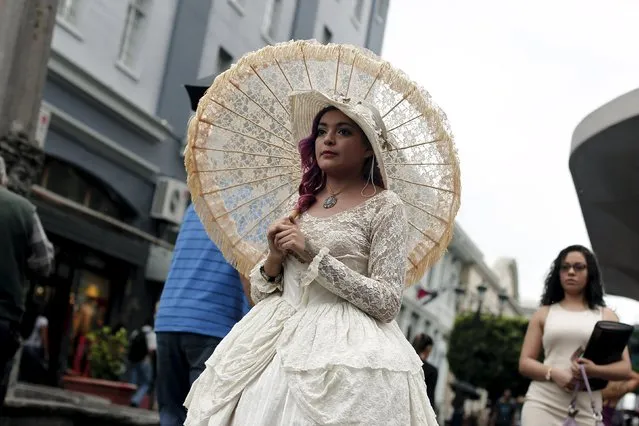
Adriana Barahona, known as " Madame Barocle," wearing clothing of the Victorian era, walks along a central avenue in San Jose, Costa Rica June 4, 2015. Barahona says she has been passionate about clothing from the era of Britain's Queen Victoria (1837-1901), and has been making and wearing them since the age of 15. REUTERS/Juan Carlos Ulate

Adriana Barahona, known as "Madame Barocle", wearing clothing of the Victorian era, walks along a central avenue in San Jose, Costa Rica June 4, 2015. Barahona says she has been passionate about clothing from the era of Britain's Queen Victoria (1837-1901), and has been making and wearing them since the age of 15. REUTERS/Juan Carlos Ulate
Details
17 Jun 2015 13:25:00
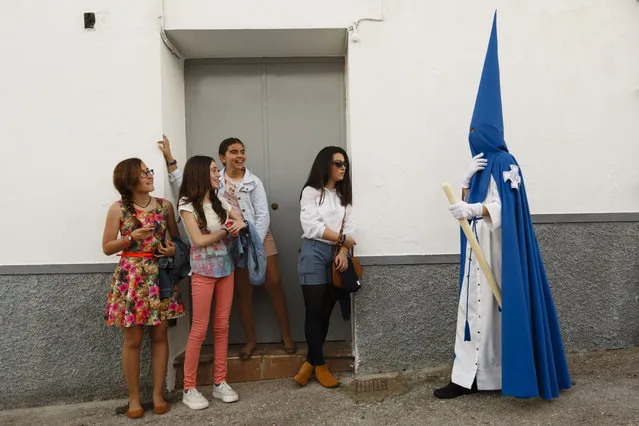
Girls look at a penitent taking part in “Nuestro Senor Atado a la Columna, Maria Santisima de la Paz y San Juan Evangelista” Holy Week procession in Arcos de la Frontera, Spain, Tuesday, March 31, 2015. Hundreds of processions take place throughout Spain during the Easter Holy Week. (Photo by Daniel Ochoa de Olza/AP Photo)

Girls look at a penitent taking part in “Nuestro Senor Atado a la Columna, Maria Santisima de la Paz y San Juan Evangelista” Holy Week procession in Arcos de la Frontera, Spain, Tuesday, March 31, 2015. Hundreds of processions take place throughout Spain during the Easter Holy Week. (Photo by Daniel Ochoa de Olza/AP Photo)
Details
02 Apr 2015 12:55:00
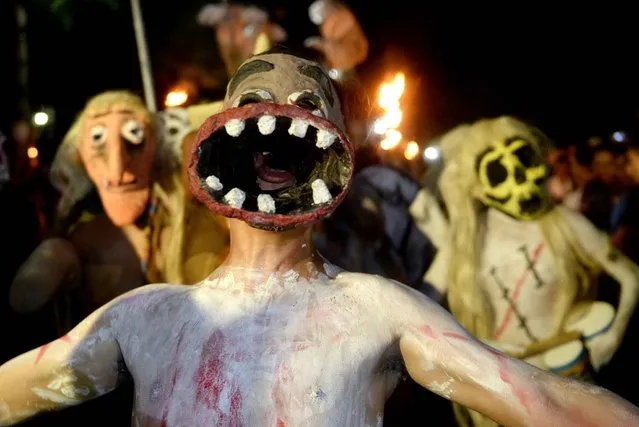
Young revelers take part in a parade called "La Calabiuza" on November 1, 2015, on the eve of the Day of the Dead in Tonacatepeque, 20 kms (13 miles) north of San Salvador. During the celebration, the residents of Tonacatepeque, originally an indigenous community, recall the characters from the mythology of Cuscatlan – pre-Columbian west and central regions of El Salvador – and their dead relatives. (Photo by Marvin Recinos/AFP Photo)

Young revelers take part in a parade called "La Calabiuza" on November 1, 2015, on the eve of the Day of the Dead in Tonacatepeque, 20 kms (13 miles) north of San Salvador. During the celebration, the residents of Tonacatepeque, originally an indigenous community, recall the characters from the mythology of Cuscatlan – pre-Columbian west and central regions of El Salvador – and their dead relatives. (Photo by Marvin Recinos/AFP Photo)
Details
04 Nov 2015 11:50:00