Loading...
Done
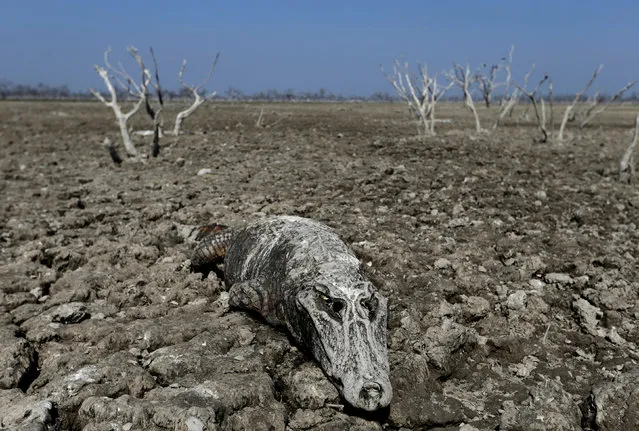
The carcass of a yacare caiman lies in the dried-up river bed of the Pilcomayo river in Boqueron, Paraguay, August 14, 2016. In Paraguay, alongside the Pilcomayo River, black vultures flew over a shrinking pond where a group of crocodilian reptiles known as yacare caimans sought refuge. Water from the river, which divides Paraguay and Argentina in the area of the Gran Chaco, was scarce. This is not an uncommon sight in the region of General Diaz, about 700 kilometres (435 miles) northwest of the country's capital Asuncion, where the Pilcomayo's waters form lakes and streams that give life to capybaras, birds and caimans. “The river's situation is critical. No water is forecast to enter the basin until December, as happens every year”, said Alcides Gonzalez, a resident of the area. (Photo by Jorge Adorno/Reuters)

The carcass of a yacare caiman lies in the dried-up river bed of the Pilcomayo river in Boqueron, Paraguay, August 14, 2016. In Paraguay, alongside the Pilcomayo River, black vultures flew over a shrinking pond where a group of crocodilian reptiles known as yacare caimans sought refuge. Water from the river, which divides Paraguay and Argentina in the area of the Gran Chaco, was scarce. This is not an uncommon sight in the region of General Diaz, about 700 kilometres (435 miles) northwest of the country's capital Asuncion, where the Pilcomayo's waters form lakes and streams that give life to capybaras, birds and caimans. (Photo by Jorge Adorno/Reuters)
Details
03 Nov 2016 12:40:00
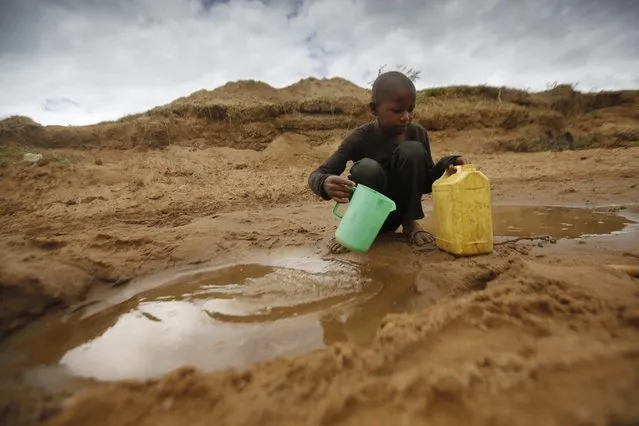
A young boy scoops water from a hand-dug well in the dry riverbed near Matinyani, in the semi-arid Kitui County in southeastern Kenya, 22 March 2015, the World Water Day. Residents of Kitui County and other arid and semi-arid areas of the country have been hard-hit by extremely poor rainfall this year while the government said in previous month that some 1.6 million people countrywide are facing acute starvation due to the drought and will need relief food over the next six months. (Photo by Dai Kurokawa/EPA)

A young boy scoops water from a hand-dug well in the dry riverbed near Matinyani, in the semi-arid Kitui County in southeastern Kenya, 22 March 2015, the World Water Day. Residents of Kitui County and other arid and semi-arid areas of the country have been hard-hit by extremely poor rainfall this year while the government said in previous month that some 1.6 million people countrywide are facing acute starvation due to the drought and will need relief food over the next six months. Residents of Matinyani say they haven't seen a drop of rain in nearly four months. Thousands of Kenyans in rural areas walk tens of kilometers just to fetch water to drink and to be used in their homes. According to an estimate by UNESCO (United Nations Educational, Scientific and Cultural Organization), 17 million people lack access to safe water in Kenya, where the drought is a perennial problem. (Photo by Dai Kurokawa/EPA)
Details
23 Mar 2015 11:01:00
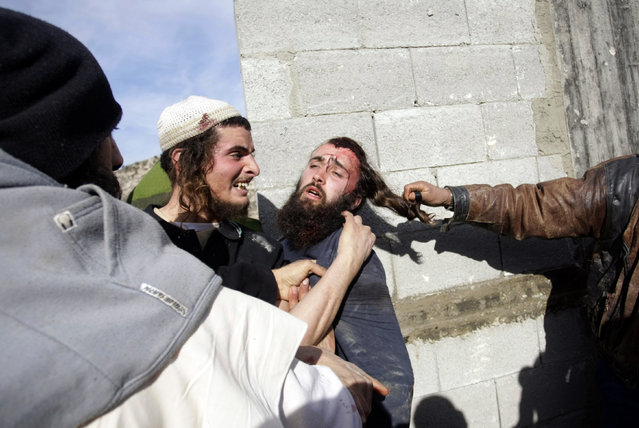
Palestinians hit injured Israeli settlers, center, detained by Palestinian villagers in a building under construction near the West Bank village of Qusra, southeast of the city of Nablus, Tuesday, January 7, 2014. (Photo by Nasser Ishtayeh/AP Photo)

Palestinians hit injured Israeli settlers, center, detained by Palestinian villagers in a building under construction near the West Bank village of Qusra, southeast of the city of Nablus, Tuesday, January 7, 2014. Palestinians held more than a dozen Israeli settlers for about two hours Tuesday in retaliation for the latest in a string of settler attacks on villages in the area, witnesses said. The military said the chain of events apparently began after Israeli authorities removed an illegally built structure in Esh Kodesh, a rogue Israeli settlement in the area. In recent years, militant settlers have often responded to any attempts by the Israeli military to remove parts of dozens of rogue settlements, or outposts, by attacking Palestinians and their property. The tactic, begun in 2008, is known as “price tag”. (Photo by Nasser Ishtayeh/AP Photo)
Details
10 Jan 2014 11:32:00
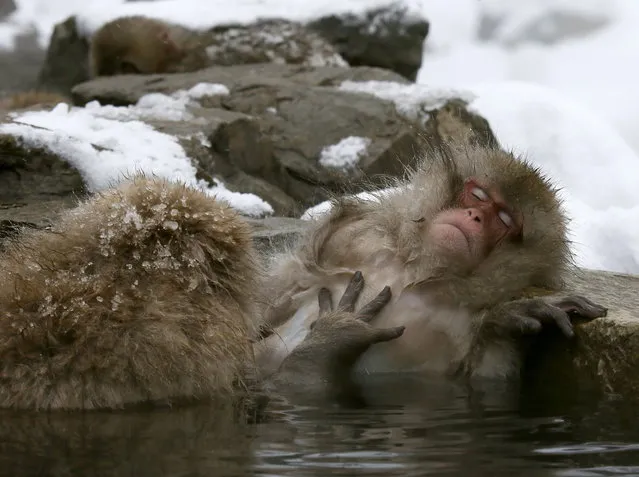
Japanese Macaque monkeys soak in the warmth of mountain hotsprings at Jigokudani Monkey Park, in Yamanouchi, central Japan, 19 January 2014. The Japanese Macaques (Macaca fuscata), also referred to as Snow Monkeys, live freely in this area that is covered by snow one third of the year. (Photo by Kimimasa Mayama/EPA)

Japanese Macaque monkeys soak in the warmth of mountain hotsprings at Jigokudani Monkey Park, in Yamanouchi, central Japan, 19 January 2014. The Japanese Macaques (Macaca fuscata), also referred to as Snow Monkeys, live freely in this area that is covered by snow one third of the year. Jigokudani is the only known place in the world where monkeys bathe in natural hot springs. As a habit, they come down from the mountains where they spend the night and bath during the day. (Photo by Kimimasa Mayama/EPA)
Details
21 Jan 2014 11:36:00
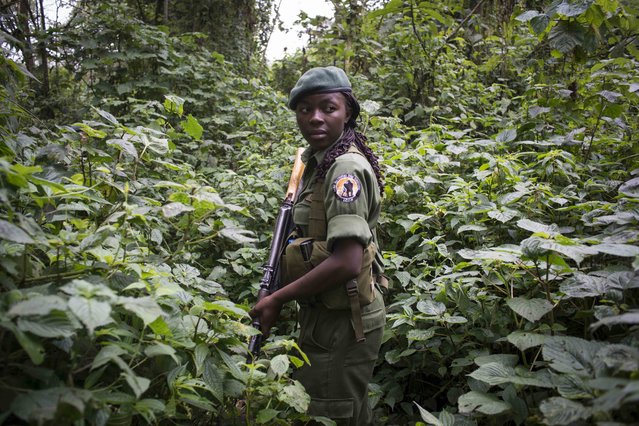
Aline, along with other rangers and park staff visit the gorilla's in the parks Mikeno sector, where the majority of the gorilla families live in Virunga National Park. Therefore there has been a surge of poaching and violence in the area. For the first time, women have taken up the most dangerous job in wildlife, becoming para-military rangers at the Virunga National Park in DR Congo. Virunga is Africa's oldest national park and home to over 200 of the world's 800 remaining mountain gorillas. For two decades it has been at the centre of a war. Hundreds of rebels operate in the park and over 150 park rangers have died protecting it from them. (Photo by Monique Jaques)

Aline, along with other rangers and park staff visit the gorilla's in the parks Mikeno sector, where the majority of the gorilla families live in Virunga National Park. Therefore there has been a surge of poaching and violence in the area. For the first time, women have taken up the most dangerous job in wildlife, becoming para-military rangers at the Virunga National Park in DR Congo. (Photo by Monique Jaques)
Details
08 Oct 2016 11:46:00
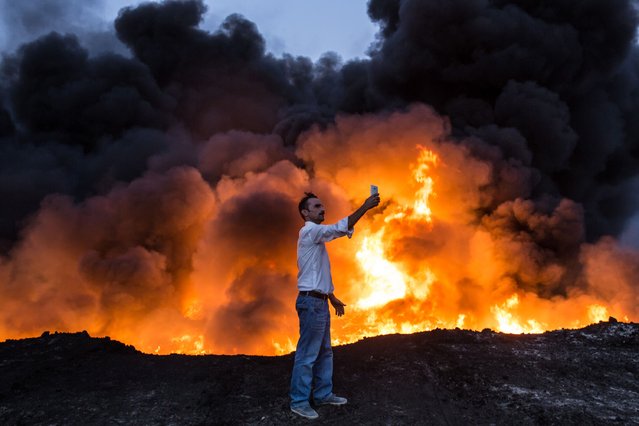
A man takes a selfie in front of a fire from oil that has been set ablaze in the Qayyarah area, some 60 kilometres (35 miles) south of Mosul, on October 19, 2016, during an operation by Iraqi forces against Islamic State (IS) group jihadists to retake the main hub city. In the biggest Iraqi military operation in years, forces have retaken dozens of villages, mostly south and east of Mosul, and are planning multiple assaults for October 20. (Photo by Yasin Akgul/AFP Photo)

A man takes a selfie in front of a fire from oil that has been set ablaze in the Qayyarah area, some 60 kilometres (35 miles) south of Mosul, on October 19, 2016, during an operation by Iraqi forces against Islamic State (IS) group jihadists to retake the main hub city. In the biggest Iraqi military operation in years, forces have retaken dozens of villages, mostly south and east of Mosul, and are planning multiple assaults for October 20. (Photo by Yasin Akgul/AFP Photo)
Details
21 Oct 2016 12:25:00
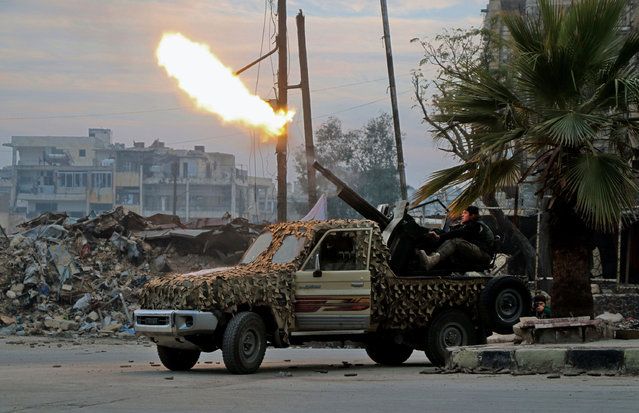
Fighters of the Free Syrian Army fire an anti-aircraft weapon in the rebel-held Mashhad area in southeastern Aleppo, on December 12, 2016, as they battle Syrian government forces during an operation to retake the embattled city. The crucial battle for Aleppo entered its “final phase” after Syrian rebels retreated into a small pocket of their former bastion in the face of new army advances. The retreat leaves opposition fighters confined to just a handful of neighbourhoods in southeast Aleppo, the largest of them Sukkari and Mashhad. (Photo by AFP Photo/Stringer)

Fighters of the Free Syrian Army fire an anti-aircraft weapon in the rebel-held Mashhad area in southeastern Aleppo, on December 12, 2016, as they battle Syrian government forces during an operation to retake the embattled city. The crucial battle for Aleppo entered its “final phase” after Syrian rebels retreated into a small pocket of their former bastion in the face of new army advances. The retreat leaves opposition fighters confined to just a handful of neighbourhoods in southeast Aleppo, the largest of them Sukkari and Mashhad. (Photo by AFP Photo/Stringer)
Details
13 Dec 2016 07:13:00
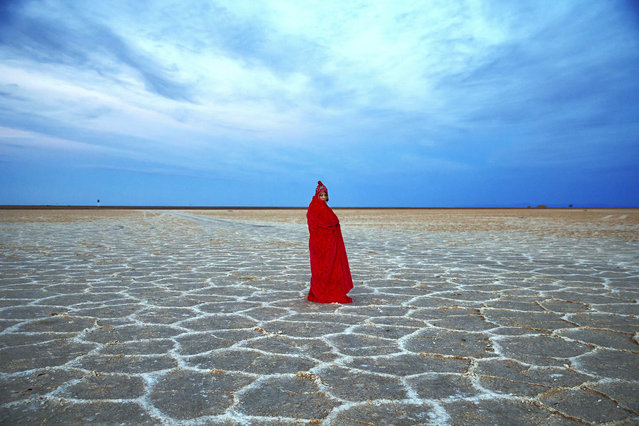
In this picture taken on Thursday, December 1, 2016, an Iranian woman covers herself with a blanket due to the cold,  while visiting Khour salt lake during her tour of the Mesr desert about 305 miles (500 kilometers) southeast of the capital Tehran, Iran. Deserts make up parts of Iran which have recently become tourist destination for young Iranians looking for a break on their weekend. The increase in tourists to the desert has stimulated economic growth in the area. (Photo by Ebrahim Noroozi/AP Photo)

In this picture taken on Thursday, December 1, 2016, an Iranian woman covers herself with a blanket due to the cold, while visiting Khour salt lake during her tour of the Mesr desert about 305 miles (500 kilometers) southeast of the capital Tehran, Iran. Deserts make up parts of Iran which have recently become tourist destination for young Iranians looking for a break on their weekend. The increase in tourists to the desert has stimulated economic growth in the area. (Photo by Ebrahim Noroozi/AP Photo)
Details
13 Dec 2016 07:26:00