Loading...
Done
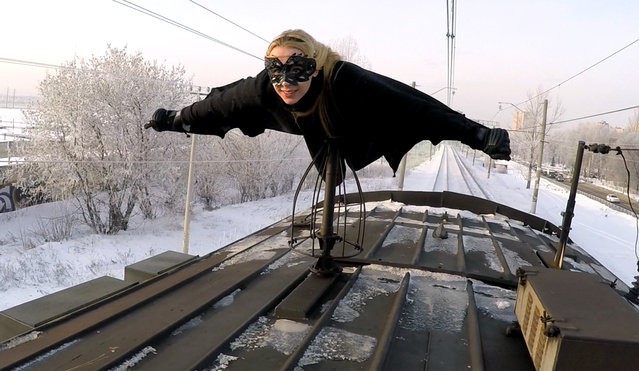
Rush-hour in Russia means one thing for this daredevil: train surfing! The 19-year-old daredevil who goes by the name Kobzarro started train surfing aged 15 as a way of escaping an oppressive family life. Here Kobzarro can be seen balanced on top of a train as it speeds through the wintery Russian environment. Kobzarro is so dedicated to train surfing that she rarely gets inside a train. Even in winter she prefers to travel in this less conventional way. It has resulted in a few run ins with the law, but Kobzarro says it has never resulted in anything more serious than a fine, with many police officers even being interested in the train surfing community. (Photo by Caters News Agency)

Rush-hour in Russia means one thing for this daredevil: train surfing! The 19-year-old daredevil who goes by the name Kobzarro started train surfing aged 15 as a way of escaping an oppressive family life. Here Kobzarro can be seen balanced on top of a train as it speeds through the wintery Russian environment. Kobzarro is so dedicated to train surfing that she rarely gets inside a train. Even in winter she prefers to travel in this less conventional way. It has resulted in a few run ins with the law, but Kobzarro says it has never resulted in anything more serious than a fine, with many police officers even being interested in the train surfing community. (Photo by Caters News Agency)
Details
11 Nov 2016 08:28:00
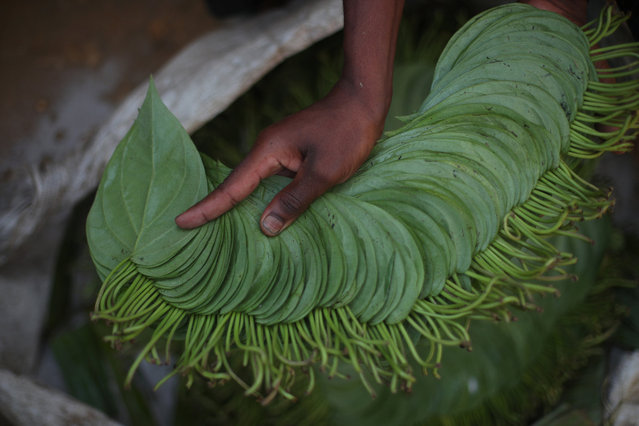
Faruk, 17, a Rohingya refugee trader holds betel leaves which are on sale at a stall in Palong Khali refugee camp near Cox's Bazar, Bangladesh, November 3, 2017. He left his village in Myanmar when the military opened fire towards the Rohingya. “I buy this betel leaf from Palong Khali market, in one bundle there are 160 pieces, I buy it for 80 taka and I sell it for 100 taka. Bangladeshi's and I sell for the same rate in the camp. Outside in the local market it is 80 taka per bundle. My problem is that I don't have money so I can't buy anything to eat, I can't buy fish to eat”, he said. (Photo by Hannah McKay/Reuters)

Faruk, 17, a Rohingya refugee trader holds betel leaves which are on sale at a stall in Palong Khali refugee camp near Cox's Bazar, Bangladesh, November 3, 2017. He left his village in Myanmar when the military opened fire towards the Rohingya. “I buy this betel leaf from Palong Khali market, in one bundle there are 160 pieces, I buy it for 80 taka and I sell it for 100 taka (1 Bangladeshi Taka = 0.012 US Dollar). Bangladeshi's and I sell for the same rate in the camp. Outside in the local market it is 80 taka per bundle. My problem is that I don't have money so I can't buy anything to eat, I can't buy fish to eat”, he said. (Photo by Hannah McKay/Reuters)
Details
27 Nov 2017 08:54:00
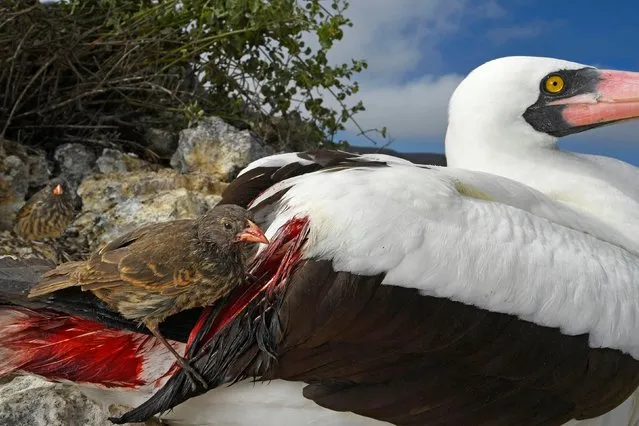
Bloodthirsty by Thomas P Peschak, Germany/South Africa — winner, Behaviour: birds. When rations run short on Wolf Island, in the remote northern Galápagos, the sharp-beaked ground finches become vampires. Their sitting targets are Nazca boobies and other large birds. The finches rely on a scant diet of seeds and insects, which regularly dries up, so they drink blood to survive. ‘I’ve seen more than half a dozen finches drinking from a single Nazca booby,’ says Tom. Rather than leave their nests the boobies tolerate the vampires, and the blood loss doesn’t seem to cause permanent harm. (Photo by Thomas P Peschak/2018 Wildlife Photographer of the Year)

Bloodthirsty by Thomas P. Peschak, Germany/South Africa — winner, Behaviour: birds. When rations run short on Wolf Island, in the remote northern Galápagos, the sharp-beaked ground finches become vampires. Their sitting targets are Nazca boobies and other large birds. The finches rely on a scant diet of seeds and insects, which regularly dries up, so they drink blood to survive. ‘I’ve seen more than half a dozen finches drinking from a single Nazca booby,’ says Tom. Rather than leave their nests the boobies tolerate the vampires, and the blood loss doesn’t seem to cause permanent harm. (Photo by Thomas P. Peschak/2018 Wildlife Photographer of the Year)
Details
19 Oct 2018 00:05:00
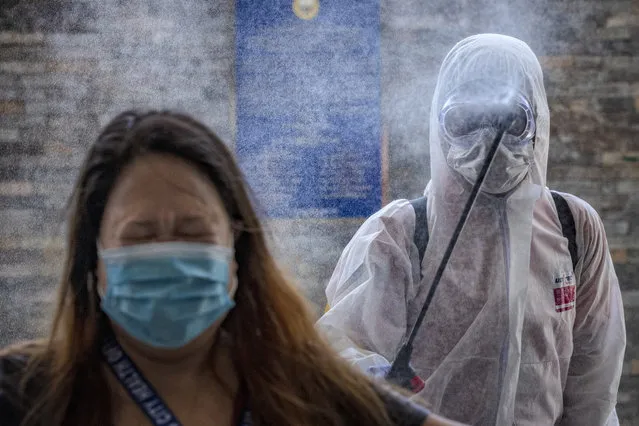
A government employee reacts as she is sprayed with disinfectant before entering a government office building to curb the spread of COVID-19 on March 19, 2020 in Pasig city, Metro Manila, Philippines. The Philippine government has sealed off Luzon, the country's largest and most populous island, to prevent the spread of COVID-19. Land, sea, and air travel has been suspended, while government work, schools, businesses, and public transportation have been ordered shut in a bid to keep some 55 million people at home. The Philippines' Department of Health has so far confirmed 217 cases of the new coronavirus in the country, with at least 17 recorded fatalities. (Photo by Ezra Acayan/Getty Images)

A government employee reacts as she is sprayed with disinfectant before entering a government office building to curb the spread of COVID-19 on March 19, 2020 in Pasig city, Metro Manila, Philippines. The Philippine government has sealed off Luzon, the country's largest and most populous island, to prevent the spread of COVID-19. Land, sea, and air travel has been suspended, while government work, schools, businesses, and public transportation have been ordered shut in a bid to keep some 55 million people at home. The Philippines' Department of Health has so far confirmed 217 cases of the new coronavirus in the country, with at least 17 recorded fatalities. (Photo by Ezra Acayan/Getty Images)
Details
07 Jan 2021 00:05:00
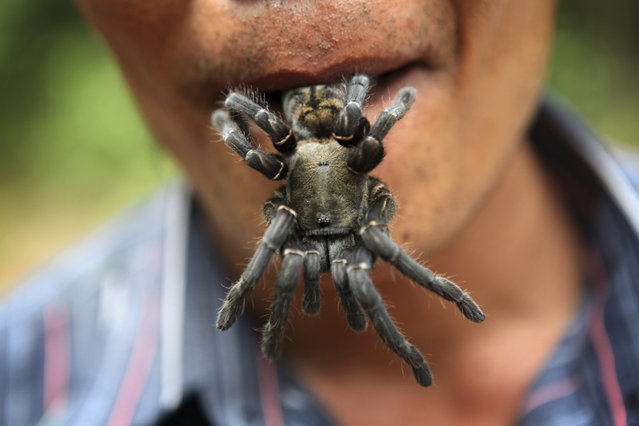
A Cambodian tuk tuk driver and guide with a tarantula in his mouth shortly after is was dug from the ground on June 7, 2010 in Skuon, Kampong Cham Province, Cambodia. The trade for spiders and other insects as food and for medicinal purposes has been in effect since the 1970's in Cambodia but only very recently have tourists been finding a way to see where the spiders are hunted in the nearby countryside. One guide, who can be found in Kampong Cham Town has started offering tours to tourists who can find him. (Photo by Tim Whitby/Getty Images)

A Cambodian tuk tuk driver and guide with a tarantula in his mouth shortly after is was dug from the ground on June 7, 2010 in Skuon, Kampong Cham Province, Cambodia. The trade for spiders and other insects as food and for medicinal purposes has been in effect since the 1970's in Cambodia but only very recently have tourists been finding a way to see where the spiders are hunted in the nearby countryside. One guide, who can be found in Kampong Cham Town has started offering tours to tourists who can find him. (Photo by Tim Whitby/Getty Images)
Details
04 Sep 2016 09:27:00
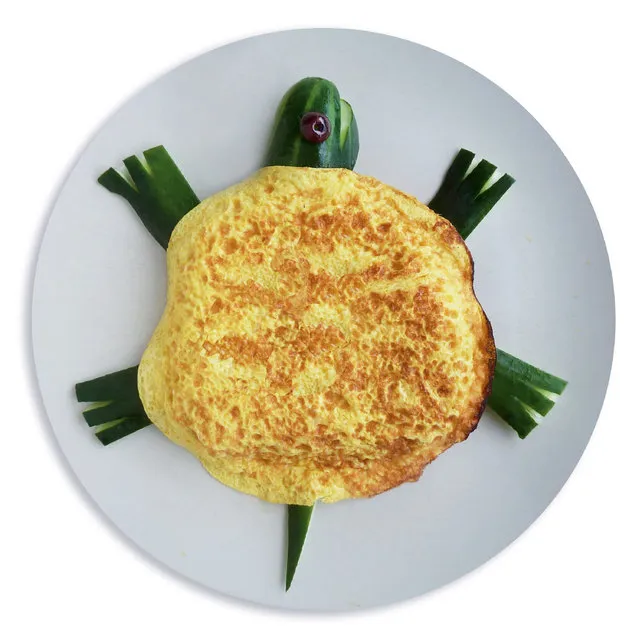
Egg, cucumber, olive. (Photo by Bill and Claire Wurtzel/Welcome Books)

Some creations from the new “Funny Food Made Easy” book by Bill and Claire Wurtzel. “Inspiring kids to eat healthy foods with creative works of plate art and easy-to-follow instructions and illustrations. Through finished plate art, detailed step-by-step illustrations, recipes, and tips, Funny Food Made Easy provides all you and your kids need to make, eat, and enjoy healthy breakfasts, lunches, and snacks” – roughly speaking so. Here: Egg, cucumber, olive. (Photo by Bill and Claire Wurtzel/Welcome Books)
Details
05 Sep 2016 11:03:00
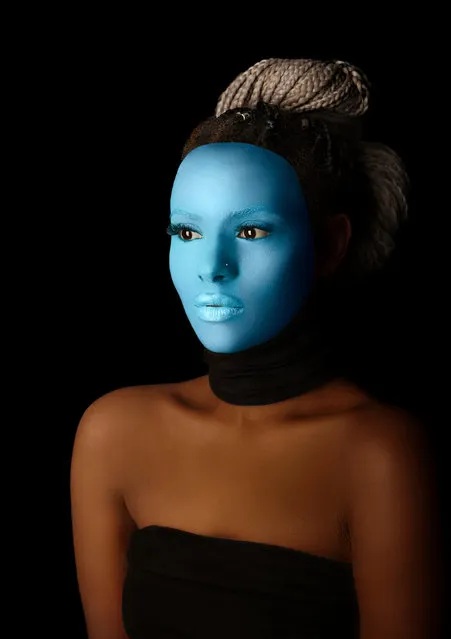
Brtukan. “Being a girl of colour in a society where the majority of the people are white, I have had to get used to all the different ways people approach me. From being asked what kind of rap music you listen to and how you wash your hair, to getting told, “you don’t sound black”, “you’re pretty for a black girl” or “you’re not that black so it’s OK”, as if being black is such a bad thing”. (Photo by Lisa Minogue/The Guardian)

As part of FLAIR Melbourne – a Flinders Lane art festival – Melbourne’s Lisa Minogue presents stylised photographic portraits of Australian women of colour, their faces painted vibrantly to accentuate their individuality and encourage the viewer to study each face more closely. Minogue asked each woman the same question: “What do the words “coloured girl” mean to you?”. (Photo by Lisa Minogue/The Guardian)
Details
17 Aug 2016 11:16:00
“The Hero”. (Christophe Kiciak)

“I started photography in June 2009. At the time, I was searching for a way to express both the rigorous scientist and the creative artist in me. There are few hobbies that let these two approaches work together, so I really was enthusiastic about it: I am now spending all my free time studying various techniques, contemplating others' fantastic work, and of course, making pictures”. – Christophe Kiciak. Photo: “The Hero”. (Photo by Christophe Kiciak)
Details
11 Jan 2013 15:40:00