Loading...
Done
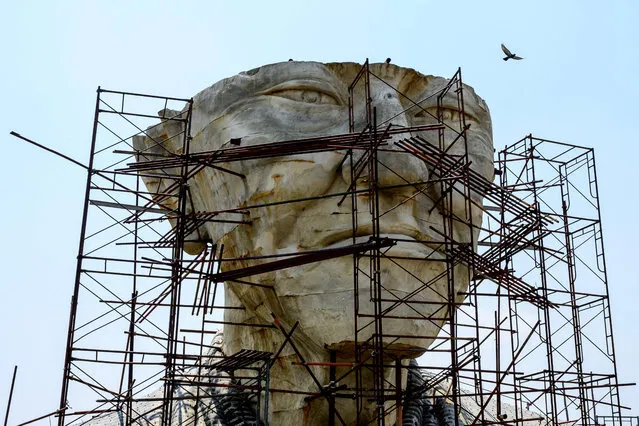
A bird flies over the abandoned giant sculpture of a Buddhist monk in Cha-am outside Hua Hin, 145km south of Bangkok, on February 25, 2021. (Photo by Mladen Antonov/AFP Photo)

A bird flies over the abandoned giant sculpture of a Buddhist monk in Cha-am outside Hua Hin, 145km south of Bangkok, on February 25, 2021. (Photo by Mladen Antonov/AFP Photo)
Details
09 Mar 2021 11:51:00
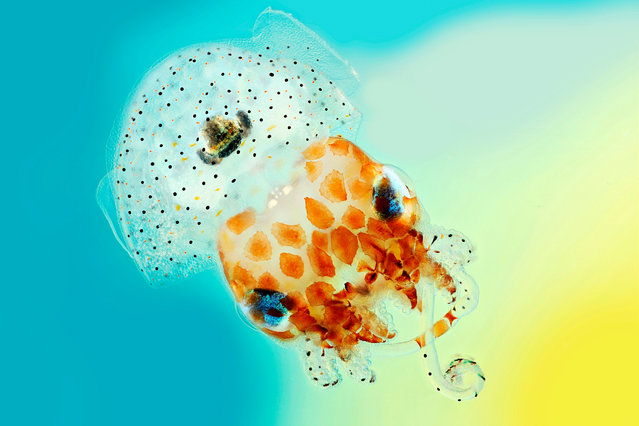
With its huge eyes, comical name and diminutive size, Mark R. Smith’s image of a baby Hawaiian bobtail squid can’t help but raise a smile. A curiously endearing creature, the cephalopod is just 1.5cm across, its mantle cavity bearing more than a passing resemblance to a rather natty shower cap. But it is also a beautiful example of symbiosis – nature’s version of “I’ll scratch your back if you scratch mine” – for on the underside of the squid is a light organ which houses bioluminescent bacteria. The squid offers the bacteria protection and food, while the bacteria emit a glow – a handy trait that the squid uses to offset its silhouette, helping it to evade predators in the depths below. Mark R. Smith’s entry combines several images of a Hawaiian bobtail squid with different focus lengths to create a final picture with greater depth of field than normal. (Photo by Mark R. Smith/Wellcome Images/Macroscopic Solutions)

With its huge eyes, comical name and diminutive size, Mark R. Smith’s image of a baby Hawaiian bobtail squid can’t help but raise a smile. A curiously endearing creature, the cephalopod is just 1.5cm across, its mantle cavity bearing more than a passing resemblance to a rather natty shower cap. But it is also a beautiful example of symbiosis – nature’s version of “I’ll scratch your back if you scratch mine” – for on the underside of the squid is a light organ which houses bioluminescent bacteria. The squid offers the bacteria protection and food, while the bacteria emit a glow – a handy trait that the squid uses to offset its silhouette, helping it to evade predators in the depths below. Mark R. Smith’s entry combines several images of a Hawaiian bobtail squid with different focus lengths to create a final picture with greater depth of field than normal. (Photo by Mark R. Smith/Wellcome Images/Macroscopic Solutions)
Details
08 Mar 2017 00:05:00
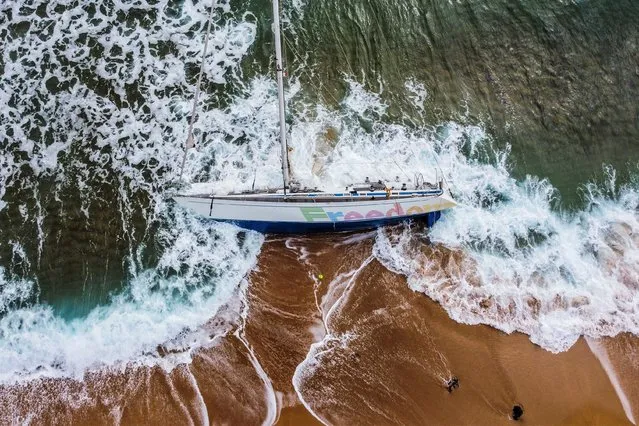
A boat lies on a beach of the Isola Capo Rizzuto marine reserve in Calabria, Italy on November 14, 2021, where many wrecks of vessels used by migrants are abandoned. (Photo by Alessandro Serrano/AGF/Rex Features/Shutterstock)

A boat lies on a beach of the Isola Capo Rizzuto marine reserve in Calabria, Italy on November 14, 2021, where many wrecks of vessels used by migrants are abandoned. (Photo by Alessandro Serrano/AGF/Rex Features/Shutterstock)
Details
16 Dec 2021 07:53:00
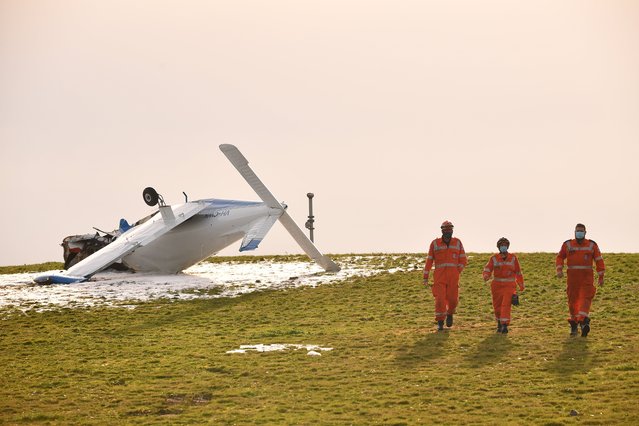
Australia's State Emergency Service (SES) personnel gather at the scene of a light plane crash near the Capital Golf Course, in Melbourne, Australia, 22 June 2021. A pilot was injured and rushed to hospital after his light plane crashed shortly after taking off from Moorabbin Airport. (Photo by James Ross/EPA/EFE)

Australia's State Emergency Service (SES) personnel gather at the scene of a light plane crash near the Capital Golf Course, in Melbourne, Australia, 22 June 2021. A pilot was injured and rushed to hospital after his light plane crashed shortly after taking off from Moorabbin Airport. (Photo by James Ross/EPA/EFE)
Details
15 Jul 2021 09:24:00
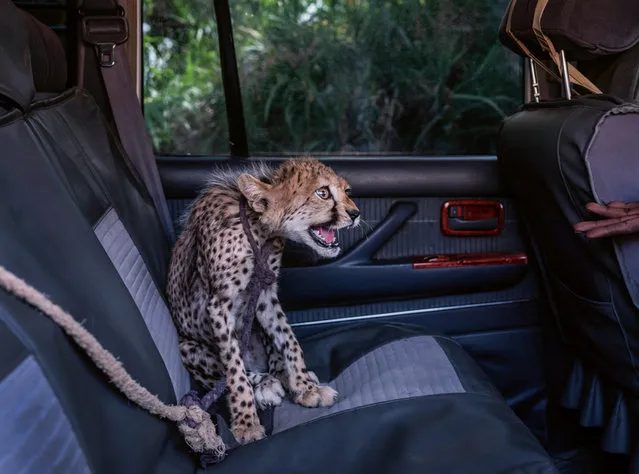
A five-month-old cheetah seated in the back of a Land Cruiser growls at an outstretched hand after being taken from traffickers in Ethiopia and driven to Harirad, Somaliland, in 2020. This photo is part of the work of more than 100 artists in Why We Photograph Animals, a new collection of wildlife photography that aims to help understand why people have photographed animals at different points in history and what it means in the present. (Photo by Nichole Sobecki/Thames & Hudson)

A five-month-old cheetah seated in the back of a Land Cruiser growls at an outstretched hand after being taken from traffickers in Ethiopia and driven to Harirad, Somaliland, in 2020. This photo is part of the work of more than 100 artists in Why We Photograph Animals, a new collection of wildlife photography that aims to help understand why people have photographed animals at different points in history and what it means in the present. (Photo by Nichole Sobecki/Thames & Hudson)
Details
28 Apr 2024 03:15:00
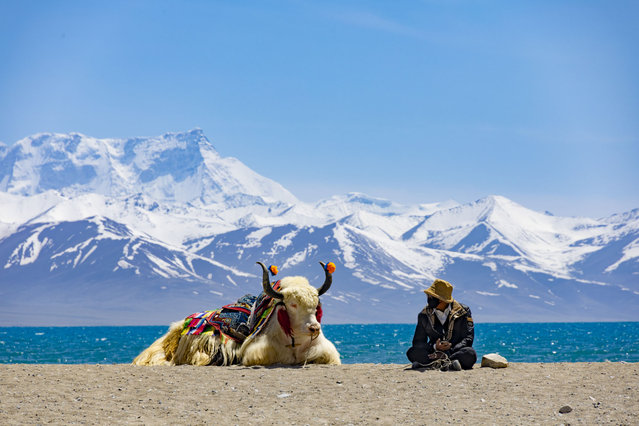
A white yak sits on the lakeside of Namtso on May 19, 2024 in Lhasa, Xizang Autonomous Region of China. As temperature rises and ice melts, Lake Namtso is entering its tourism season. An event celebrating the melting of frozen water of Lake Namtso is held on May 19. (Photo by Jin Wei/VCG via Getty Images)

A white yak sits on the lakeside of Namtso on May 19, 2024 in Lhasa, Xizang Autonomous Region of China. As temperature rises and ice melts, Lake Namtso is entering its tourism season. An event celebrating the melting of frozen water of Lake Namtso is held on May 19. (Photo by Jin Wei/VCG via Getty Images)
Details
10 Jun 2024 02:52:00
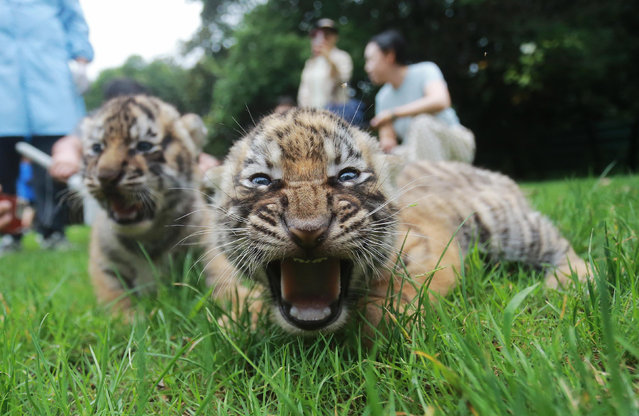
Three Siberian tiger cubs meet visitors at Yangzhou Zoo in Yangzhou City, east China's Jiangsu Province, on 27 June, 2024. (Photo by Splash News and Pictures)

Three Siberian tiger cubs meet visitors at Yangzhou Zoo in Yangzhou City, east China's Jiangsu Province, on 27 June, 2024. (Photo by Splash News and Pictures)
Details
10 Jul 2024 02:15:00
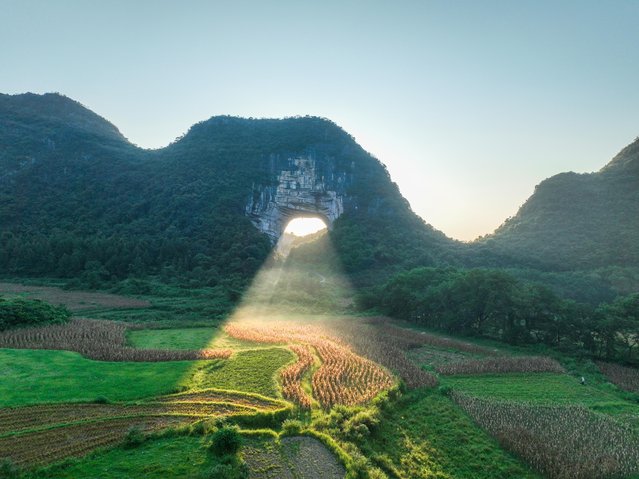
Aerial view of sunbeam shining through mountain cave at Yueyan National Forest Park on August 27, 2024 in Yongzhou, Hunan Province of China. (Photo by Jiang Keqing/VCG via Getty Images)

Aerial view of sunbeam shining through mountain cave at Yueyan National Forest Park on August 27, 2024 in Yongzhou, Hunan Province of China. (Photo by Jiang Keqing/VCG via Getty Images)
Details
07 Sep 2024 03:50:00