Loading...
Done
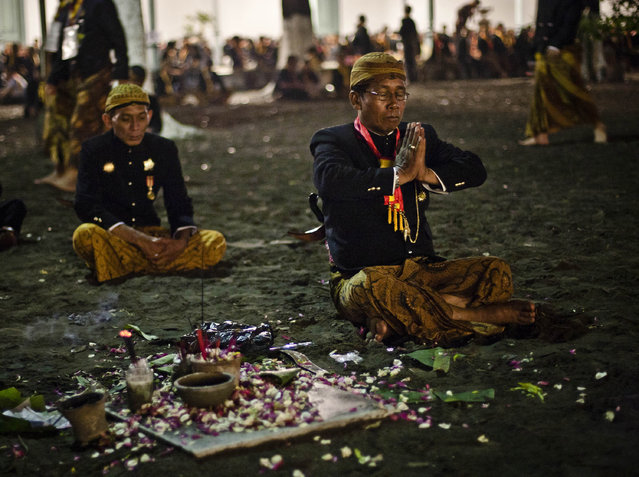
Javanese people pray before rituals night carnival “1st Suro” (Javanese calender) during  Islamic New Year celebrations at Kasunanan Palace on November 14, 2012 in Solo City, Central Java, Indonesia. Javanese will celebrate the national holiday with ceremonies and rituals marking the 1434th Islamic New Year's Eve or “1st Suro”. The parade started from Keraton Kasunanan and is headed by a group of albino buffaloes, known as Kebo Bule. Local people believe that the parade of Heirlooms and Kebo Bule will bring them a better life. (Photo by Ulet Ifansasti)

Javanese people pray before rituals night carnival “1st Suro” (Javanese calender) during Islamic New Year celebrations at Kasunanan Palace on November 14, 2012 in Solo City, Central Java, Indonesia. Javanese will celebrate the national holiday with ceremonies and rituals marking the 1434th Islamic New Year's Eve or “1st Suro”. The parade started from Keraton Kasunanan and is headed by a group of albino buffaloes, known as Kebo Bule. Local people believe that the parade of Heirlooms and Kebo Bule will bring them a better life. (Photo by Ulet Ifansasti)
Details
16 Nov 2012 07:37:00
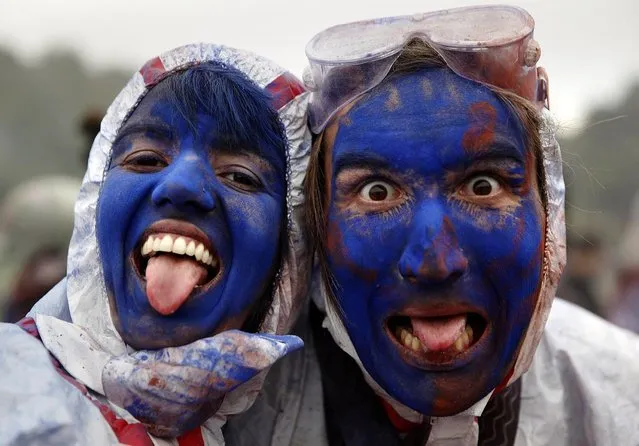
Revellers celebrate "Ash Monday" by participating in a colourful "flour war", a traditional festivity marking the end of the carnival season and the start of the 40-day Lent period until the Orthodox Easter,in the port town of Galaxidi, some 215 km (134 miles) north west of Athens, March 18, 2013. The revellers "fight" by throwing coloured flour, charcoal dust and powder painting until they essentially run out of supplies. (Photo by Yannis Behrakis/Reuters)

Revellers celebrate "Ash Monday" by participating in a colourful "flour war", a traditional festivity marking the end of the carnival season and the start of the 40-day Lent period until the Orthodox Easter,in the port town of Galaxidi, some 215 km (134 miles) north west of Athens, March 18, 2013. The revellers "fight" by throwing coloured flour, charcoal dust and powder painting until they essentially run out of supplies. (Photo by Yannis Behrakis/Reuters)
Details
20 Mar 2013 07:23:00
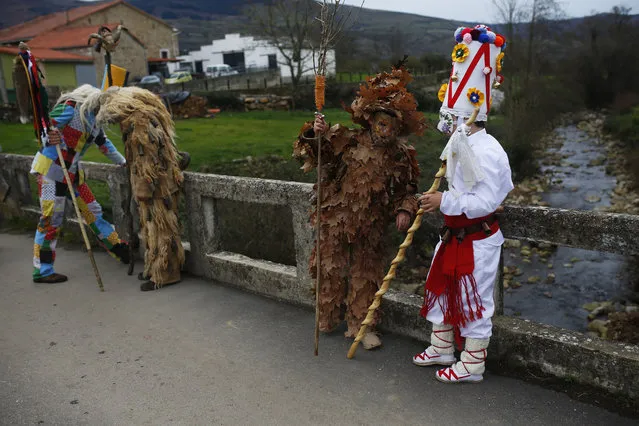
People dressed in costumes have a break while marching during the Vijanera Festival, in the small village of Silio, northern Spain, Sunday, January 3, 2016. The Vijanera masquerade, of pre-Roman origin, is the first carnival of the year in Europe symbolizing the triumph of good over evil and involving the participation of crowds of residents wearing different masks, animal skins and brightly coloured clothing with its own complex function and symbolism and becoming the living example of the survival of archaic cults to nature. (Photo by Francisco Seco/AP Photo)

People dressed in costumes have a break while marching during the Vijanera Festival, in the small village of Silio, northern Spain, Sunday, January 3, 2016. The Vijanera masquerade, of pre-Roman origin, is the first carnival of the year in Europe symbolizing the triumph of good over evil and involving the participation of crowds of residents wearing different masks, animal skins and brightly coloured clothing with its own complex function and symbolism and becoming the living example of the survival of archaic cults to nature. (Photo by Francisco Seco/AP Photo)
Details
04 Jan 2016 10:17:00
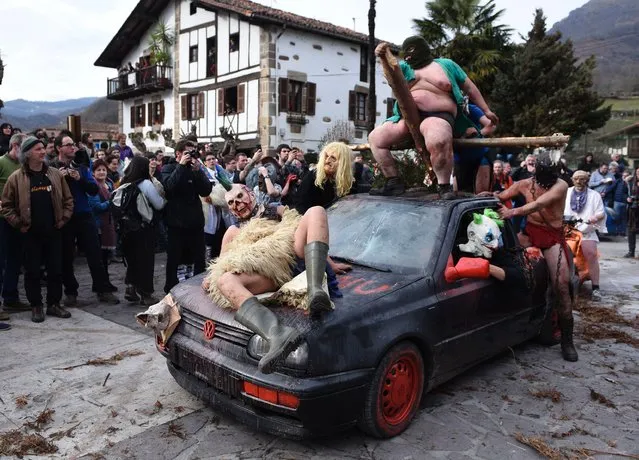
Disguised participants strike poses on a car during the ancient carnival of Ituren, in the northern Spanish Navarra province on January 30, 2017. The yearly three day festivities, revolving mainly around agriculture and principally sheep hearding, run on the last Sunday, Monday and Tuesday of January where Navarra Valley locals from two villages dress up and participate in a variety of activites as they perform a pilgrimage through each village. (Photo by Ander Gillenea/AFP Photo)

Disguised participants strike poses on a car during the ancient carnival of Ituren, in the northern Spanish Navarra province on January 30, 2017. The yearly three day festivities, revolving mainly around agriculture and principally sheep hearding, run on the last Sunday, Monday and Tuesday of January where Navarra Valley locals from two villages dress up and participate in a variety of activites as they perform a pilgrimage through each village. (Photo by Ander Gillenea/AFP Photo)
Details
31 Jan 2017 10:00:00
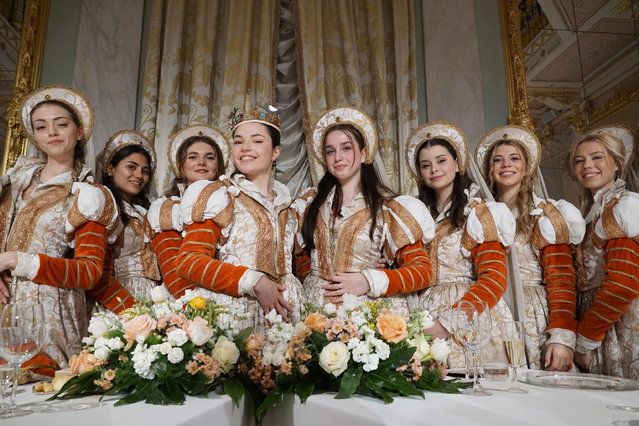
Silvia Zecchin (4L) wearing a crown poses with a group of Maries, at the end of the ceremony that crowned her Maria of Carnival 2024, in Venice, Italy, 13 February 2024. The young student of Political Science at the University of Padua, in addition to teaching rhythmic gymnastics to children, was elected at the end of the Gala Dinner hosted in the Apollinee rooms of the Teatro La Fenice in Venice and hosted by Maurice Agosti and Alice Bars. (Photo by Andrea Merola/EPA)

Silvia Zecchin (4L) wearing a crown poses with a group of Maries, at the end of the ceremony that crowned her Maria of Carnival 2024, in Venice, Italy, 13 February 2024. The young student of Political Science at the University of Padua, in addition to teaching rhythmic gymnastics to children, was elected at the end of the Gala Dinner hosted in the Apollinee rooms of the Teatro La Fenice in Venice and hosted by Maurice Agosti and Alice Bars. (Photo by Andrea Merola/EPA)
Details
24 May 2025 02:16:00
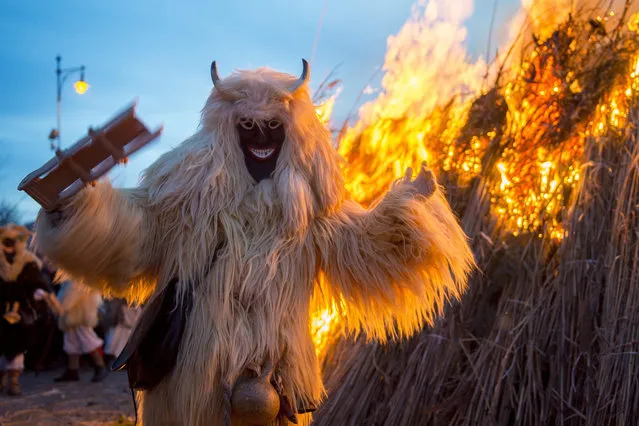
A reveler wearing sheepfur costume is seen in front of a bonfire on which they burn a coffin symbolizing winter during the closing ceremony of the traditional carnival parade in Mohacs, 189 kms south of Budapest, Hungary, 07 February 2016. (Photo by Tamas Soki/EPA)

A reveler wearing sheepfur costume is seen in front of a bonfire on which they burn a coffin symbolizing winter during the closing ceremony of the traditional carnival parade in Mohacs, 189 kms south of Budapest, Hungary, 07 February 2016. The carnival parade of people, the so-called busos, dressed in such costumes and frightening wooden masks, using various noisy wooden rattlers is traditionally held on the seventh weekend before Easter to drive away winter, and is a revival of a legend, which says that ethnic Croats ambushed the Osmanli Turkish troops, who escaped in panic seeing the terrifying figures during the Turkish occupation of Hungary. (Photo by Tamas Soki/EPA)
Details
09 Feb 2016 14:02:00
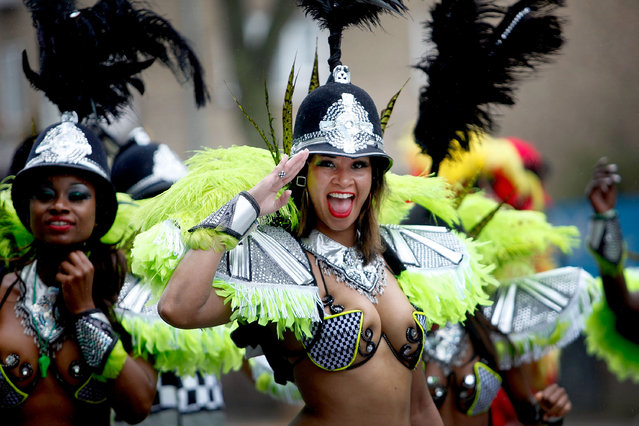
Performers take part in a rain soaked Notting Hill Carnival on August 25th, 2014 in London, England. Despite the bad weather over 1 million visitors are expected to attend the two-day event which is the largest of its kind in Europe. The event has taken place on the West London streets every August Bank Holiday weekend since 1964. (Photo by Mary Turner/Getty Images)

Performers take part in a rain soaked Notting Hill Carnival on August 25th, 2014 in London, England. Despite the bad weather over 1 million visitors are expected to attend the two-day event which is the largest of its kind in Europe. The event has taken place on the West London streets every August Bank Holiday weekend since 1964. (Photo by Mary Turner/Getty Images)
Details
21 Oct 2016 12:46:00
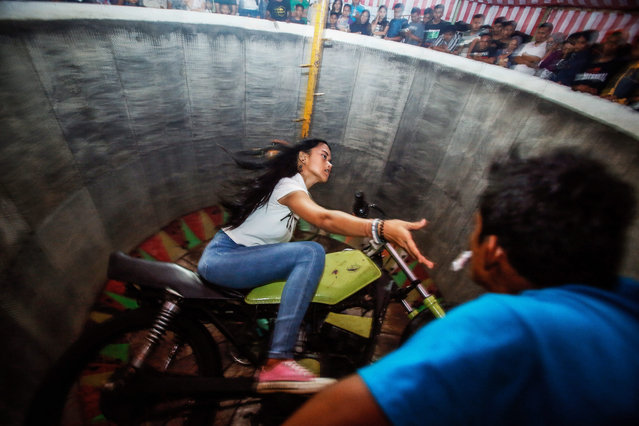
A picture made available on 16 August 2016 shows a young dare devil motorbike rider, Karmila Purba, 18, reaching for a tip while riding her motorbike inside a barrel locally known as “Tong Setan” or Davil's Barrel, at a traditional night carnival in Deliserdang, North Sumatra, Indonesia, 13 August 2016. (Photo by Dedi Sinuhaji/EPA)

A picture made available on 16 August 2016 shows a young dare devil motorbike rider, Karmila Purba, 18, reaching for a tip while riding her motorbike inside a barrel locally known as “Tong Setan” or Davil's Barrel, at a traditional night carnival in Deliserdang, North Sumatra, Indonesia, 13 August 2016. (Photo by Dedi Sinuhaji/EPA)
Details
18 Aug 2016 11:39:00