Loading...
Done
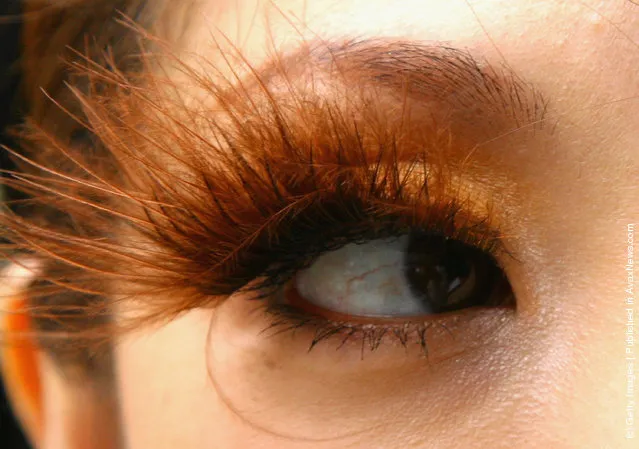
Designer False Eyelashes Remain Popular Japanese Fashion Accessory

An employee wears false eyelashes at the Shu Uemura eyelashes bar in the Omotesando district May 18, 2007 in Tokyo, Japan. 22 different false eyelash designs are available at the eyelashes bar ranging in cost from US$13 to US$43. (Photo by Koichi Kamoshida/Getty Images)
Details
02 Dec 2011 09:07:00


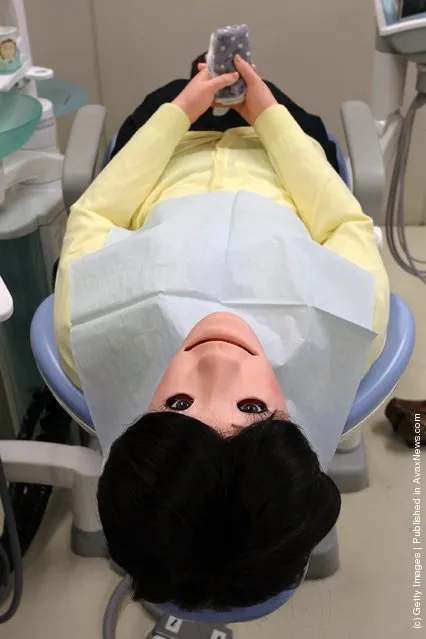
A humanoid dental patient robot, named Hanako Showa, about to be used during a demonstration of dental treatment at Showa University on March 25, 2010 in Tokyo, Japan. The robot was co-developed by the university and tmsuk co. Ltd, and simulates real human patients. The robot has been used for training of procedures in which the dental treatment requires a high level of precision. (Photo by Koichi Kamoshida/Getty Images)
Details
06 Jun 2011 10:04:00
Japanese Boy and His Bulldog

The cutest Instagram ever! Tokyo-based mother Aya Sakai is taking pictures everyday of her son Tasuku and his best friend, a French Bulldog ‘Muu’ and post it on Instagram and her Facebook page. Whether the two are watching tv on their ‘favorite’ cushion or cuddling on the couch or sleeping together, the two just can’t seem to get enough of each other. Probably the cutest thing I’ve seen in a long time…
Details
29 Aug 2013 10:24:00
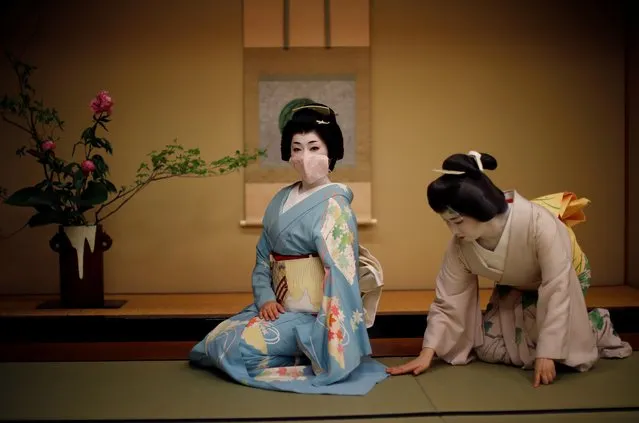
Mayu adjusts Koiku’s kimono, as Koiku wears a protective face mask while posing for a photograph, before they work at a party where they will entertain with other geisha at Japanese luxury restaurant Asada in Tokyo, Japan, June 23, 2020. The coronavirus pandemic has made Tokyo's geisha fear for their centuries-old profession as never before. Though the number of geisha - famed for their witty conversation, beauty and skill at traditional arts - has been falling for years, they were without work for months due to Japan's state of emergency and now operate under awkward social distancing rules. Engagements are down 95 percent, and come with new rules: no pouring drinks for customers or touching them even to shake hands, and sitting 2 meters apart. Masks are hard to wear with their elaborate wigs, so they mostly don't. “I was just full of anxiety”, said Mayu, 47. “I went through my photos, sorted my kimonos ... The thought of a second wave is terrifying”. (Photo by Kim Kyung-Hoon/Reuters)

Mayu adjusts Koiku’s kimono, as Koiku wears a protective face mask while posing for a photograph, before they work at a party where they will entertain with other geisha at Japanese luxury restaurant Asada in Tokyo, Japan, June 23, 2020. (Photo by Kim Kyung-Hoon/Reuters)
Details
23 Jul 2020 00:03:00
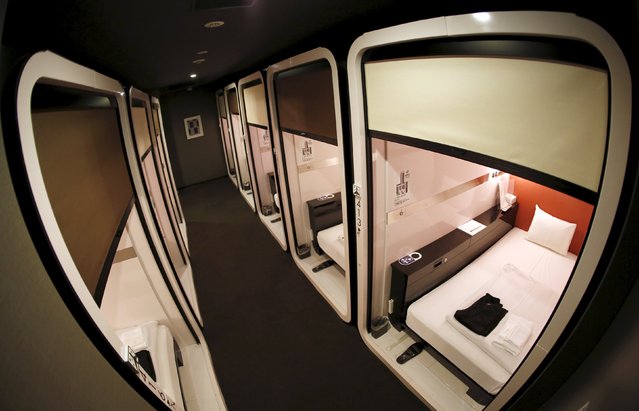
“Business-class” cabins are seen at First Cabin hotel, which was converted from an old office building, in Tokyo, July 3, 2015. Record tourists to Japan are stretching the ability of hotels to accommodate them in a sector constrained by high costs, forcing developers to think out of the box for means to quickly increase lodging options without breaking the bank. (Photo by Toru Hanai/Reuters)

“Business-class” cabins are seen at First Cabin hotel, which was converted from an old office building, in Tokyo, July 3, 2015. Record tourists to Japan are stretching the ability of hotels to accommodate them in a sector constrained by high costs, forcing developers to think out of the box for means to quickly increase lodging options without breaking the bank. (Photo by Toru Hanai/Reuters)
Details
31 Jul 2015 10:57:00
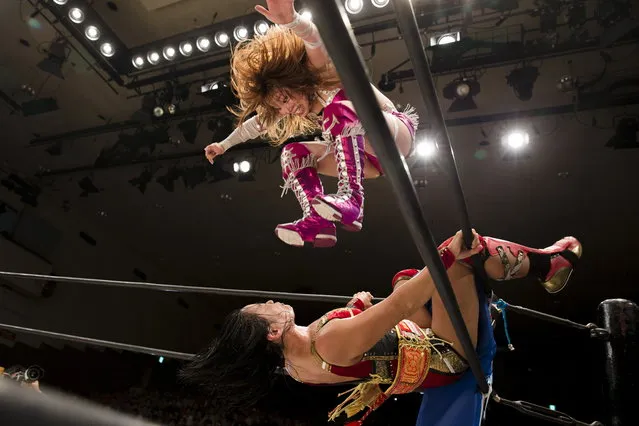
Wrestler Kairi Hojo jumps at her opponent Mieko satomura during their Stardom female professional wrestling show at Korakuen Hall in Tokyo, Japan, July 26, 2015. Professional women's wrestling in Japan means body slams, sweat, and garish costumes. But Japanese rules on hierarchy also come into play, with a culture of deference to veteran fighters. The brutal reality of the ring is masked by a strong fantasy element that feeds its popularity with fans, most of them men. (Photo by Thomas Peter/Reuters)

Wrestler Kairi Hojo jumps at her opponent Mieko satomura during their Stardom female professional wrestling show at Korakuen Hall in Tokyo, Japan, July 26, 2015. Professional women's wrestling in Japan means body slams, sweat, and garish costumes. But Japanese rules on hierarchy also come into play, with a culture of deference to veteran fighters. The brutal reality of the ring is masked by a strong fantasy element that feeds its popularity with fans, most of them men. (Photo by Thomas Peter/Reuters)
Details
14 Dec 2016 07:58:00
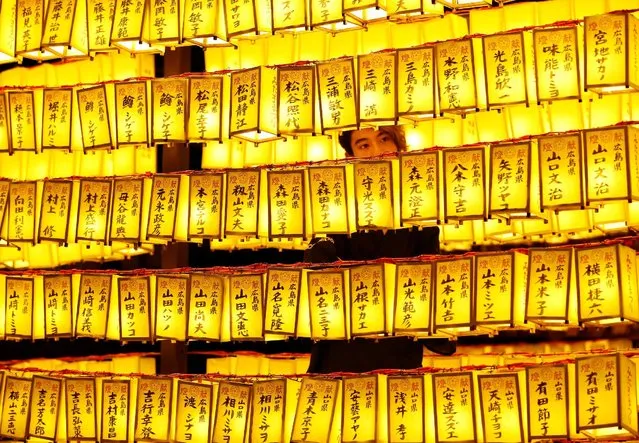
A man stands between thousands of paper lanterns, which were displayed and lit up the precincts of the shrine, where more than 2.4 million war-dead are enshrined, during the Mitama Festival at Yasukuni Shrine in Tokyo, Japan July 13, 2016. “Mitama” is a respectful word that means “the soul of a dead person” in Japanese, and this “Soul Festival” honors just that. The Yasukuni Shrine is dedicated to the honoring of the souls of those who gave their lives to defend Japan, and this festival is an early step towards the Japanese holiday season of Obon, during which Japanese people honor their deceased ancestors. (Photo by Issei Kato/Reuters)

A man stands between thousands of paper lanterns, which were displayed and lit up the precincts of the shrine, where more than 2.4 million war-dead are enshrined, during the Mitama Festival at Yasukuni Shrine in Tokyo, Japan July 13, 2016. “Mitama” is a respectful word that means “the soul of a dead person” in Japanese, and this “Soul Festival” honors just that. (Photo by Issei Kato/Reuters)
Details
14 Jul 2016 09:37:00
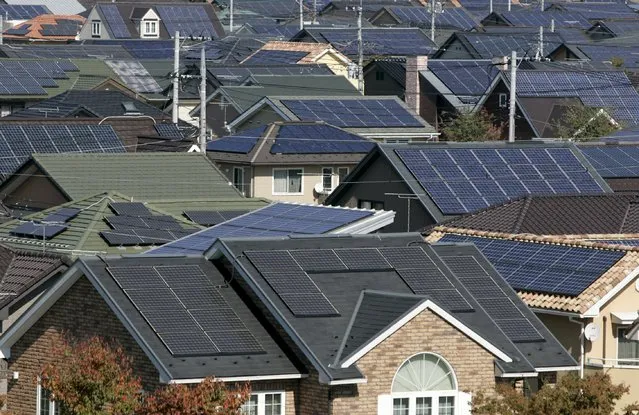
Rooftops of solar powered houses are pictured in Ota, 80 km northwest of Tokyo in this October 28, 2008 file photo. One by one, Japan is turning off the lights at the giant oil-fired power plants that propelled it to the ranks of the world's top industrialised nations. With nuclear power in the doldrums after the Fukushima disaster, it's solar energy that is becoming the alternative. (Photo by Yuriko Nakao/Reuters)

Rooftops of solar powered houses are pictured in Ota, 80 km northwest of Tokyo in this October 28, 2008 file photo. One by one, Japan is turning off the lights at the giant oil-fired power plants that propelled it to the ranks of the world's top industrialised nations. With nuclear power in the doldrums after the Fukushima disaster, it's solar energy that is becoming the alternative. Solar power is set to become profitable in Japan as early as this quarter, according to the Japan Renewable Energy Foundation (JREF), freeing it from the need for government subsidies and making it the last of the G7 economies where the technology has become economically viable. (Photo by Yuriko Nakao/Reuters)
Details
24 Nov 2015 08:04:00