Loading...
Done
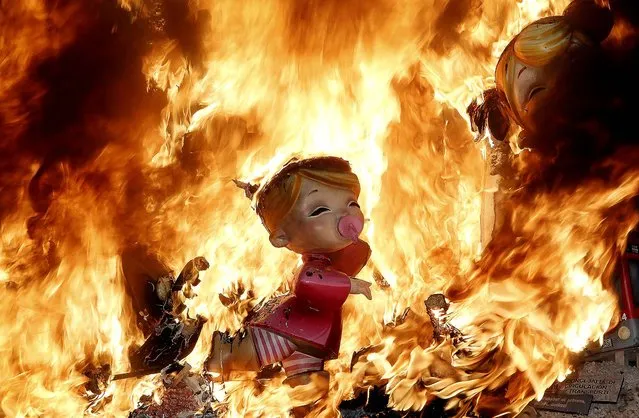
Satirical sculptures burn during the traditional Fallas festival in Valencia, Spain, on March 19, 2014. Every year the city celebrates the ancient “Las Fallas” fiesta, a noisy week that is full of fireworks and processions in honor of Saint Joseph that ends on midnight of March 19, burning large satiric figures displayed around the streets of the city. (Photo by Alberto Saiz/Associated Press)

Satirical sculptures burn during the traditional Fallas festival in Valencia, Spain, on March 19, 2014. Every year the city celebrates the ancient “Las Fallas” fiesta, a noisy week that is full of fireworks and processions in honor of Saint Joseph that ends on midnight of March 19, burning large satiric figures displayed around the streets of the city. (Photo by Alberto Saiz/Associated Press)
Details
21 Mar 2014 07:17:00
Bonbibi, Treehouse Point, Fall City, WA. The Bonbibi is balanced on two steel yokes. The yokes spread out the load and allow for tree growth and movement in the wind. A small deck hangs from the beams below and uses the treehouse itself to shelter guests. (Photo by Pete Nelson)

Bonbibi, Treehouse Point, Fall City, WA. The Bonbibi is balanced on two steel yokes. The yokes spread out the load and allow for tree growth and movement in the wind. A small deck hangs from the beams below and uses the treehouse itself to shelter guests. (Photo by Pete Nelson)
Details
16 May 2014 16:00:00
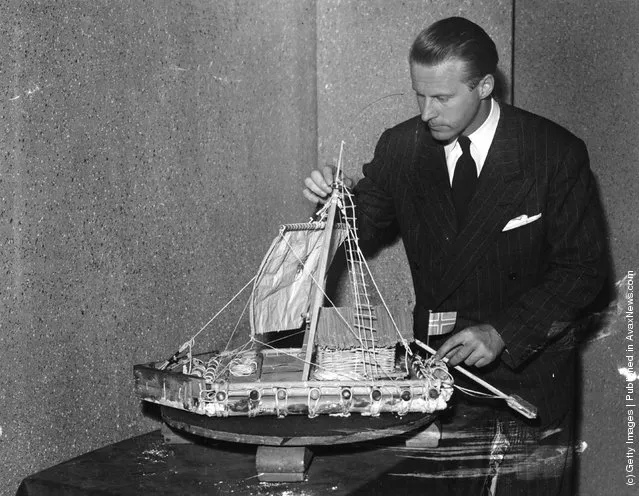
Thor Heyerdahl with a model of the balsa raft Kon Tiki

“Thor Heyerdahl (October 6, 1914, Larvik, Norway – April 18, 2002, Colla Micheri, Italy) was a Norwegian ethnographer and adventurer with a background in zoology and geography. He became notable for his Kon-Tiki expedition, in which he sailed 8,000 km (4,300 miles) by raft from South America to the Tuamotu Islands. All his expeditions are shown in the Kon-Tiki Museum, Oslo”. – Wikipedia

Photo: Norwegian anthropologist Thor Heyerdahl with a model of the balsa raft “Kon-Tiki” on which he drifted 4,300 miles from Peru to the Tuamotu Islands, proving his theory that Polynesia could originally have been populated by South Americans. (Photo by Express/Express/Getty Images). 1950
Details
09 Aug 2011 11:05:00
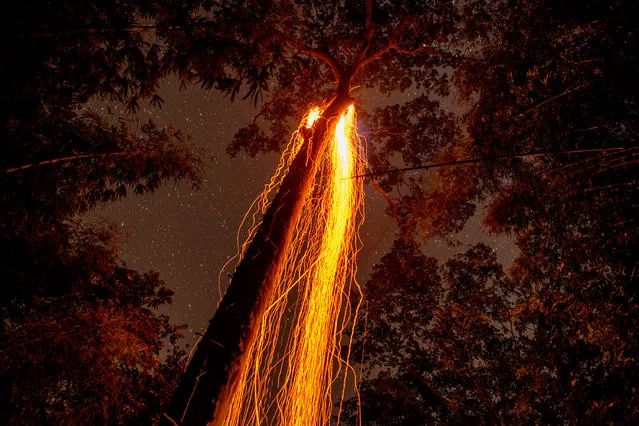
Bees are sensitive to light, which makes them follow the glowing embers down to the ground. (Photo by Hasnoor Hussain/The Guardian)

During the spring harvest season, a group of traditional Malaysian honey hunters travel to the rainforest near the Thai border to collect honeycombs from giant bees – and risk their lives climbing 200ft trees. Here: Bees are sensitive to light, which makes them follow the glowing embers down to the ground. (Photo by Hasnoor Hussain/The Guardian)
Details
22 Oct 2016 10:26:00
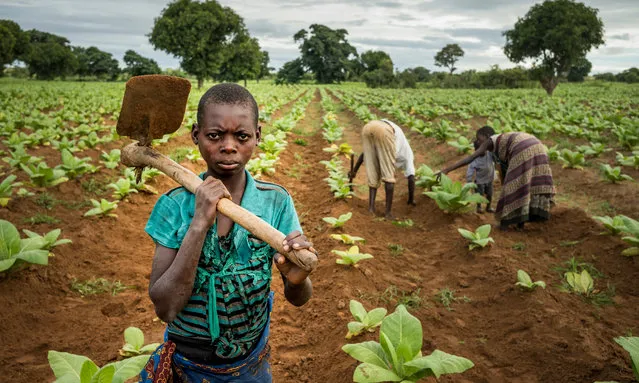
Tiyamike Phiri hopes to become a nurse because she wants to travel the country and help others. (Photo by David Levene/The Guardian)

Life as tenant farmers in Kasungu, northern Malawi, can be a struggle for families trapped in poverty, who feel forced to rely on their children’s help, impacting schooling. Here: A tobacco field at a farm in Kasungu region, Malawi. Tobacco is the country’s most important export crop, with tobacco leaf from Malawi filling cigarettes found all over the world. Here: Tiyamike Phiri hopes to become a nurse because she wants to travel the country and help others. (Photo by David Levene/The Guardian)
Details
27 Jun 2018 00:05:00
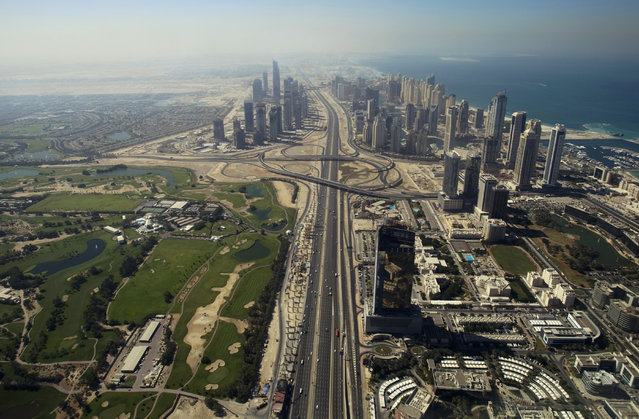
A view of the Sheikh Zayed highway in Dubai and some high rise buildings, November 8, 2007. (Photo by Steve Crisp/Reuters)

A view of the Sheikh Zayed highway in Dubai and some high rise buildings, November 8, 2007. (Photo by Steve Crisp/Reuters)
Details
23 Nov 2014 12:05:00
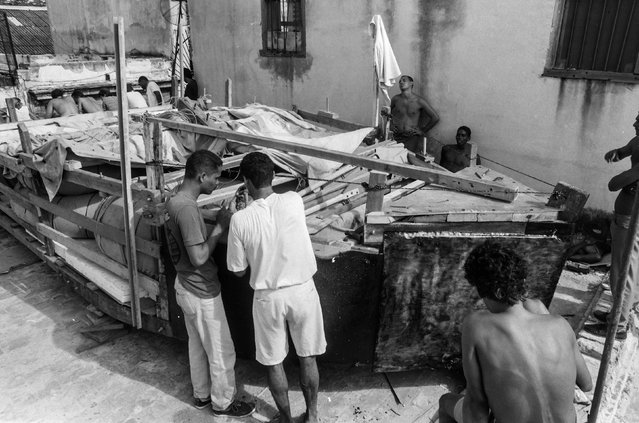
Rolando Pujol Rodriguez photographed the Cuban raft exodus in 1994, and twenty years later Enrique de la Osa took portraits of some of the people who made it to the United States, in this story which combines archive and present day images. Here: People put the finishing touches to a makeshift boat on a rooftop before lowering it onto a truck and launching it into the Straits of Florida towards the U.S., on the last day of the 1994 Cuban raft exodus in Havana, in this September 13, 1994 file photo. (Photo by Rolando Pujol Rodriguez/Reuters)

Rolando Pujol Rodriguez photographed the Cuban raft exodus in 1994, and twenty years later Enrique de la Osa took portraits of some of the people who made it to the United States, in this story which combines archive and present day images. Here: People put the finishing touches to a makeshift boat on a rooftop before lowering it onto a truck and launching it into the Straits of Florida towards the U.S., on the last day of the 1994 Cuban raft exodus in Havana, in this September 13, 1994 file photo. (Photo by Rolando Pujol Rodriguez/Reuters)
Details
13 Nov 2014 14:07:00
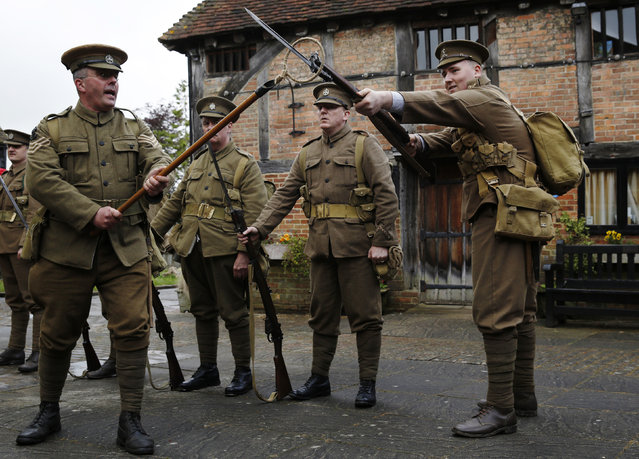
Factory landlord Lawrence Taylor (L), portraying a Colour Sergeant from the King's Royal Rifle Corps, part of the Rifles Living History Society, performs a drill with Connor Young (R) of the Queen's Own Royal West Kent Regiment Living History Group as they recreate the life of a First World War soldier at the Eden Valley Museum in Edenbridge in southeast England May 10, 2014. (Photo by Luke MacGregor/Reuters)

Factory landlord Lawrence Taylor (L), portraying a Colour Sergeant from the King's Royal Rifle Corps, part of the Rifles Living History Society, performs a drill with Connor Young (R) of the Queen's Own Royal West Kent Regiment Living History Group as they recreate the life of a First World War soldier at the Eden Valley Museum in Edenbridge in southeast England May 10, 2014. Lawrence has always had an interest in military history and specifically “The Rifles” – his veteran father's WWII regiment. When he became a re-enactor he chose not to re-enact WWII as many of the veterans are still alive, and he felt uncomfortable as he remembers his father would have flashbacks and nightmares about the war. United by a fascination with military history and a fondness for dressing up, groups such as the Rifles Living History Society and the Queen's Own Royal West Kent Regiment Living History Group get together to recreate aspects of life during the First World War. Reuters photographer Luke MacGregor photographed members of the groups, both as they took part in living history events and at their day jobs. (Photo by Luke MacGregor/Reuters)
Details
26 Aug 2014 10:12:00