Loading...
Done
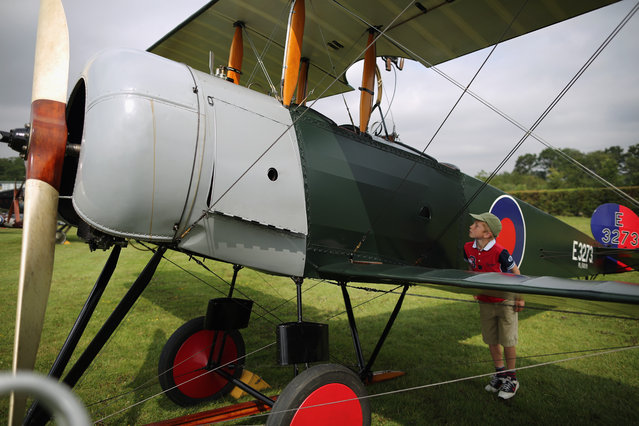
Aviation enthusiast Patrick Wilson 8, from Wetherby looks at  an Avro 504 k at “The Shuttlesworth Collection” at Old Warden on July 21, 2014 in Biggleswade, England. Of the 55,000 planes that were manufactured by the Royal Army Corps (RAC) during WWI, only around 20 remain in airworthy condition. (Photo by Dan Kitwood/Getty Images)

Aviation enthusiast Patrick Wilson 8, from Wetherby looks at an Avro 504 k at “The Shuttlesworth Collection” at Old Warden on July 21, 2014 in Biggleswade, England. Of the 55,000 planes that were manufactured by the Royal Army Corps (RAC) during WWI, only around 20 remain in airworthy condition. Six of these belong to The Shuttleworth Collection at Old Warden, Bedfordshire, making it the most complete collection of original airworthy WWI aircraft in the world. Amongst the collection is the SE5a. The SE5a is a single seater fighter aircraft. It is an original biplane designed by the Royal Aircraft Factory, with its engine built by Wolseley Motors Ltd, and it was issued to 84 Squadron in November 1918. The National Archive in Kew has recently verified that the plane saw action in France with 84 Squadron the day before Armistice, November 10, 1918. (Photo by Dan Kitwood/Getty Images)
Details
23 Jul 2014 10:00:00
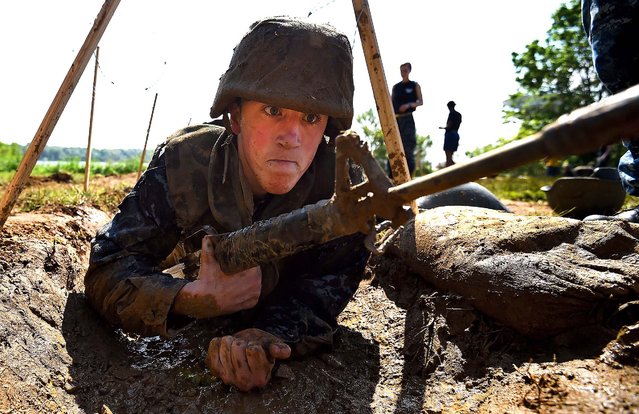
A member of the United States Naval Academy freshman class crawls through trenches at the wet and sandy station during the annual Sea Trials training exercise at the U.S. Naval Academy on May 13, 2014 in Annapolis, Maryland. (Photo by Patrick Smith/Getty Images)

A member of the United States Naval Academy freshman class crawls through trenches at the wet and sandy station during the annual Sea Trials training exercise at the U.S. Naval Academy on May 13, 2014 in Annapolis, Maryland. For 14 hours, the United States Naval Academy freshman class, also known as Plebes, worked as a team to complete many grueling physical and mental challenges that help prepare them for real-world experiences and reinforce leadership, bonds, trust, and teamwork. Of the challenges, they endured: a two-mile regimental run, ground fights, water tactics, aquatics challenges, and survival skills, amongst many others. (Photo by Patrick Smith/Getty Images)
Details
14 May 2014 07:52:00
Traditional trumpeters perform during the durbar festival on the second day of Eid-al-Fitr celebrations in Nigeria's northern city of Kano, July 7, 2016. (Photo by Akintunde Akinleye/Reuters)

Traditional trumpeters perform during the durbar festival on the second day of Eid-al-Fitr celebrations in Nigeria's northern city of Kano, July 7, 2016. The Durbar festival begins with prayers, followed by a parade of the Emir and his entourage on horses, accompanied by music players, and ending at the Emir's palace. The Durbar festival had been in hausaland for more than 500 years. It was introduced by sarki muhammadu rumfa of kano in the late 14th century, as a way of demonstrating military power and skills before going to war. The festival is also an opportunity for local leaders to pay homage to emir throughout the jahi cheering. (Photo by Akintunde Akinleye/Reuters)
Details
09 Jul 2016 09:35:00
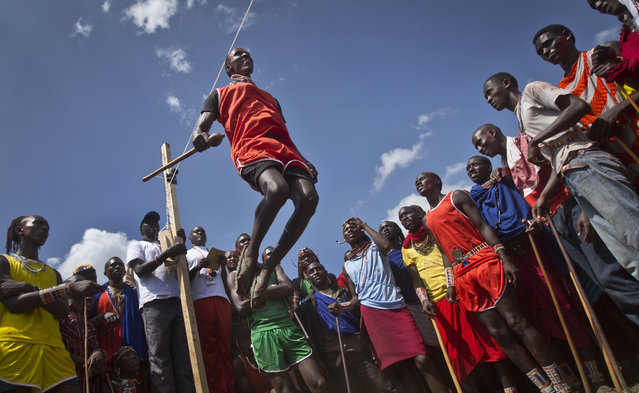
A Maasai warrior makes the high jump, in which athletes must touch a high line with the top of their heads, at the annual Maasai Olympics in the Sidai Oleng Wildlife Sanctuary near to Mt. Kilimanjaro, in southern Kenya, Saturday, December 13, 2014. (Photo by Ben Curtis/AP Photo)

A Maasai warrior makes the high jump, in which athletes must touch a high line with the top of their heads, at the annual Maasai Olympics in the Sidai Oleng Wildlife Sanctuary near to Mt. Kilimanjaro, in southern Kenya, Saturday, December 13, 2014. Maasai men and women from the Amboseli and Tsavo region compete for medals and prizes in the event which aims for a sports competition of Maasai skills such as running, jumping, and throwing, to replace lion-hunting as the traditional warrior activity. (Photo by Ben Curtis/AP Photo)
Details
16 Dec 2014 12:21:00
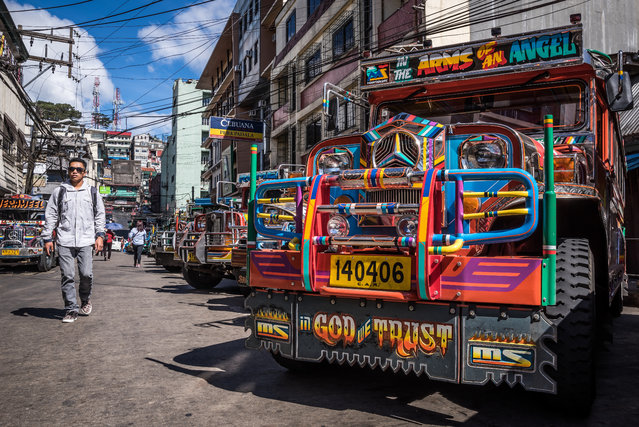
A jeepney waits for departure at Baguio (North Luzon). (Photo by Claudio Sieber/Barcroft Media)

These Filipino icons of ingenuity were originally re-crafted from abandoned US army jeeps after the second world war, and helped to establish a new system of urban transportation. Jeepneys are being phased to help ease city congestion, but the move will also cause unemployment for experienced drivers – and higher fares for commuters. (Photo by Claudio Sieber/Barcroft Media)
Details
30 May 2019 00:01:00
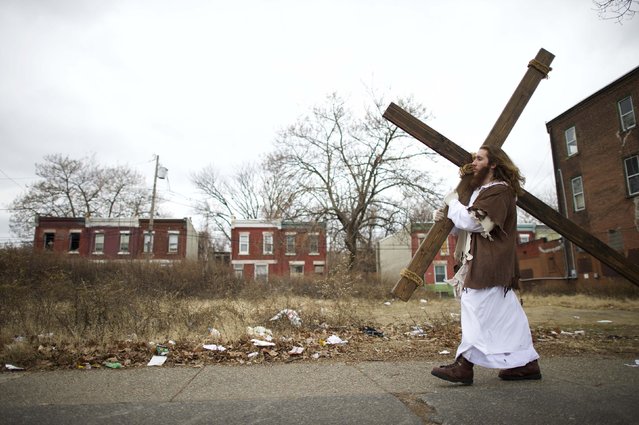
Michael Grant, 28, “Philly Jesus”, carries a 12 foot cross 8 miles through this blighted area of North Philadelphia towards LOVE Park in Center City as part of a Christmas walk to spread the true message of the holiday in Philadelphia, Pennsylvania December 20, 2014. As many as a half dozen others joined him for numerous miles as he trekked southward down Broad Street.  Some shouted “Praise Jesus!” and “Thank you for doing this!” at the sight. (Photo by Mark Makela/Reuters)

Michael Grant, 28, “Philly Jesus”, carries a 12 foot cross 8 miles through this blighted area of North Philadelphia towards LOVE Park in Center City as part of a Christmas walk to spread the true message of the holiday in Philadelphia, Pennsylvania December 20, 2014. As many as a half dozen others joined him for numerous miles as he trekked southward down Broad Street. Some shouted “Praise Jesus!” and “Thank you for doing this!” at the sight. Nearly everyday for the last 8 months, Grant has dressed as Jesus Christ, and walked the streets of Philadelphia to share the Christian gospel by example. He quickly acquired the nickname of “Philly Jesus”, which he has gone by ever since. (Photo by Mark Makela/Reuters)
Details
24 Dec 2014 14:13:00


“Pivo”, Nissan's concept car is introduced at Nissan's Gallery on September 30, 2005 in Tokyo, Japan. “Pivo” is an electric car in which the direction of the cabin moves 180 degrees, therefore, when making a turn in a different direction, it simply needs to move the cabin without moving the car. (Photo by Koichi Kamoshida/Getty Images)
Details
17 May 2011 09:23:00
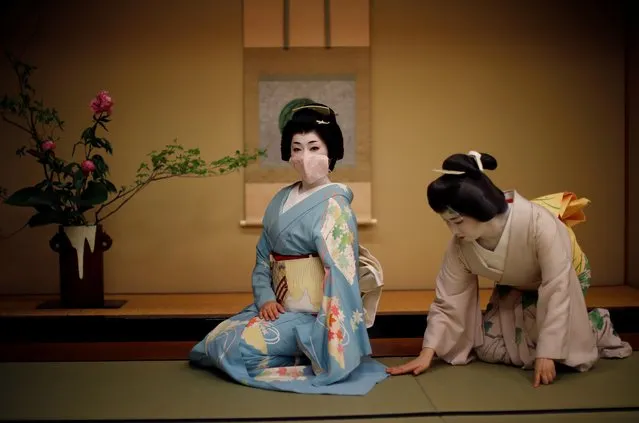
Mayu adjusts Koiku’s kimono, as Koiku wears a protective face mask while posing for a photograph, before they work at a party where they will entertain with other geisha at Japanese luxury restaurant Asada in Tokyo, Japan, June 23, 2020. The coronavirus pandemic has made Tokyo's geisha fear for their centuries-old profession as never before. Though the number of geisha - famed for their witty conversation, beauty and skill at traditional arts - has been falling for years, they were without work for months due to Japan's state of emergency and now operate under awkward social distancing rules. Engagements are down 95 percent, and come with new rules: no pouring drinks for customers or touching them even to shake hands, and sitting 2 meters apart. Masks are hard to wear with their elaborate wigs, so they mostly don't. “I was just full of anxiety”, said Mayu, 47. “I went through my photos, sorted my kimonos ... The thought of a second wave is terrifying”. (Photo by Kim Kyung-Hoon/Reuters)

Mayu adjusts Koiku’s kimono, as Koiku wears a protective face mask while posing for a photograph, before they work at a party where they will entertain with other geisha at Japanese luxury restaurant Asada in Tokyo, Japan, June 23, 2020. (Photo by Kim Kyung-Hoon/Reuters)
Details
23 Jul 2020 00:03:00