Loading...
Done
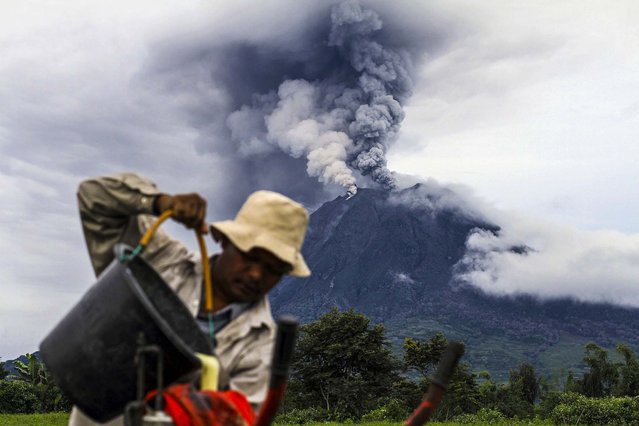
A villager pours pesticide from a bucket as Mount Sinabung spews ash at Kebayaken village in Karo district, Indonesia's North Sumatra province, on December 4, 2013. The country has ordered the evacuation of 15,000 residents near the active volcano. (Photo by Roni Bintang/Reuters)

A villager pours pesticide from a bucket as Mount Sinabung spews ash at Kebayaken village in Karo district, Indonesia's North Sumatra province, on December 4, 2013. The country has ordered the evacuation of 15,000 residents near the active volcano. (Photo by Roni Bintang/Reuters)
Details
07 Dec 2013 11:48:00
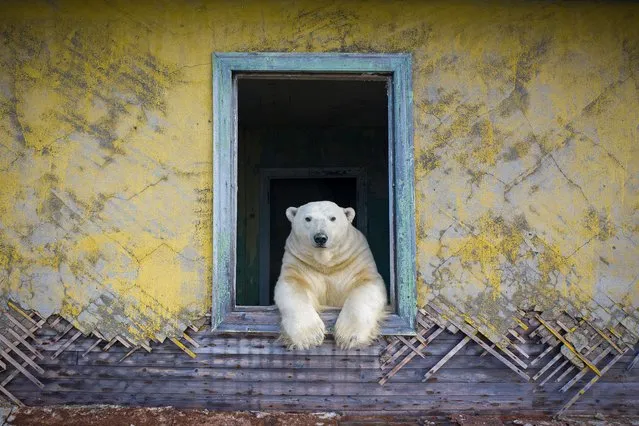
Polar frame, by Dmitry Kokh, Russia. When Kokh’s boat approached the small island of Kolyuchin in the Russian High Arctic, which had been abandoned by humans since 1992, he was surprised to spot movement in one of the houses. Binoculars revealed polar bears – more than 20 in total – exploring the ghost town. Dmitry used a low-noise drone to document them. (Photo by Dmitry Kokh/Wildlife Photographer of the Year 2022)

Polar frame, by Dmitry Kokh, Russia. When Kokh’s boat approached the small island of Kolyuchin in the Russian High Arctic, which had been abandoned by humans since 1992, he was surprised to spot movement in one of the houses. Binoculars revealed polar bears – more than 20 in total – exploring the ghost town. Dmitry used a low-noise drone to document them. (Photo by Dmitry Kokh/Wildlife Photographer of the Year 2022)
Details
03 Sep 2022 05:43:00
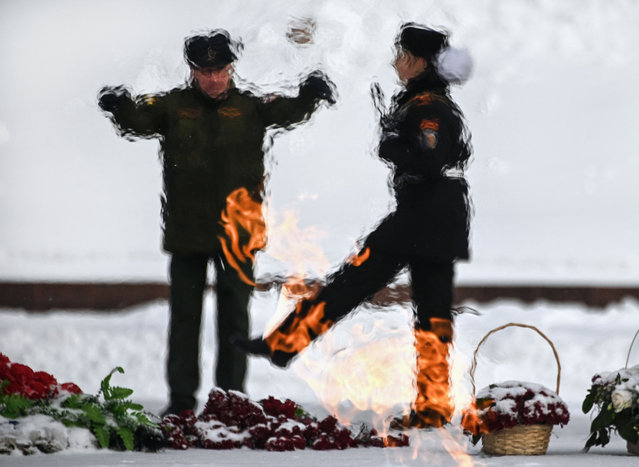
A Russian female military cadet marches in front of the Eternal Flame at the WWII memorial complex at Poklonnaya Hill in Moscow on February 17, 2021, during a rehearsal for the upcoming February 23's Defender of the Fatherland Day. (Photo by Alexander Nemenov/AFP Photo)

A Russian female military cadet marches in front of the Eternal Flame at the WWII memorial complex at Poklonnaya Hill in Moscow on February 17, 2021, during a rehearsal for the upcoming February 23's Defender of the Fatherland Day. (Photo by Alexander Nemenov/AFP Photo)
Details
27 Feb 2021 09:57:00
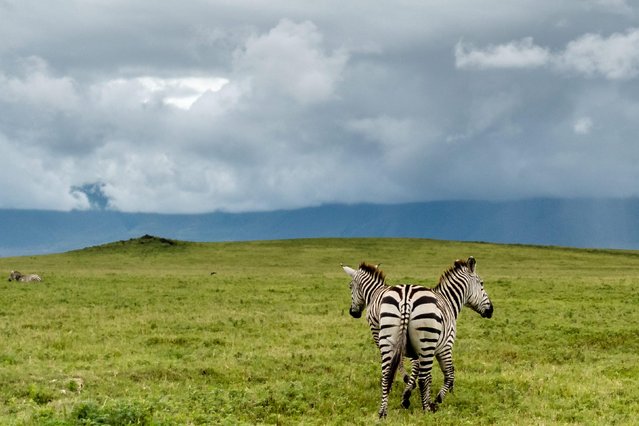
Two zebras stand so close in Ngorongoro Crater, Tanzania. (Photo by Zhayynn James/Solent News)

Two zebras stand so close in Ngorongoro Crater, Tanzania. (Photo by Zhayynn James/Solent News)
Details
10 May 2020 00:01:00
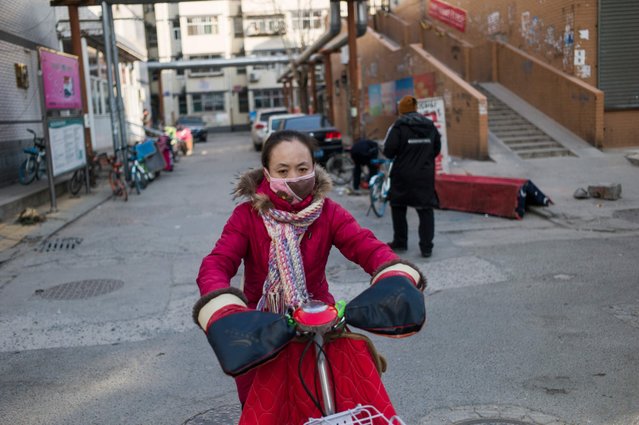
In this picture taken on December 13, 2017, a woman commutes on a street on a cold day in Baoding. As temperatures dipped below freezing in a northern Chinese village, a group of parka-clad women tried to stay warm as they played mahjong around a small gas stove in a grocery store. (Photo by Fred Dufour/AFP Photo)

In this picture taken on December 13, 2017, a woman commutes on a street on a cold day in Baoding. As temperatures dipped below freezing in a northern Chinese village, a group of parka-clad women tried to stay warm as they played mahjong around a small gas stove in a grocery store. (Photo by Fred Dufour/AFP Photo)
Details
22 Dec 2017 07:52:00
Colombian-American actress Sofía Vergara in the first decade of November 2022 takes a risqué selfie inside her walk-in closet. (Photo by sofiavergara/Instagram)

Colombian-American actress Sofía Vergara in the first decade of November 2022 takes a risqué selfie inside her walk-in closet. (Photo by sofiavergara/Instagram)
Details
18 Nov 2022 04:56:00
Baby Fennec Fox

“The fennec fox is a small nocturnal fox found in the Sahara of North Africa. Its most distinctive feature is unusually large ears. The name “fennec” comes from the Arabic word for fox, and the species name zerda has a Greek origin that refers to its habitat. The fennec is the smallest species of canid in the world; coat, ears and kidney functions have adapted to a high-temperature, low-water, desert environment. In addition, its hearing is sensitive enough to hear prey moving underground”. – Wikipedia

Photo: A Baby Fennec is seen at Sunshine International Aquarium on June 24, 2009 in Tokyo, Japan. The small nocturnal fox babies were born on May 17 2009. (Photo by Junko Kimura/Getty Images)

Details
16 Sep 2011 12:02:00
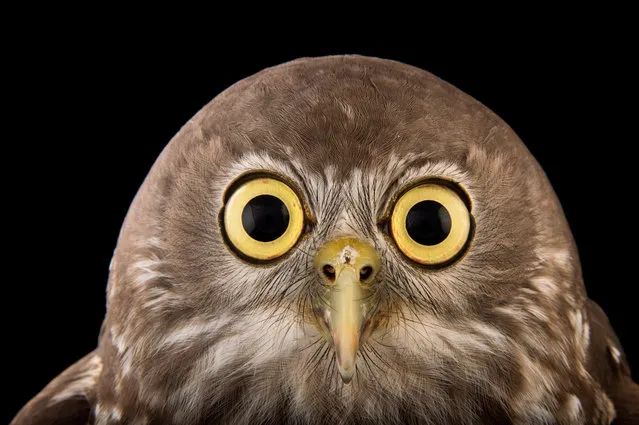
The National Geographic Photo Ark is a travelling exhibition of photographer Joel Sartore’s quest to create a photo archive of biodiversity around the world. So far, Sartore has captured studio portraits of more than 6,000 species – a number that he hopes to double. On 1 July, the ark will open at Melbourne zoo – the first time it has been exhibited in the southern hemisphere. More than 50 portraits will be on display, including many of Australian endangered animals being protected by programs at the zoo itself. These captions have been edited from text supplied by Melbourne zoo. Here: Barking owl. So-named because its call sounds like a barking dog, these birds are native to Australia, Indonesia and Papua New Guinea. In Victoria they are listed as an endangered species, and in 2003 there were estimated to be fewer than 50 breeding pairs. The main threat to the species in Victoria is loss of habitat, especially large trees with hollows in which they can nest and on which many of their prey depend. Apart from a bark, they may utter a chilling scream when they feel threatened. (Photo by Joel Sartore/National Geographic Photo Ark/The Guardian)

The National Geographic Photo Ark is a travelling exhibition of photographer Joel Sartore’s quest to create a photo archive of biodiversity around the world. So far, Sartore has captured studio portraits of more than 6,000 species – a number that he hopes to double. On 1 July, the ark will open at Melbourne zoo – the first time it has been exhibited in the southern hemisphere. More than 50 portraits will be on display, including many of Australian endangered animals being protected by programs at the zoo itself. These captions have been edited from text supplied by Melbourne zoo. Here: Barking owl. (Photo by Joel Sartore/National Geographic Photo Ark/The Guardian)
Details
01 Jul 2017 07:45:00